📌 Part of the guide: Packing a Go Bag: Checklist, Documents, and Family Plan
A good emergency preparedness gift is practical, useful in everyday life, and doesn’t stir up fears. Examples include a headlamp, first-aid kit, hand-crank radio, or warm wool socks. These items are useful in daily life and at the same time form a first building block of your preparedness.
Especially around Christmas or birthdays, the question comes up: how do you give a preparedness gift without it sounding like doomsday? The answer is simple. You choose items that everyone understands immediately and enjoys using. In this article, you’ll find ideas for various budgets, tips for selection, and an honest assessment of why expensive equipment doesn’t automatically make sense as an emergency preparedness gift.
Why Preparedness Can Be a Great Gift
Most people put off the topic of preparedness. Not because they think it’s unimportant, but because the first step seems unclear. A gift removes exactly that hurdle. The recipient doesn’t need to research anything or make comparisons. They receive a useful item and thus get a start.
Germany’s Federal Office of Civil Protection and Disaster Assistance (BBK) recommends being able to provide for yourself for up to ten days. That sounds like a lot. According to the BBK, however, a supply for at least three days helps considerably, and you can build on that. You can think about gifts this way: not as a complete solution, but as a meaningful building block you can add to over time.
Another point from the BBK guide is important when considering the recipient: provisioning should be individually tailored. This includes food intolerances, personal preferences, and your own storage options. You can apply this thinking to gifts. Don’t give what you would like to have yourself, but what fits the recipient’s home, daily life, and habits.
What Makes a Good Emergency Preparedness Gift
Before you gather specific ideas, a few simple criteria can help guide you. A successful gift in this area should meet as many of these as possible:
- Everyday usefulness: The item gets used even without a crisis, such as on a walk, in the basement, or on vacation.
- Easy to use: No one should have to study instructions when it’s dark and stressful.
- Right place to store it: The gift can be kept in your home without taking up excessive space.
- No lecture: It comes across as thoughtfulness, not as a wagging finger.
- Solid construction: Better a simple, robust item than an overloaded multifunctional device.
Ideas for an Emergency Preparedness Gift
The following ideas have one thing in common: they are low-key and easy to understand. You don’t need to be an expert, and you’re not giving fear but a piece of security. This list is not ranked. Choose what fits the person, and with each emergency preparedness gift, consider whether it will fit into their everyday life.
Hand-Crank Radio as a Gift
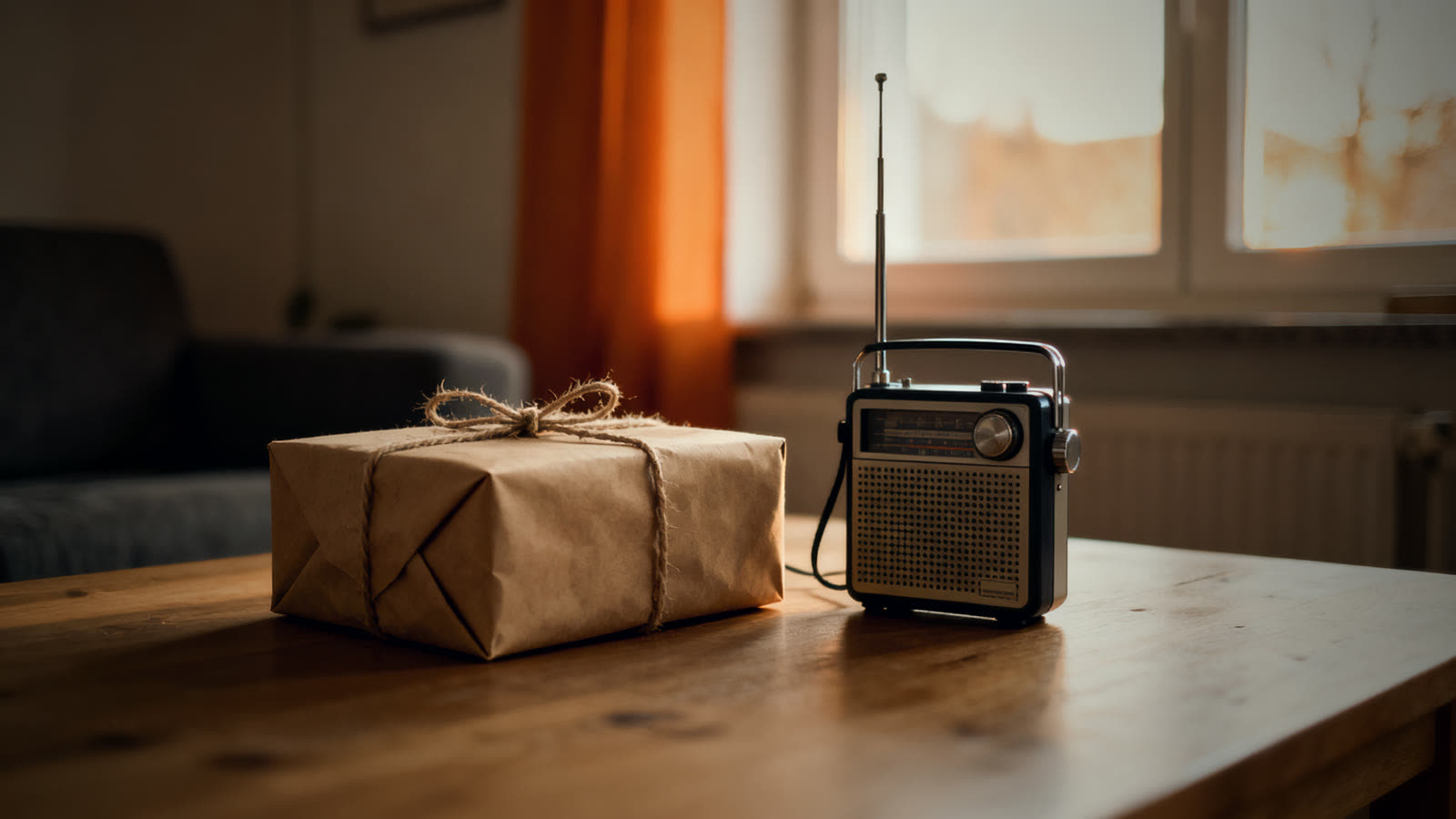
A hand-crank radio is a classic example of a gift that is practical and reassuring. Many models can be powered by turning a crank. The actual power sources a device uses vary depending on the model, and you should check this before buying. We explain why this device fits into many households in the article Hand-Crank Radio in the Home.
When buying, look for clear operation, easily accessible buttons, and a sturdy crank. If you’re giving a hand-crank radio as a gift, you can try it out right away and suggest a fixed place for it, such as in the hallway drawer. You’ll find more on the topic in Staying Informed Without Internet.
Headlamp: Hands-Free, Light Ready
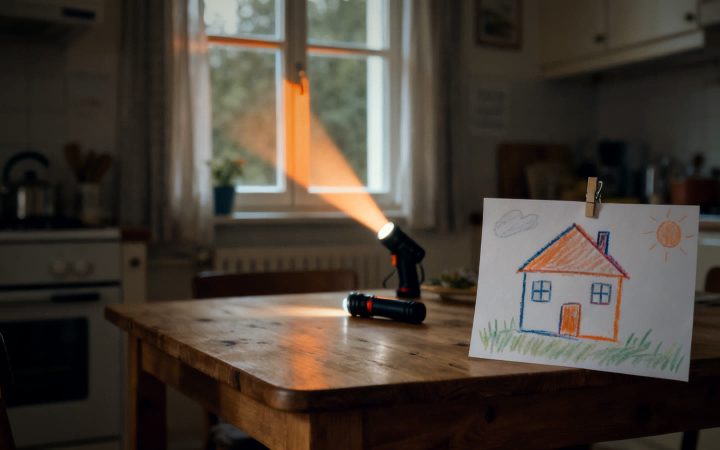
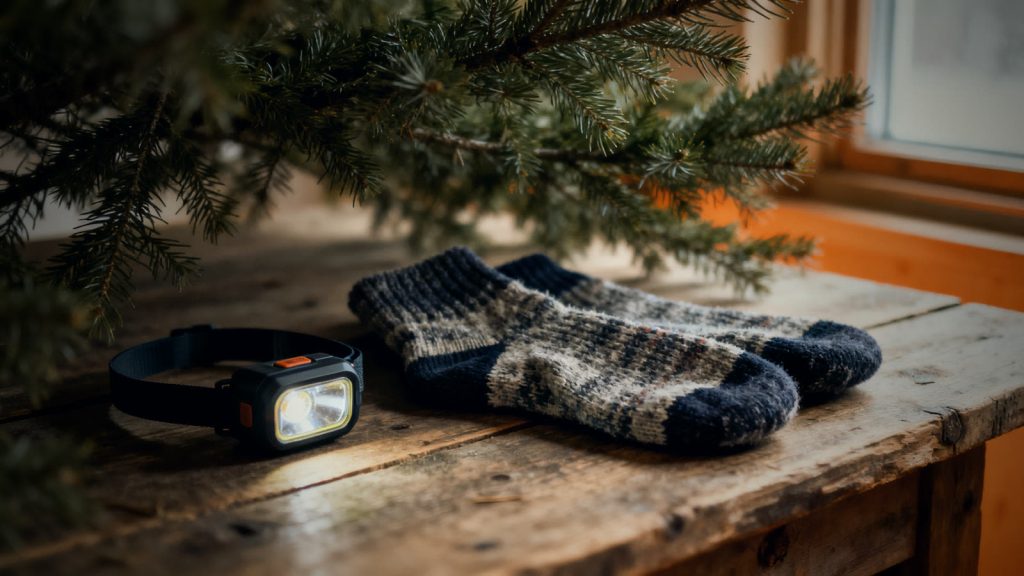
A headlamp is a gift that many people can use. When jogging in the dark, in the basement, or while camping, you have both hands free. This is especially useful when you need to search for, carry, or hold something. Depending on the model, you need batteries or a rechargeable battery. It’s better to include them separately rather than install them.
We’ve summarized what matters when choosing flashlights and headlamps in Choosing the Right Flashlight and Headlamp. If you’re giving batteries or rechargeable batteries as well, the article Storing Batteries and Rechargeable Batteries Properly is a good tip for your greeting card.
First-Aid Kit as a Gift
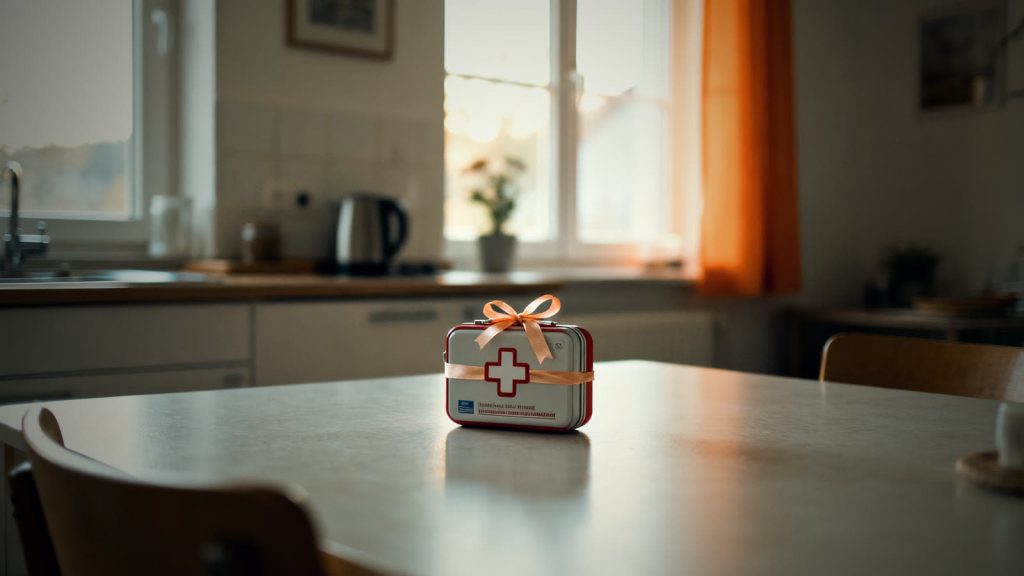
A first-aid kit is a gift that hardly anyone refuses and that hopefully won’t be needed often. Make sure the contents are complete and well-organized, and check the expiration dates of the included materials. Also make sure the recipient knows where the kit is stored. You’ll find out what belongs in a good kit in What Should Be in a First-Aid Kit? Contents, Standards, and Useful Extras.
The kit can be nicely complemented with a voucher for a first-aid course. Materials are only part of preparation; the knowledge of how to use them matters too. Why it’s worth refreshing your skills is explained in Refreshing First Aid: Why a Course is Really Worth It.
Warmth to Wear
Wool socks, a warm hat, gloves, or a blanket are gifts that are easy to give and won’t alarm anyone. They fit any season with cool days and are an inconspicuous addition to the household. How to sensibly layer clothing in cold weather is explained in the article The Layering Principle: Dressing Right in Cold Weather.
More Simple Ideas
- A document folder in which to collect important papers (see The Document Folder: Securing Important Papers).
- A notebook where the recipient can record important contacts, with space for the family meeting point (more on this in Emergency Contact List and Family Meeting Point).
- A map set with compass for hikers and families.
- Board games and card games that don’t require a screen.
- A gourmet basket with favorite items. Ask about allergies and food intolerances first, because the BBK (Germany’s Federal Office of Civil Protection and Disaster Relief) explicitly mentions these when discussing stockpiling.
Gifts Based on Recipient and Life Situation
Not every idea suits everyone. A student in a small apartment needs different things than a family with a basement. The BBK (Germany’s Federal Office of Civil Protection) cites personal preferences and individual storage options as the standard for emergency stockpiling. This principle also helps when choosing an emergency preparedness gift: consider the person and their living situation.
For People with Limited Space
In a rental apartment, every square foot counts. Compact gifts work well here: a headlamp, a small first aid kit, or a hand crank radio that fits in a drawer. Tips for space-saving organization can be found in Emergency Preparedness in a Small Rental Apartment. Bulky gifts that might get in the way later are not a good choice there.
For Families with Children
Families benefit from items that are useful for everyone together. This includes lamps, a first aid kit, and games for screen-free evenings. For children themselves, small flashlights or their own backpack that they can fill as they wish work well. Find inspiration in Emergency Preparedness for Families: Prepared Together and Power Outage: Keeping Children Entertained Without Screens.
For Parents and Grandparents
With older family members, simplicity is key. Large buttons, easy-to-read instructions, and a fixed place for items are more important than technical sophistication. Questions about medications and aids are best clarified together with the recipient and with a doctor or pharmacist, not on your own. Read more about this in Emergency Preparedness for Seniors and Dependent Relatives.
For Outdoor Enthusiasts and Campers
Those who enjoy outdoor activities already know much of this. Here you can strategically add, such as with a map and compass or a tarp. These items are useful on hiking trails and can be given without particular concerns. You’ll find relevant instructions at Navigation Without GPS: Using Map and Compass Safely and Emergency Shelter with Tarp.
Giving a Power Station as a Gift? An Honest Assessment
Power stations are often considered dream gifts for tech enthusiasts. But not every model delivers what it promises. The Stiftung Warentest (German consumer protection organization) tested 11 power stations with 300 to 700 watts. Five of them performed well, the rest satisfactory or adequate. The tested devices ranged from €470 to over €800. That’s a lot of money for a gift whose usefulness depends on how it will be used.
The test also revealed: not all devices deliver the promised performance. Some charge slowly, several are loud, and one model shut down after 30 minutes. The tested power stations are unsuitable for high-power devices like electric kettles. According to the Stiftung Warentest, they are suitable for camping, garden sheds, and emergency supply.
If the recipient primarily wants to charge their smartphone, the Stiftung Warentest recommends cheaper power banks. The differences are explained in Power Station or Power Bank – Which Do I Need?. If you’re still considering a power station, you’ll find criteria in the article Buying a Power Station: What to Watch For.
Why Expensive Doesn’t Automatically Mean Better
A high price is no guarantee of suitable performance. Before you give away a larger device, it should be clear what it’s intended for and how much power is actually needed. A calculation for this is provided by Calculating Power Needs in an Emergency: How to Do It Right. When in doubt, a gift card or a joint shopping trip is the better solution because the recipient can choose the device themselves.
Gifts You Should Better Avoid
Not everything that looks like preparedness is sensible. Be cautious with things that look spectacular but hardly help in everyday life. This includes overloaded multitools with many functions or packages with supposed complete kits with no discernible quality. Such sets tempt you to feel secure without being truly prepared.
For safety-related items, there is a clear rule: don’t give away gas cartridges, heating devices, ferro rods, or knives without talking to the recipient first. Anyone unfamiliar with such items can store or operate them incorrectly. Combustion devices should not be thoughtlessly placed indoors because they create dangers like carbon monoxide. You’ll find background information in Storing Gas Cartridges in Your Apartment: Rules and Limits, Carbon Monoxide: The Invisible Danger of Emergency Heaters, and Tea Light Heaters & Co.: Which Emergency Heating Tips Are Dangerous.
How to Wrap the Gift Without Causing Anxiety
The tone is crucial. A hand-crank radio with a card saying “For emergencies” quickly feels dramatic. Better is a phrase like “You can listen to news and music with this, even in the garden in summer.” This keeps the benefit in focus. An emergency preparedness gift should convey security, not worry.
You can combine several small items into a package, for example a headlamp, wool socks, and a sweet treat. That feels like winter preparation and not disaster relief. A first aid kit with a ribbon and a handwritten note indicating where it will be kept is perfectly sufficient.
An Example of a Gift Package
- A headlamp with matching batteries or a rechargeable battery separately in the packaging.
- A pair of thick wool socks.
- A small first aid kit in a practical pouch.
- A card game or a small puzzle booklet.
- A card with a personal note and the storage location.
Such a package can be expanded as needed. Those who want more later can continue with emergency supplies. The BBK (Germany’s Federal Office of Civil Protection and Disaster Assistance) recommends being able to sustain yourself for ten days if possible, and the article Emergency Supplies According to BBK Recommendations shows you how to work toward this goal step by step.
Frequently Asked Questions
What makes a good emergency preparedness gift on a budget?
Headlamps, wool socks, a simple first aid kit, or a card game work well. They’re practical for everyday use and take up little space. More important than the price is that the recipient will actually use the item and that it suits their living situation.
Is a hand-crank radio a good gift?
Yes, especially for people who like to stay informed. Before buying, check which power sources the specific model uses, as devices vary. Look for ease of operation and place the radio in a fixed, easily accessible location.
How much supply does the BBK recommend?
The BBK (Germany’s Federal Office of Civil Protection and Disaster Assistance) recommends being able to supply yourself for up to ten days if possible. According to the BBK, having a supply of at least three days helps considerably, and you can build from there. Stockpiling should be individually tailored to account for intolerances, preferences, and storage options.
Is a power station a good emergency gift?
Only to a limited extent. In testing by Stiftung Warentest, not all devices delivered the promised performance; some charged slowly or were loud. For charging a smartphone only, Stiftung Warentest recommends more affordable power banks. According to the test, power stations are suitable for camping, garden cabins, and emergency supply.
How do I give preparedness as a gift without being preachy?
Focus on practical everyday use and avoid dramatic language. A personal, friendly note on the card is enough. Try out the item together if possible, then the emergency preparedness gift feels like a thoughtful gesture rather than an obligation.
Next Steps: How to Proceed
With just a few steps, you’ll find a suitable gift and avoid costly mistakes. This sequence has proven effective:
- Assess the person: Clarify living situation, space, interests, and technical preferences.
- Set a budget: Better a simple, solid item than an expensive device with unclear value.
- Choose a category: Light, information, first aid, or warmth are a good start.
- Consider accessories: Include batteries or rechargeable batteries separately, check expiration dates, ask about food allergies.
- Present in person: Show where and how it works and keep the tone light.
If you’d like to explore the topic more deeply, the article Emergency Preparedness Done Right: Why an emergency supply is sensible is a good starting point. And if you want to support the recipient longer-term, Emergency Supply Costs: What 10 Days of Preparedness Really Costs offers guidance for the next steps.
Sources and Further Information
General information, no substitute for individual advice from authorities, emergency services or medical professionals. In an emergency in Europe: 112.