A tea light heater is dangerous when it burns unattended or is improvised from flammable materials: the fire department and the chimney sweeps’ association warn of wax fires, flash fires, and the risk of suffocation. Many emergency heating tips that circulate on social media during a power outage don’t hold up to a factual review. This article goes through the best-known variants and shows what the BBK (Germany’s Federal Office of Civil Protection and Disaster Assistance) actually recommends.
When it’s cold and the power is out, everyone looks for a quick fix. That’s understandable. Still, it’s worth taking a calm look at what experts actually say – not at what looks good.
Tea Light Heater: Why the Design Is Risky
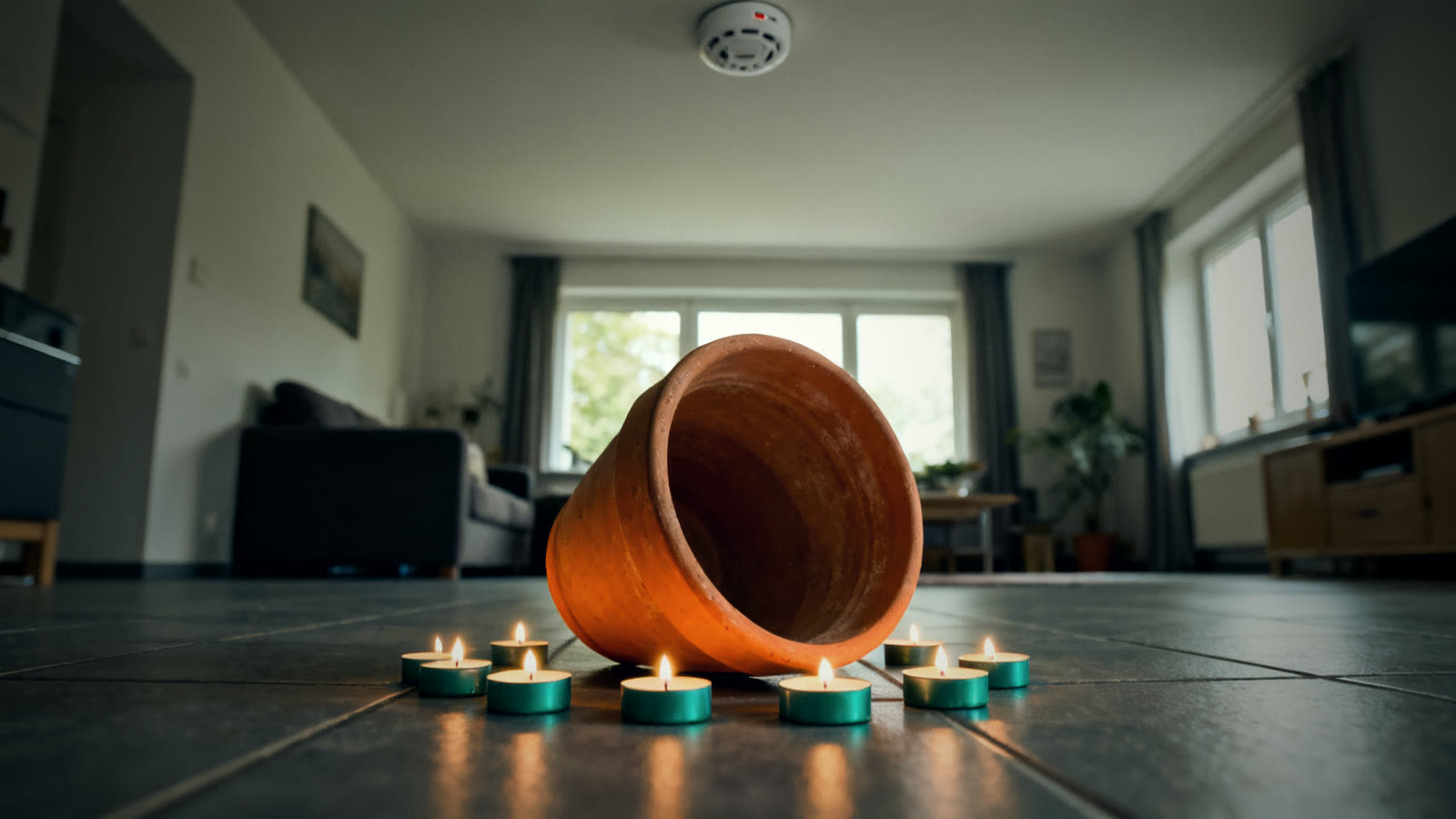
A tea light heater uses several tea lights placed under an upside-down clay pot, which is supposed to store the heat and release it. The principle sounds simple, but the execution is not. The fire department and the chimney sweeps’ association explicitly warn: because the tea lights sit close together, they can quickly ignite one another – resulting in a wax fire.
According to the professional associations, a wax fire like this can quickly lead to a flash fire or even a house fire. This very mechanism – several open flames in a tight space igniting one another – makes the tea light heater one of the most commonly underestimated emergency heating ideas of all.
A single tea light may be harmless for a bit of occasional warmth on a table. As an emergency heater for an entire room, however, the design is not suitable in the view of the fire department and the chimney sweeps’ association, because the very proximity of several flames to each other creates the risk the professional associations warn about.
Heating Without Electricity in Your Apartment: What Actually Works
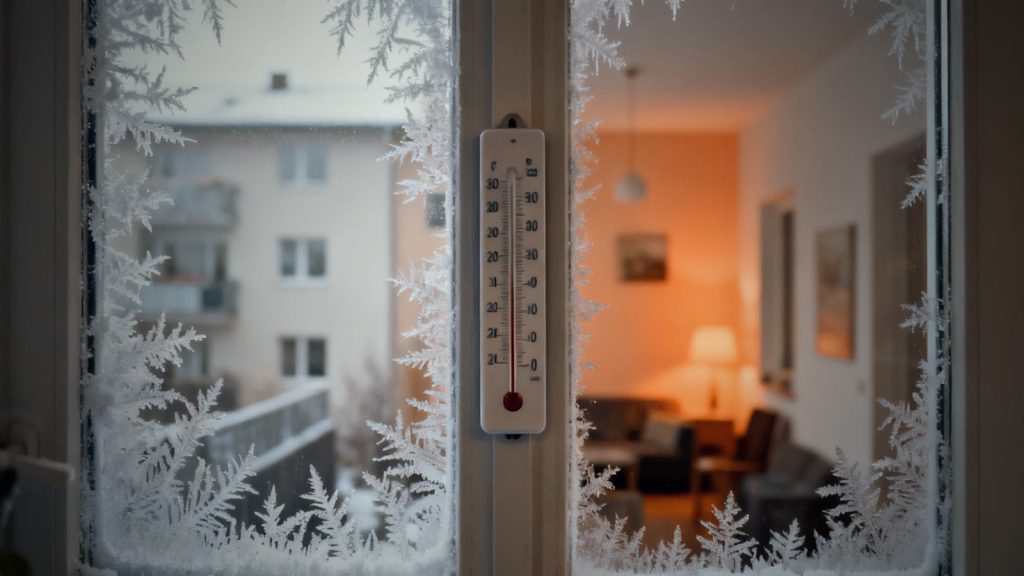
If you want to heat your apartment without electricity, you should first rely on what doesn’t need an open flame. During a power outage, the BBK recommends heating just a single room and keeping the doors to the other rooms closed. This significantly reduces heat loss without adding any extra risk.
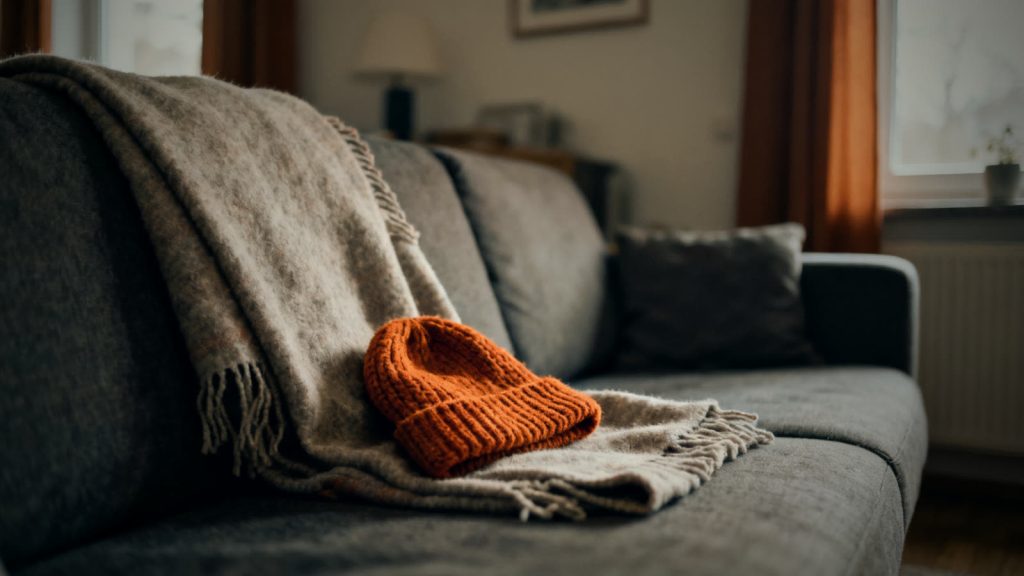
As a supplement, the BBK advises warm clothing and blankets – dressed properly using the layering principle, you can stay comfortable even when indoor temperatures are cool. According to the BBK, these simple measures are explicitly part of the recommended strategy, not just a stopgap.
If you want to prepare for the long term, the BBK advises keeping a supply of coal, briquettes, or firewood for a fireplace or stove – but only if such a fireplace is already installed and has been inspected and approved by a professional. To learn how else you can stay warm when your heating fails, read the article How to Keep Your Home Warm When the Heating Fails.
Indoor Emergency Heating: What the BBK Explicitly Prohibits
Some tips for indoor emergency heating go far too far. The BBK explicitly warns against grilling inside an apartment or house – there is a risk of suffocation. A grill produces carbon monoxide, a gas that, according to the chimney sweeps’ association, is invisible and odorless and displaces the air you breathe. It can be deadly without the person affected ever noticing.
This danger is not limited to grills. According to the chimney sweeps’ association, improper use of stoves and fireplaces always carries a risk of carbon monoxide poisoning. You can find more on this risk in the article Carbon Monoxide: The Invisible Danger of Emergency Heaters.
Safety Precautions for Gas-Powered Heat Sources
If you still want to use a gas-powered heat source, the BBK says it is essential to make sure it has an oxygen depletion sensor and an ignition safety device. Without these safeguards, the risk increases considerably. The BBK also recommends installing a carbon monoxide alarm to improve safety.
Heating with Candles: What’s Safe and What Isn’t
Candles can warm a room slightly and provide light, but they are not a substitute for a heating system. When using candles, the BBK (Germany’s Federal Office of Civil Protection and Disaster Assistance) recommends ventilating regularly to ensure an adequate oxygen supply. That means even a seemingly harmless candle consumes oxygen and should not burn for hours in a completely sealed room.
The classic fire safety basics also apply: never leave candles unattended, don’t place them next to flammable materials, and set them on a stable, non-combustible surface. If you want background on smoke detectors and escape routes, check out the article Fire Safety at Home.
Grease Fires and Other Firefighting Mistakes with Improvised Heat Sources
One risk that is often overlooked with improvised heating and cooking setups is the grease fire. The BBK warns against putting out a grease fire with water, as this can cause grease explosions. If you cook or heat with an open flame and grease is involved, you should know about this mistake and, if in doubt, keep a fire extinguisher or fire blanket within reach.
Using Stoves and Fireplaces Correctly
If you have a proper stove or fireplace, you generally have an advantage, provided the unit is operated correctly. The chimney sweeps’ association stresses that stoves should only be operated in consultation with your local chimney sweep, as otherwise there is a serious risk of fire and suffocation. This also applies if a decommissioned fireplace is to be reactivated or a new stove is to be installed later.
According to the BBK, if you’re preparing ahead, you should get advice from professionals in advance about heating alternatives you can install, rather than testing improvised solutions in an actual emergency. Suitable fuel is also part of your preparation. You’ll find more in the article Firewood: Gathering, Storing, and Drying.
Why Improvised Emergency Heaters Are Often Misjudged Online
Tea light heater tutorials, indoor grilling tips, and camping stoves as permanent heating spread quickly online because they seem simple and cheap. What’s often missing is a mention of the real danger: carbon monoxide and fire risks are rarely considered. That’s exactly why it’s worth looking at the assessments of the fire department, the chimney sweeps’ association, and the BBK rather than well-meant everyday tips.
If you want to prepare for a power outage in general, you shouldn’t view emergency heating in isolation, but as one part of your overall preparedness. This also includes lighting, communication, and an adequate supply of essentials, so that no rushed decisions are necessary in the first hours and days.
Frequently Asked Questions
Is a tea light heater dangerous?
Yes. The fire department and the chimney sweeps’ association warn of wax fires and flashovers, because the tea lights sit close together and can quickly ignite one another.
Can I grill indoors to heat my home?
No. The BBK explicitly warns against grilling inside an apartment or house, as there is a risk of suffocation from carbon monoxide.
How can I heat without electricity without taking risks?
According to the BBK: heat only one room, close the doors to other rooms, and use warm clothing and blankets. An existing, professionally installed stove or fireplace is an additional option.
What should I do in case of a grease fire?
Never put it out with water, as the BBK warns of grease explosions. If in doubt, keep a fire extinguisher or fire blanket within reach and call the fire department (112).
Do I need a carbon monoxide alarm?
The BBK recommends installing a carbon monoxide alarm, especially if you use gas-powered heat sources or stoves.
What you can do right now
First, check which emergency heating tips are circulating in your area, and evaluate them using this overview. Rely on warm clothing and blankets layered like an onion, rather than improvised open-flame heat sources. If you have a wood stove or fireplace, have the installation inspected by a chimney sweep and install a carbon monoxide alarm. To prepare further for a power outage, it is also worth reading the article Power Outage: How to Act Correctly in the First 24 Hours.
Sources and further information
General information, no substitute for individual advice from authorities, emergency services or medical professionals. In an emergency in Europe: 112.