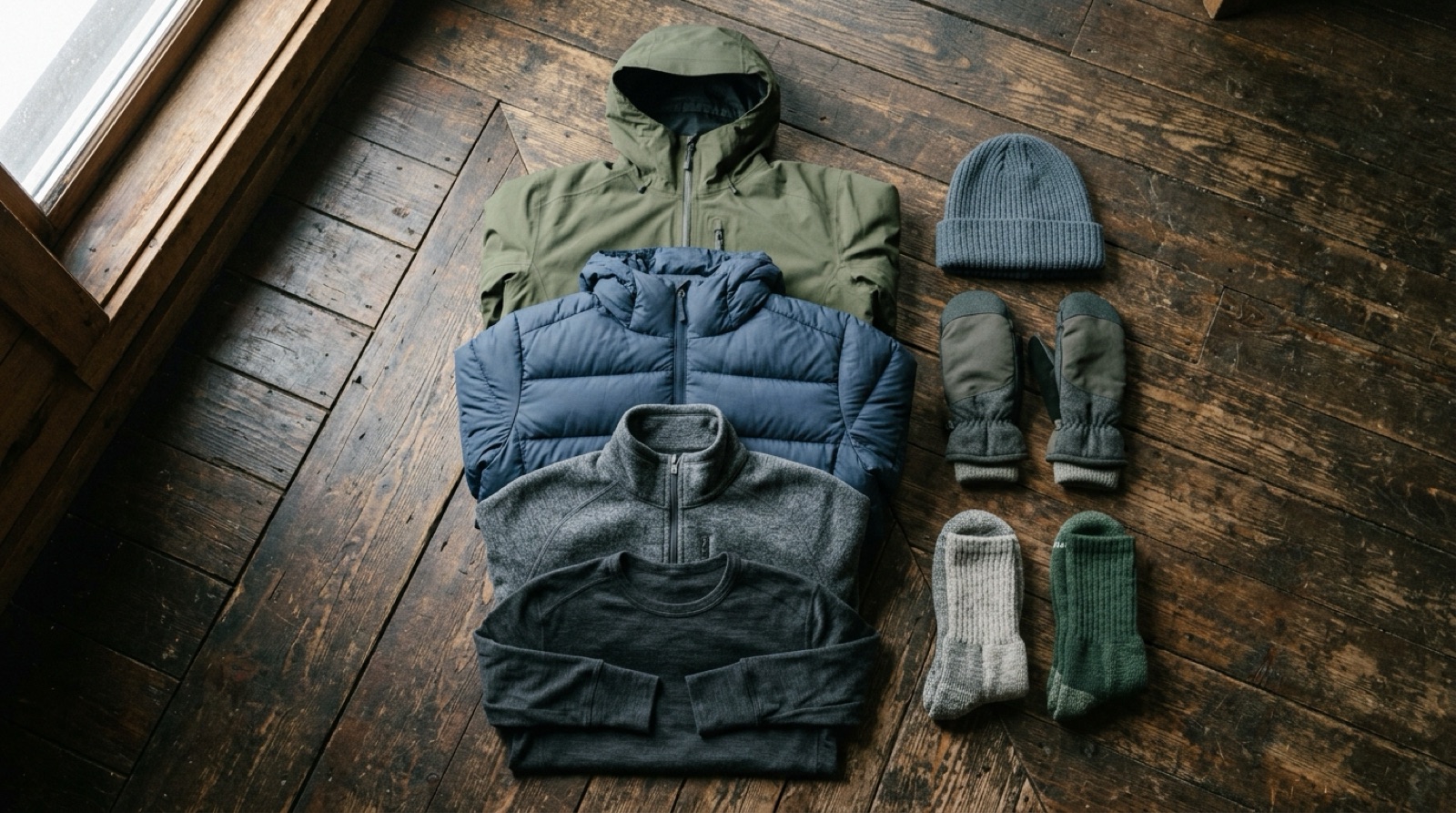
When you’re cold, it’s tempting to reach for the thickest jacket in the closet. It sounds logical, but it’s rarely the best solution. A single thick layer is either too warm or too cold – and as soon as you start moving, you begin to sweat underneath it. The Deutsches Rotes Kreuz (DRK, the German Red Cross) explicitly recommends wearing several garments on top of each other in cold weather instead of one thick one. That’s exactly the layering principle: several thinner layers, each with its own job, which you put on or take off depending on the situation.
Why layers work so well
It’s not the fabric itself that keeps you warm, but the still air between and inside the fibers. Several layers trap more air than a single one. Then there’s the second big advantage: you can regulate your temperature. When you’re shoveling snow, you take a layer off, and during a break you put it back on. In basic training, we repeated the phrase “If you sweat, you freeze” so often that it stuck. That’s because wet clothing draws heat away from your body much faster than dry clothing. So the real goal isn’t maximum warmth, but staying dry and evenly warm.
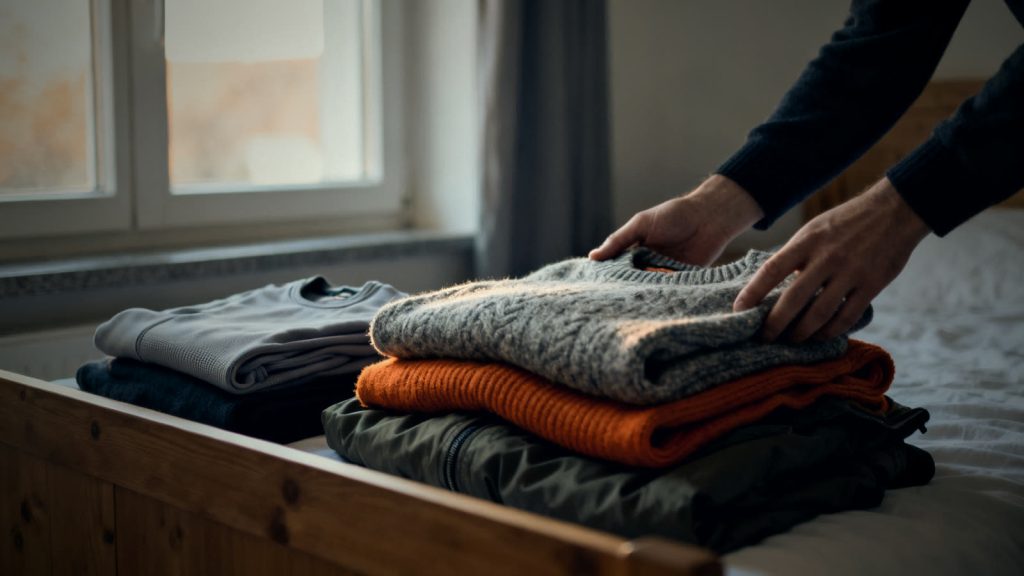
Layer 1: The base layer
Technical underwear sits directly on your skin. Its job: wick moisture away from your body. Merino wool and synthetic fibers such as polyester have proven their worth. Merino still keeps you warm when slightly damp, takes longer to start smelling, and feels comfortable. Synthetic fabric dries faster and is more durable as well as cheaper. Cotton is the worst choice here: it soaks up sweat, holds on to it, and chills you. A cotton T-shirt under your sweater is therefore not a good idea in cold weather when you’re active.
Layer 2: The insulation layer
The middle layer holds in the heat. This is where fleece, thick wool, or insulated jackets with down or synthetic fill come in. Fleece is easy to care for and breathable. Down offers the best warmth-to-weight ratio, but loses much of its insulating power when wet. Synthetic fills still keep you reasonably warm when damp, which is why they’re often the more practical choice for our cold, damp weather in Germany. In very cold conditions, you can also combine two insulation layers, such as a fleece jacket under an insulated jacket.
Layer 3: The weather protection layer
The shell goes on the outside. It protects against wind, rain, and snow. The DRK stresses that the outermost layer should be windproof – otherwise the wind simply blows the warm air out of the inner layers. A waterproof, breathable hardshell jacket is ideal for wet conditions. In dry cold, a windproof softshell is enough. Look for a hood that fits over a hat, and for ventilation zippers under the arms.
Don’t forget your extremities
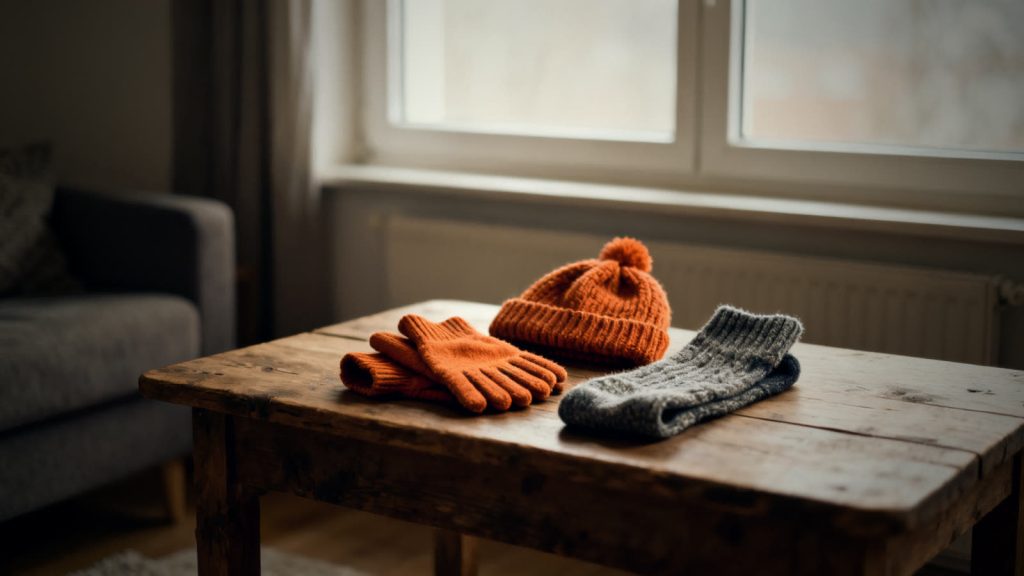
Your head, hands, and feet often determine whether you feel warm overall.
- Head: A hat that also covers your ears is always a must in cold weather. A neck gaiter additionally protects your neck and face.
- Hands: Mittens keep you warmer than gloves, as the DRK also points out. A thin glove liner underneath lets you do fine-motor tasks.
- Feet: Wool socks instead of cotton. Don’t lace your shoes too tightly, or circulation suffers. A spare pair of dry socks is worth its weight in gold.
The Layering Principle in an Emergency
During a heating failure or power outage, layering is your best friend indoors, too. A merino base layer, a fleece on top, and a lightweight insulated vest make a cold home much more bearable. At night, you can put on a fresh, dry base layer before getting into your sleeping bag, so you don’t go to bed in damp clothes. For your go bag, pack a lightweight insulated jacket and a rain jacket rather than a heavy winter coat.
Know the Warning Signs
Children in particular lose body heat faster than adults. Watch for shivering, pale skin, and blue lips – according to the DRK (German Red Cross), these are typical early signs of hypothermia. If you notice them, move to a warm room, take off any wet clothing, and drink warm (not hot) beverages with a little sugar. If the skin turns whitish, yellowish, or gray and hurts, it may be frostbite, which should be treated by a doctor. For serious symptoms, always call the emergency number 112.
What You Can Do Today
Go through your clothes once and sort them into the three layers. You probably already have a lot of it: a fleece, a rain jacket, wool socks. Often the only thing missing is a good base layer. Try out the combination on a winter walk and pay attention to when you start to sweat. In an emergency, this feel for your own clothing is worth more than any high-tech label.
In short: Three layers – wick away moisture, insulate, and protect against wind and wet weather. No cotton directly on your skin when you’re active. If you sweat, you get cold: add and remove layers in good time.
Matching Gear Compared
| Produktbild bei AmazonAll-rounderCL convallaria Thermounterwäsche Set | Produktbild bei AmazonNo tagsSIMIYA Thermounterwäsche Set | Produktbild bei AmazonDenser fabricHomord Thermounterwäsche Set | |
|---|---|---|---|
| Rating | at least 4.3 out of 5 starswith 500+ customer reviews (our selection criterion)See current reviews* | at least 4.3 out of 5 starswith 500+ customer reviews (our selection criterion)See current reviews* | at least 4.3 out of 5 starswith 500+ customer reviews (our selection criterion)See current reviews* |
| Features |
|
|
|
| Pros |
|
|
|
| Cons |
|
|
|
| View on Amazon* | View on Amazon* | View on Amazon* |
Selected by manufacturer data and customer reviews (at least 4.3 stars with 500+ reviews). We only show exact star ratings when they come from Amazon the same day. As of 04.10.2026. Not tested by us. Current prices and reviews are on Amazon. *Ad · paid link
Conclusion: our product picks
Thermal Underwear Sets (Men's) Compared
All three are fleece-lined synthetic-fiber sets—warm, easy-care, and affordable. The CL convallaria set is the proven all-rounder, the SIMIYA set also works as warm sleepwear during a heating outage, and the Homord set has the densest fabric. Important with the layering principle: underwear should fit snugly, with several layers on top.
Links marked with * are advertising links. As an Amazon Associate I earn from qualifying purchases.
Sources and Further Information
General information, no substitute for individual advice from authorities, emergency services or medical professionals. In an emergency in Europe: 112.