A heating system rarely fails for no reason. Most often it’s a power outage, a fault in the system, or a problem with the gas supply. Here’s something important to know: even a gas or oil furnace usually needs electricity for the pump, burner, and controls. So when the power goes out, many homes with fossil-fuel heating get cold too. The good news: an insulated home doesn’t cool down all at once. You have time – and if you use it wisely, your home can stay reasonably comfortable for several days.
Check first, then act
Before you start hauling blankets around, find the cause. If only your apartment is affected, check the breaker box and the display on your heating system. A fault code can sometimes be cleared with a reset – the owner’s manual will tell you how. If the whole building is affected, notify your landlord, property management company, or your heating contractor. If the entire street is dark, you’re dealing with a power outage. In that case, a battery-powered or hand-crank radio helps you get information from the authorities, as also recommended by the BBK (Germany’s Federal Office of Civil Protection and Disaster Assistance).
Set up a warm room
The most important step: focus on a single room. The BBK advises that during a heating failure, you should gather together in one room and keep the doors closed. The best choice is a small room with few exterior walls and the smallest possible windows, ideally one that faces south. Keeping an entire home warm without heating is hardly possible. A room where the whole family stays, on the other hand, will already feel noticeably warmer thanks to body heat.
- Close the doors to all other rooms, and seal gaps under doors with rolled-up towels.
- Close curtains, roller shutters, and blinds after dark. Open them during the day when the sun is out and let the sunlight in.
- Cover the floor with rugs, sleeping pads, or blankets – cold floors draw off a lot of heat.
- Don’t place furniture directly against exterior walls if you plan to sit or sleep there.
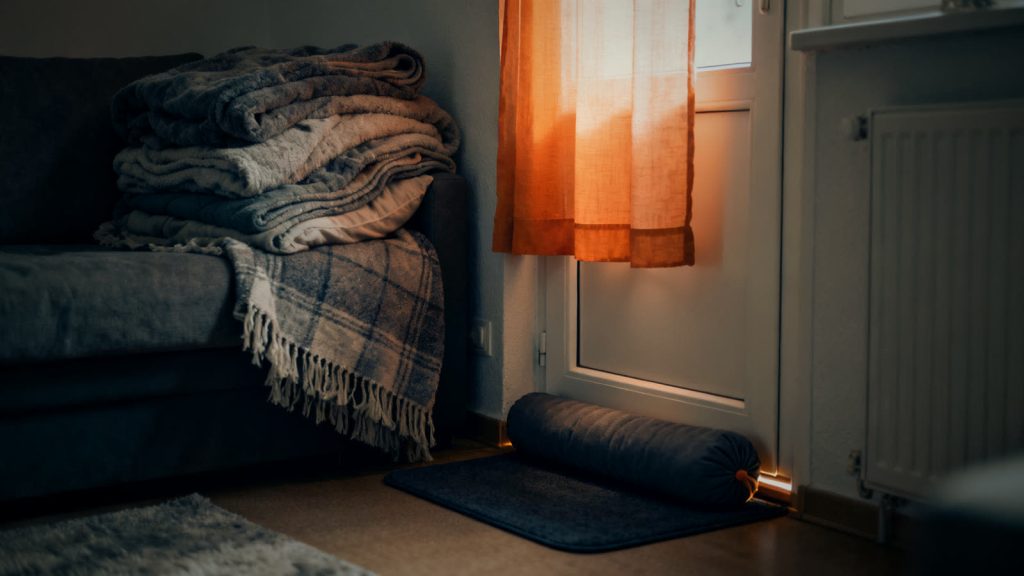
Ventilate properly – even if it’s uncomfortable
It sounds counterintuitive, but you still need to ventilate. People release moisture, and damp air feels colder and promotes mold. So air out the room briefly and thoroughly several times a day with the window wide open, rather than leaving it tilted open all the time. That way you exchange the air without chilling the walls. If you’re using candles, regular ventilation is even more essential, because flames consume oxygen.
Keep the Warmth on Your Body, Not in the Room
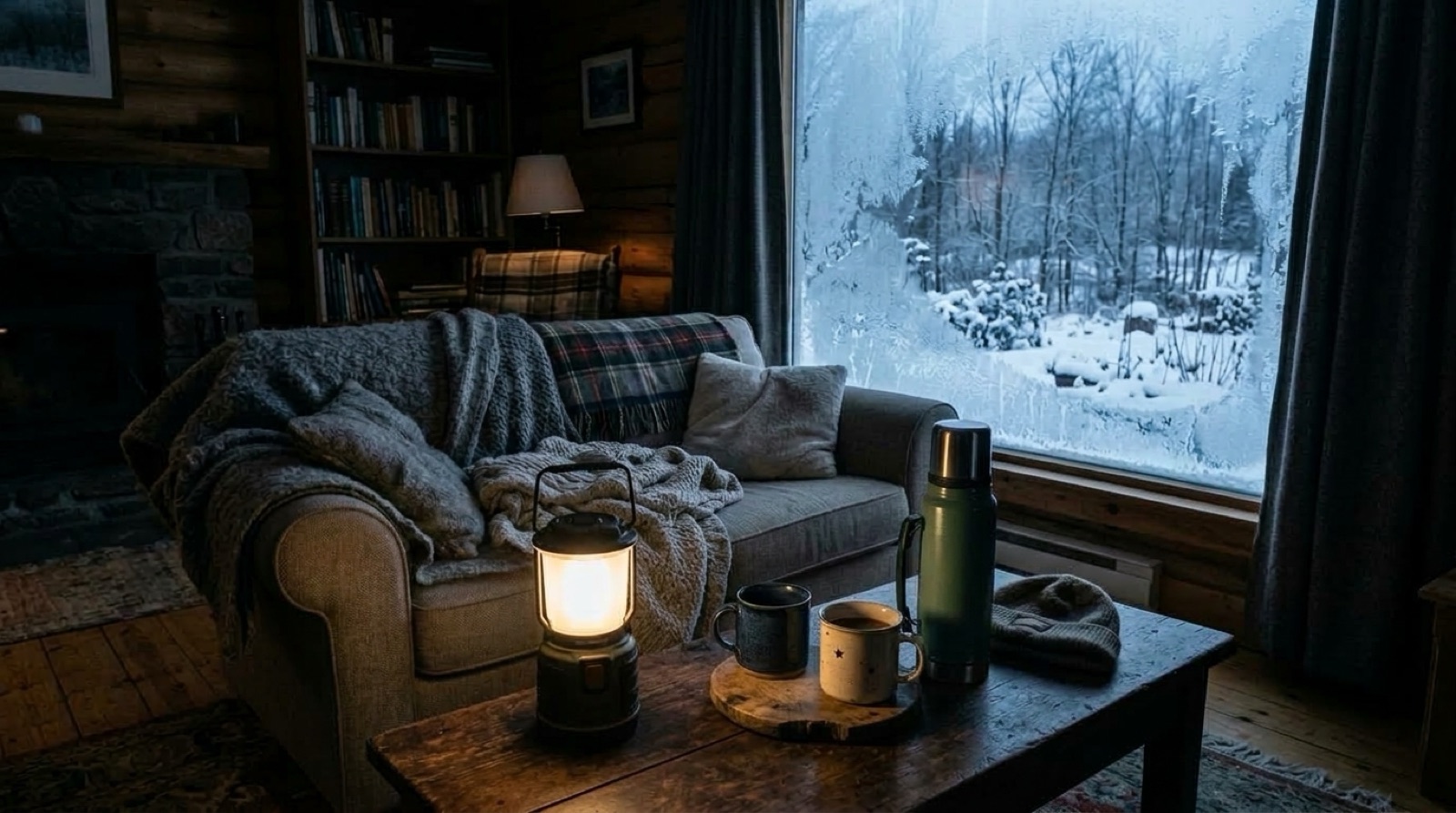
If the room won’t warm up anymore, heat yourself instead. Warm clothing in layers, a hat, thick socks and slippers make more of a difference than any degree of room temperature. A good sleeping bag turns even a cold bedroom into a bearable place to spend the night. During basic training, we drilled it into recruits again and again: if you want to stay warm, you have to stay dry and eat and drink regularly. That applies in the living room just as much as in the field.
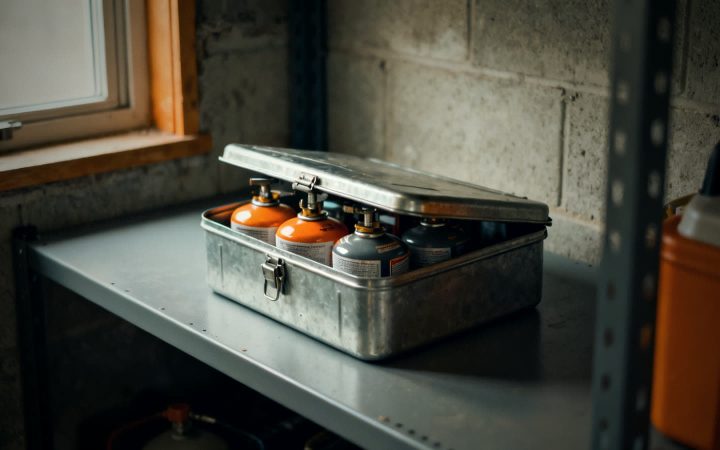
- Keep hot drinks ready in thermos flasks – boil water once on a camping stove (outdoors or on the balcony), then enjoy it for hours.
- Eat warm meals regularly, or at least energy-rich snacks.
- Light movement every now and then gets your circulation going.
- Avoid alcohol: it creates a feeling of warmth but speeds up heat loss.
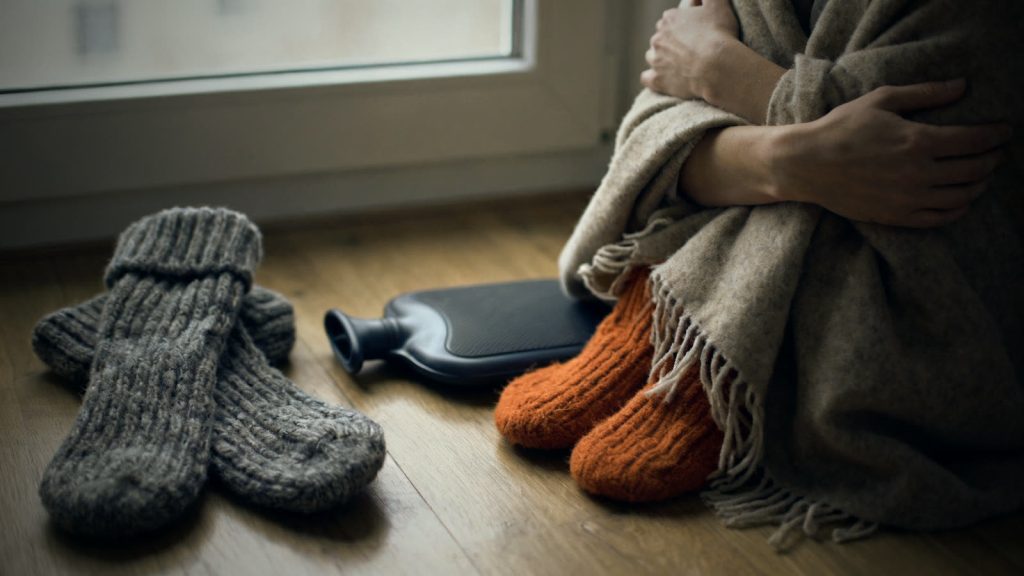
Emergency Heating: Use Common Sense
If you have a wood stove or tiled stove with a supply of fuel, you’re clearly at an advantage – provided the unit has been inspected and approved by a chimney sweep and is well maintained. Anything else is risky. Grills, fire bowls, patio heaters and outdoor gas heaters have no place indoors. They produce carbon monoxide, an invisible and odorless gas that can be deadly. Even with devices designed for indoor use, the BBK (Germany’s Federal Office of Civil Protection) advises making sure they have an oxygen depletion sensor and an ignition safety device; a carbon monoxide detector adds further safety. Our clear recommendation at LAGEBEREIT: without a permanently installed exhaust system, it’s better not to use a flame for heating. Blankets, clothing and a warm room are safer.
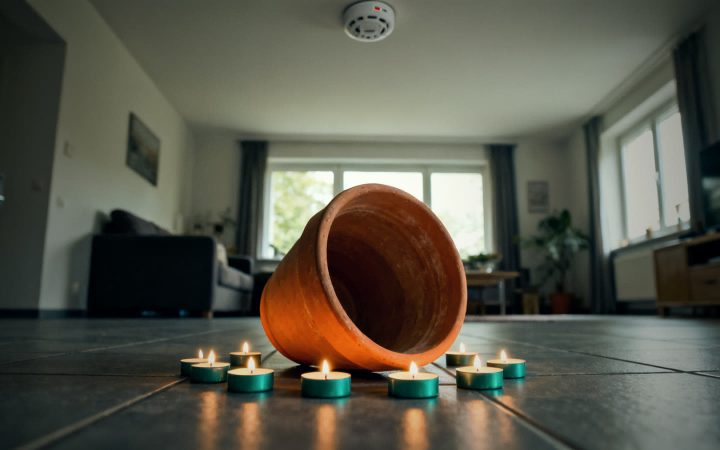
Be careful with homemade tea light heaters made from flowerpots, too. They produce hardly any noticeable heat but pose a fire hazard. If you use candles, keep them a safe distance from curtains and never leave them unattended.
Keep an Eye on Water Pipes and Your Home
During prolonged freezing temperatures, pipes in unheated rooms, basements or outdoor areas can freeze. Keep doors to these areas closed and talk to your landlord or a professional contractor early on about whether the pipes should be drained. Once the power outage is over, it’s worth doing a walk-through: is anything dripping, and is the heating working properly again?
Prepare While It’s Still Warm
The best time to prepare is summer. Get a few extra wool blankets, check that every family member has a warm sleeping bag, and think now about which room would be your warm room. Thermos flasks, a camping stove for outdoor use and a carbon monoxide detector for rooms with a fireplace or stove round things off. Also look out for your neighbors – older people who live alone in particular will appreciate a visit and a thermos of tea.
In short: Focus on one warm room and keep doors closed. Warm your body rather than the whole room – with clothing, blankets and hot drinks. No grills or outdoor heaters in your home: carbon monoxide is deadly.
Matching Gear Compared
| Produktbild bei AmazonFor mild temperaturesSportneer Deckenschlafsack | Produktbild bei AmazonLightweightSOULOUT Schlafsack | Produktbild bei AmazonWinterEXPLORER Grönland (Mumie) | |
|---|---|---|---|
| Rating | at least 4.3 out of 5 starswith 500+ customer reviews (our selection criterion)See current reviews* | at least 4.3 out of 5 starswith 500+ customer reviews (our selection criterion)See current reviews* | at least 4.3 out of 5 starswith 500+ customer reviews (our selection criterion)See current reviews* |
| Features |
|
|
|
| Pros |
|
|
|
| Cons |
|
|
|
| View on Amazon* | View on Amazon* | View on Amazon* |
Selected by manufacturer data and customer reviews (at least 4.3 stars with 500+ reviews). We only show exact star ratings when they come from Amazon the same day. As of 04.10.2026. Not tested by us. Current prices and reviews are on Amazon. *Ad · paid link
| Produktbild bei AmazonWith displayX-Sense CO-Melder | Produktbild bei AmazonBrand-name manufacturerABUS COWM510 | Produktbild bei AmazonAlso mobileFireAngel FA6812 | |
|---|---|---|---|
| Rating | at least 4.3 out of 5 starswith 500+ customer reviews (our selection criterion)See current reviews* | at least 4.3 out of 5 starswith 500+ customer reviews (our selection criterion)See current reviews* | at least 4.3 out of 5 starswith 500+ customer reviews (our selection criterion)See current reviews* |
| Features |
|
|
|
| Pros |
|
|
|
| Cons |
|
|
|
| View on Amazon* | View on Amazon* | View on Amazon* |
Selected by manufacturer data and customer reviews (at least 4.3 stars with 500+ reviews). We only show exact star ratings when they come from Amazon the same day. As of 04.10.2026. Not tested by us. Current prices and reviews are on Amazon. *Ad · paid link
Conclusion: our product picks
Sleeping Bags Compared
When the heating fails in winter, comfort rating is what counts – here, the EXPLORER Greenland is the only choice in this comparison. The two rectangular sleeping bags are suitable for spring through fall and as an extra blanket.
CO Detectors Compared
Anyone heating or cooking with gas, wood, or coal in an emergency needs a CO detector – carbon monoxide has no smell. For home use, we recommend the X-Sense; for campers and travel trailers, the FireAngel FA6812.
Links marked with * are advertising links. As an Amazon Associate I earn from qualifying purchases.
Sources and further information
- BBK (Germany’s Federal Office of Civil Protection and Disaster Assistance) – Power outage preparedness and what to do
- BBK – Guide to emergency preparedness and how to act in emergencies
- DRK (German Red Cross) – Watch for hypothermia during prolonged cold
- BfR (German Federal Institute for Risk Assessment) – Carbon monoxide: the invisible danger when heating with wood
General information, no substitute for individual advice from authorities, emergency services or medical professionals. In an emergency in Europe: 112.