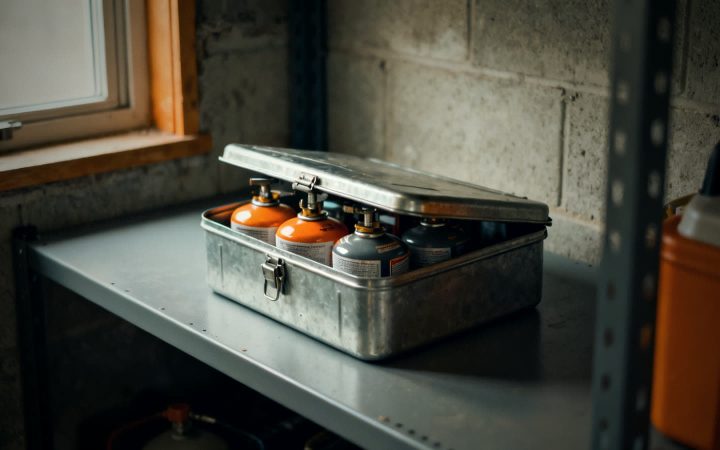
When the heating fails during a winter power outage, the temptation is strong: the gas grill from the balcony, the heater from the camper van, or the generator in the garage. This is exactly where one of the biggest dangers in an emergency lurks – and it is completely unspectacular. No bang, no smoke, no smell. Carbon monoxide, or CO for short, gives no sign of itself until it may be too late. That is why this topic belongs at the start of any planning for heating and cooking without power.
What is carbon monoxide?
Carbon monoxide is produced by the incomplete combustion of wood, coal, gas, heating oil, or gasoline – in other words, whenever a flame does not get enough oxygen or an appliance is not working properly. The gas is colorless, odorless, and tasteless, and it can build up quickly in enclosed spaces. According to the German Fire Brigade Association (Deutscher Feuerwehrverband), it can even pass through walls and ceilings into neighboring rooms.
In the body, CO displaces oxygen: it binds to the red blood pigment hemoglobin, and much more strongly than oxygen does. The blood can then no longer carry enough oxygen. The BfR (Germany’s Federal Institute for Risk Assessment) reports several thousand poisoning cases per year in Germany, including several hundred deaths.
Typical causes in an emergency
- Charcoal and gas grills used indoors, in a tent, in a caravan, or in the garage.
- Gas heaters or patio heaters that are designed for outdoor use.
- Fuel-powered generators in a basement, in a garage, or close to windows.
- Wood stoves with a blocked flue, poor draft, or too little combustion air.
- Gas boilers with faulty exhaust venting.
The BfR explicitly names emergency generators, gas-powered heaters, and charcoal grills as sources of danger when they are used indoors. Our rule at LAGEBEREIT is therefore simple: if it was built for outdoors, it stays outdoors. An open window or a door left ajar does not change that.
Recognizing the signs
Mild poisoning starts inconspicuously. Typical symptoms are headache, dizziness, and nausea. The tricky part: these symptoms are easily mistaken for a cold, tiredness, or an upset stomach. At higher concentrations, drowsiness, cramps, and loss of consciousness follow, and in the worst case death. The night is especially dangerous, because when you are asleep, no one notices the first symptoms.
One clue that should make you suspicious: several people in the same room get headaches or nausea at the same time, and it gets better outside in the fresh air. Pets that suddenly seem listless can also be a warning sign.
What to do if you suspect CO poisoning
- Stay calm and don’t wait.
- Open windows and doors wide, as long as you can do so quickly and safely.
- Shut off the possible source if you can do so without delay – close gas appliances at the valve.
- Leave the room immediately and take everyone else in the household as well as pets with you.
- Once outside, call the emergency number 112, especially if someone is confused or unconscious or has severe symptoms. For mild symptoms, a poison control center can also advise you.
- Do not go back into the room until the fire department or qualified professionals give the all-clear.
In basic training, we learned that in a dangerous situation your own safety comes first. That applies here too: anyone who tries to pull unconscious people out of a room puts themselves in danger. If you can’t act quickly and safely, alert the fire department.
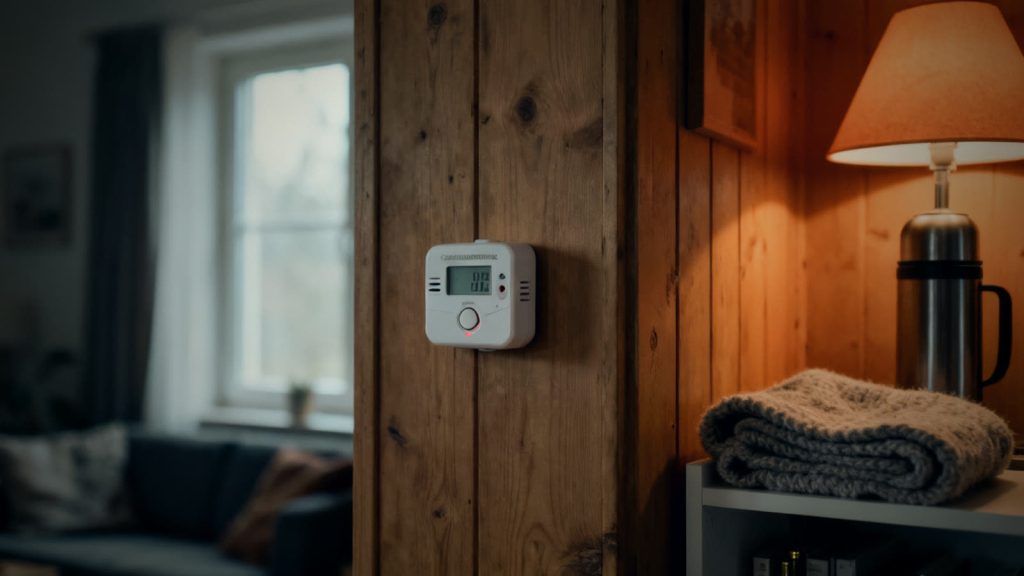
Carbon Monoxide Detectors: A Small Investment That Makes a Big Difference
A smoke detector can’t detect carbon monoxide. For that, you need a separate carbon monoxide (CO) detector. When you buy one, look for the EN 50291 standard. The Deutscher Feuerwehrverband (German Fire Brigades Association) recommends installing detectors in rooms with fuel-burning appliances as well as in sleeping and living areas. Unlike smoke detectors, CO detectors are usually mounted on the wall at about breathing height. However, the manufacturer’s installation instructions take priority, and your chimney sweep will gladly advise you as well. CO detectors have a limited service life – the replacement date is printed on the device.
Heating and Cooking Safely Without Power
- Only use fireplaces and tiled stoves if they have been approved by a chimney sweep and are serviced regularly.
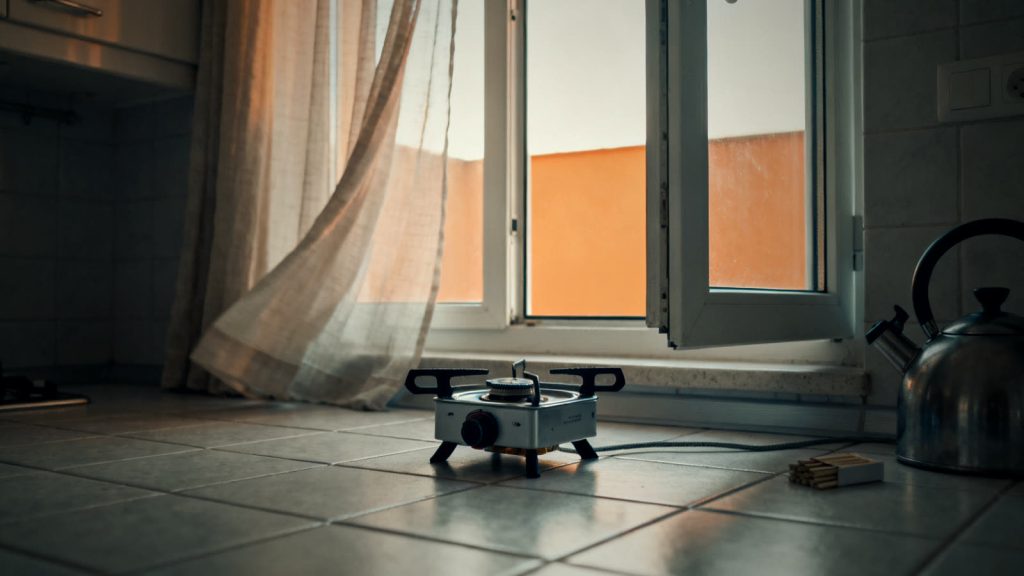
- Only use camping stoves, grills, and gas burners outdoors – and keep them away from windows and ventilation openings.
- Run generators outdoors only, at a safe distance from the house. A quiet portable power station with a battery, on the other hand, produces no exhaust fumes.
- It’s better to conserve heat than to generate it: a single warm room, blankets, and warm clothing are the safest emergency heating.
Prevention Is Easier Than Rescue
The most effective protection happens long before an emergency. Have your heating system, gas boiler, and wood stove inspected and serviced regularly by a chimney sweep, as the fire brigades association and the BfR (Germany’s Federal Institute for Risk Assessment) recommend. If you have fuel-burning appliances that draw air from the room, check whether enough combustion air can flow in – for example, after new, airtight windows have been installed or a range hood has been retrofitted. And talk with everyone in your household about what a CO alarm means: don’t switch it off and go back to sleep – get out into fresh air.
In short: Carbon monoxide is invisible, odorless, and can be deadly. Grills, patio heaters, and generators never belong indoors. A CO detector certified to EN 50291 belongs in every home with a fuel-burning appliance.
Recommended Gear Compared
| Produktbild bei AmazonWith displayX-Sense CO-Melder | Produktbild bei AmazonBrand-name manufacturerABUS COWM510 | Produktbild bei AmazonAlso mobileFireAngel FA6812 | |
|---|---|---|---|
| Rating | at least 4.3 out of 5 starswith 500+ customer reviews (our selection criterion)See current reviews* | at least 4.3 out of 5 starswith 500+ customer reviews (our selection criterion)See current reviews* | at least 4.3 out of 5 starswith 500+ customer reviews (our selection criterion)See current reviews* |
| Features |
|
|
|
| Pros |
|
|
|
| Cons |
|
|
|
| View on Amazon* | View on Amazon* | View on Amazon* |
Selected by manufacturer data and customer reviews (at least 4.3 stars with 500+ reviews). We only show exact star ratings when they come from Amazon the same day. As of 04.10.2026. Not tested by us. Current prices and reviews are on Amazon. *Ad · paid link
Conclusion: our product picks
CO Detectors Compared
Anyone heating or cooking with gas, wood, or coal in an emergency needs a CO detector – carbon monoxide has no smell. For home use, we recommend the X-Sense; for campers and travel trailers, the FireAngel FA6812.
Links marked with * are advertising links. As an Amazon Associate I earn from qualifying purchases.
Sources and Further Information
- BfR – Carbon Monoxide: The Invisible Danger When Heating with Wood
- Deutscher Feuerwehrverband – Installing CO Detectors
- Deutscher Feuerwehrverband – Carbon Monoxide Risks During the Heating Season
- BBK (Germany’s Federal Office of Civil Protection and Disaster Assistance) – Preparing for and Responding to a Power Outage
General information, no substitute for individual advice from authorities, emergency services or medical professionals. In an emergency in Europe: 112.