A house fire is one of those risks that can affect anyone, regardless of weather, location, or major crises. At the same time, it is one of the risks where you can do a great deal with relatively little effort. Three building blocks make the difference: getting warned in time, being able to put out a small fire before it spreads, and knowing how to get out safely.
The Real Danger Is the Smoke
Many people picture fires mainly as flames. But the smoke is usually more dangerous. Fire smoke contains toxic gases that can make you lose consciousness after just a few breaths. This is especially treacherous at night: when you’re asleep, you can’t smell smoke. That’s exactly why smoke alarms are so important – they are your sense of smell while you sleep.
Building Block 1: Smoke Alarms
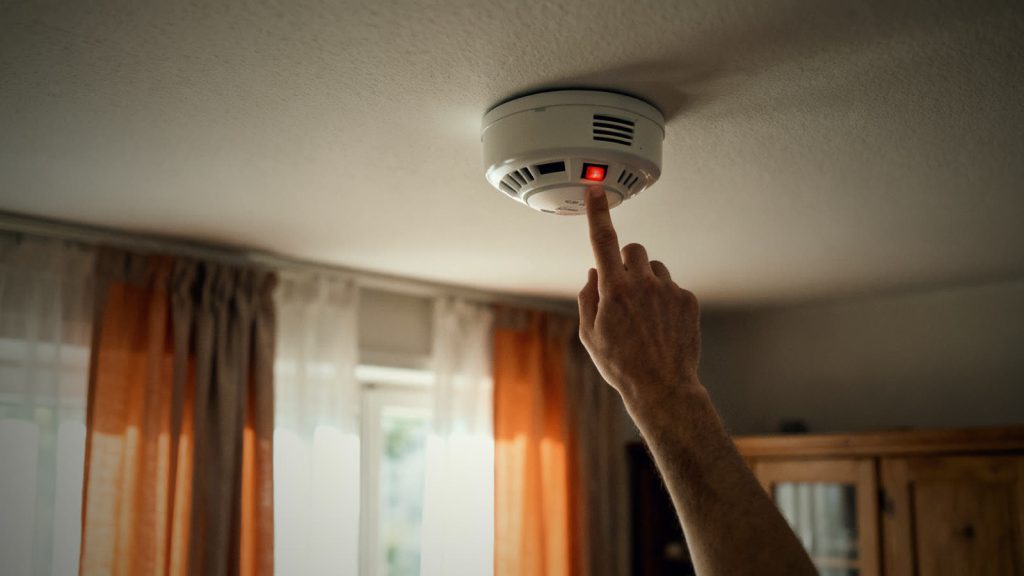
In Germany, smoke alarms are mandatory in all 16 federal states, for rental apartments and owner-occupied homes alike. As a rule, the minimum requirement is to equip bedrooms, children’s rooms, and hallways that serve as escape routes. Some states require more. Who is responsible for installation and maintenance is regulated differently by each state’s building code – if you rent, it’s worth checking your documents or asking your landlord.
Here is what to look out for:
- Mount on the ceiling, ideally in the center of the room, because smoke rises.
- Not in the kitchen or bathroom – steam easily triggers false alarms there. There are special solutions for kitchens, such as heat detectors.
- Tested quality: Look for the DIN EN 14604 standard. The additional Q label marks devices with enhanced reliability and a permanently installed long-life battery.
- Test regularly using the test button, and keep the smoke inlet openings clear.
- Replace after about ten years – the electronics deteriorate over time.
Worth doing beyond the legal requirement: install smoke alarms in the living room, basement, and attic as well. If you use a wood stove, you should also consider a carbon monoxide detector, because smoke alarms cannot detect this odorless gas. For people with hearing impairments, there are alarms with strobe lights or vibrating pillow pads.
Step 2: Fire Extinguisher and Fire Blanket
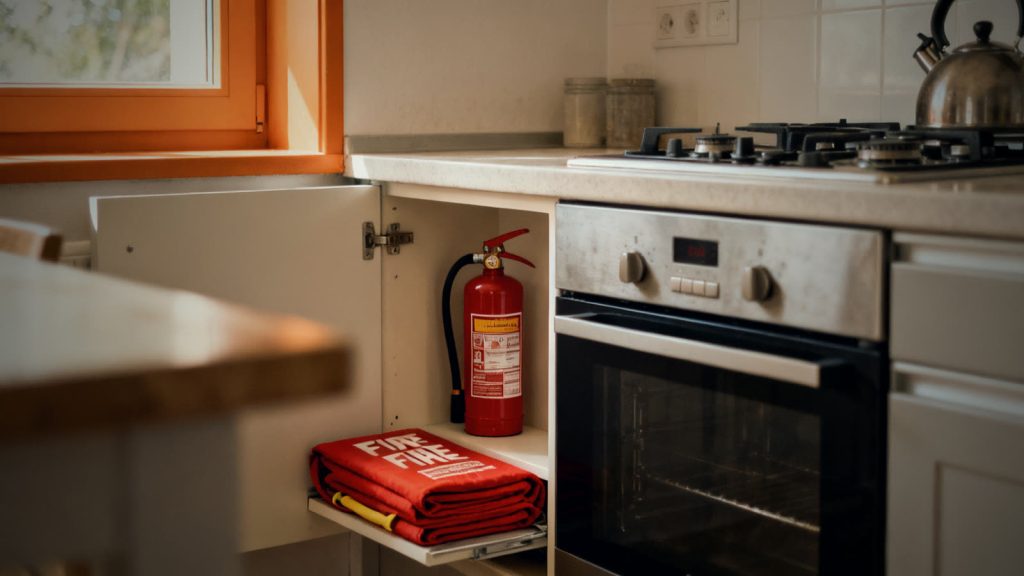
A fire extinguisher is meant for an incipient fire – that is, a fire that is just starting. Foam extinguishers have proven their worth for home use. Units rated for fire classes A, B, and F are especially versatile: they work on solid materials such as wood and textiles, on burning liquids, and on cooking grease and oil fires in the kitchen. Dry powder extinguishers do put fires out effectively, but the fine powder often causes significant damage to your home afterward.
Important: Fire extinguishers should be serviced by a professional every two years. Mount the extinguisher where it is clearly visible and easy to reach, for example in the hallway near the kitchen or by the front door of your home.
A fire blanket is a good addition, for example for a small fire in a wastebasket or for burning clothing.
Special Case: Grease Fires
You should never put out burning grease or oil with water. The water instantly turns to steam and throws burning grease into the room in an explosive burst. Instead, turn off the stove, smother the flames with a fitting lid, or use a grease fire extinguisher. Leave the room if you can’t smother the fire right away.
Step 3: Your Escape Route
The BBK (Germany’s Federal Office of Civil Protection and Disaster Assistance) stresses: only try to put out a fire if you won’t put yourself in danger. Once a fire is no longer small, your safety comes first. That’s why you need a fire escape plan before a fire starts.
- Know two ways out: How do you get out of each room? Is there a second way out, such as through a window or onto a balcony, where the fire department can reach you?
- Keep escape routes clear: No boxes, shoe racks, or strollers in the stairwell.
- Keep your keys ready: Your apartment key belongs in a fixed spot near the door.
- Agree on a meeting point: A spot outside the building where everyone gathers – that way you can quickly tell if someone is missing.
- Practice once: Walk the route together, including with children. During my training, we didn’t run alarm drills for fun, but because only practiced routines work under stress.
If There’s a Fire
- Warn others and leave your home.
- Close the doors behind you, but don’t lock them – this slows the spread of fire and smoke.
- Don’t enter rooms filled with smoke. If there’s smoke in the hallway, stay low or crawl, because the air near the floor stays breathable the longest.
- Call 112 (emergency number): Say where the fire is, what happened, and how many people are affected, and wait for follow-up questions.
- If the stairwell is filled with smoke, stay in your apartment, close the door, seal it with wet towels, and signal for help at the window.
- Don’t use the elevator.
Prevention Is the Best Fire Protection
Many fires start through carelessness: unattended candles, pots forgotten on the stove, overloaded power strips, or batteries charging unattended on flammable surfaces. Being mindful of these things prevents a large share of the danger.
In short: Smoke alarms in bedrooms, children’s rooms, and hallways are mandatory and save lives. A well-maintained foam extinguisher helps with an incipient fire, and you should never put out grease fires with water. Know two escape routes, keep them clear, and practice them together.
Matching Gear Compared
| Produktbild bei AmazonNo Drilling RequiredPYREXX PX-1 | Produktbild bei AmazonTop RatedEi Electronics Ei650 | Produktbild bei AmazonWith App-Based InspectionHekatron Genius Plus | |
|---|---|---|---|
| Rating | at least 4.3 out of 5 starswith 500+ customer reviews (our selection criterion)See current reviews* | at least 4.3 out of 5 starswith 500+ customer reviews (our selection criterion)See current reviews* | at least 4.3 out of 5 starswith 500+ customer reviews (our selection criterion)See current reviews* |
| Features |
|
|
|
| Pros |
|
|
|
| Cons |
|
|
|
| View on Amazon* | View on Amazon* | View on Amazon* |
Selected by manufacturer data and customer reviews (at least 4.3 stars with 500+ reviews). We only show exact star ratings when they come from Amazon the same day. As of 04.10.2026. Not tested by us. Current prices and reviews are on Amazon. *Ad · paid link
Conclusion: our product picks
Smoke Detectors Compared
All three are solid detectors with a 10-year battery. The Ei650 is the proven standard, the Hekatron Genius Plus is worth it if you want to document maintenance. For rental apartments without drilling, the PYREXX PX-1 is the right fit.
Links marked with * are advertising links. As an Amazon Associate I earn from qualifying purchases.
Sources and Further Reading
General information, no substitute for individual advice from authorities, emergency services or medical professionals. In an emergency in Europe: 112.