A 10-day emergency food supply you put together yourself at the supermarket, water included, costs less than 10 euros per day, or under 100 euros per person. Ready-made emergency kits from online shops, on the other hand, cost an average of 23.33 euros per day. The difference comes mainly from the water and the way the kits are put together.
As part of a market check, the Verbraucherzentrale Sachsen (the Saxony consumer advice center) examined 14 different online shops selling emergency kits and compared them with a self-assembled supply. The result: if you shop for it yourself, you save a significant amount – without giving up quality.
Emergency Food Supply Cost: DIY or Ready-Made Kit?
An individually assembled 10-day emergency supply from the supermarket, water included, costs less than 10 euros per day and person. Ready-made kits from online shops, by contrast, cost an average of 23.33 euros per day, and the most expensive option tested came in at up to 50 euros per day. According to the Verbraucherzentrale Sachsen, ready-made kits are often twice as expensive as a supply you put together yourself.
If you have to decide between buying an emergency kit and building your own supply, you should know what the extra cost actually pays for – and whether it’s worth it. The answer from the market check is clear: in most cases, the extra cost isn’t worth it.
Why Ready-Made Kits Cost More
Water is a major cost driver. Drinking water in special emergency pouches costs between 2.95 and 8.10 euros per liter, while bottled mineral water at the supermarket costs less than 1 euro per liter. At 20 liters per person for 10 days, that makes a considerable difference. You can read more in the article How Much Drinking Water Do I Need in an Emergency?
On top of that, none of the ready-made kits tested reached the recommended 2,200 kilocalories per day, especially the vegetarian and vegan versions. In addition, many ready-made kits contain too much meat and too little fruit and vegetables. So if you pay a lot, you don’t automatically get a balanced supply.
Bisphenols in Long-Life Canned Food
Another point from the market check: the long-life canned foods tested contained BPA, or bisphenols. None of the products carried a “bisphenol-free” label. This is no reason to panic, but it is an argument against assuming that cans from the regular supermarket shelf are generally worse than expensive specialty products. What matters more is how your entire supply is put together, rather than where individual cans come from.
If you’re unsure how long individual products actually last and what to watch out for when storing them, you’ll find an overview in the article Foods With a Long Shelf Life.
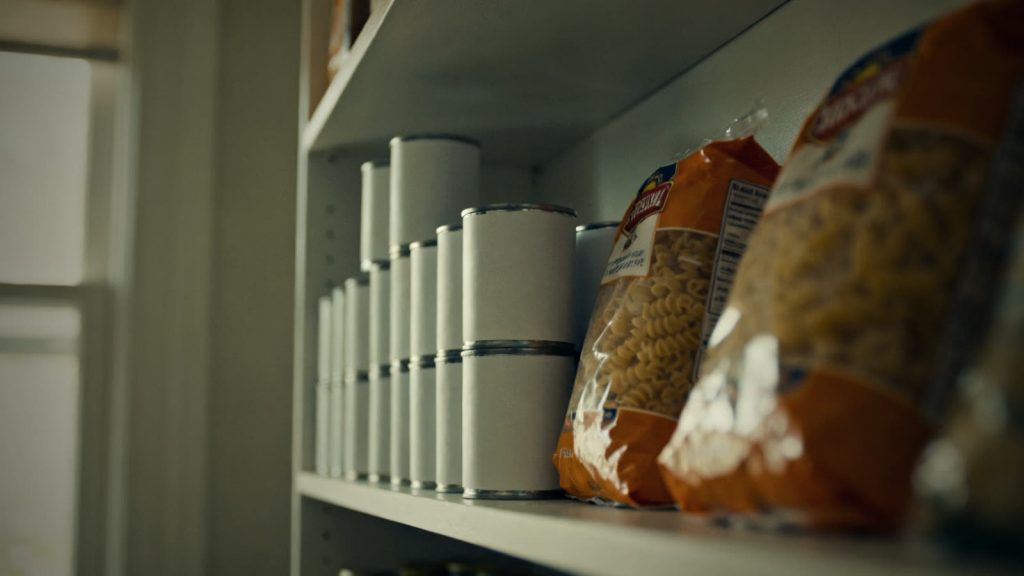
What Belongs in a 10-Day Emergency Supply?
The BBK (Germany’s Federal Office of Civil Protection and Disaster Assistance) recommends being able to provide for yourself for 10 days if possible. The BBK doesn’t give specific quantities per food item, but it points to the stockpile calculator from the Bundesanstalt für Landwirtschaft und Ernährung (Germany’s Federal Office for Agriculture and Food). Among other foods, the BBK recommends:
- Dried fruit
- Canned fruit, vegetables, meat, or fish
- Dried meat and dry sausage
- Nuts
- Rusks
The stockpile calculator assumes 2,200 kilocalories per person per day and gives the following daily amounts: 0.33 kg of grain products, bread, or potatoes, 0.40 kg of vegetables or mushrooms, 0.25 kg of fruit, 0.25 kg of milk or dairy products, 0.12 kg of eggs, meat, sausage, or fish, and 33 grams of fats or oil – each per day. You’ll find a detailed overview in the article The 10-Day Emergency Food Supply According to BBK Recommendations.
These amounts are deliberately calculated in a sober way and are based on what a household regularly uses anyway. That makes putting it into practice easier than it might first sound: it’s not about exotic specialty products, but about staple foods in somewhat larger quantities.
Planning Your Water Needs Correctly
The BBK (Germany’s Federal Office of Civil Protection and Disaster Assistance) recommends at least 1.5 liters of fluid per person per day for drinking, plus 0.5 liters for cooking. Over 10 days, that comes to about 20 liters per person. The supply calculator uses the same total of 2.0 liters per day, made up of drinking and cooking water. For seniors aged 65 and older, an increased need of 2 liters per day for drinking alone is assumed, while about 1 liter per day is enough for children up to 12 years old.
Water is the biggest item in your storage room, but also the cheapest if you rely on regular bottled water or properly stored tap water instead of expensive emergency pouches. You can find out how to store it correctly in the article How to Store Drinking Water Properly.
Building an Emergency Food Supply on a Budget: Practical Tips
If you want to build an emergency food supply on a budget, it’s best to spread your purchases over several shopping trips and buy shelf-stable staples that your household already uses. That turns your stockpile into a rotating supply that is used and replenished regularly, so nothing goes bad unused in the basement. Read more in the article Rotating Your Food Stockpile: The “Living Supply” Principle.
Another cost factor is timing. If you shop right before an acute warning situation, you often pay more because popular products become scarce. If you instead shop over several weeks, you can take advantage of sales and spread the expense across your normal household budget instead of feeling it all at once.
Is a Fixed Shopping List Worth It?
A written list helps you avoid forgetting items while shopping and prevents duplicate purchases. Use the quantities from the supply calculator as a guide and add whatever your family actually eats. This keeps the total cost down, because nothing is bought unnecessarily or left unused and ends up in the trash.
It also makes sense to organize the list by category: grain products, canned vegetables and fruit, dairy products with a long shelf life, protein sources, and fats and oils. If you also need to provide for pets, you’ll find helpful advice in the article Emergency Supplies for Pets.
Frequently Asked Questions
How much does a 10-day emergency supply cost per person?
A 10-day supply you put together yourself at the supermarket, including water, costs less than 10 euros per day, so under 100 euros per person.
Are ready-made emergency kits worth the money?
Ready-made kits cost an average of 23.33 euros per day, and sometimes up to 50 euros. None of the kits tested reached the recommended 2,200 kilocalories per day, and the contents were often unbalanced, with too much meat and too little fruit and vegetables.
Why is water from emergency pouches so expensive?
Drinking water in special emergency pouches costs between 2.95 and 8.10 euros per liter, while regular bottled water at the supermarket costs less than 1 euro per liter.
How much water do I need for 10 days?
The BBK recommends at least 1.5 liters for drinking and 0.5 liters for cooking per person per day, which adds up to about 20 liters for 10 days.
Is canned food from the supermarket safe?
A market check found bisphenols even in expensive long-life canned food, and none of the tested products were labeled as bisphenol-free. That means regular supermarket cans are not automatically a worse choice.
Your Next Steps
Create a list based on the supply calculator, following the quantities for grain products, vegetables, fruit, dairy products, protein sources, and fats. Spread your purchases over several shopping trips and buy shelf-stable foods you already eat. Plan on 20 liters of water per person for 10 days and store it properly. That way, the cost of your emergency supply stays manageable, and you don’t have to resort to expensive ready-made kits.
Sources and further information
- Market check: emergency supplies – Verbraucherzentrale Sachsen (Saxony Consumer Advice Center)
- Press release on the market check – Verbraucherzentrale Sachsen
- Stockpiling – Bundesamt für Bevölkerungsschutz und Katastrophenhilfe (BBK, Germany’s Federal Office of Civil Protection and Disaster Assistance)
- Emergency food supply calculator – Ernaehrungsvorsorge.de
General information, no substitute for individual advice from authorities, emergency services or medical professionals. In an emergency in Europe: 112.