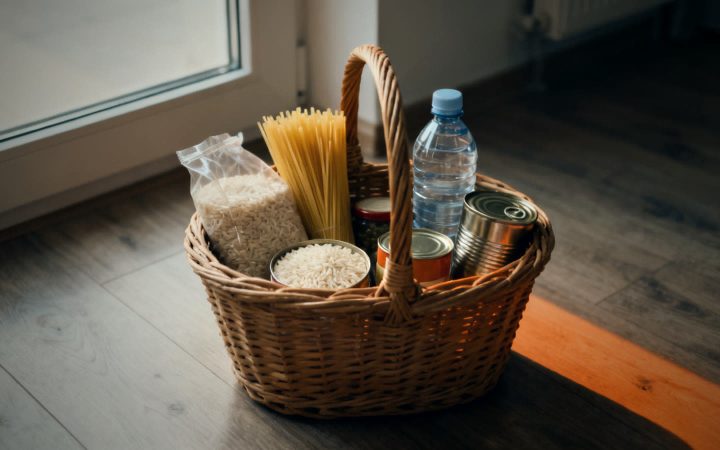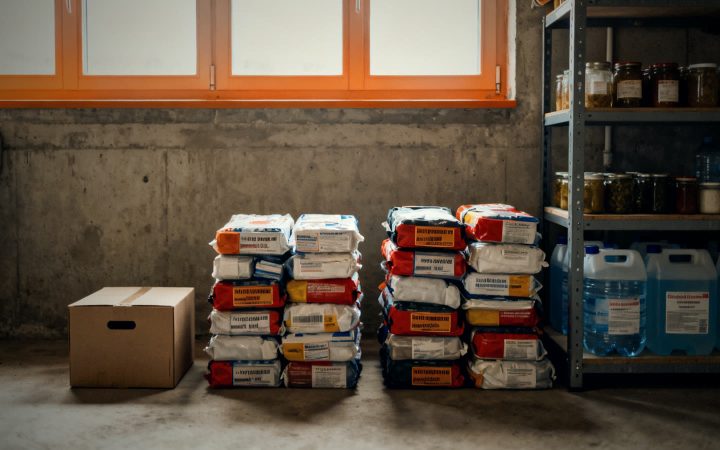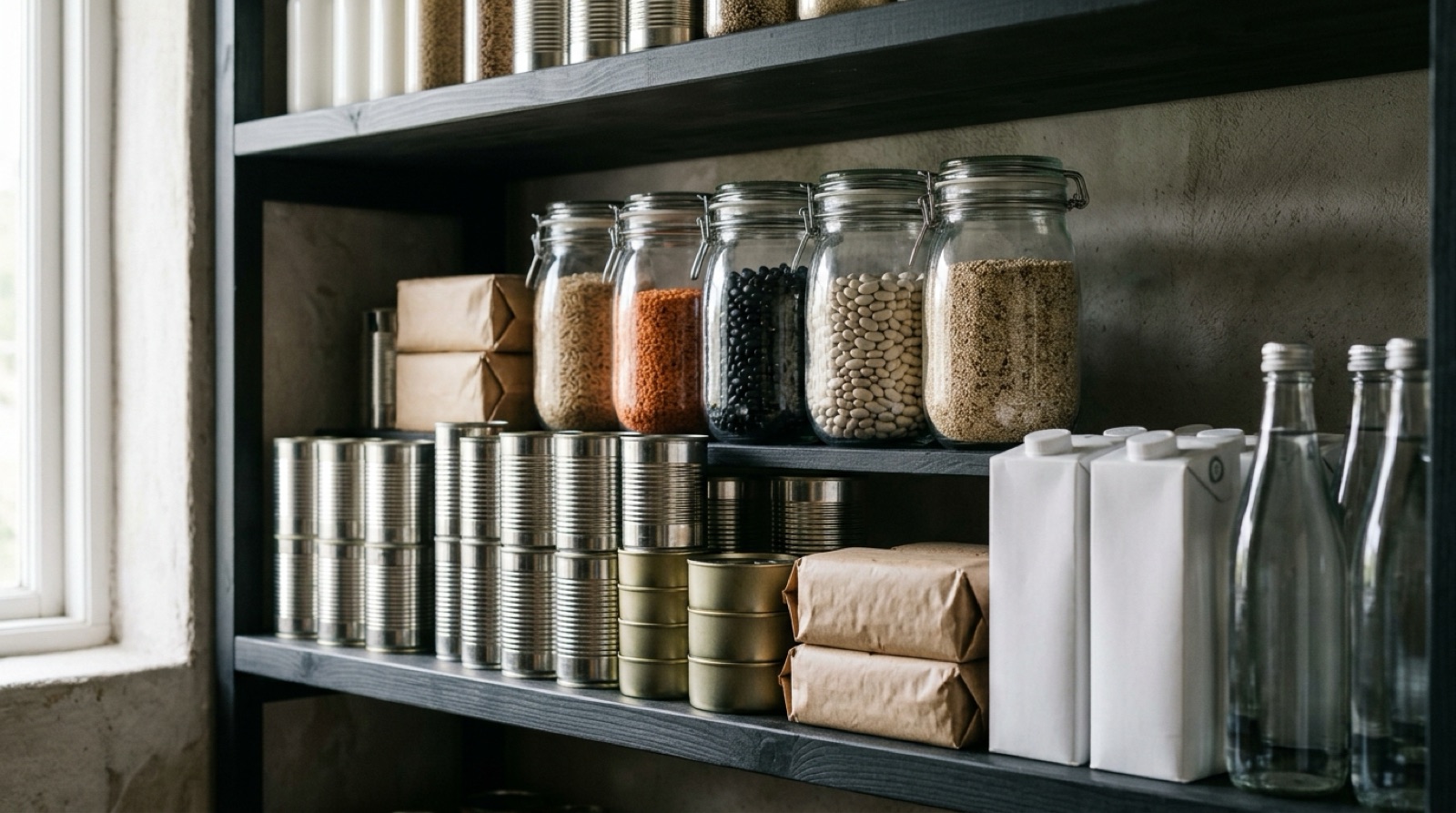
Ten days of self-sufficiency – that is the recommendation of the BBK (Germany’s Federal Office of Civil Protection and Disaster Assistance) for every household in Germany. The reasoning behind it is sober: during a widespread power outage, flooding, or another disruption, supermarkets may be closed, supply chains may stall, and emergency services need time to reach everyone. If you can bridge a few days on your own, you relieve both yourself and the responders. And even a three-day supply is a good start, according to the BBK.
The basis: around 2,200 kilocalories per day
The quantity recommendations from the BBK and the BLE (Germany’s Federal Office for Agriculture and Food) assume that an adult needs about 2,200 kilocalories per day on average. That covers normal needs. Frozen food is deliberately left out of the sample lists, because it thaws quickly during a power outage.
Quantities for one person and ten days
The BBK checklist gives the following guideline amounts for one adult:
- Beverages: 20 liters (water for drinking and cooking; juices count too)
- Grains, bread, potatoes, pasta, rice: 3.5 kg
- Vegetables and legumes: 4.0 kg
- Fruit and nuts: 2.5 kg
- Milk and dairy products: 2.6 kg
- Fish, meat, eggs: 1.5 kg
- Fats and oils: about 0.36 kg
- Other items as needed: for example sugar, honey, jam, salt, spices, broth, cocoa, ready-made meals
For a household with several people, simply multiply. For children, older adults, or very active adults, needs differ – the supply calculator at ernaehrungsvorsorge.de helps you work out individual quantities, including a vegetarian version.
What works in practice
The lists are a framework, not a shopping list you have to follow to the letter. We recommend choosing food based on three criteria, which the BBK also names:
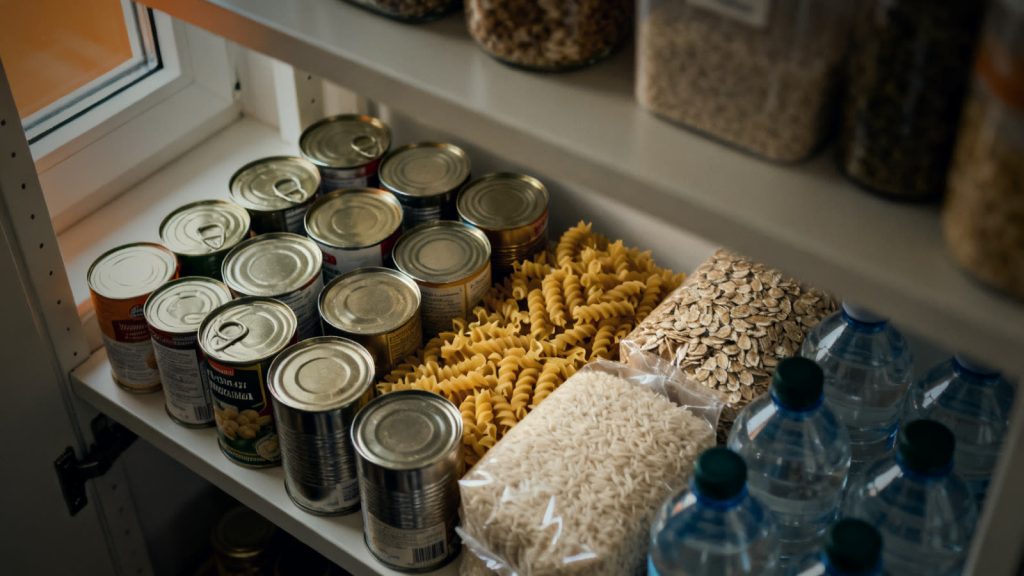
- Shelf-stable without refrigeration: canned food, dried products, UHT milk, hard cheese, rusks, crispbread.
- Ready to eat or quick to cook: food you can eat cold or that only needs brief heating.
- Little energy needed for preparation: Dried beans need long cooking times. Lentils, couscous, instant oats, or canned vegetables use less fuel.
Examples by group
- Grains: crispbread, rusks, oats, pasta, rice, couscous, instant mashed potato flakes
- Vegetables: canned or jarred beans, peas, corn, carrots, and lentils; dried red lentils
- Fruit: canned fruit, applesauce, dried fruit, nuts
- Dairy: UHT milk, powdered milk, hard cheese in one piece
- Protein: canned fish and meat, dry sausage; for vegetarians, extra legumes and nut butter
- Fats: cooking oil, peanut butter
In basic training, everyone learns that a hot meal is more than calories – it keeps morale up. So plan for things you enjoy, too: coffee, tea, chocolate, a favorite canned dish.
Common mistakes
- Buying only pasta and rice: It fills you up, but without water, fuel, and variety, things get difficult quickly. Aim for a mix from all the groups.
- Buying things nobody eats: A supply that is never touched in everyday life will eventually spoil. Buy what already turns up in your kitchen.
- Forgetting the can opener: It sounds trivial, but it happens. A manual can opener belongs in every emergency supply.
- Overlooking a way to cook: Without electricity, you need a safe alternative. Read more in our article “Cooking Without Power.”
Special Needs
The BBK (Germany’s Federal Office of Civil Protection) reminds you to also consider allergies, food intolerances, and special dietary requirements. For infants, your emergency food supply should include baby food along with suitable water, and for toddlers, familiar foods. If you depend on a special diet, it’s best to talk through your supply with your doctor. And don’t forget your pets – we have a separate article on that.
Buy It All at Once or Build Gradually?
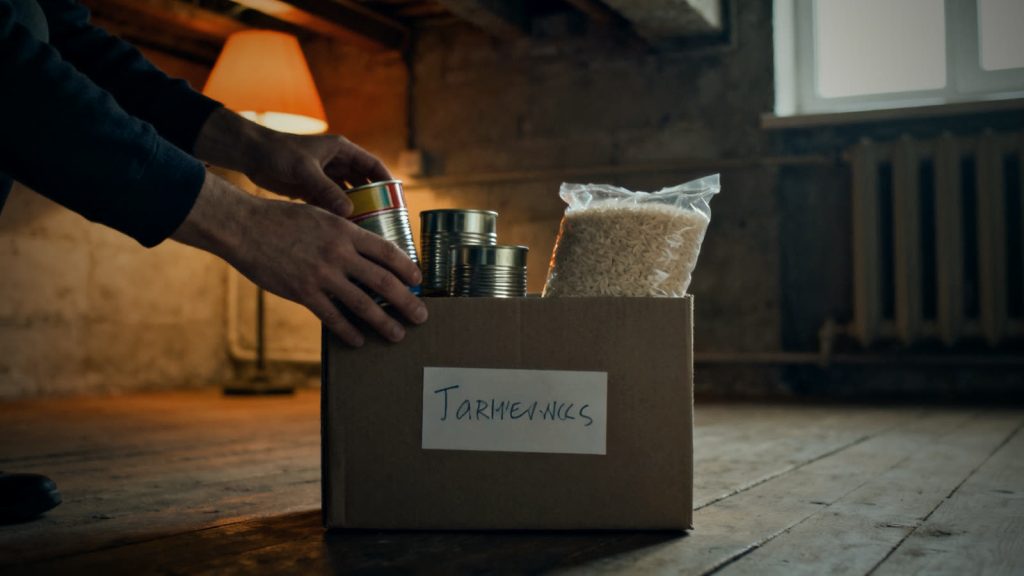
The BBK describes two approaches. You can stock up all at once and then check expiration dates regularly, for example once a year. Or you can build a “living pantry”: each time you shop, you pick up one or two extra items and use the oldest ones first. For most households, a combination works best – a basic stock bought all at once, which then rotates through your everyday cooking.
Where to Store Everything
Cool, dry, and dark is ideal. A shelf in the basement, a cupboard in the hallway, or a box under the bed will do. Dry goods like flour, rice, and oats are best stored in airtight containers, which protect against moisture and pantry pests.
Your Start in Three Stages
If the list seems too big, break it up. Stage one: water and ready-to-eat food for three days. Stage two: increase to seven days and get a way to cook without electricity. Stage three: the full amount for ten days, plus hygiene items, medications after consulting your doctor or pharmacist, and pet supplies. Each stage makes you a little more self-reliant.
In short: The BBK recommends a ten-day supply based on roughly 2,200 kilocalories per person per day. For this, one person needs, among other things, 20 liters of beverages, 3.5 kg of grain products, and 4 kg of vegetables. Buy what you already eat, and use the oldest items first.
Matching Gear Compared
| Produktbild bei AmazonSmall starter setViwares Vorratsdosen 12er-Set | Produktbild bei AmazonAll-rounder with labelsGoMaihe Vorratsdosen 24er-Set | Produktbild bei AmazonWith large 2.8-liter containersLONGANCHANG Vorratsdosen 25er-Set | |
|---|---|---|---|
| Rating | at least 4.3 out of 5 starswith 500+ customer reviews (our selection criterion)See current reviews* | at least 4.3 out of 5 starswith 500+ customer reviews (our selection criterion)See current reviews* | at least 4.3 out of 5 starswith 500+ customer reviews (our selection criterion)See current reviews* |
| Features |
|
|
|
| Pros |
|
|
|
| Cons |
|
|
|
| View on Amazon* | View on Amazon* | View on Amazon* |
Selected by manufacturer data and customer reviews (at least 4.3 stars with 500+ reviews). We only show exact star ratings when they come from Amazon the same day. As of 04.10.2026. Not tested by us. Current prices and reviews are on Amazon. *Ad · paid link
| Produktbild bei AmazonCompactplasteo Wasserkanister 10 l | Produktbild bei AmazonProven Classichünersdorff Wasserkanister 12 l | Produktbild bei AmazonLarge Supplyhünersdorff Wasserkanister 22 l | |
|---|---|---|---|
| Rating | at least 4.3 out of 5 starswith 500+ customer reviews (our selection criterion)See current reviews* | at least 4.3 out of 5 starswith 500+ customer reviews (our selection criterion)See current reviews* | at least 4.3 out of 5 starswith 500+ customer reviews (our selection criterion)See current reviews* |
| Features |
|
|
|
| Pros |
|
|
|
| Cons |
|
|
|
| View on Amazon* | View on Amazon* | View on Amazon* |
Selected by manufacturer data and customer reviews (at least 4.3 stars with 500+ reviews). We only show exact star ratings when they come from Amazon the same day. As of 04.10.2026. Not tested by us. Current prices and reviews are on Amazon. *Ad · paid link
Conclusion: our product picks
Comparison of Airtight Food Storage Container Sets
For storing larger quantities of flour, rice, and pasta, the LONGANCHANG 25-piece set is a good fit, with additional 2.8-liter containers. The GoMaihe 24-piece set is the all-rounder, with labels for marking expiration dates. For a small kitchen, the Viwares 12-piece set is sufficient.
Water Canisters with Spigot Compared
For home storage, 22-liter canisters are the most efficient option – one per person covers the BBK's recommended 20 liters. If you need to carry it, go with several 10- or 12-liter canisters. Store canisters in a cool, dark place and rotate the water regularly.
Links marked with * are advertising links. As an Amazon Associate I earn from qualifying purchases.
Sources and Further Information
General information, no substitute for individual advice from authorities, emergency services or medical professionals. In an emergency in Europe: 112.