If you want to check your emergency supplies, you don’t need to block out a special date on your calendar – the clock change hands you one twice a year. A short routine lets you check your food stockpile, batteries, and smoke detectors before the dark or the bright season begins. That turns preparedness into a habit instead of a one-time effort.
The clocks change, the heating season starts or ends, the days get shorter or longer – it’s a good, easy-to-remember cue to walk through your home once. It takes little effort, but the payoff is real: a working smoke detector, a well-stocked supply of batteries, and food supplies that don’t spoil on the shelf are the foundation of any emergency preparedness plan.
Why the Clock Change Is the Right Time
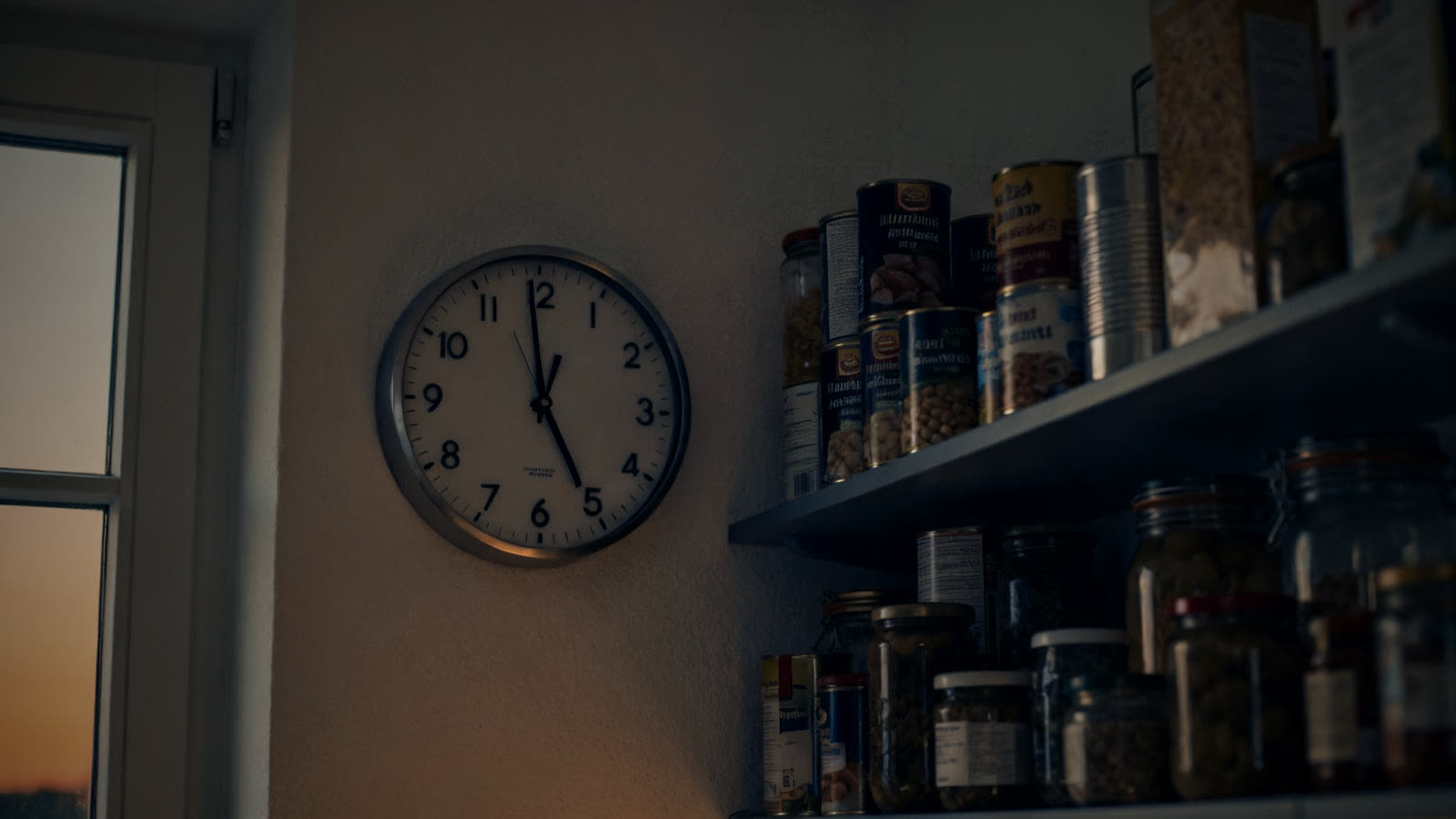
Fixed dates often get postponed or forgotten. The clock change, on the other hand, happens anyway, twice a year, and many people already link it to small routines, like the battery change reminder in smoke detector ads. You can use exactly this automatism to check three things at once: your food stockpile, the batteries in your home, and your smoke detectors.
The advantage: you don’t have to remember anything new. The clocks change, and that’s your signal to run the check. This turns a good intention into a habit that reliably happens twice a year – regardless of whether you feel like it or have the time. If you like, you can also set a reminder, so the routine still works if the clock change slips your mind.
Checking Your Emergency Supplies: The Foundation of the Routine
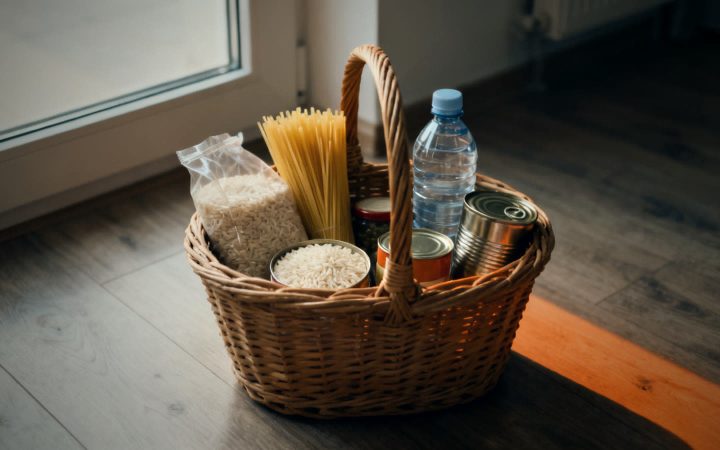
The BBK (Germany’s Federal Office of Civil Protection and Disaster Assistance) recommends being able to take care of yourself for ten days if possible; a supply for at least three days already helps a great deal. The BMLEH (Germany’s Federal Ministry of Food and Agriculture) also advises, via ernaehrungsvorsorge.de, to always keep a food supply for a period of 10 days at home. Once you’ve built up this stockpile, you don’t need to start over – but you should check it regularly.
The check comes down to three questions: Is there still enough? Has anything expired or is about to expire? Does the stockpile still match your needs? The BBK expressly stresses that emergency preparedness is a very individual matter – your supplies should be adapted to your personal dietary needs and storage space. A single-person household needs something different than a family of four, and allergies or special eating habits also play a role.
Checklist for a Quick Supply Check
- Check the expiration dates of the items at the front and the back of the shelf
- Sort out expired or soon-to-expire products and use them up promptly
- Note any gaps in your stock (what’s missing, what was used up most recently)
- Take a quick look at your drinking water supply – for more, see our article on the amount of drinking water you need in an emergency
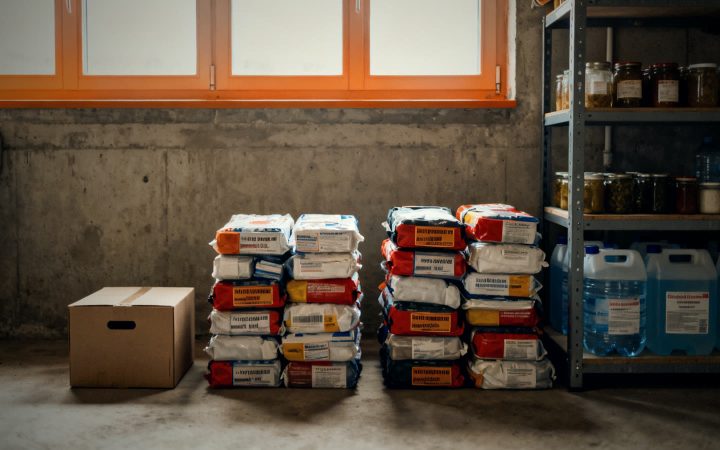
- Check the storage location: dry, cool, protected from light
For exact quantity planning, the BMLEH offers a stockpile calculator that lets you work out your individual needs for 1 to 28 days. The BMLEH also provides three tables for this: a general supply table, a vegetarian supply table, and a list of other foods. If you haven’t built up your supplies systematically yet, you’ll find detailed instructions in the article The 10-Day Emergency Food Supply According to BBK Recommendations.
Rotate Your Emergency Supplies Instead of Stockpiling
A stockpile that is only stored away and never touched quietly ages. A better approach is the “living pantry” principle: the oldest items are used first and replaced with new ones, so your supplies are constantly in motion. The article Rotating Your Supplies: The “Living Pantry” Principle explains in detail how this works in everyday life.
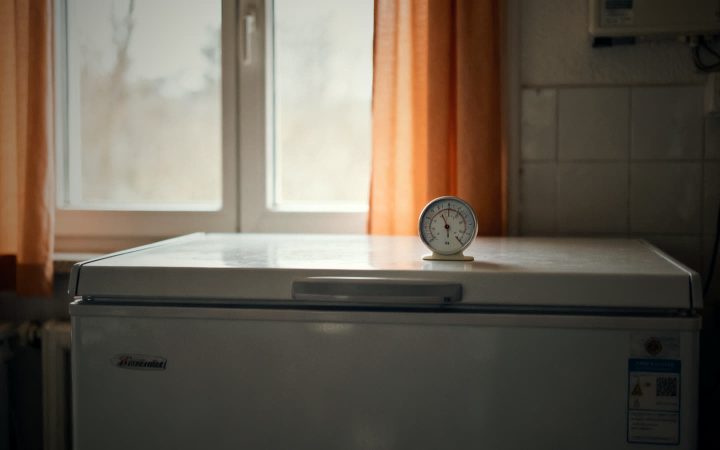
When the clocks change, a quick check is enough: What has been used up over the last few months, and what needs to be restocked? This small routine keeps an entire shelf from expiring all at once later on. It is also important to factor a possible power outage into your planning – the BMLEH (Germany’s Federal Ministry of Food and Agriculture) therefore advises against relying on frozen food as your only supply base. If you do keep frozen food at home, don’t count on it as your only reserve; supplement it with products that have a longer shelf life. The article Long Shelf Life Foods shows which foods are especially well suited.
Check Your Batteries: Unremarkable, but Essential
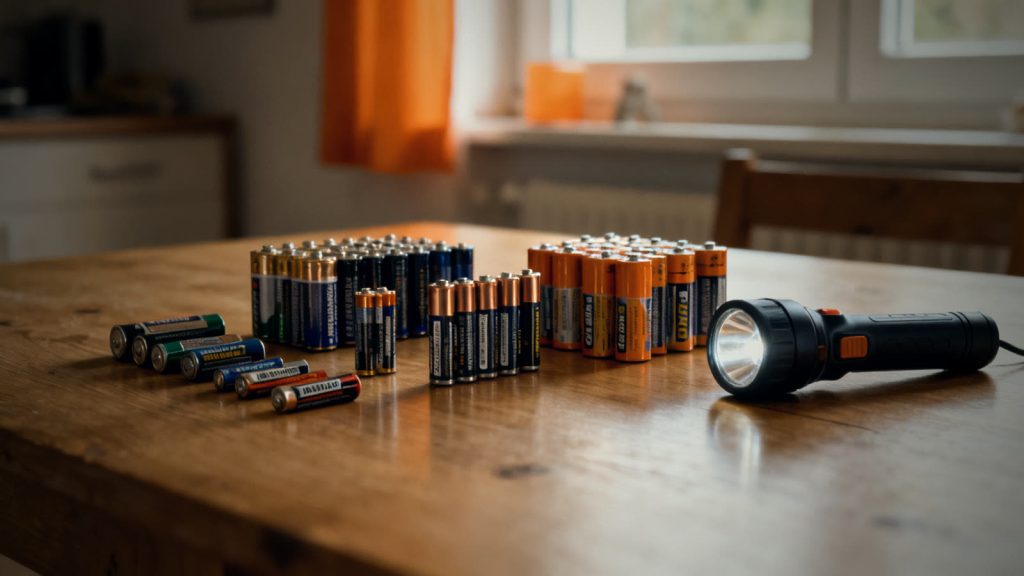
Batteries are among the most underestimated emergency supplies. Ready.gov, the preparedness website of the US disaster protection agency, lists “Extra batteries” as a standard part of every basic emergency kit, for example for a radio and a flashlight. Without working batteries, even the best hand-crank radio or the highest-quality flashlight is of little use.
How the Battery Check Works
- Open all battery compartments in flashlights, radios, and two-way radios and check for corrosion
- Test the charge level of rechargeable and regular batteries, or check the expiration date
- Check your stock of spare batteries in the sizes your own devices actually need
- Dispose of old, leaked, or very old batteries properly
How to store batteries and rechargeable batteries correctly so they last longer and don’t cause damage is covered in detail in the article How to Store Batteries and Rechargeable Batteries Properly. If you notice that your spare stock regularly runs too low, you should buy a bit more generously on your next shopping trip – batteries don’t spoil, but they often sit in the cupboard at exactly the moment they would be needed.
Test Your Smoke Detectors When the Clocks Change
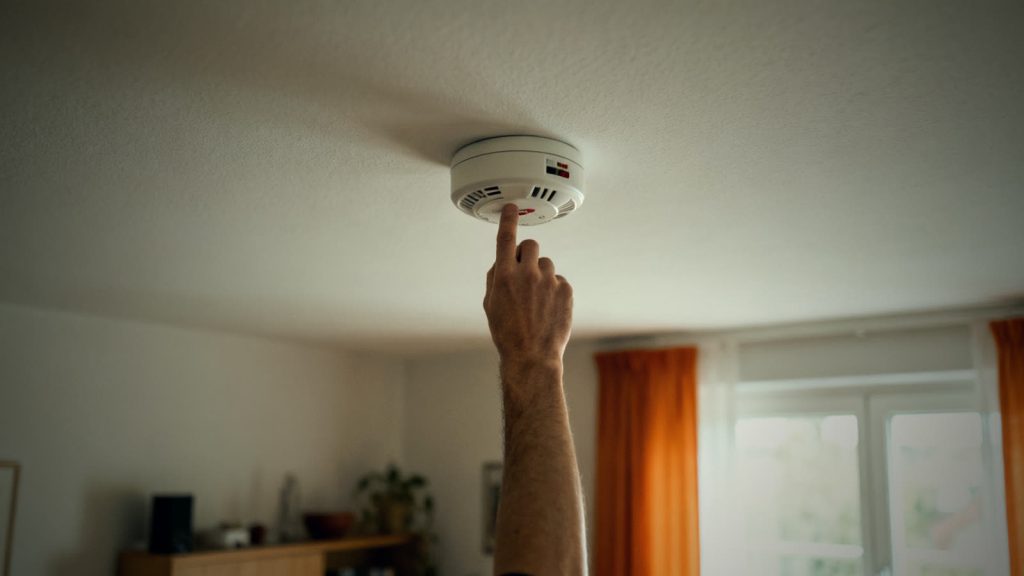
For many people, testing the smoke detector is already part of the clock change – and for good reason. As a rule, all it takes is this: press the test button, wait for the signal, and replace the battery if needed or replace the device if it no longer responds reliably. Every smoke detector in your home should be tested individually, since each device has to work independently.
More on smoke detectors, fire extinguishers, and escape routes in your own home can be found in the article Fire Safety at Home: Smoke Detectors, Fire Extinguishers, and Your Escape Route.
The Routine at a Glance
In short, you can run the whole check in a fixed order so nothing gets forgotten:
- Review your pantry shelf: expiration dates, gaps, storage conditions
- Check your battery box and devices: charge level, spare supply
- Test your smoke alarms: test button, escape route, replace the battery if needed
You can adjust this order however you like. What matters is that it becomes a firm habit. Ready.gov generally recommends rethinking your emergency kit needs every year and updating the kit as your family’s needs change – and the clock change gives you two opportunities a year to do just that.
If you share the routine with your family, you can also split the three steps: one person takes care of the food supply, another handles the batteries, and a third checks the smoke alarms. That way the check not only gets done faster, but also becomes a shared habit that everyone in the household supports. Especially in families with children, it’s worth testing the smoke alarms together – that way even the youngest know what the signal sounds like and what it means.
Frequently Asked Questions
How often should I check my emergency supplies?
One check at every clock change, so twice a year, is enough for most households. If you store products with a shorter shelf life, you should check more often.
How long should an emergency supply last?
The BBK (Germany’s Federal Office of Civil Protection and Disaster Assistance) recommends being able to take care of yourself for ten days if possible; even a three-day supply makes a noticeable difference. The BMLEH (Germany’s Federal Ministry of Agriculture, Food and Regional Identity) also recommends a 10-day supply.
Do I need to test every smoke alarm in my home?
Yes, every smoke alarm in the home should be tested individually, since each unit has to work independently.
Which battery sizes should I keep in stock?
That depends on the devices you own. The best approach is to go through your flashlights, radios, and other battery-powered devices and keep spares for exactly those sizes.
What should I do with expired pantry items?
Use food that is still edible but recently expired as soon as possible and replace it with fresh items – the rotating stockpile principle helps you avoid this in the future.
How to Get Started
Take a few minutes the next time you change the clocks: review your supplies, check your batteries, test your smoke alarms. It’s best to add the routine to your calendar right away for the next clock change so it sticks. If you haven’t set up your supplies systematically yet, it’s best to start with a basic list and build on it from there. Over time, this routine becomes a regular part of your year – as natural as changing the clocks themselves.
Sources and Further Information
General information, no substitute for individual advice from authorities, emergency services or medical professionals. In an emergency in Europe: 112.