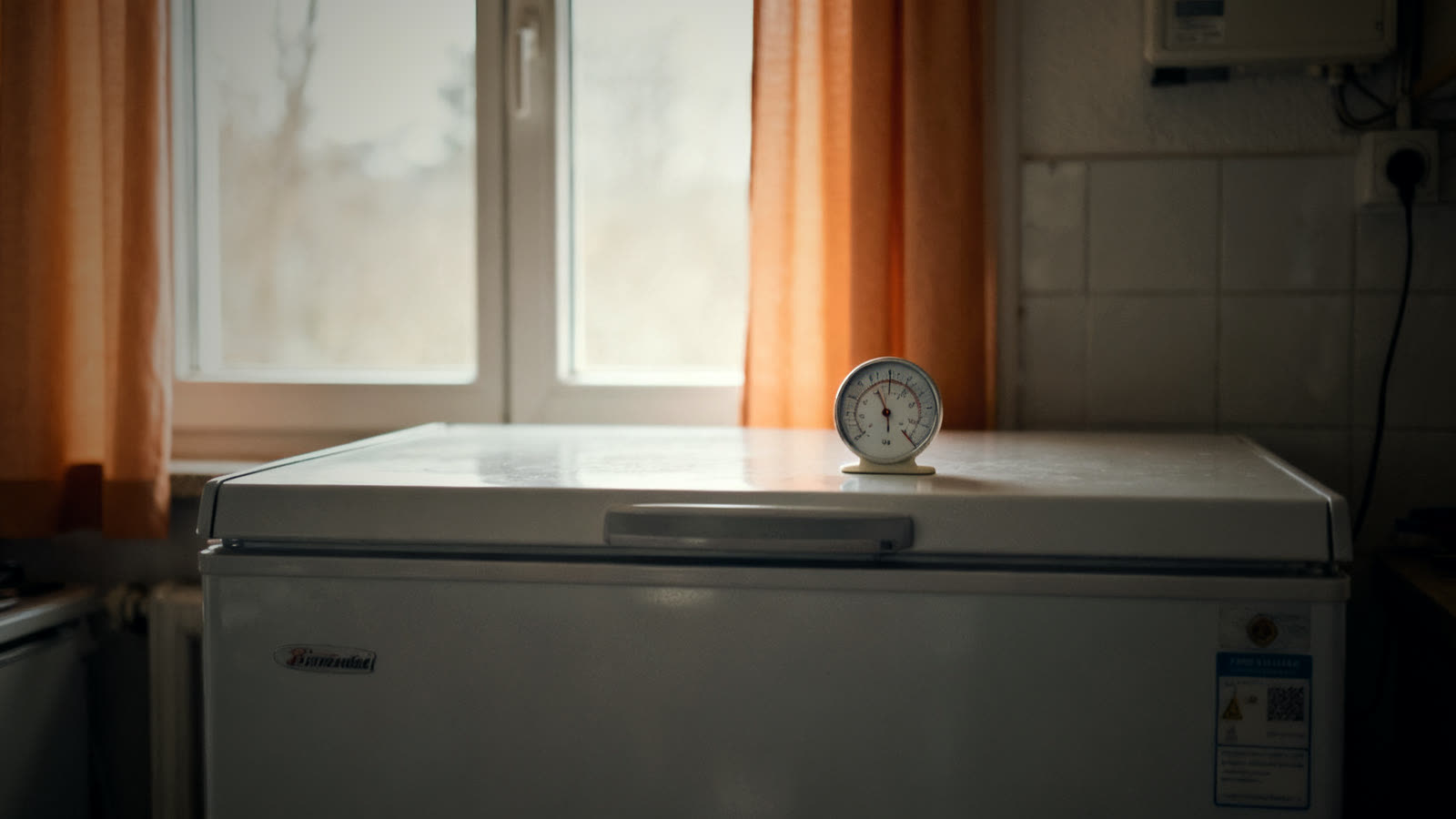
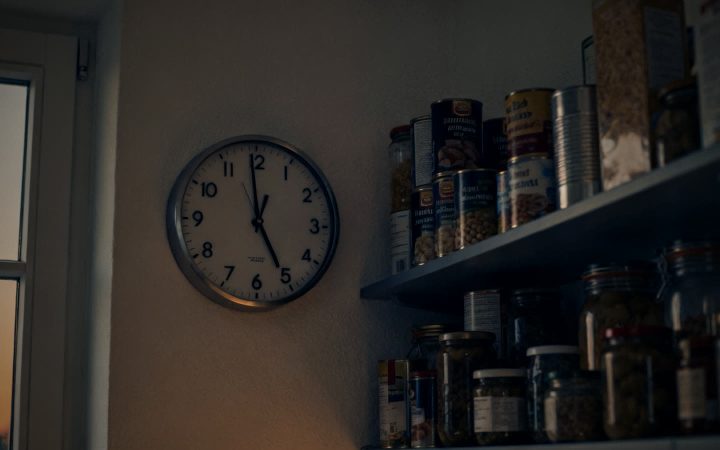
A thermometer on the chest freezer helps you judge the temperature correctly later on.
When the power goes out, a freezer keeps its cold much longer than a refrigerator: a closed chest freezer stays cold enough for up to 48 hours, as long as the temperature doesn’t rise above -12°C. A refrigerator, on the other hand, stays cool for only about four to six hours, depending on how full it is and how well it’s insulated. If you know what matters, you can save a lot of food in the first few hours – and avoid throwing food away unnecessarily.
Freezer during a power outage: how long the cold lasts
During the first 24 hours of a power outage, the temperature inside a closed freezer barely rises. The Bavarian State Ministry of Food, Agriculture and Forestry (StMELF) gives clear limits: up to -12°C, there is no risk to the food, and from -5 to -8°C there is already a risk of foodborne illness. A full freezer stays cold longer because the frozen food itself acts as a cold reserve.
The energy efficiency class also plays a role: appliances in class A or B stay cold longer thanks to better insulation than appliances in class F or G. That’s something you can keep in mind the next time you buy an appliance, even though it doesn’t change anything for the power outage you’re facing right now.
The most important rule: keep the door closed
During a short power outage, the appliance shouldn’t be opened at all, and during a longer one, only rarely and as briefly as possible. Every time you open it, cold air escapes and the time you have left gets shorter. Think ahead about what you really need, then open the door deliberately and quickly.
Keep the chest freezer as full as possible – this extends the cooling time
Open the door only in an emergency and for as short a time as possible
A thermometer inside the appliance makes it easier to assess the food later
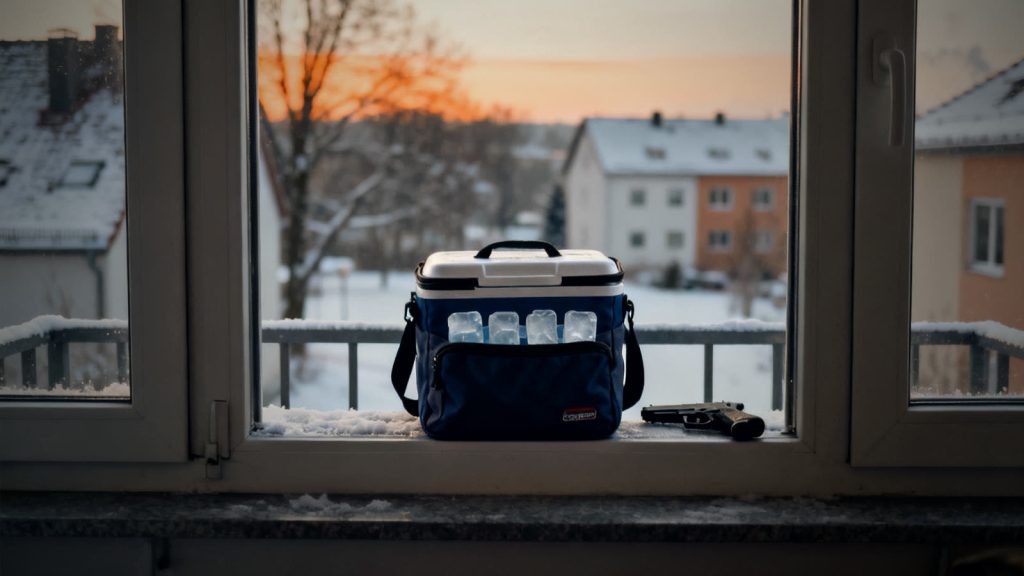
During a longer outage: if necessary, move the contents to a cooler with ice packs
Refrigerator during a power outage: how long does it really last
Above 4°C, bacteria multiply faster in the refrigerator – this is considered a critical point for food safety. Since a refrigerator without power stays cool for only four to six hours, it’s worth acting sooner here than with the chest freezer, which gives you much more leeway with up to 48 hours.
Ice packs or frozen water bottles help keep the temperature in the refrigerator low for longer. Perishable foods such as meat, fish, or dairy products belong in the coldest area – usually at the bottom, above the vegetable drawer. If you expect a longer power outage, you should move these foods there as early as possible or transfer them to a cooler.
For a cooler like that, it’s worth knowing in advance how to organize the first 24 hours of a power outage in general – if you know your home well, you also know where the cooler and the ice packs are within easy reach.
Ice packs in a cooler extend the safe storage time of perishable foods.
Refreezing thawed food – is it safe?
Whether you can refreeze thawed food can’t be answered across the board – it depends on the condition of the food. After thawing, cooked meals and raw plant-based foods need to be used or eaten promptly. Raw animal products must be cooked all the way through before refreezing is even an option – thawing raw food and refreezing it right away is not a safe option.
High-risk foods such as meat, fish, seafood, dairy and egg products, thawed ice cream, and frozen homemade meals must be thrown out if they were affected by the power outage and can no longer be assessed with certainty. This applies especially if you aren’t sure how long and to what extent the food was thawed.
Frozen Food After a Power Outage: What’s Safe and What to Throw Out
Once the power is back on, check the temperature display right away. A sensory check helps too: appearance, smell, and texture offer further clues. If food looks, smells, or tastes unusual, or if you’re unsure about its temperature or how long it has been stored, you should throw it out when in doubt. Ice cream that has thawed also belongs in the trash to be safe, even if it seems solid again.
The limits set by the StMELF (the Bavarian State Ministry of Food, Agriculture, Forestry and Tourism) provide guidance: below 12°F (-12°C) there is no danger, while in the range of 23 to 18°F (-5 to -8°C) or higher, the risk of foodborne illness rises. If you know your appliance’s temperature display and keep an eye on it regularly, you can interpret these values right away in an emergency instead of having to deliberate for long.
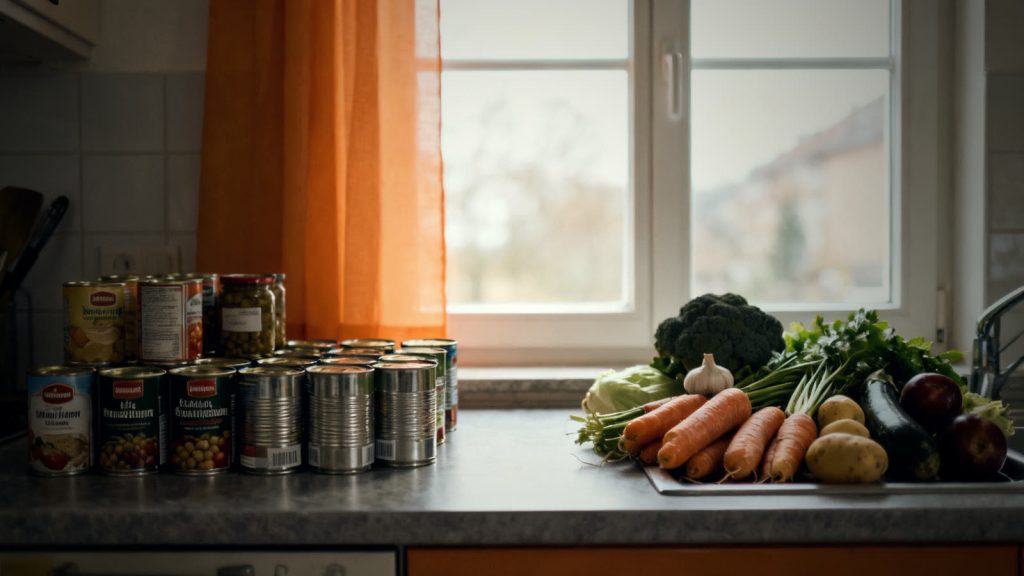
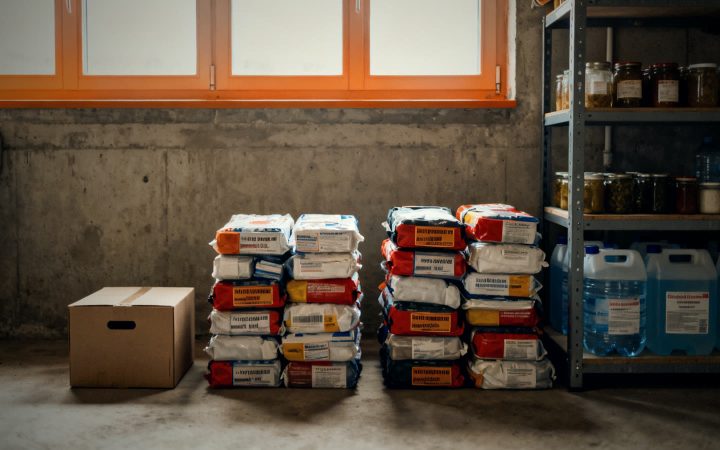
After a power outage, it helps to sort your supplies clearly and check them.
How to Assess Your Food After a Power Outage
After a power outage, it’s worth doing a quick, systematic check of all affected food, rather than saving everything or throwing it all away across the board:
Read the temperature display on your refrigerator and freezer
Check frozen items for ice crystals and firmness
Check refrigerated food for smell, color, and texture
When in doubt, consistently throw out high-risk foods (meat, fish, dairy and egg products)
Use up safe leftovers promptly instead of storing them again for a long time
If you also have an emergency food supply based on BBK recommendations (BBK is Germany’s Federal Office of Civil Protection and Disaster Assistance) at home, you’re less dependent on the cold chain anyway. The Federal Office of Civil Protection and Disaster Assistance recommends a supply for ten days, but a three-day supply already offers meaningful security. Depending on the products you choose, a ten-day supply costs about 90 euros per person – a manageable investment compared with the value of perishable food in your refrigerator.
Preparedness: Cushioning the Impact of a Power Outage on Your Refrigerator
If you expect power outages more often, you can prepare: keep ice packs ready for your cooler, have a cooler at home, and – where technically possible – keep a portable power station on hand for your most important appliances. This way you can better bridge the time until power is restored without having to give up refrigerated food entirely.
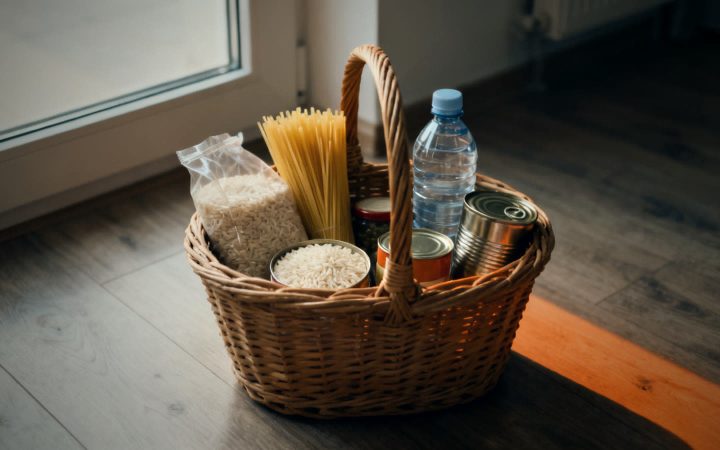
It’s also worth taking a look at long-lasting foods for your supply, since they work independently of your refrigerator and freezer. They bridge the time during which you should be more cautious with refrigerated and frozen food anyway.
During a power outage, the refrigerator and freezer should be kept closed as much as possible so the cold lasts longer and food doesn’t spoil as quickly. This simple rule is the most effective lever you have without any additional equipment.
Frequently Asked Questions
How long does a freezer stay cold without power?
A closed chest freezer stays cold for up to 48 hours, as long as the temperature doesn’t rise above -12°C and the door is opened as little as possible.
How long does a refrigerator stay cold during a power outage?
Depending on how full it is and how well it’s insulated, a refrigerator stays cold for about four to six hours. After that, the risk to food safety rises significantly.
Can I refreeze thawed food?
Raw animal products must be cooked all the way through before being refrozen. Cooked dishes and raw plant-based foods should be eaten soon after thawing rather than refrozen.
Which foods do I need to throw out after a power outage?
You should throw out high-risk foods such as meat, fish, seafood, dairy and egg products, thawed ice cream, and frozen homemade meals if they were affected and their condition is unclear.
How can I tell if frozen food is still good?
Check the temperature display, and also the appearance, smell, and texture of the food. If you have doubts about its temperature or how long it has been stored, it’s better to throw it out when in doubt.
Act now: the first steps
Keep your freezer as full as possible, have ice packs ready for your cooler, and write down the time and approximate duration of any power outage. After every power outage, systematically check temperature, smell, and texture before you use any food again – and when in doubt, throw it out rather than take a risk.
General information, no substitute for individual advice from authorities, emergency services or medical professionals. In an emergency in Europe: 112.
The EU says 72 hours, while the BBK (Germany's Federal Office of Civil Protection and Disaster Assistance) recommends 10 days. Here's why both numbers are right and how to combine them in your emergency supplies.
6 min read
As an Amazon Associate I earn from qualifying purchases.