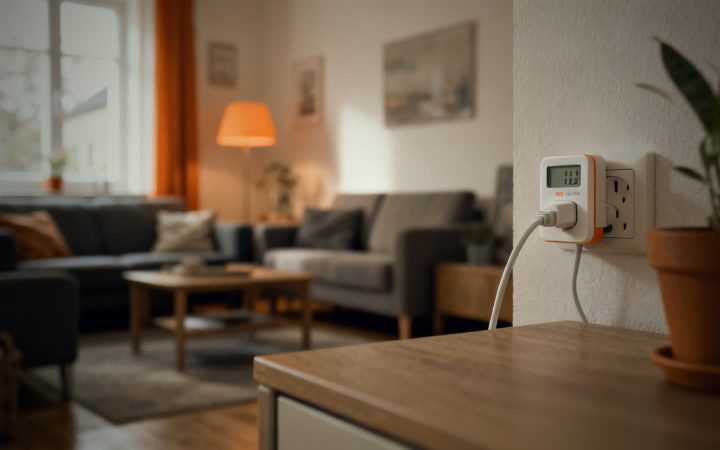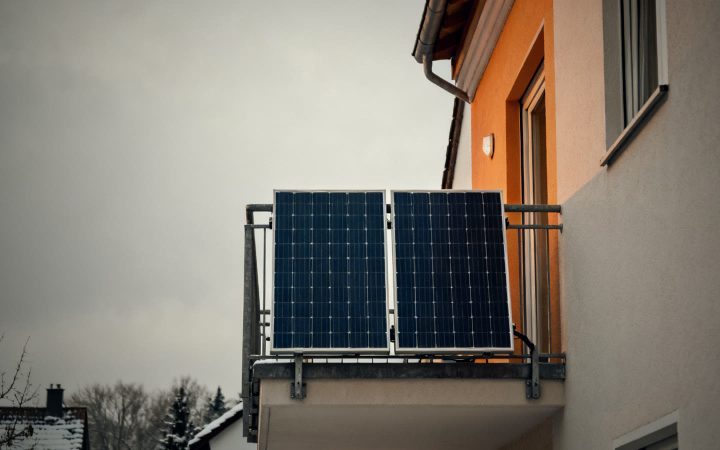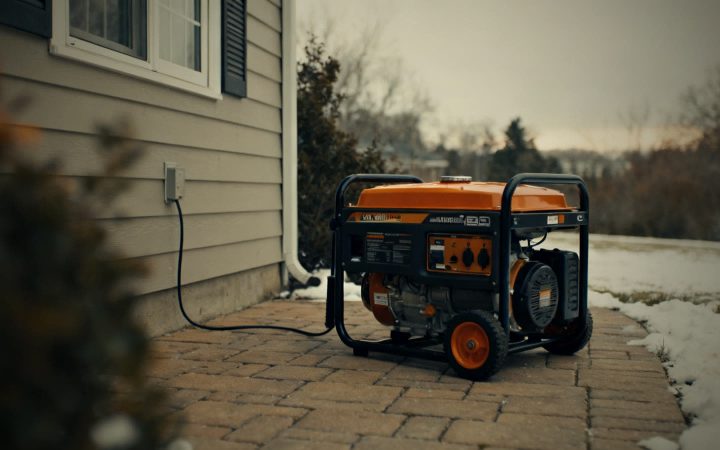
The BBK (Germany’s Federal Office of Civil Protection) recommends charged batteries, spare batteries, and power banks or solar chargers in case of a power outage. But the market is huge: from compact power banks that fit in a jacket pocket to suitcase-sized portable power stations with AC outlets. Which solution makes sense doesn’t depend on marketing claims, but on one simple question: What do you want to run in an emergency, and for how long?
Two terms you need to know
Capacity in watt-hours (Wh)
Capacity tells you how much energy a battery stores. For portable power stations, it is usually given directly in watt-hours. Power banks, on the other hand, often show a number in milliamp-hours (mAh) on the packaging. This figure refers to the voltage of the battery cells, not the output voltage. To compare them, you convert: mAh times cell voltage divided by 1000 equals watt-hours. Many manufacturers also print the Wh value on the casing. In addition, some energy is lost to conversion during charging, so you never get the full rated capacity out.
Power in watts (W)
Power describes how much electricity a device can deliver at the same time. For example, a portable power station with a large capacity but a weak inverter can’t run an electric kettle. That’s why you should always check both values: Does the battery hold enough energy, and can it deliver it fast enough?
The power bank: small, affordable, essential
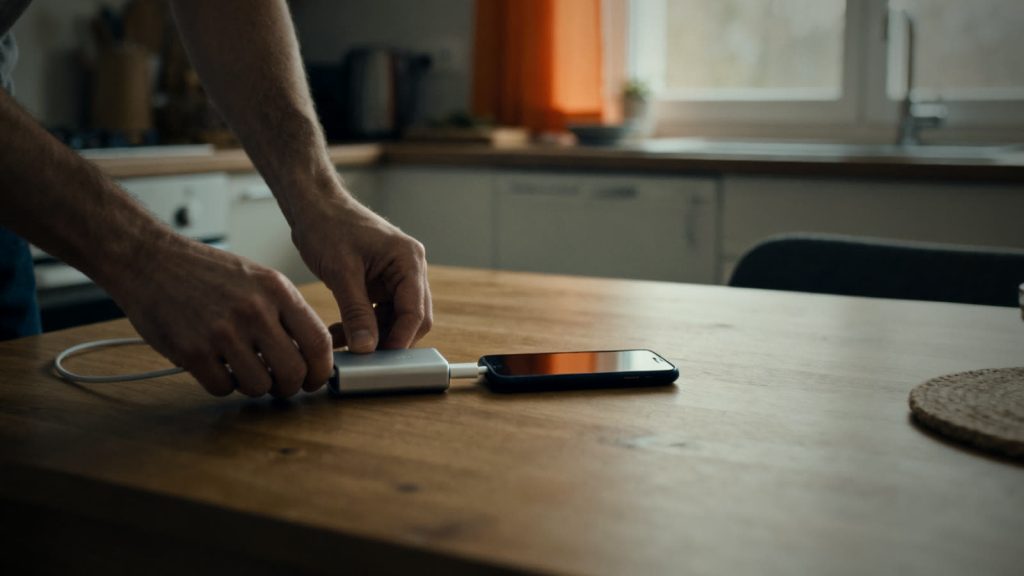
A power bank is the basic equipment for every household. It charges your smartphone, headlamp, two-way radio, or a small radio via USB. For emergency preparedness, we recommend:
- At least one larger power bank per household, ideally one per adult.
- USB-C with Power Delivery, so you can charge modern devices quickly too.
- A smaller power bank in your go bag.
- Recharge regularly: Even unused power banks lose charge over time.
For a power outage lasting one to two days, a good power bank is usually plenty if you use your phone sparingly.
The portable power station: an outlet you can take with you
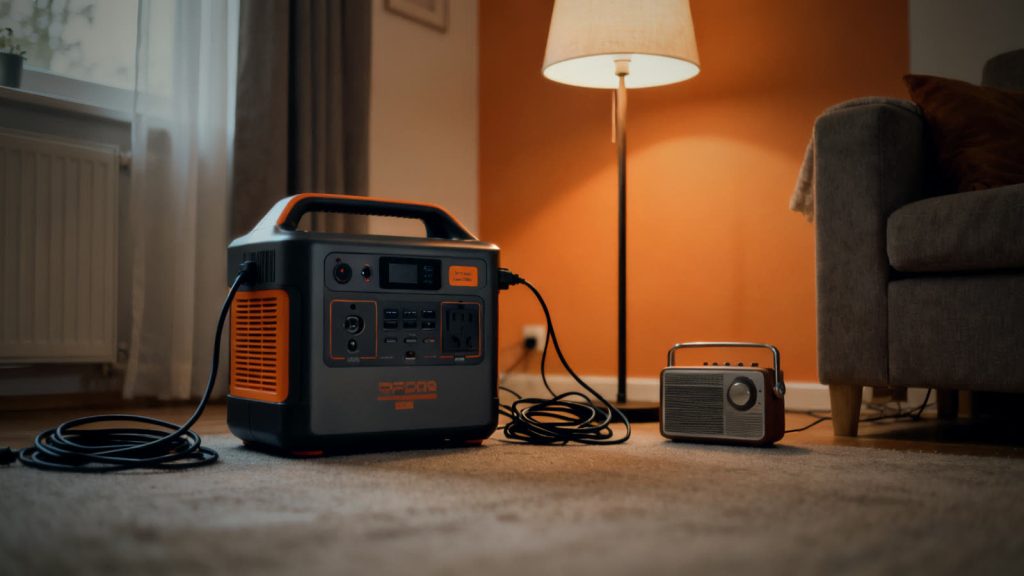
At its core, a portable power station is a large battery with an inverter, AC outlets, USB ports, and often an input for solar panels. It produces no exhaust fumes and is quiet, so unlike a gasoline generator, you can run it indoors. It makes sense if you want to power more than small devices:
- Laptop for working from home or communication
- Router, to stay online if your landline internet is still working
- Cooler or, for short periods, your refrigerator
- LED lighting for several rooms
- Medical devices – here it is essential to check beforehand with your doctor or the device manufacturer whether and how it can be safely operated on a portable power station.
How to Calculate Your Power Needs
- Write down all the devices you want to keep running in an emergency.
- Note the power rating of each device in watts (check the label or the user manual).
- Estimate how many hours per day each device needs to run.
- Power times hours gives you watt-hours per day. Add everything up.
- Add about one fifth as a reserve for conversion losses.
For your refrigerator, the energy label helps: it lists the annual consumption in kilowatt-hours. Divided by 365, this gives you a rough daily consumption. For devices with a motor, keep in mind the starting current (inrush current), which can briefly be well above the rated power.
Important for setting realistic expectations: space heaters, electric kettles, electric stoves, and hair dryers draw a lot of power and can drain even large power stations in a short time. A power station is not meant for heating.
What to Look for When Buying
- Battery type: Lithium iron phosphate (LiFePO4) is considered especially durable and thermally stable. Many current models use it.
- Pure sine wave: An inverter with a pure sine wave reliably powers sensitive electronics as well.
- Charging options: Wall outlet, car, and solar – the more options, the more flexible you are.
- Weight: Larger models can quickly weigh as much as a full crate of drinks. Consider whether you might have to carry it in an emergency.
- Brand and service: Choose established manufacturers with German-language customer service and spare parts availability.
Care and Storage
Store your power bank and power station in a dry place at room temperature, not in a hot car and not in the cold. Recharge them every few months and read the manufacturer’s recommendation for the storage charge level. Only use compatible chargers, and do not charge unattended near flammable materials. A swollen or damaged battery should no longer be used and belongs at a collection point.
From our experience as instructors: you won’t know a device in an emergency if you’ve never used it. Try out your power station for one evening – you’ll learn more from that than from any data sheet.
In short: For your phone and small devices, a good power bank is enough. A power station is worth it if you want to run a laptop, a cooler, or lights for an extended time. Calculate your needs in watt-hours first, then buy.
Matching Gear Compared
| Produktbild bei AmazonSmall & affordableINIU Power Bank 20.000 mAh 22,5 W | Produktbild bei AmazonAll-rounderAnker Zolo 20.000 mAh 30 W | Produktbild bei AmazonAlso for laptopsAnker Powerbank 20.000 mAh 87 W | |
|---|---|---|---|
| Rating | at least 4.3 out of 5 starswith 500+ customer reviews (our selection criterion)See current reviews* | at least 4.3 out of 5 starswith 500+ customer reviews (our selection criterion)See current reviews* | at least 4.3 out of 5 starswith 500+ customer reviews (our selection criterion)See current reviews* |
| Features |
|
|
|
| Pros |
|
|
|
| Cons |
|
|
|
| View on Amazon* | View on Amazon* | View on Amazon* |
Selected by manufacturer data and customer reviews (at least 4.3 stars with 500+ reviews). We only show exact star ratings when they come from Amazon the same day. As of 04.10.2026. Not tested by us. Current prices and reviews are on Amazon. *Ad · paid link
| Produktbild bei AmazonCompact (DC only)Anker SOLIX C200 DC | Produktbild bei AmazonEntry-level with AC outletEcoFlow RIVER 2 | Produktbild bei AmazonLarge reserveAnker SOLIX C1000 Gen 2 | |
|---|---|---|---|
| Rating | at least 4.3 out of 5 starswith 500+ customer reviews (our selection criterion)See current reviews* | at least 4.3 out of 5 starswith 500+ customer reviews (our selection criterion)See current reviews* | at least 4.3 out of 5 starswith 500+ customer reviews (our selection criterion)See current reviews* |
| Features |
|
|
|
| Pros |
|
|
|
| Cons |
|
|
|
| View on Amazon* | View on Amazon* | View on Amazon* |
Selected by manufacturer data and customer reviews (at least 4.3 stars with 500+ reviews). We only show exact star ratings when they come from Amazon the same day. As of 04.10.2026. Not tested by us. Current prices and reviews are on Amazon. *Ad · paid link
Conclusion: our product picks
Power Banks (20,000 mAh) Compared
For charging your phone in an emergency, the Anker Zolo is enough – with a built-in cable, nothing gets lost. If you need to power a laptop, you'll need the 87 W version. The INIU is the most compact choice for emergency bags and jacket pockets.
Power Stations Compared
For phones, lights, and routers, the EcoFlow RIVER 2 with an AC outlet is enough. If you want to run a refrigerator or an electric blanket for hours, you'll need a large station like the Anker SOLIX C1000 Gen 2. The C200 DC is an oversized power bank—without a 120V AC outlet.
Links marked with * are advertising links. As an Amazon Associate I earn from qualifying purchases.
Sources and Further Information
- BBK (Germany’s Federal Office of Civil Protection and Disaster Assistance) – Preparing for and Responding to a Power Outage
- Verbraucherzentrale (German consumer advice organization) – Off-Grid Photovoltaic Systems: Using Solar Energy Directly
- Umweltbundesamt (German Environment Agency) – Safe Handling of Lithium Batteries and Rechargeable Batteries
General information, no substitute for individual advice from authorities, emergency services or medical professionals. In an emergency in Europe: 112.