📌 Part of the guide: Building Your Emergency Supply Kit: A 4-Step Guide to 10 Days of Readiness
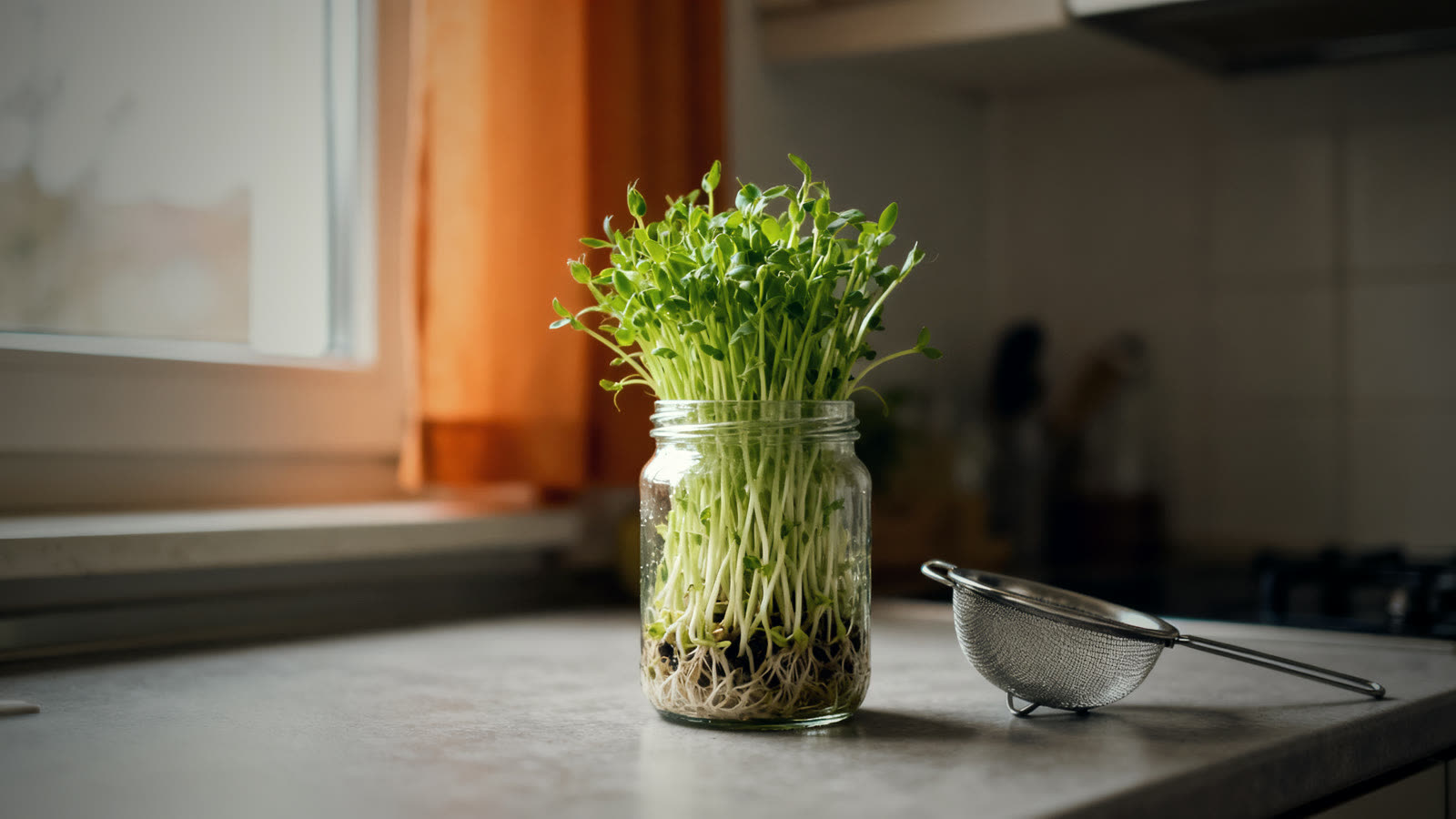
Growing sprouts requires minimal supplies: you soak suitable sprouting seeds in a clean jar, rinse them multiple times daily with fresh water, and harvest them after several days depending on the variety. Hygiene is crucial because with raw sprouts, if the seeds are already contaminated with microorganisms, even clean kitchen practices won’t reliably prevent illness. In this article, you’ll learn how to do it step by step, which seeds are suitable, and what you should know about raw sprouts.
Why Fresh Greens Can Be a Worthwhile Addition
A good emergency food supply consists primarily of shelf-stable foods. When it comes to personal nutrition preparedness, the Bundeszentrum für Ernährung (Germany’s Federal Center for Nutrition) focuses on exactly that. Fresh foods that must be refrigerated appear there only as a possible supplement. There’s nothing there about sprouts, seedlings, or herbs. Therefore, this article should not be understood as a replacement for your supply, but as an addition to your daily routine.
This thinking aligns with the principle of the “living pantry”: you use what you have on hand and create something fresh from it when needed. Learn how to consume and replenish supplies in your daily life in the article on the living pantry principle. If you have limited space, the article on preparedness in a rental apartment with limited space offers more ideas.
From a nutritional standpoint, sprouts also have something to offer. According to ÖKO-TEST, they provide many nutrients, including vitamins C and K, B vitamins, minerals, fiber, and plant-based protein, all with few calories. Nevertheless, sprouts are not a miracle cure but rather a fresh side dish you can grow yourself. It’s important that you work carefully, because raw sprouts require more attention than many other foods.
Growing Sprouts: What You Need
The equipment is manageable. Most importantly, everything must be clean. According to the BfR (Germany’s Federal Institute for Risk Assessment), microorganisms multiply rapidly in sprouts during production, which is why attention to detail from the start is worthwhile.
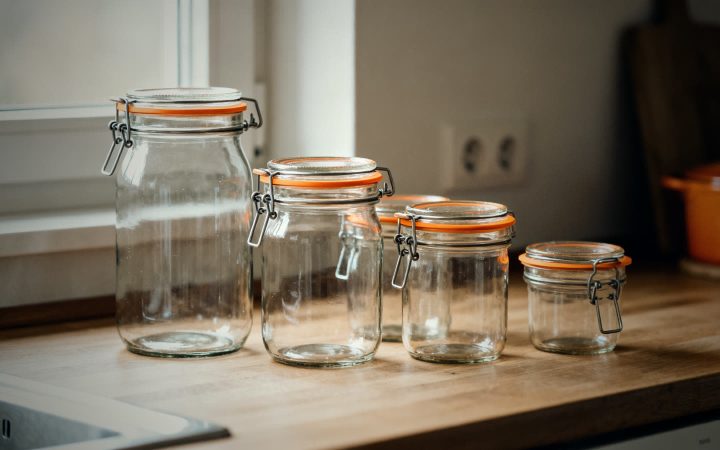
- a clean jar, such as a canning jar or mason jar
- a strainer for rinsing and draining
- sprouting seeds in organic quality, explicitly labeled as sprouting seeds
- fresh water for soaking and rinsing
- a draft-free location without direct sunlight
Which Seeds Are Suitable?
Only use seeds explicitly sold as sprouting seeds, and make sure they’re organic quality. Garden seeds have no place in a sprouting jar. ÖKO-TEST, for example, recommends mung beans, alfalfa, radishes, broccoli, lentils, and chickpeas. Seeds vary in size, and this affects, for example, the soaking time. According to ÖKO-TEST, soaking time ranges from 6 to 12 hours depending on size.
Which Seeds to Avoid
Raw kidney beans are unsuitable because they’re toxic. According to the Verbraucherzentrale (German consumer protection organizations), sprouts from garden beans are also toxic and should not be eaten. Soybean sprouts and other bean sprouts must be cooked. If you’re unsure about any variety, it’s better to skip it and stick with the suitable types mentioned.
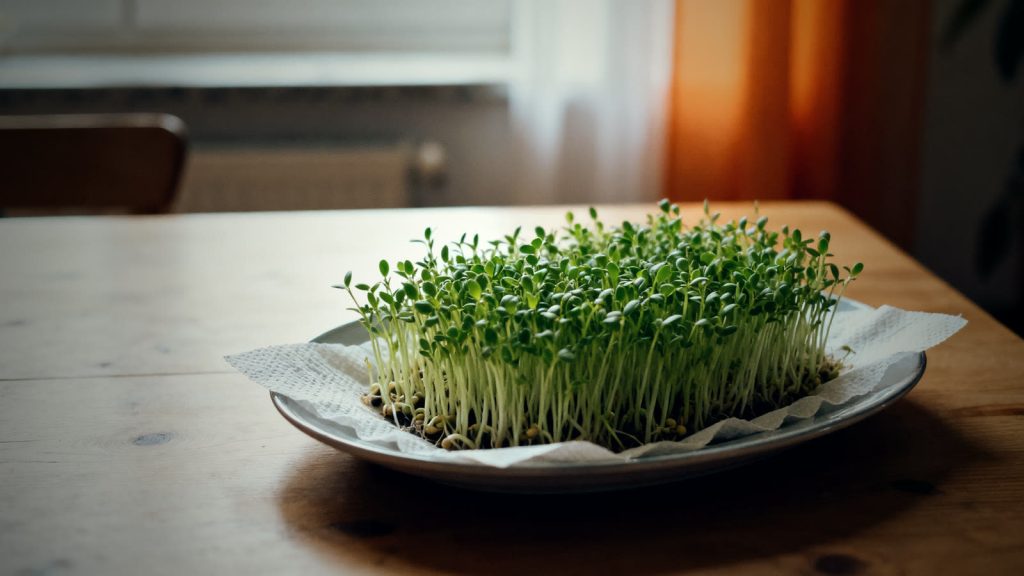
Growing Sprouts in a Jar: Step by Step
The process is similar for most varieties. The exact timing varies depending on seed size and variety, so the following information is a guide based on the sources mentioned.
1. Wash Your Hands and Prepare the Jar
First, wash your hands thoroughly. The jar must be clean. Keep sprouting separate from other foods, especially away from meat and fish. After you’re done, clean your work surfaces thoroughly.
2. Soak the Seeds
Place the seeds in a clean jar with water. Depending on the seed size, they soak for 6 to 12 hours according to ÖKO-TEST. Then drain the water, most easily through a sieve.
3. Rinse and Drain
Now the routine begins: ÖKO-TEST recommends rinsing two to three times daily with fresh water and draining well. The Verbraucherzentrale (Germany’s consumer protection centers) mentions twice daily in a sieve. So you’re working within this range. What’s important is that the sprouts drain well after rinsing.
4. Choose the Right Location
Sprouts need a place free from drafts. ÖKO-TEST names 20 to 24 °C as the appropriate range. The Verbraucherzentrale adds that they should not be too warm and should not be in direct sunlight. So orient yourself to this temperature range and don’t place the jar in the sun. For the first 2 to 5 days, according to ÖKO-TEST, the sprouts should be kept dark or shaded to prevent mold. Green sprouts can be exposed to light in the final days before harvest.
5. Harvest and Store
Depending on the variety, sprouts are ready to harvest after 2 to 7 days and are about 2 to 4 cm long, according to ÖKO-TEST. The Verbraucherzentrale suggests about 4 to 6 days for ready-to-eat sprouts. The sources differ here because varieties grow at different rates. So pay attention to the length and follow the guidance for your specific variety. After that, store the sprouts in the refrigerator in breathable packaging and use them promptly.
When rinsing, you need fresh water, but not large amounts. If you’re wondering how much water you should plan for in an emergency, our article How much drinking water do I need in an emergency? can help you.
Hygiene and Safety: What You Need to Know About Raw Sprouts
This deserves an honest look. In June 2011, during the EHEC outbreak, the Federal Institute for Risk Assessment (BfR) advised against eating homegrown raw sprouts. If seeds are already contaminated with pathogens, maintaining kitchen hygiene alone won’t prevent illness. That means: clean work is important, but it doesn’t replace selecting suitable seeds and heating them if you want to be on the safe side.
Later, the BfR (Federal Institute for Risk Assessment), BVL (Federal Office of Consumer Protection and Food Safety), and RKI (Robert Koch Institute) narrowed their recommendation. Only fenugreek seeds from Egypt were identified as problematic. Other seed varieties were not linked to the EHEC infections. Raw sprouts should be thoroughly washed and consumed as quickly as possible. Because pathogens multiply rapidly during sprout production, people with compromised immune systems should be especially careful.
Who Should Not Eat Raw Sprouts
Consumer protection centers advise older adults, young children, pregnant people, and those with compromised immune systems not to eat raw sprouts. Especially when you’re cooking for family or relatives, you should keep this in mind. You’ll find more on this in our article on emergency preparedness for seniors and family members requiring care.
Brief Heating as a Safety Measure
Consumer protection centers recommend heating fresh sprouts in boiling water for about 30 seconds before consuming them. This applies generally, not just for high-risk groups. If you eat sprouts raw anyway, wash them thoroughly and consume them quickly.
Essential Rules at a Glance
- Wash your hands before handling.
- Keep sprouts separate from other foods, especially meat and fish.
- Clean work surfaces thoroughly afterward.
- Use only seeds designated for sprouting in organic quality.
- Discard any moldy sprouts.
- Cook bean sprouts; never eat garden bean sprouts.
- Consume freshly harvested sprouts promptly.
Microgreens and Herbs as Alternatives
Consumer protection centers describe microgreens as watercress seedlings that grow on soil, cotton, or paper towels. They take 8 to 20 days to grow. You harvest them when they have 2 to 3 leaves: you cut them off above the roots. Our sources provide no specific information on microgreens hygiene. Therefore, work as cleanly as you would with sprout jars, use the seeds according to package directions, and discard any moldy growth.
Our sources’ information applies to watercress seedlings; timing may vary for other plants. Our sources provide no information on potted herbs. Follow the instructions on the seed packet or plant label instead.
What This Means for Your Emergency Supply
Homegrown sprouts are a fresh side dish, not a complete meal replacement. They complement canned goods and shelf-stable supplies. Learn how to build a foundation supply in our article 10-Day Emergency Supply Based on BBK (Germany’s Federal Office of Civil Protection) Recommendations. You’ll also find suitable long-lasting basics under Foods with Long Shelf Life.
Frequently Asked Questions
How long does it take for sprouts to become edible?
It depends on the variety. Consumer Centers cite approximately 4 to 6 days, while ÖKO-TEST (German consumer testing magazine) mentions 2 to 7 days depending on the type, at a length of about 2 to 4 cm.
How often do I need to rinse sprouts?
ÖKO-TEST recommends rinsing two to three times daily with fresh water, then draining thoroughly. Consumer Centers recommend rinsing twice daily in a sieve.
Can I use regular garden seeds?
No. Use only specially designated sprouting seeds in organic quality, not garden seeds.
Can I eat sprouts raw?
Consumer Centers advise against raw sprouts for elderly people, young children, pregnant women, and people with weakened immune systems. In 2011, the BfR (Germany’s Federal Institute for Risk Assessment) generally advised against raw homegrown sprouts but narrowed this recommendation later. Consumer Centers generally recommend heating sprouts for about 30 seconds in boiling water. If you eat them raw, wash them thoroughly and consume them quickly.
What are microgreens and how long do they take to grow?
Microgreens are cress seedlings that grow on soil, cotton, or paper towels. They take 8 to 20 days to grow and are cut above the roots when 2 to 3 leaves have appeared.
How to Get Started: Action Steps
- Get a clean glass jar, a sieve, and organic sprouting seeds that are explicitly labeled as sprouting seeds.
- Choose one of the suitable varieties mentioned, such as mung beans, lentils, or broccoli.
- Wash your hands, soak the seeds for 6 to 12 hours depending on their size, then drain the water.
- Place the jar in a draft-free location at 20 to 24 °C, away from direct sunlight, in darkness or covered for the first 2 to 5 days.
- Rinse two to three times daily with fresh water and drain the sprouts thoroughly.
- Harvest at approximately 2 to 4 cm in length, store the sprouts in the refrigerator in breathable packaging, and consume them quickly.
- Heat the sprouts for about 30 seconds in boiling water before consuming. People at risk should not eat raw sprouts.
- Next, try microgreens as the next step.
Start small and keep the routine simple. Then your sprout jar becomes a small, reliable habit that brings fresh greens to your plate when you follow the hygiene rules.
Sources and Further Information
- Growing Sprouts at Home – Consumer Centers
- Superfood from the Windowsill: Growing Sprouts at Home – ÖKO-TEST
- EHEC Outbreak: BfR (Germany’s Federal Institute for Risk Assessment) Advises Against Consuming Homegrown Raw Sprouts and Seedlings
- BfR, BVL, and RKI Specify Consumption Recommendations for Raw Sprouts and Seedlings – Federal Institute for Risk Assessment
- Private Food Supply – Federal Center for Nutrition
General information, no substitute for individual advice from authorities, emergency services or medical professionals. In an emergency in Europe: 112.