When we talk about emergency preparedness, most people think of themselves and their families. Dogs, cats, and rabbits often only come into the picture once things have already become serious. Yet in an emergency, pets depend entirely on us. That is why the BBK (Germany’s Federal Office of Civil Protection and Disaster Assistance) explicitly reminds people to think about their pets when stocking up. The good news: with a little planning, a pet emergency supply is quickly put together.
Food for at least ten days
Plan for your pets the same length of time as for yourself – ideally ten days. A few basic principles will help:
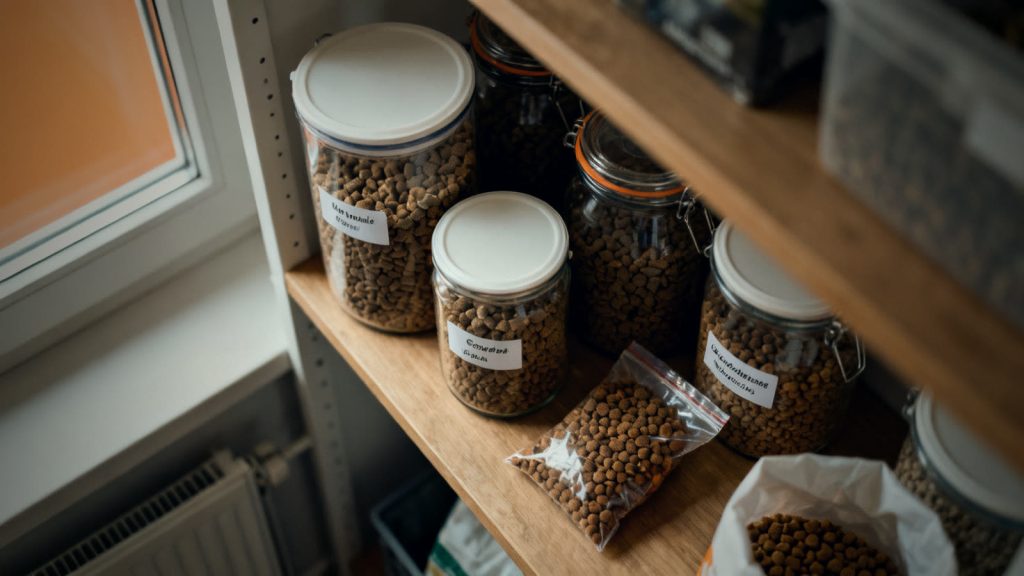
- Familiar food: A sudden change of food can cause digestive problems in many animals. So stock up on the food your pet already eats.
- Long-lasting options: Dry food and wet food in cans or trays keep for a long time when unopened. However, opened wet food spoils quickly without a fridge – so small portion sizes are more practical in an emergency.
- Rotate: The rotating stockpile principle works for pet food too. Buy one extra pack and always use the oldest one first.
- Store airtight: Dry food in a sealable container stays free of moisture and doesn’t attract pests.
- Treats and chew items: They help calm pets in unfamiliar situations.
Don’t forget water
Pets need fresh water every day. Exactly how much depends on the species, size, activity level, temperature, and food – animals eating dry food drink significantly more than those eating wet food. The best approach is to ask your vet’s office for a guideline amount for your pet and add it to your own water supply. A collapsible bowl belongs in every go bag.
Medication and health
If your pet takes medication regularly, talk to your vet about how to build a small supply and how it needs to be stored. Also write down:
- The name and phone number of your vet’s office
- A nearby animal hospital with emergency service
- Your pet’s pre-existing conditions, allergies, and medications
A small first aid kit for pets – for example with bandages, tick tweezers, and paw protection – is a good idea. What exactly suits your pet is best clarified with your vet.
The pet document folder
In an evacuation or if your pet runs away, paperwork is worth its weight in gold. Put copies in your document folder and keep photos on your phone:
- EU pet passport or vaccination record
- Microchip number – and check whether your pet is registered with a pet registry such as TASSO or FINDEFIX. Only then can a found animal be traced back to you.
- Recent photos that clearly show distinctive markings
- Proof of insurance, such as for dog liability insurance
- If applicable, documents for dog tax or competency certification, depending on the federal state
During my training, there was a simple principle: if you are responsible for others, you plan for them too. This applies especially to a pet, because it can’t help itself.
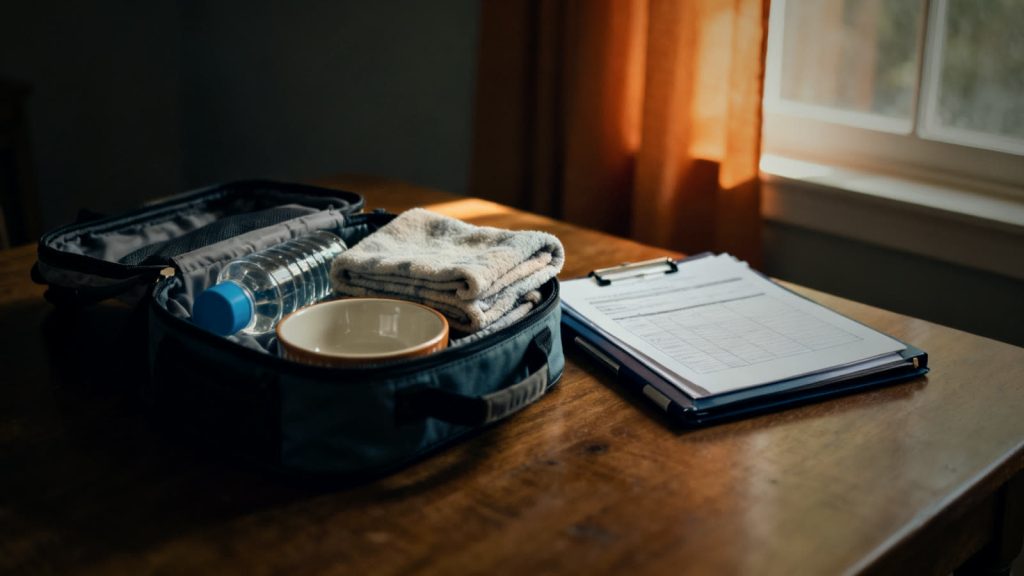
Pet Emergency Kit
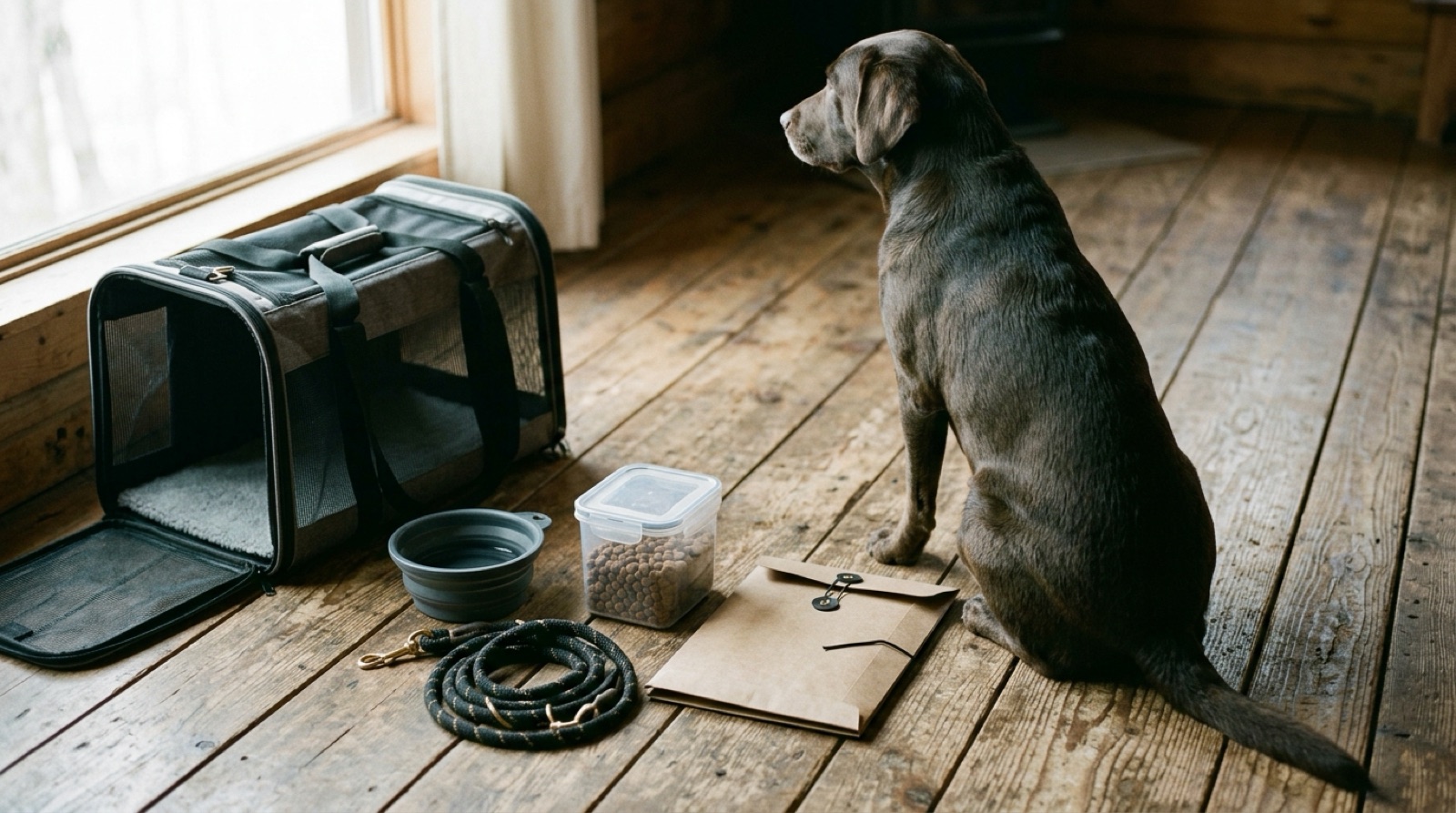
If you have to leave quickly, a small bag kept next to your own go bag will help:
- Food and water for several days, collapsible bowl
- Leash, harness, and collar with an ID tag showing your address, plus a spare leash
- Carrier for cats and small animals – your pet should know it and not associate it only with trips to the vet
- Waste bags, cat litter, and a small disposable tray
- A familiar blanket or a toy
- Medications and copies of documents
Planning an Evacuation with Your Pet
Not every emergency shelter can take in animals. Find out in advance from your city or municipality how pets are handled there. Even better: arrange with friends, family, or neighbors outside your area whether you can take each other in along with your pets. If you are evacuated, take your pet with you whenever possible and follow the instructions of the emergency responders.
Get cats and small animals used to their carrier early on. Leave it open in your home, and put a blanket and the occasional treat inside. That way, in an emergency, it won’t be an enemy but a safe place to retreat to.
Special Animals, Special Needs
- Aquariums: Filters, heaters, and oxygen pumps need electricity. A battery-powered air pump can help during a power outage. Ask a pet store for advice.
- Terrarium animals: Many reptiles depend on heat. Check with a specialty pet store or your vet’s office about how to get through a power outage.
- Birds and small animals: They are sensitive to cold, heat, and drafts. Plan a sheltered spot in your home.
- Horses and livestock: These need their own plan, ideally worked out with the stable, your club, and neighbors.
In short: Stock your pet’s usual food for at least ten days and plan for extra water for your pet. Keep the vaccination record, microchip number, and photos ready, and register your pet. Find out in advance where you can stay with your pet, and get it used to the carrier.
Suitable Gear Compared
| Produktbild bei AmazonCompact with accessoriesMobiclinic FeedPet 20 l | Produktbild bei AmazonSolid qualityKerbl Futtercontainer 25 l | Produktbild bei AmazonLarge supplyNobleza Futterbehälter 40 l | |
|---|---|---|---|
| Rating | at least 4.3 out of 5 starswith 500+ customer reviews (our selection criterion)See current reviews* | at least 4.3 out of 5 starswith 500+ customer reviews (our selection criterion)See current reviews* | at least 4.3 out of 5 starswith 500+ customer reviews (our selection criterion)See current reviews* |
| Features |
|
|
|
| Pros |
|
|
|
| Cons |
|
|
|
| View on Amazon* | View on Amazon* | View on Amazon* |
Selected by manufacturer data and customer reviews (at least 4.3 stars with 500+ reviews). We only show exact star ratings when they come from Amazon the same day. As of 04.10.2026. Not tested by us. Current prices and reviews are on Amazon. *Ad · paid link
Conclusion: our product picks
Airtight Feed Bins Compared
For a large feed or supply bag, the Nobleza 40 L with wheels is the most practical choice. The Kerbl 25 L with rubber seal and clip is the sturdy middle option, made in the EU. Those with limited space should go with the Mobiclinic FeedPet 20 L with viewing window.
Links marked with * are advertising links. As an Amazon Associate I earn from qualifying purchases.
Sources and Further Information
General information, no substitute for individual advice from authorities, emergency services or medical professionals. In an emergency in Europe: 112.