The quantity is settled – 2 liters per person per day, for ten days. Now comes the practical question: how do you store that water so it’s actually still drinkable in an emergency? This is where it’s decided whether your supply pays off or ends up smelling musty in the basement after a year. We’ll show you the two proven methods and what matters when it comes to containers, location, and upkeep.
Option 1: Store-bought bottled water
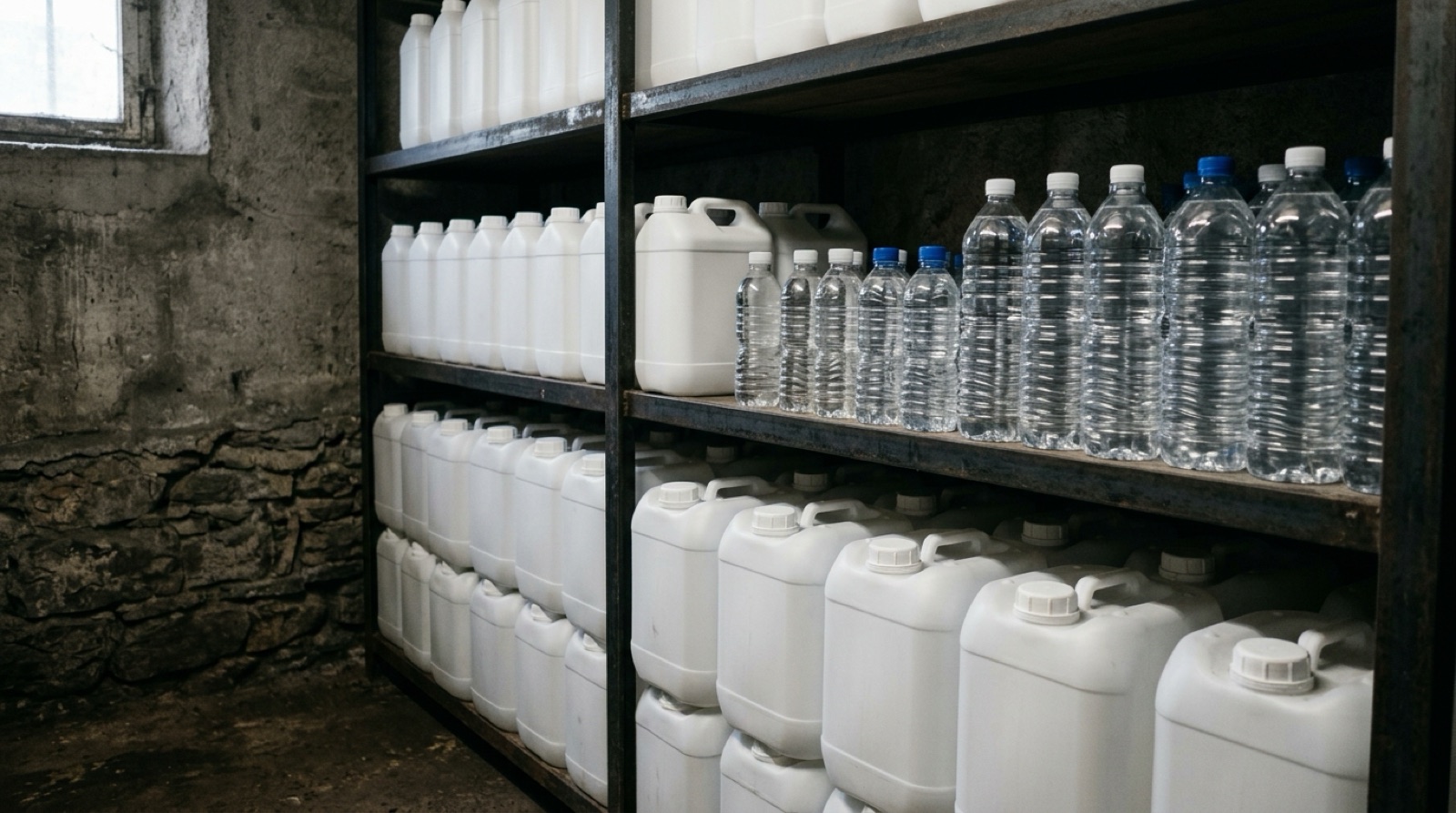
The simplest, lowest-maintenance emergency water supply is bottled mineral or table water from the store. Germany’s Federal Office for Agriculture and Food (BLE) notes on its food-supply portal that mineral water in its original, sealed bottle keeps almost indefinitely – as long as it’s stored dark, cool, and dry. Sunlight and heat degrade its quality.
A few points that have proven useful in practice:
- Choose still water: It can be used directly for cooking and for preparing baby formula without any extra steps. There’s specially labeled water for infants – when in doubt, ask your pediatrician.
- Glass or PET: Glass is heavy and can break, while PET is lightweight but can absorb odors from its surroundings. So don’t store PET bottles near paint, solvents, gasoline, or cleaning products.
- Check the best-by date: It’s the manufacturer’s quality guarantee, not an expiration date. Still, use the oldest bottles first and put new ones at the back.
Option 2: Filling your own tap water
In Germany, tap water is a strictly regulated food product and costs almost nothing. But storing it yourself requires more care, since germs can multiply over time outside the pipe – especially with warmth, light, and unclean containers.
Choosing the right container
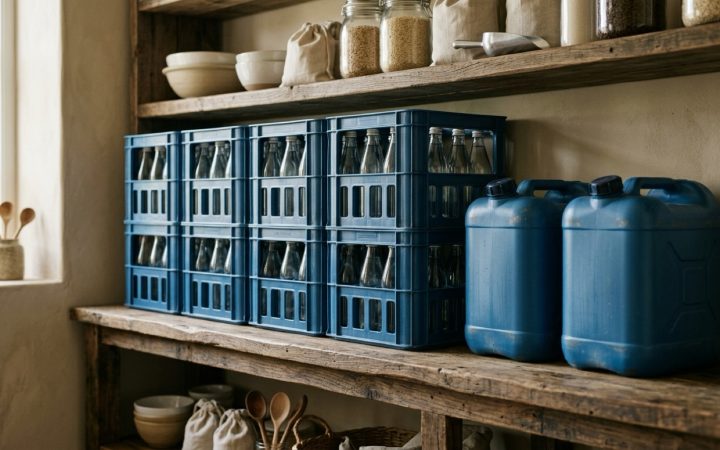
- Food-grade: Look for canisters explicitly intended for drinking water. Food-safe materials are often marked with the glass-and-fork symbol.
- Opaque and sturdy: Opaque HDPE canisters block out nearly all light and can take a few knocks.
- Wide opening: Makes it easy to clean with a brush and your hand. Narrow necks are hard to get properly clean.
- Not suitable: Old juice, milk, or cleaning-product bottles, or any container that previously held chemicals, oil, or fuel. Residue from these is almost impossible to remove reliably.
Filling it cleanly
- Thoroughly clean the container with hot water and a little dish soap, then rinse several times with clear water.
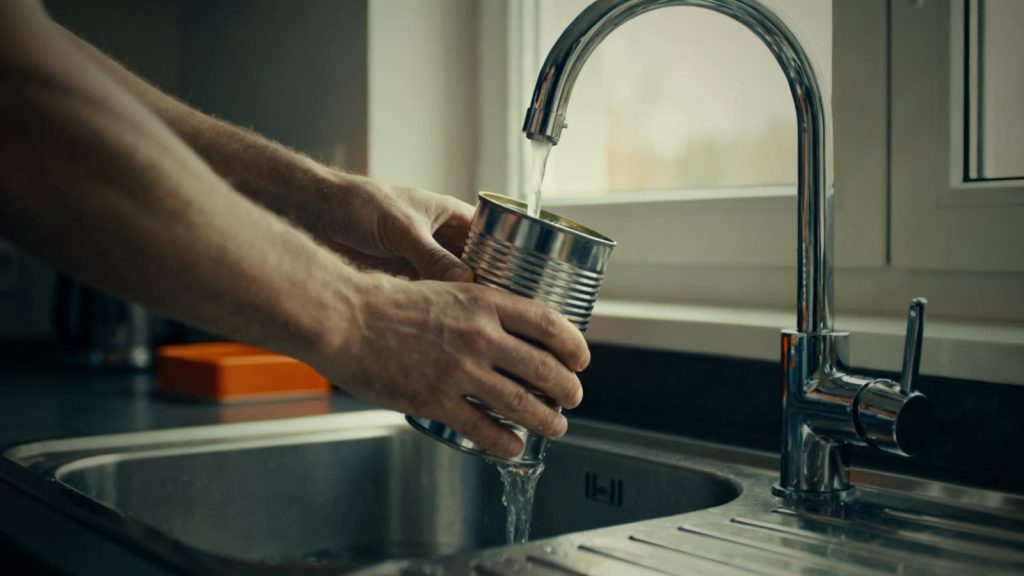
- Let the tap run briefly until fresh, cold water flows.
- Fill the canister as full as possible and seal it tightly right away.
- Label it with the date – a strip of painter’s tape and a marker will do.
How long does homemade bottled tap water last?
There’s no official fixed timeframe, since too much depends on cleanliness and storage conditions. We recommend rotating your homemade water supply regularly rather than letting it sit for years. The old water isn’t wasted, though: use it to water plants or for cleaning.
If you’d rather swap it out less often, you can preserve clean tap water with silver ions. Katadyn states that its Micropur Classic products keep clear tap water drinkable for up to six months. Important: according to the manufacturer, use this only in plastic or glass containers, not aluminum or stainless steel. Note that preserving water isn’t the same as disinfecting it – contaminated water won’t become safe this way. More on that in our article “Treating Water.”
During my time in the military, we never just shoved canisters into a corner. Each one had a fixed spot, a label, and a check-up date. That same routine makes all the difference at home, too.
Choosing the Right Storage Spot
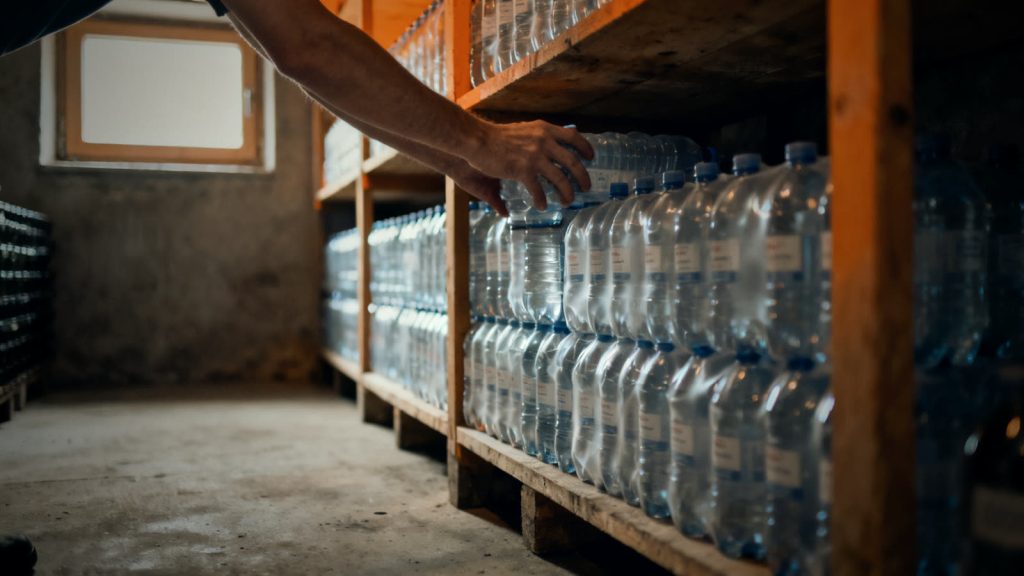
- Cool and dark: A basement, utility closet, or a cupboard against an interior wall is ideal. Direct sunlight promotes algae and germs.
- Away from chemicals: Paints, solvents, fertilizers, and fuel should be kept well away from your water supply.
- Watch out for frost: In a garage, shed, or RV, water can freeze in winter and crack containers. Better not to store it there, or don’t fill canisters all the way.
- Consider flooding: If you live in a flood-prone area, keep part of your supply on an upper floor.
- Spread it out instead of stacking: Multiple storage spots protect you from losing your entire supply to a burst pipe or a toppled stack.
- Keep it accessible: A full 20-liter jug weighs a good 20 kilograms (about 44 pounds). Store it where you can get it out without a ladder or straining your back.
The Maintenance Routine
An emergency water supply is only as good as its upkeep. Set two fixed dates a year, for example when the clocks change in spring and fall. That’s when you check:
- Expiration dates on bottles, moving older ones to the front
- Dates on canisters, swapping out stored tap water
- Leaks, cracks, odors
- Whether the amount still matches the number of people and pets in your household
A Combination Is Often Smartest
Many households do well with a mix: mostly store-bought bottled water, which gets used and restocked in everyday life anyway, plus a few canisters of tap water as backup. Add a collapsible water bag so you can fetch water from a distribution point in an emergency, and you’re well set up.
In short: Factory-sealed mineral water is the lowest-maintenance emergency water supply. Only store tap water in clean, food-grade containers, labeled and swapped out regularly. Keep everything cool, dark, frost-free, and well away from chemicals.
Compare the Right Gear
| Produktbild bei AmazonCompactplasteo Wasserkanister 10 l | Produktbild bei AmazonProven Classichünersdorff Wasserkanister 12 l | Produktbild bei AmazonLarge Supplyhünersdorff Wasserkanister 22 l | |
|---|---|---|---|
| Rating | at least 4.3 out of 5 starswith 500+ customer reviews (our selection criterion)See current reviews* | at least 4.3 out of 5 starswith 500+ customer reviews (our selection criterion)See current reviews* | at least 4.3 out of 5 starswith 500+ customer reviews (our selection criterion)See current reviews* |
| Features |
|
|
|
| Pros |
|
|
|
| Cons |
|
|
|
| View on Amazon* | View on Amazon* | View on Amazon* |
Selected by manufacturer data and customer reviews (at least 4.3 stars with 500+ reviews). We only show exact star ratings when they come from Amazon the same day. As of 04.10.2026. Not tested by us. Current prices and reviews are on Amazon. *Ad · paid link
Conclusion: our product picks
Water Canisters with Spigot Compared
For home storage, 22-liter canisters are the most efficient option – one per person covers the BBK's recommended 20 liters. If you need to carry it, go with several 10- or 12-liter canisters. Store canisters in a cool, dark place and rotate the water regularly.
Links marked with * are advertising links. As an Amazon Associate I earn from qualifying purchases.
Sources and Further Reading
- BLE (German Federal Office for Agriculture and Food) – Food Provisioning: Recommendations and Tips
- BBK (Germany’s Federal Office of Civil Protection) – Stocking Up on Food and Water
- Katadyn – Micropur Classic MC 1T (manufacturer information)
- Umweltbundesamt (German Federal Environment Agency) – All About Drinking Water
General information, no substitute for individual advice from authorities, emergency services or medical professionals. In an emergency in Europe: 112.