In Germany, safe drinking water almost always comes out of the tap. Still, there are situations where that can’t be taken for granted: the local health department (Gesundheitsamt) issues a boil water advisory after bacteria are detected, a water main is damaged during a flood, or you have to rely on water from nature while on the move. For these cases, you should know the three basic tools of water treatment – and what each one can and can’t do.
Step 0: Choose the Right Source
No method reliably turns bad water into good water. That’s why water treatment starts with choosing your source:
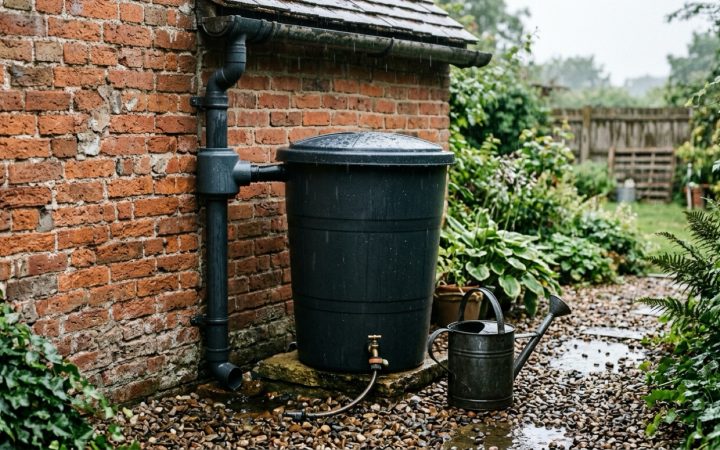
- Better: clear, flowing water, rainwater from clean containers, water from official distribution points
- Worse: standing ponds, ditches along roads and fields, bodies of water downstream from settlements or wastewater treatment plants
- Stay away: floodwater and water with an oil film, a chemical smell, or unusual coloring. Boiling and filtering remove neither fuels nor dissolved chemicals.
Step 1: Pre-Settle and Pre-Filter
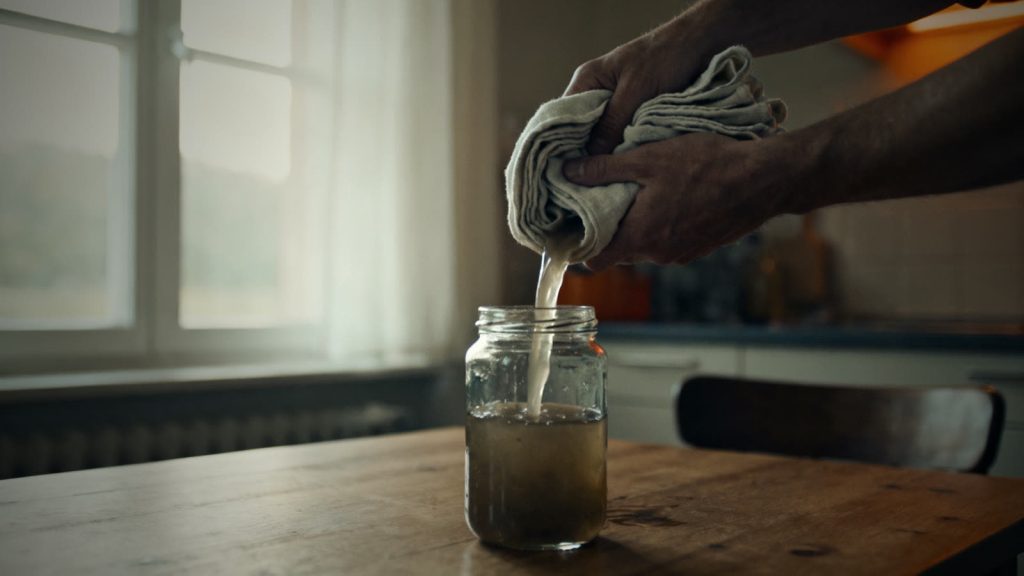
Cloudy water is a problem for every other method. Suspended particles clog filters and shield germs from chlorine or UV light. So let the water sit in a bucket for a while until the dirt settles to the bottom. Then carefully pour off the upper, clearer water through a clean cotton cloth, a coffee filter, or a bandana. This isn’t disinfection yet – but it’s the foundation for it.
Method 1: Boiling
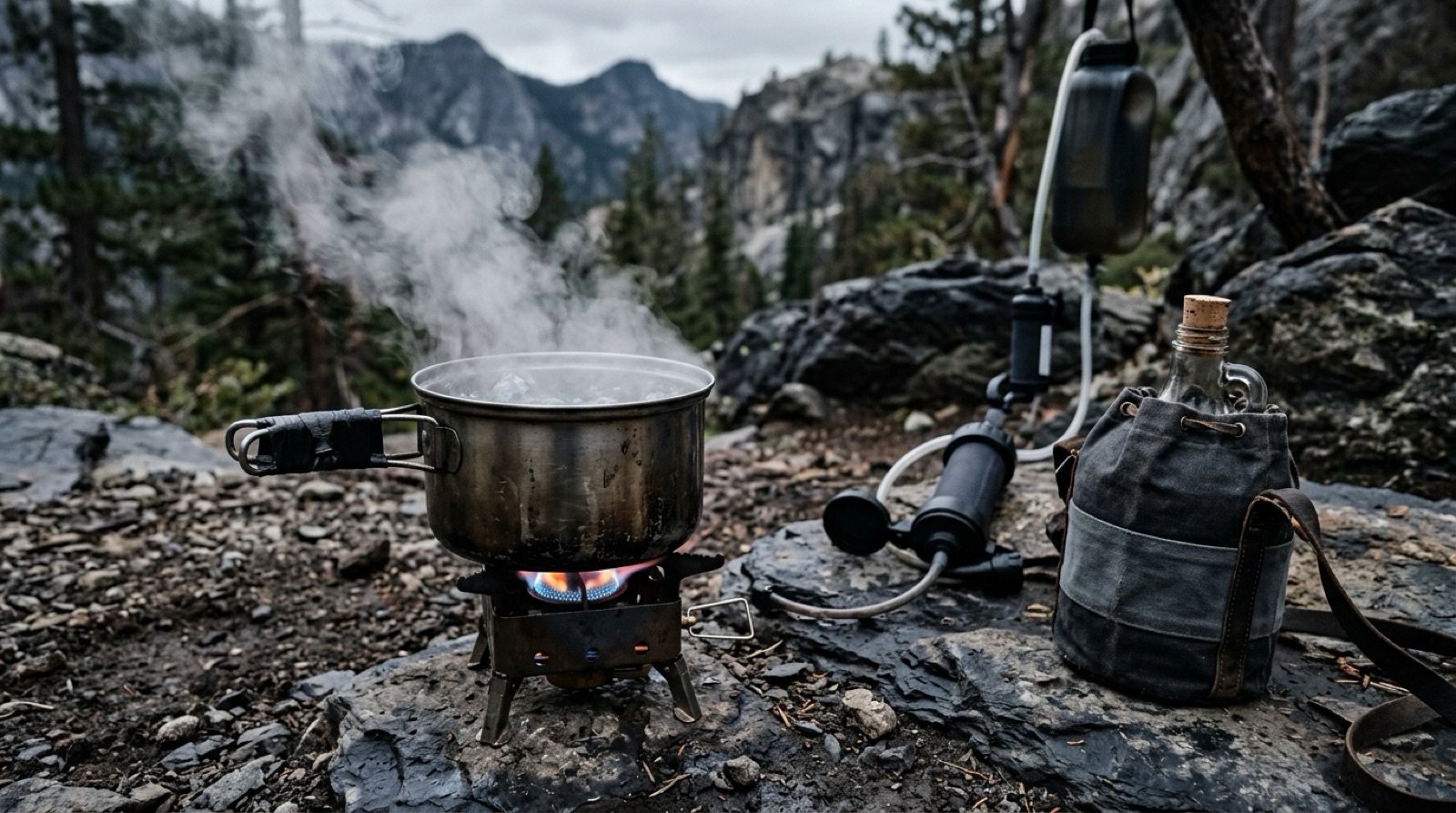
Boiling is the oldest and most reliable method against pathogens. During a boil water advisory, health departments recommend bringing the water to a full rolling boil once and then letting it cool down slowly, over at least about ten minutes. An electric kettle works well for this as long as it brings the water to a proper rolling boil.
- Works against: bacteria, viruses, and protozoa
- Does not work against: chemicals, heavy metals, salt, cloudiness
- Downside: it takes energy. Without electricity, that means a camping stove, gas, or alcohol fuel – and therefore a fuel supply.
Under an official boil water advisory, boiled water isn’t just for drinking. You should also use it for baby food, brushing your teeth, ice cubes, and washing fruit and vegetables that are eaten raw. Always follow the specific instructions from your health department or water utility – they’re issued, for example, through the NINA warning app (the German federal emergency warning app), on the radio, or in the local press.
In training, we kept it simple: when in doubt, boil it. That rule is still the safest fallback today.
Method 2: Filtering
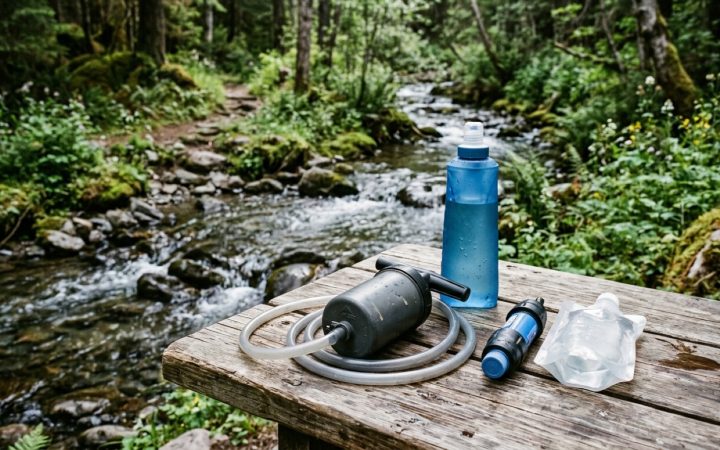
Mechanical outdoor filters with pore sizes of around 0.1 to 0.2 microns, according to manufacturers, remove bacteria and protozoa. Viruses, on the other hand, pass through most of these filters. For clear water from natural sources in Central Europe, a good filter is often a practical solution. With questionable sources, you should filter and also boil or chemically disinfect the water. We explain which filter types are available in our article “Water Filters Compared.”
Method 3: Chemical Disinfection
Disinfection tablets or drops are lightweight, compact, and need no fuel. In stores, you’ll mainly find two groups of active ingredients:
- Chlorine (usually combined with silver): works against bacteria and viruses. Some protozoa, especially Cryptosporidium, are highly resistant to chlorine.
- Chlorine dioxide: considered effective against a broader range of pathogens, including more resistant ones, but requires longer contact times depending on the product.
It’s important to distinguish these from pure silver ion products: they preserve water that is already clean, but they don’t make contaminated water safe. So read the package carefully and stick to the stated dosage and contact time. Chemical treatments work less well in cloudy and very cold water – pre-settling and pre-filtering is especially important here.
Supplementary option: UV light
Battery-powered UV pens destroy germs with ultraviolet light. They only work in clear water and depend on rechargeable batteries or regular batteries. They make sense as a supplement in your travel kit, but not as the sole solution for your household.
The safe order of steps
- Check the source: no floodwater, no chemical smell
- Pre-treat: let it settle, pour it through a cloth
- Filter: remove bacteria, protozoa, and suspended particles
- Boil or disinfect chemically: take care of viruses and any remaining germs
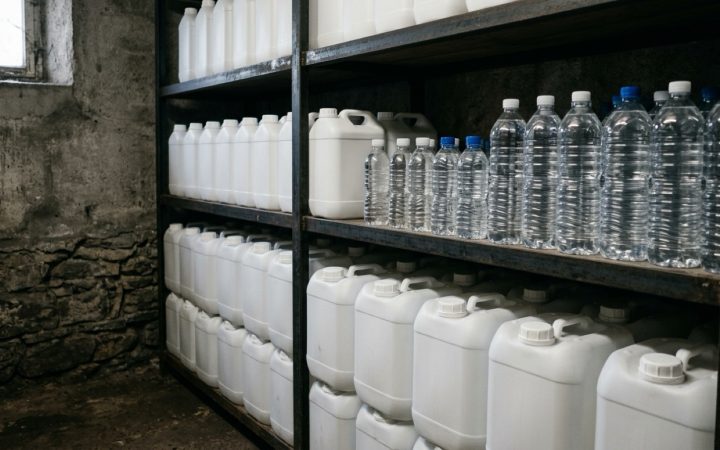
- Store safely: in a fresh, sealed container, separate from the untreated water
Not every situation requires all of the steps. If a boil water notice is issued for your tap water, boiling is enough. Out in the wild at a clear mountain stream, a filter is often enough. The less certain the source, the more stages you should combine.
What you should keep on hand
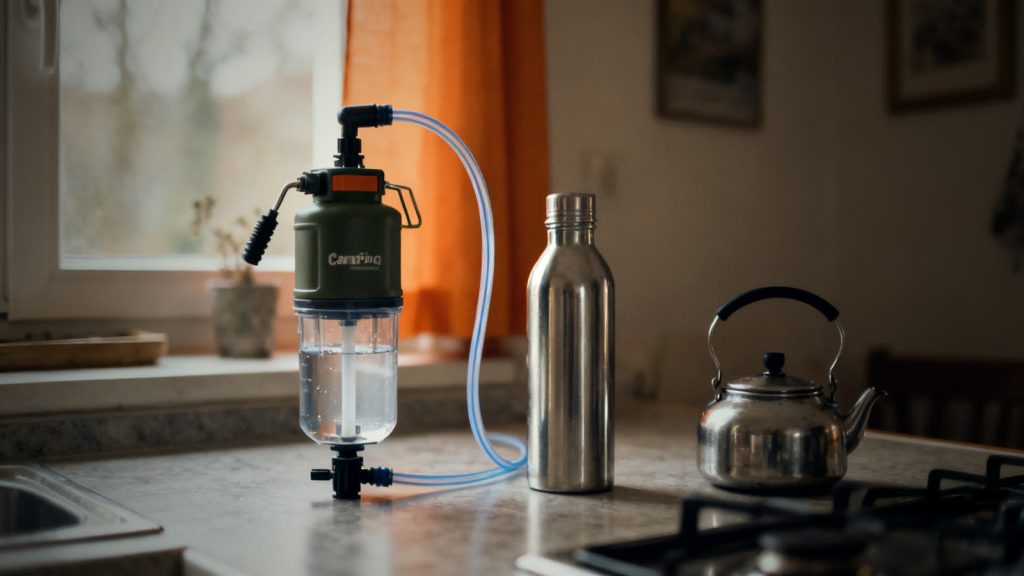
- A camping stove with enough fuel (follow the safety rules, see the article “Cooking Without Power”)
- A pot with a lid – it saves energy
- A filter for your go bag
- A pack of water purification tablets as a lightweight backup
- Clean cloths and at least two clearly labeled containers: “untreated” and “drinkable”
In short: Boiling – bring the water to a full rolling boil, then let it cool slowly – is the safest method against germs. Filters remove bacteria and protozoa, but usually not viruses. No method removes chemicals: floodwater and suspicious sources are off limits.
Comparison of suitable gear
| Produktbild bei AmazonLight & affordableMembrane Solutions Filter-Strohhalm | Produktbild bei AmazonFilter bottleBachgold Selfpress Trinkflasche | Produktbild bei AmazonProfessional pump filterKatadyn Pocket | |
|---|---|---|---|
| Rating | at least 4.3 out of 5 starswith 500+ customer reviews (our selection criterion)See current reviews* | at least 4.3 out of 5 starswith 500+ customer reviews (our selection criterion)See current reviews* | at least 4.3 out of 5 starswith 500+ customer reviews (our selection criterion)See current reviews* |
| Features |
|
|
|
| Pros |
|
|
|
| Cons |
|
|
|
| View on Amazon* | View on Amazon* | View on Amazon* |
Selected by manufacturer data and customer reviews (at least 4.3 stars with 500+ reviews). We only show exact star ratings when they come from Amazon the same day. As of 04.10.2026. Not tested by us. Current prices and reviews are on Amazon. *Ad · paid link
Conclusion: our product picks
Outdoor Water Filters Compared
For the emergency backpack, the lightweight Membrane Solutions straw is enough. Anyone needing to treat water for several people is reliably supplied with the Katadyn Pocket. The Bachgold bottle is the easiest to use. Important: these filters retain bacteria and parasites, but not reliably viruses or dissolved chemicals – when in doubt, also boil the water.
Links marked with * are advertising links. As an Amazon Associate I earn from qualifying purchases.
Sources and further information
- Umweltbundesamt (German Environment Agency) – Recommendations for handling deviations under the Drinking Water Ordinance (2026)
- City of Memmingen/Public Health Department – Fact sheet on boil water orders
- BBK (Germany’s Federal Office of Civil Protection and Disaster Assistance) – Preparing for and responding to a power outage
- Katadyn – Micropur Classic (manufacturer information on silver ion preservation)
General information, no substitute for individual advice from authorities, emergency services or medical professionals. In an emergency in Europe: 112.