A water filter is one of those pieces of gear that barely gets noticed in daily life but becomes enormously valuable in an emergency. If the water supply fails for an extended period, or if you have to use water from a stream, lake, or rain barrel while on the move, the filter determines whether you end up with diarrhea or not. At the same time, a lot of misconceptions surround these devices. We’ll break down the most important systems – no marketing promises, just an honest look at their limits.
What a filter can actually do
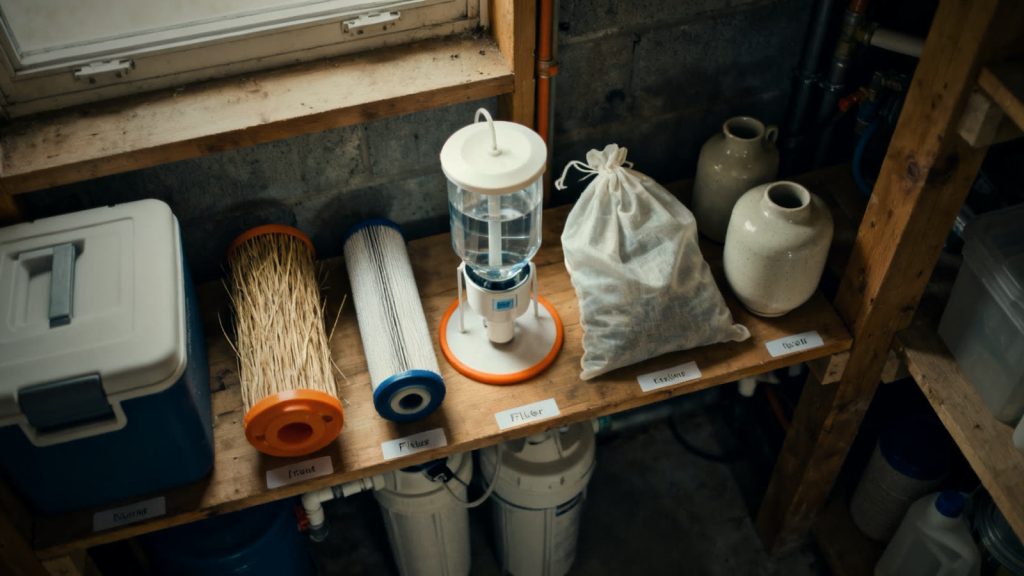
Mechanical water filters work like an extremely fine sieve. The key factor is pore size, measured in micrometers (µm). Common outdoor filters range from about 0.1 to 0.2 µm. According to manufacturer specs, this reliably removes:
- Bacteria, such as E. coli or salmonella
- Protozoa like giardia and cryptosporidium
- Suspended particles and turbidity
What most of these filters do not remove:
- Viruses – they’re smaller than the pores of typical filters. The exception is special purifiers explicitly designed to remove viruses.
- Dissolved chemicals such as pesticides, fuel, or industrial chemicals
- Salt – seawater stays seawater
- Heavy metals – outdoor filters don’t reliably help here
This leads to an important rule: water from flooded areas, ditches next to roads, or bodies of water downstream of treatment plants and industrial sites is not a good source for outdoor filters. Floodwater often contains sewage, oil, and chemicals.
An overview of the systems
Hollow-fiber filters (squeeze and bottle filters)
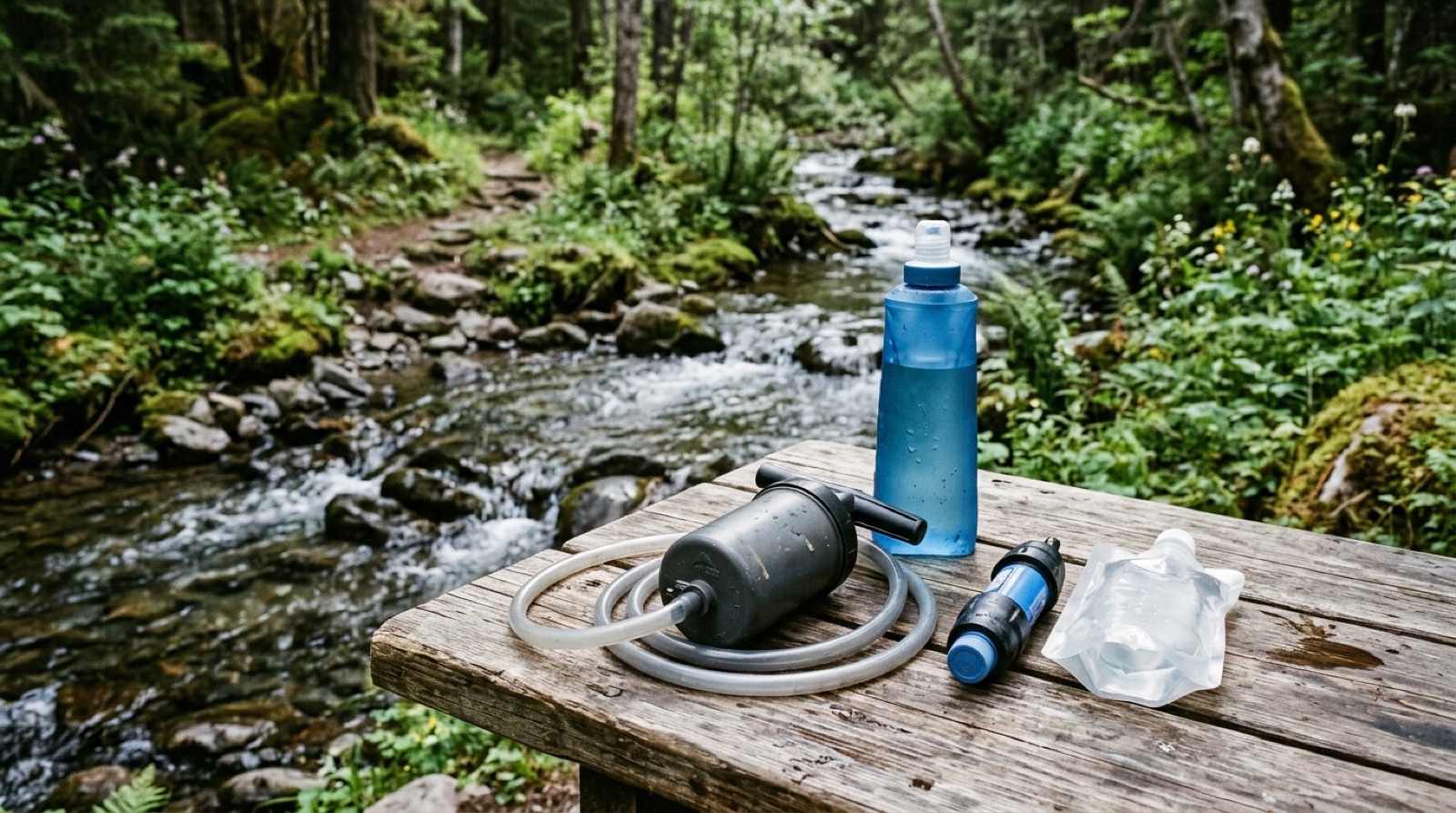
Here, water flows through bundles of extremely fine plastic tubes. Well-known examples are the Katadyn BeFree and the Sawyer Squeeze. You fill a pouch or soft bottle, screw on the filter, and squeeze or drink directly through it.
- Pros: very light, compact, fast, affordable relative to performance
- Cons: A defect is hard to spot from the outside. Frost can damage the fibers without you noticing – according to manufacturer guidance, a frozen filter is no longer considered safe.
- Best for: go bags, backpacks, car kits
Ceramic filters
A ceramic element, often containing silver, traps germs. The classic example is the Katadyn Pocket. When the surface gets dirty, it’s scrubbed with a brush – which lets the element last a very long time.
- Pros: extremely durable, cleanable, rugged construction
- Cons: heavier, slower, more expensive; ceramic can crack if dropped
- Best for: household emergency preparedness, extended use, multiple people
Pump filters with glass fiber and activated carbon
Pump filters like the Katadyn Hiker Pro draw water directly from the source through a hose. An activated carbon core improves taste.
- Pros: works well even from shallow puddles or streams, decent flow rate
- Cons: more parts, the cartridge is a wear item
Gravity filters
A large bag is hung up, and water flows through the filter into a container on its own. This is convenient when multiple people need to be supplied – for example, at home or at camp. Many manufacturers offer gravity sets based on their hollow-fiber filters.
Purifiers with virus protection
Some devices, such as the MSR Guardian, are rated by the manufacturer to handle viruses as well. They’re significantly more expensive, heavier, and better suited to travel in regions with poor hygiene conditions. In Central Europe, a standard filter is usually enough for clear water from natural sources; if the source is questionable, combine it with boiling or chemical disinfection.
Activated carbon alone
Pure activated carbon filters, like those found in kitchen pitcher filters, improve taste and odor. They don’t protect against germs. That means they’re no substitute for an outdoor filter.
A lesson from training: the best gear is useless if you unpack it for the first time during an actual emergency. Try out your filter at a stream on your next walk.
How to choose the right system
- Who is it for? For one person on the go, a lightweight squeeze filter is enough for your go bag. For a family at home, a ceramic or gravity-fed filter system is worth it.
- What water sources are near you? Clear stream, pond, rain barrel? The murkier the water, the more important a cleanable filter becomes.
- Where will it be stored? In a car or garden shed, freezing is a risk—in that case, ceramic or a frost-protected storage spot is the better choice.
- Spare parts: Check whether cartridges and seals are readily available where you live.
Practical tips for use
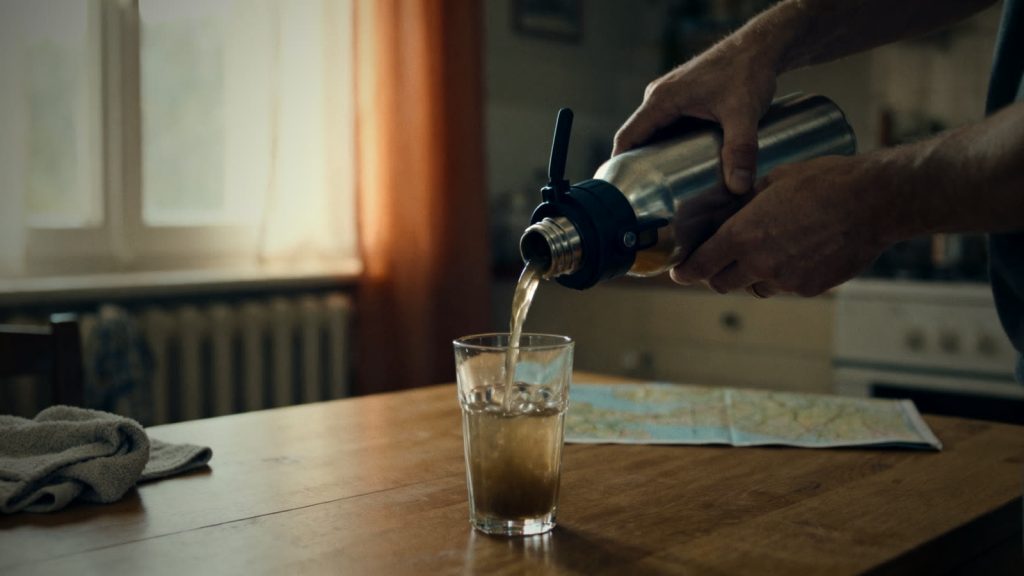
- Pre-filter first: Let murky water settle, then pour it through a clean cloth. This protects the filter.
- Keep dirty and clean separate: Label containers for unfiltered water and never mix them up.
- Backflush regularly: Clean according to the manufacturer’s instructions, or the flow rate will drop.
- Store dry: Let it dry after use and store it somewhere frost-free.
- Combine methods: Pairing a filter with boiling or disinfection tablets also covers viruses.
In short: Common outdoor water filters block bacteria and protozoa, but usually not viruses, chemicals, or salt. Hollow-fiber filters are lightweight and fast; ceramic filters are durable and cleanable. Protect hollow-fiber filters from freezing, and test every system before you actually need it.
Compare the right gear
| Produktbild bei AmazonLight & affordableMembrane Solutions Filter-Strohhalm | Produktbild bei AmazonFilter bottleBachgold Selfpress Trinkflasche | Produktbild bei AmazonProfessional pump filterKatadyn Pocket | |
|---|---|---|---|
| Rating | at least 4.3 out of 5 starswith 500+ customer reviews (our selection criterion)See current reviews* | at least 4.3 out of 5 starswith 500+ customer reviews (our selection criterion)See current reviews* | at least 4.3 out of 5 starswith 500+ customer reviews (our selection criterion)See current reviews* |
| Features |
|
|
|
| Pros |
|
|
|
| Cons |
|
|
|
| View on Amazon* | View on Amazon* | View on Amazon* |
Selected by manufacturer data and customer reviews (at least 4.3 stars with 500+ reviews). We only show exact star ratings when they come from Amazon the same day. As of 04.10.2026. Not tested by us. Current prices and reviews are on Amazon. *Ad · paid link
Conclusion: our product picks
Outdoor Water Filters Compared
For the emergency backpack, the lightweight Membrane Solutions straw is enough. Anyone needing to treat water for several people is reliably supplied with the Katadyn Pocket. The Bachgold bottle is the easiest to use. Important: these filters retain bacteria and parasites, but not reliably viruses or dissolved chemicals – when in doubt, also boil the water.
Links marked with * are advertising links. As an Amazon Associate I earn from qualifying purchases.
Sources and further information
General information, no substitute for individual advice from authorities, emergency services or medical professionals. In an emergency in Europe: 112.