Every roof is a small catchment surface. During a heavy downpour, several hundred liters of water can quickly run through the downspouts of a single-family home – water that usually disappears unused into the sewer. For emergency preparedness, that makes it an interesting reserve. But rainwater has its pitfalls. We’ll show you what it’s good for, how to collect it, and when it can go into a glass and when it can’t.
Rainwater Is Not Drinking Water
The most important point first: rainwater from a roof is not drinking-water quality. On its way into the barrel, it picks up dust, pollen, leaves, bird droppings, and particles worn off the roofing material. Pathogens can be present in it. That’s why health departments (Gesundheitsämter) point out that collected rainwater in the home is meant for watering the garden and flushing the toilet – not for drinking, cooking, or brushing your teeth.
In an emergency, it is still extremely useful. After all, a large share of our water needs has nothing to do with drinking.
What You Can Use Rainwater for in an Emergency
- Toilet flushing: A bucket of rainwater poured straight into the bowl flushes even without water pressure. This saves your drinking water supply considerably.
- Cleaning and rough scrubbing: Floors, tools, shoes, patio furniture.
- Garden and plants: Vegetable beds love soft rainwater anyway.
- Laundry in an emergency: Suitable for heavily soiled clothing. For baby clothes and towels, it’s better to use clean water.
Drinking Only After Treatment – and With Caution
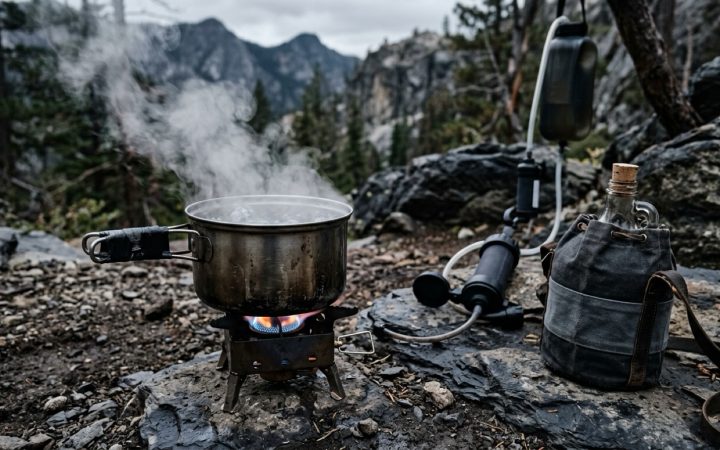
If all other sources have run dry, rainwater can be treated. In that case, the rule is: let it settle, filter it, and also boil it or disinfect it chemically (see the article “Water Purification”). But even then, there are limits. Neither an outdoor filter nor boiling removes substances that get into the water from the roof or the air. Problem cases include, for example:
- Roofs with copper or zinc sheeting, tar-based roofing membranes, or old asbestos-cement panels
- Freshly treated wood surfaces or coatings
- Locations right next to busy roads or industrial facilities
Cleaner is rain that you catch directly in a clean bowl placed in the open or in a stretched-out tarp – not via gutters. But you should disinfect this water too before drinking it.
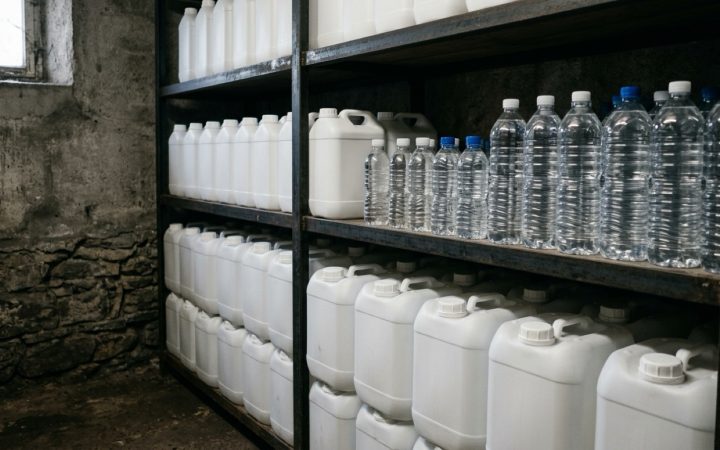
An old rule from training: drinking water and non-potable water get separate containers, separate colors, and a clear label. After all, mix-ups don’t happen when things are calm, but under stress.
How to Collect Rainwater Cleanly
The Simple Rain Barrel
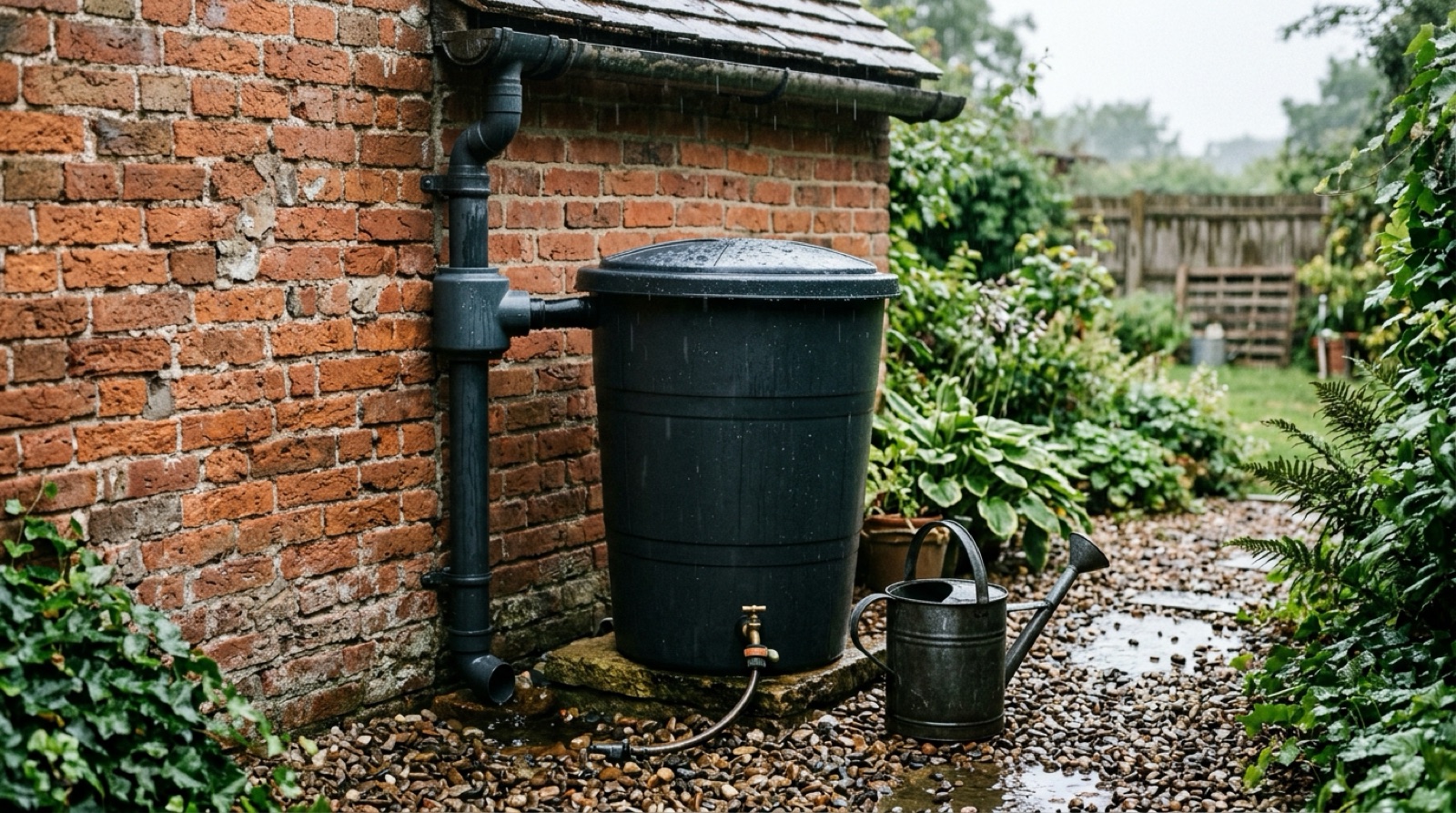
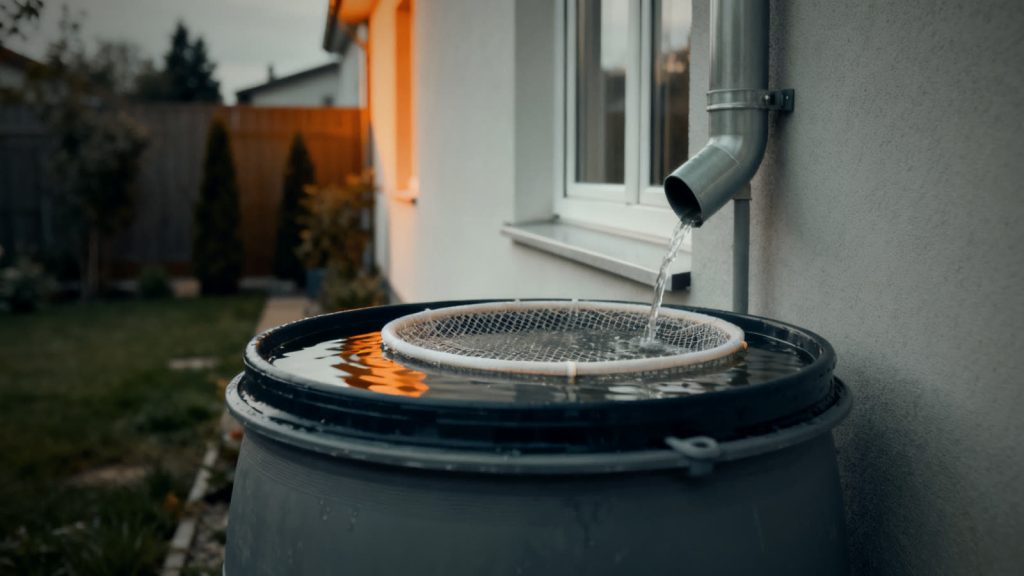
A rain barrel at the downspout with a rain diverter or downspout filter is the simplest solution. Keep these points in mind:
- Keep the lid on: A tight-fitting lid keeps out leaves, animals, and mosquitoes. It is also an important safeguard for children – an open barrel is a drowning hazard.
- Let the first flush run off: The rain from the first few minutes washes the worst of the dirt off the roof. Many downspout diverters can be set so that nothing flows into the barrel at first, or you can close the diverter only after a few minutes.
- Place it in the shade: Sun and warmth promote algae.
- Clean it regularly: Remove sludge from the bottom once a year.
- Mind the winter: Empty it or disconnect it before frost so the barrel doesn’t crack.
Larger Systems and Cisterns
If you want to use rainwater inside the house for toilet flushing, you need a permanently installed system. Clear rules apply here: a direct connection between the rainwater and drinking water lines is not permitted, taps and outlets must be labeled “Not drinking water,” and the start of operation must be reported to the health department. Depending on the municipality, additional requirements may apply, for example regarding wastewater fees. Get advice on systems like this from a specialist company and your local authority.
How much rainwater can I realistically collect?
That depends on your roof area, the amount of rainfall, and the size of your rain barrel. As a rough rule of thumb, one millimeter of rain equals one liter of water per square meter of surface area. Some of it is lost to evaporation, overflow, and first flush. For emergency preparedness, you don’t need to calculate exactly. What matters more is that the barrel is full when you need it – so don’t empty it completely to water the garden in summer if a heat wave with storms is forecast.
No garden? Solutions for apartments
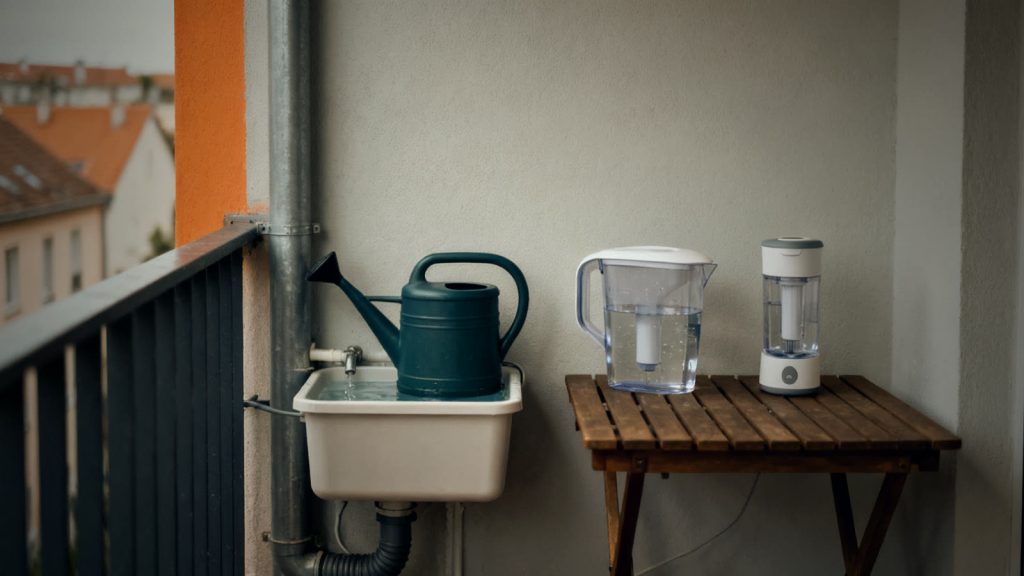
You can collect rain on a balcony, too. A clean bucket or a collapsible water container placed under a drip point is enough for plants and toilet flushing. Check your house rules and make sure water doesn’t run onto the balcony below. For most apartment households, however, a stored supply of bottled utility water – such as a filled bathtub when service disruptions are announced – is the more practical solution.
In short: Rainwater is ideal for toilet flushing, cleaning, and gardening, but it is not drinking water. If you have to drink it in an emergency, only do so after settling, filtering, and boiling it – and never from contaminated roofs. Always cover rain barrels, label them, and protect them from frost.
Matching gear compared
| Produktbild bei AmazonLight & affordableMembrane Solutions Filter-Strohhalm | Produktbild bei AmazonFilter bottleBachgold Selfpress Trinkflasche | Produktbild bei AmazonProfessional pump filterKatadyn Pocket | |
|---|---|---|---|
| Rating | at least 4.3 out of 5 starswith 500+ customer reviews (our selection criterion)See current reviews* | at least 4.3 out of 5 starswith 500+ customer reviews (our selection criterion)See current reviews* | at least 4.3 out of 5 starswith 500+ customer reviews (our selection criterion)See current reviews* |
| Features |
|
|
|
| Pros |
|
|
|
| Cons |
|
|
|
| View on Amazon* | View on Amazon* | View on Amazon* |
Selected by manufacturer data and customer reviews (at least 4.3 stars with 500+ reviews). We only show exact star ratings when they come from Amazon the same day. As of 04.10.2026. Not tested by us. Current prices and reviews are on Amazon. *Ad · paid link
Conclusion: our product picks
Outdoor Water Filters Compared
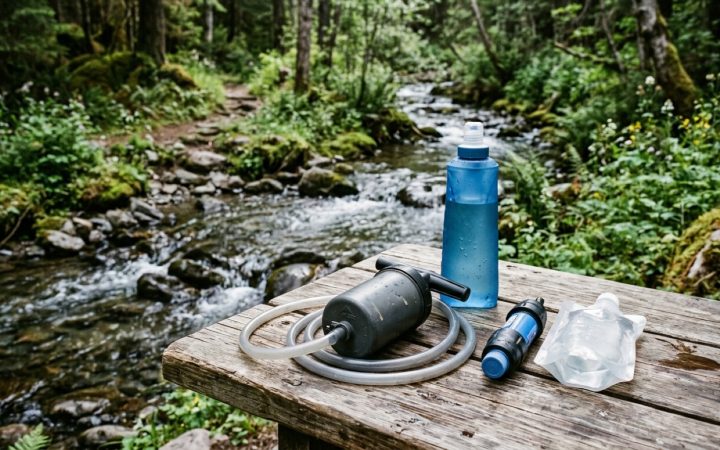
For the emergency backpack, the lightweight Membrane Solutions straw is enough. Anyone needing to treat water for several people is reliably supplied with the Katadyn Pocket. The Bachgold bottle is the easiest to use. Important: these filters retain bacteria and parasites, but not reliably viruses or dissolved chemicals – when in doubt, also boil the water.
Links marked with * are advertising links. As an Amazon Associate I earn from qualifying purchases.
Sources and further information
General information, no substitute for individual advice from authorities, emergency services or medical professionals. In an emergency in Europe: 112.