A first aid kit is one of the few preparedness items you will very likely actually use – not just in a major crisis, but when a kitchen knife slips, when you fall off your bike, or when your child scrapes a knee on the playground. That makes it all the more important that the right items are inside and that you can find the kit when it matters.
First aid kit or home medicine cabinet?
The two are often confused. The home medicine cabinet holds medication and supplies for everyday ailments such as fever or diarrhea. The first aid kit, on the other hand, is meant for injuries: stopping bleeding, covering wounds, immobilizing joints, and protecting an injured person from losing body heat. Medication generally does not belong in it. The two complement each other, and the BBK (Germany’s Federal Office of Civil Protection and Disaster Assistance) explicitly lists bandage material as part of emergency preparedness in its guide.
What the DIN standards mean
In Germany, there are standards that define the contents of first aid kits. Two terms matter most for you as a private individual:
- DIN 13164 describes the car first aid kit. It is required in passenger vehicles and, thanks to its compact size, also works well as a base for your home kit or go bag.
- DIN 13157 covers the small workplace first aid kit. It contains more supplies and is a good choice if you are looking for a kit for a family or a home with a workshop.
The standard is a good minimum. But it says nothing about whether the kit fits your life. That is why it makes sense to start with a standardized kit as your core and add to it as needed.
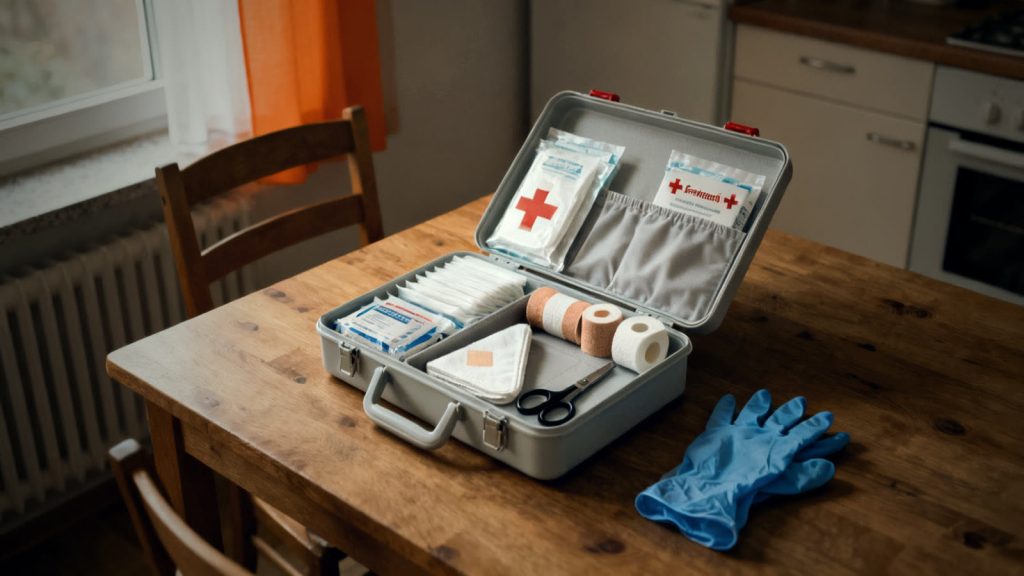
The core contents
Regardless of the standard, a useful kit should include these basics:
- Sterile wound dressings in various sizes, meaning compresses and bandage packets
- Fixation bandages and gauze bandages to secure dressings or apply a pressure bandage
- Adhesive tape as a roll and adhesive bandages in various sizes
- Triangular bandages to immobilize an arm or shoulder and as a versatile aid
- Bandage scissors with a rounded tip
- Disposable gloves, at least two pairs – for your protection and the injured person’s
- Emergency blanket to prevent heat loss
Useful additions
What else you pack depends on where and how you live. These have proven worthwhile:
- a rescue breathing aid (pocket mask or face shield), if you would feel more confident performing CPR (cardiopulmonary resuscitation)
- splinter tweezers and a tick removal card
- Wound disinfectant – if in doubt, ask a pharmacy or doctor’s office how to use it
- a small headlamp so you have both hands free
- Instant cold packs for bruises
- a waterproof pen and a piece of paper to note the time and your observations
Medication and personal prescriptions belong in the home medicine cabinet, not in the injury kit. That keeps the kit organized and prevents mix-ups.
One Kit Is Not Enough
In basic training, every soldier carries their own field dressing on their person – for a simple reason: supplies sitting in a locker don’t help anyone out in the field. For your household, that means having first aid kits where you actually need them:
- At home: a larger kit in a fixed spot that everyone knows about, such as the hallway.
- In the car: the legally required vehicle first aid kit, within easy reach and not buried under your luggage.
- In your emergency or daypack: a small, lightweight kit for when you’re out and about and in case you have to leave your home.
If you spend a lot of time outdoors, commute by bike, or have kids, you’ll also appreciate a mini version in your jacket pocket or the stroller.
Maintenance and Inspection
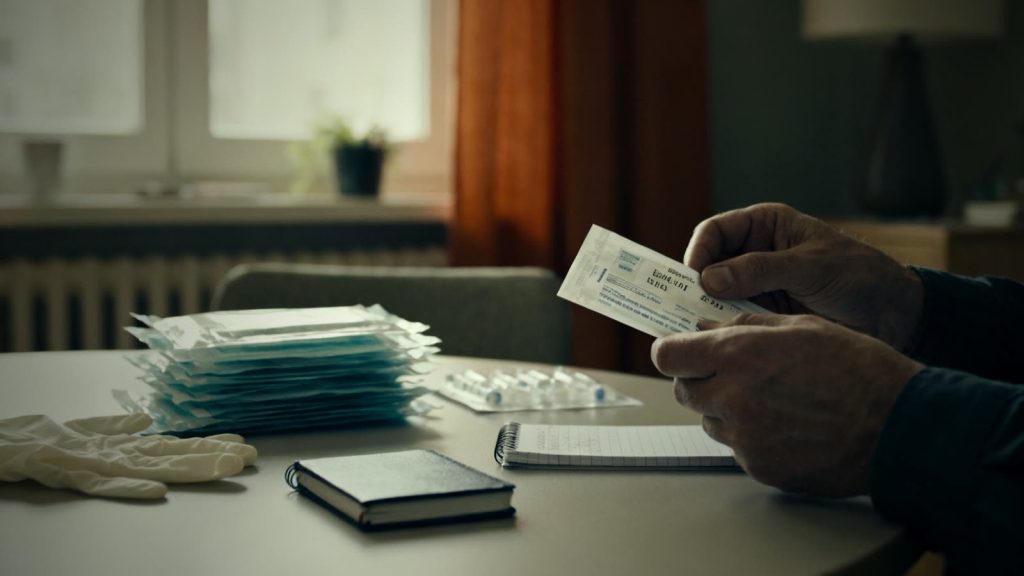
Sterile supplies have an expiration date because the sterility of the packaging can’t be guaranteed indefinitely. Adhesive bandages lose their stickiness over time, and gloves can become brittle. Check your first aid kit regularly, ideally together with your medicine cabinet. Look out for:
- expired or damaged sterile packaging
- gaps after the last time you used the kit
- brittle gloves and bandages that no longer stick
- moisture or heat, especially for a kit stored in the car
And most important: open your kit once on purpose and take a look at what’s inside. Anyone who tears open a field dressing for the first time in an emergency loses valuable time. Anyone who has tried it out calmly beforehand acts with confidence. A first aid course offered by the DRK (German Red Cross), Johanniter, Malteser, ASB, or other providers combines supplies and hands-on skills – one without the other is only half the preparation.
For any serious injury, the rule is: first your own safety, then call the emergency number 112, then give first aid until emergency medical services arrive.
One last practical tip: stick a small note with the date of your last check inside the lid of your kit. That way you can see at a glance when it’s time to check again – and nobody in your household has to guess whether the supplies are still up to date.
In short: A standardized kit that meets DIN 13164 or DIN 13157 is a good foundation that you can expand to fit your needs. Spread kits across your home, car, and backpack. Check them regularly and get familiar with the contents before you need them.
Compare the Right Gear
| Produktbild bei AmazonFor home useFLEXEO Erste-Hilfe-Koffer DIN 13157:2021 | Produktbild bei AmazonHome alternativeWERKSTEIN Erste-Hilfe-Kasten DIN 13157:2021 | Produktbild bei AmazonFor on the goFLEXEO Erste-Hilfe-Tasche „Discovery“ | |
|---|---|---|---|
| Rating | at least 4.3 out of 5 starswith 500+ customer reviews (our selection criterion)See current reviews* | at least 4.3 out of 5 starswith 500+ customer reviews (our selection criterion)See current reviews* | at least 4.3 out of 5 starswith 500+ customer reviews (our selection criterion)See current reviews* |
| Features |
|
|
|
| Pros |
|
|
|
| Cons |
|
|
|
| View on Amazon* | View on Amazon* | View on Amazon* |
Selected by manufacturer data and customer reviews (at least 4.3 stars with 500+ reviews). We only show exact star ratings when they come from Amazon the same day. As of 04.10.2026. Not tested by us. Current prices and reviews are on Amazon. *Ad · paid link
Conclusion: our product picks
First Aid Kits Compared
For home use, a kit meeting DIN 13157 belongs on the wall – both models meet the current standard. For emergency bags and outings, the FLEXEO bag is a good addition. A first aid course doesn't replace the supplies – in an emergency, always call 112.
Links marked with * are advertising links. As an Amazon Associate I earn from qualifying purchases.
Sources and Further Information
General information, no substitute for individual advice from authorities, emergency services or medical professionals. In an emergency in Europe: 112.