📌 Part of the guide: Building Your Emergency Supply Kit: A 4-Step Guide to 10 Days of Readiness
You recognize hypothermia in the first stage by cold-induced shivering, increased breathing, and elevated heart rate; in the second stage by slowed breathing, muscle rigidity, and increasing drowsiness. According to the German Red Cross (DRK), emergency call 112 is the first step in both stages. Everything else depends on which stage the person is in.
This article is aimed at anyone who bears responsibility for others at home, on the go, or in cold conditions. It does not replace a first aid course, but gives you calm guidance: What do you observe, what do you do first, and what are you consciously aware of? The action steps are based on information from the DRK, and the preparedness tips are based on the Federal Office of Civil Protection and Disaster Relief (BBK).
Recognizing Hypothermia: The Two Stages
The DRK distinguishes two stages of hypothermia. This classification helps you organize what you observe and choose the appropriate steps. It is not a medical diagnosis, and you don’t need to master it perfectly. What matters is that you take any unusual signs seriously, stay calm, and call emergency services at 112, because according to the DRK, this is necessary in both stages.
Stage I: The Body Still Responds Clearly
In the first stage, the person is conscious. The DRK describes the following signs:
- Cold-induced shivering
- Increased breathing
- Elevated heart rate
- The person is conscious, initially agitated, later calmer.
Don’t look at just a single sign, but the overall picture. A person who is shivering, breathing faster, and still responding to you fits the first stage according to this description. Take it seriously, even if they say it’s not that bad.
Stage II: The Situation Worsens
For the second stage, the DRK describes different signs:
- Slowed breathing
- Muscle rigidity
- Diminished pain sensation
- Increasing drowsiness up to loss of consciousness
The signs can blend into one another. You don’t have to decide alone whether a stage has already been reached. Call emergency services and describe what you observe. The calmer and more precisely you do this, the better others can assess the situation.
As a memory aid, you can remember: In the first stage, the body is active, there is shivering and increased breathing. In the second stage, slowing down is in the foreground—slower breathing, rigidity, and increasing drowsiness. For both: call emergency services at 112.
First Aid for Hypothermia in Stage I
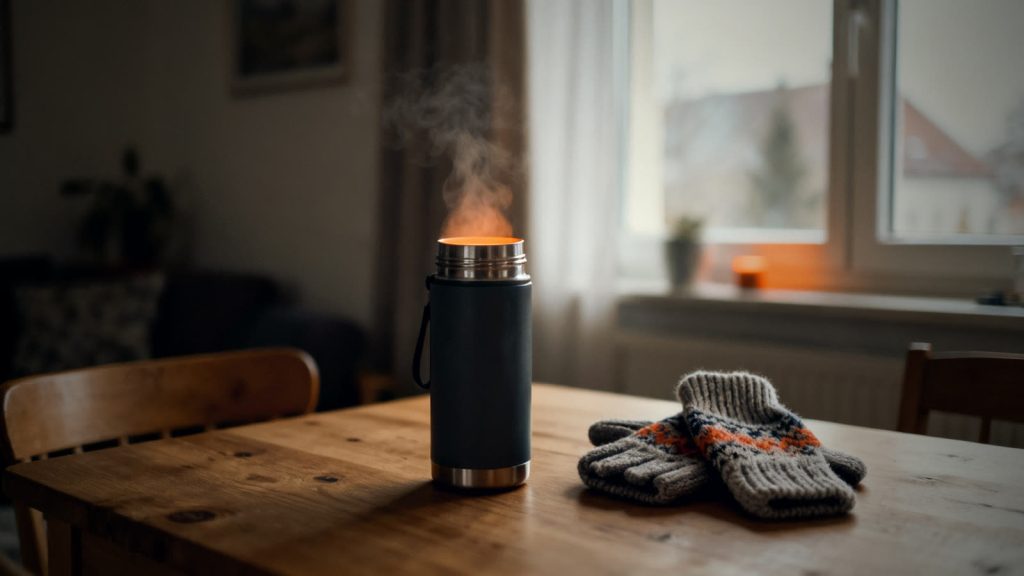
If the person is conscious and shivering, follow the DRK (German Red Cross) recommendations in this order. The steps are intentionally straightforward so you can recall them even under stress.
- Call emergency number 112. Even in the first stage, calling for help is essential. If you’re not alone, ask another person to make the call while you stay with the affected person.
- Move to a warm location. Help the person leave the cold environment, as long as it can be done safely.
- Remove wet clothing. Do this carefully and without rushing.
- Wrap in warm blankets. This keeps the person protected without you actively applying heat.
- Warm up gradually. This means gentle, passive rewarming through the warm location and blankets, not active heat application.
- Warm, sweetened beverages are acceptable. The DRK recommends them for the affected person in the first stage, when the person is conscious.
Stay with the person, speak to them calmly, and watch for any changes. You don’t need to do anything complicated: call for help, provide thermal protection, remove wet clothing, add blankets, and be patient. This is the core of first aid in this stage.
What to Avoid in Stage I
Warming up here does not mean rapidly heating the body from the outside. The DRK is explicit: no active rewarming, so no rubbing and no heat bottles. Also, do not give alcohol to the affected person. Follow these clear guidelines, even if others offer well-intentioned advice.
Stage II: What to Do and What to Avoid
If the person shows signs of the second stage, the priority changes. The DRK recommends: call emergency number 112 and stop any rewarming attempts. This is a clear difference from the first stage. Anyone who continues rewarming here no longer follows the recommendations. Stay with the person and calmly wait for the ambulance service.
If the person is no longer conscious, the DRK outlines clear steps:
- Call emergency number 112, if you haven’t already.
- Check if the person is breathing normally.
- If unconscious with normal breathing: place in the recovery position.
- If not breathing normally: perform CPR.
The number 112 also applies throughout Europe, so you can use it when traveling. The BBK (Germany’s Federal Office of Civil Protection) counts calling for help and basic first aid as life-saving measures. That’s exactly why it’s worth practicing them beforehand.
Panic doesn’t help in this situation, but calm, structured action does. Learn how to stay capable of action under stress in our article Staying Calm in an Emergency.
Stage I or II? If You’re Unsure
It’s not always clear which stage is occurring. That’s okay. What matters is that you call for help and don’t wait. Tell them what you see: whether the person is shivering, if they’re conscious, how they’re breathing, and if they seem very tired. At no point give alcohol or apply active heat, as neither is recommended by the DRK.

Preparation: How to prepare for cold
Good first aid begins before an emergency. The BBK (Germany’s Federal Office of Civil Protection) points out that with a supply of food and beverages, you can avoid shopping when weather warnings are issued. Learn how to build a sensible emergency stockpile in Smart emergency preparedness: why an emergency stockpile makes sense.
When snow and ice are present, the BBK also recommends: heed weather warnings and avoid accidents and falls. You should only enter frozen bodies of water after official clearance. The BBK specifies a minimum ice thickness of 15 cm for this. If you’re unsure about an ice surface, follow official guidance.
Supplies for minor emergencies are also part of preparedness. The BBK describes a home medicine cabinet assembled according to personal needs. It helps you manage minor emergencies on your own, such as when you can’t leave your home or medical care is interrupted. Learn what to include in the article The home medicine cabinet for emergencies. A readily accessible first aid kit complements this well.
Keeping an eye on cold at home
Cold is not just an issue outdoors. If your home heating fails, you should think early about how to protect yourself and others. Find helpful guidance in Keeping your home warm when heating fails and the article The layering principle: how to dress properly for cold. Emergency heating systems pose risks you should learn about in advance, for example in the article Carbon monoxide: the invisible danger from emergency heaters.
Refreshing your knowledge
Reading is no substitute for practice. The BBK points out that free courses in “First Aid with Self-Protection Content” (EHSH) are offered nationwide. There you can practice under instruction what can only be described in this article. Learn why a course is worthwhile in Refreshing first aid.
Frequently asked questions
How can I recognize hypothermia?
In the first stage, by shivering from cold, rapid breathing, and increased heart rate, with consciousness intact. In the second stage, by slowed breathing, muscle rigidity, reduced pain sensation, and increasing fatigue leading to unconsciousness.
What is the first action for hypothermia?
Call emergency number 112. In the first stage, move the person to a warm place, remove wet clothing, and wrap them in warm blankets. In the second stage, do not attempt any rewarming.
Can I use a hot water bottle or rubbing?
No. The DRK (German Red Cross) recommends no active heat application, so no rubbing and no hot water bottles. Warming in the first stage should happen slowly through the warm location and blankets.
Can I give alcohol for hypothermia?
No, do not give the affected person alcohol. In the first stage, however, warm, sweetened beverages are acceptable.
What do I do if the person is unconscious?
Call emergency number 112. If the person is unconscious but breathing normally, place them in the recovery position. If normal breathing is absent, begin cardiopulmonary resuscitation (CPR).
Your next steps
With just a few simple steps, you’ll be better prepared. Go through this list carefully:
- Memorize the two stages and the procedure: call emergency services, warm place, remove wet clothing, blankets, no active heat application.
- Remember for the second stage: call emergency services, no rewarming attempts, recovery position or resuscitation if unconscious.
- Keep a first aid kit readily accessible and check if your home medicine cabinet meets your needs.
- Build a supply so you can stay home when weather warnings are issued.
- Take a first aid course and refresh your knowledge regularly.
Anyone who recognizes the signs and acts calmly can make a real difference in a cold-weather emergency. Stay with the person, call emergency services, and follow the steps you’ve learned here.
Sources and further information
General information, no substitute for individual advice from authorities, emergency services or medical professionals. In an emergency in Europe: 112.