A broken water main on your street, a long power outage that shuts down the pumps, or a problem at the waterworks – there are several reasons why the tap can suddenly run dry. Drinking water comes first, of course. But after a short time, you notice how often you use water for hygiene in everyday life: washing your hands, brushing your teeth, doing the dishes, flushing the toilet. If you’re prepared, you protect yourself and your family from infections and keep a bit of normalcy.
Why hygiene matters in an emergency
Germs are spread mainly through the hands. If you can’t wash your hands, the risk of stomach and intestinal infections goes up – and those are especially unpleasant in an emergency, because they cost you additional fluids. Good hygiene is therefore not a matter of comfort, but of health protection.
Rationing water: separate drinking water and utility water
The BBK (Germany’s Federal Office of Civil Protection and Disaster Assistance) recommends collecting water in all larger containers during a water outage: bathtub, buckets, pots, jerry cans. It’s important to keep these supplies clearly separated:
- Drinking water – from your stored supply or boiled – is reserved for drinking, cooking, and brushing your teeth.
- Utility water – for example from the filled bathtub – is what you use for personal hygiene, for cleaning, and, if needed, for flushing the toilet.
Label the containers clearly. In basic training, we learned that mix-ups almost never happen out of stupidity, but out of tiredness. A clear label is the simplest safeguard.
Washing your hands with little water
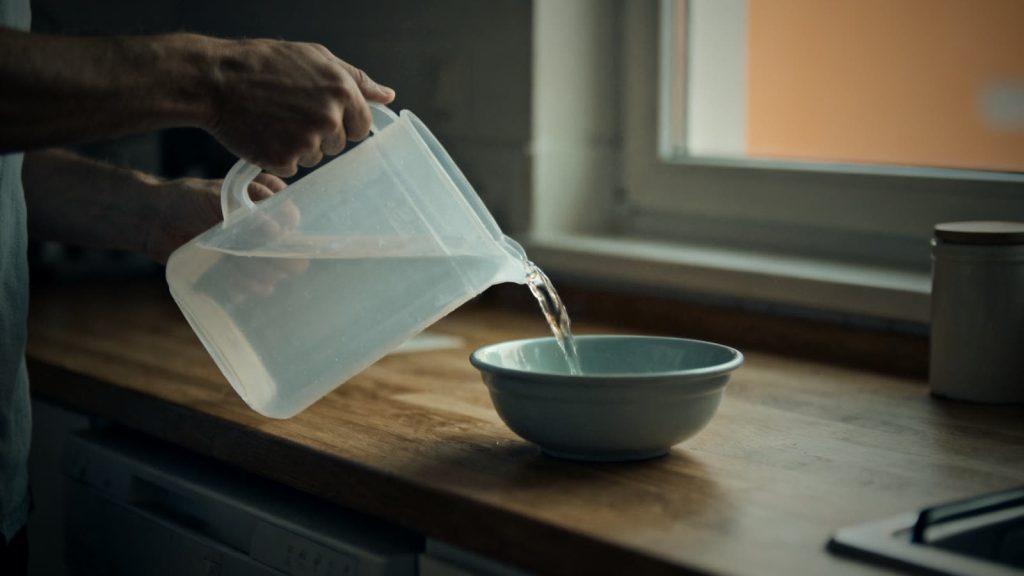
Washing your hands with soap is still the best method in an emergency. According to the German federal portal infektionsschutz.de, you should lather your hands thoroughly for 20 to 30 seconds. Here’s how to do it with little water:
- Wet your hands lightly – a small splash from a jerry can with a spigot or from a bottle is enough.
- Lather thoroughly: palms, backs of the hands, between the fingers, thumbs, fingertips.
- Rinse with a second small splash, catching the water in a bowl.
- Dry with a clean cloth or a disposable paper towel.
You can then use the collected water to flush the toilet. Hand sanitizer is a good addition, but it doesn’t replace washing when your hands are visibly dirty.
Personal hygiene: the sponge bath
You don’t need a shower for daily personal hygiene. A bowl of warm water, a washcloth, and soap are enough. Work from “clean” to “less clean”: face, neck, arms, upper body, legs, feet, and the intimate area last. It’s better to change the water once more often if it gets very dirty. Wet wipes are handy on the go, but they shouldn’t be flushed down the toilet, as they clog pipes.
A cup of drinking water is enough for brushing your teeth. Dry shampoo or a damp cloth can help with your hair until the water is running again.
Kitchen and dishes
Germs can build up quickly in the kitchen. Here’s how to keep the effort small:
- Disposable dishes or plates lined with parchment paper significantly reduce the amount of washing up.
- Cooking with just one pot saves dishwater.
- First wipe dishes down roughly with paper towels, then wash them in a bowl with a little dishwater.
- The BBK advises using paper towels instead of wet cleaning when water is scarce.
Keeping Your Trash Under Control
If trash collection is also suspended or runs less often, garbage can quickly become a hygiene problem. Pack food scraps and diapers in tightly sealed trash bags and store them somewhere cool, away from your living areas if possible. This keeps odors down and pests away.
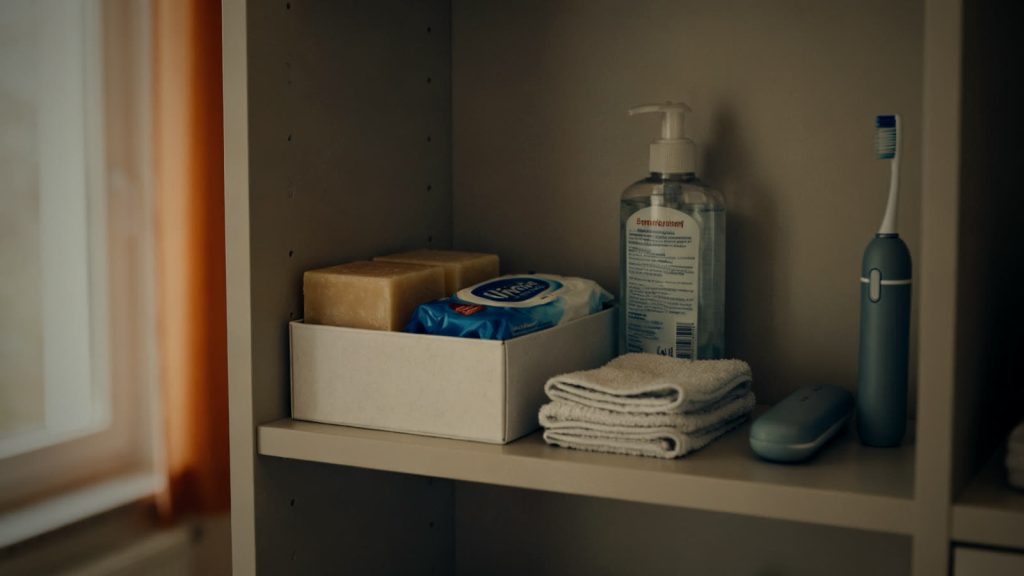
What Belongs in Your Hygiene Supply
The guide from the BBK (Germany’s Federal Office of Civil Protection and Disaster Assistance) lists these hygiene items, among others, for your emergency supplies:
- Soap, toothpaste, laundry detergent
- Toilet paper and paper towels
- Wet wipes
- Household gloves and hand sanitizer
- Trash bags
- A camping toilet with replacement fluid or another emergency toilet
Add to the list whatever else your household needs: feminine hygiene products, diapers, incontinence supplies, shaving gear, and skin care products for sensitive skin. These items aren’t always available in an emergency and should be rotated with your normal use.
Start Small
You don’t have to buy everything at once. A sensible way to begin: a water canister with a spigot, a collapsible basin, a pack of trash bags, and an extra supply of soap and toilet paper. That puts you in good shape for the first few days. Try it all out over a weekend, for example while camping, and you’ll know how much water you really need.
Also think about the people around you for whom a lack of water is especially hard: families with babies, relatives who need care, or elderly neighbors who can’t carry heavy canisters. A short visit, a filled bucket of non-drinking water, or a pack of wet wipes often helps them more than any gear in your own basement.
In short: If you consistently separate drinking water from water for other uses, just a few liters are enough for good basic hygiene. Washing your hands with soap remains a must, and hand sanitizer is just a supplement. A small hygiene supply of soap, paper products, trash bags, and an emergency toilet covers the most important needs.
Matching Gear Compared
| Produktbild bei AmazonFoldable for Emergencies & CarGLAMPmania Campingtoilette faltbar (M) | Produktbild bei AmazonSimple BucketBranQ 1306 Campingtoilette 22 l | Produktbild bei AmazonComfort with FlushThetford Porta Potti 365 | |
|---|---|---|---|
| Rating | at least 4.3 out of 5 starswith 500+ customer reviews (our selection criterion)See current reviews* | at least 4.3 out of 5 starswith 500+ customer reviews (our selection criterion)See current reviews* | at least 4.3 out of 5 starswith 500+ customer reviews (our selection criterion)See current reviews* |
| Features |
|
|
|
| Pros |
|
|
|
| Cons |
|
|
|
| View on Amazon* | View on Amazon* | View on Amazon* |
Selected by manufacturer data and customer reviews (at least 4.3 stars with 500+ reviews). We only show exact star ratings when they come from Amazon the same day. As of 04.10.2026. Not tested by us. Current prices and reviews are on Amazon. *Ad · paid link
Conclusion: our product picks
Portable Camping Toilets Compared
For emergencies in the car or basement, the foldable GLAMPmania with regular trash bags is enough. The BranQ bucket is the simplest solution for home use. Anyone wanting family comfort during a longer water outage should go with the Thetford Porta Potti 365.
Links marked with * are advertising links. As an Amazon Associate I earn from qualifying purchases.
Sources and Further Information
General information, no substitute for individual advice from authorities, emergency services or medical professionals. In an emergency in Europe: 112.