📌 Part of the guide: Packing a Go Bag: Checklist, Documents, and Family Plan
Household skills from the past were not hobbies but everyday life: mending clothes, preserving food, repairing broken items, and making do with what you have. This knowledge is not outdated. It makes you more independent, saves money, and helps you when shops, repair services, or electricity are temporarily unavailable.
In this article, you won’t find nostalgia but practical inspiration. You’ll learn which skills are worth it, how to start without prior knowledge, and how they fit with your other emergency preparedness measures.
Household Skills from the Past: What They Teach Us Today
Earlier generations had less choice and less money but more skill. A piece of clothing was not discarded just because a button was missing. Leftover roast from Sunday dinner became soup the next day. The underlying principle is: use things as long as it makes sense and understand how they work.
This understanding is valuable in crises. Those who know how something works and how to maintain it are less dependent on quick replacement. This applies to everyday life just as much as to situations where supply chains or electricity fail temporarily.
Skills, Not Equipment
You can buy equipment, but not skill. A flashlight only works if you have batteries. A needle and some thread always work if you know how to use them. Skills weigh nothing, require no storage space, and can be passed on to others.
Which Skills Are Particularly Worthwhile
- Mending, darning, and basic sewing
- Small repairs on household items
- Preserving food and storing it properly
- Cooking and baking with basic ingredients
- Using water, energy, and leftovers sparingly
You don’t have to master any of these perfectly. What matters is that you’ve done it yourself at least once. Then it will be much easier to get started when it counts.
Mending and Sewing: The Basics
Mending and sewing are skills you can learn quickly and apply immediately in daily life. With just a few simple steps, you can extend the life of clothing, blankets, backpacks, and sleeping bags. This is not only economical but also practical in cold weather: intact clothing keeps you warmer.
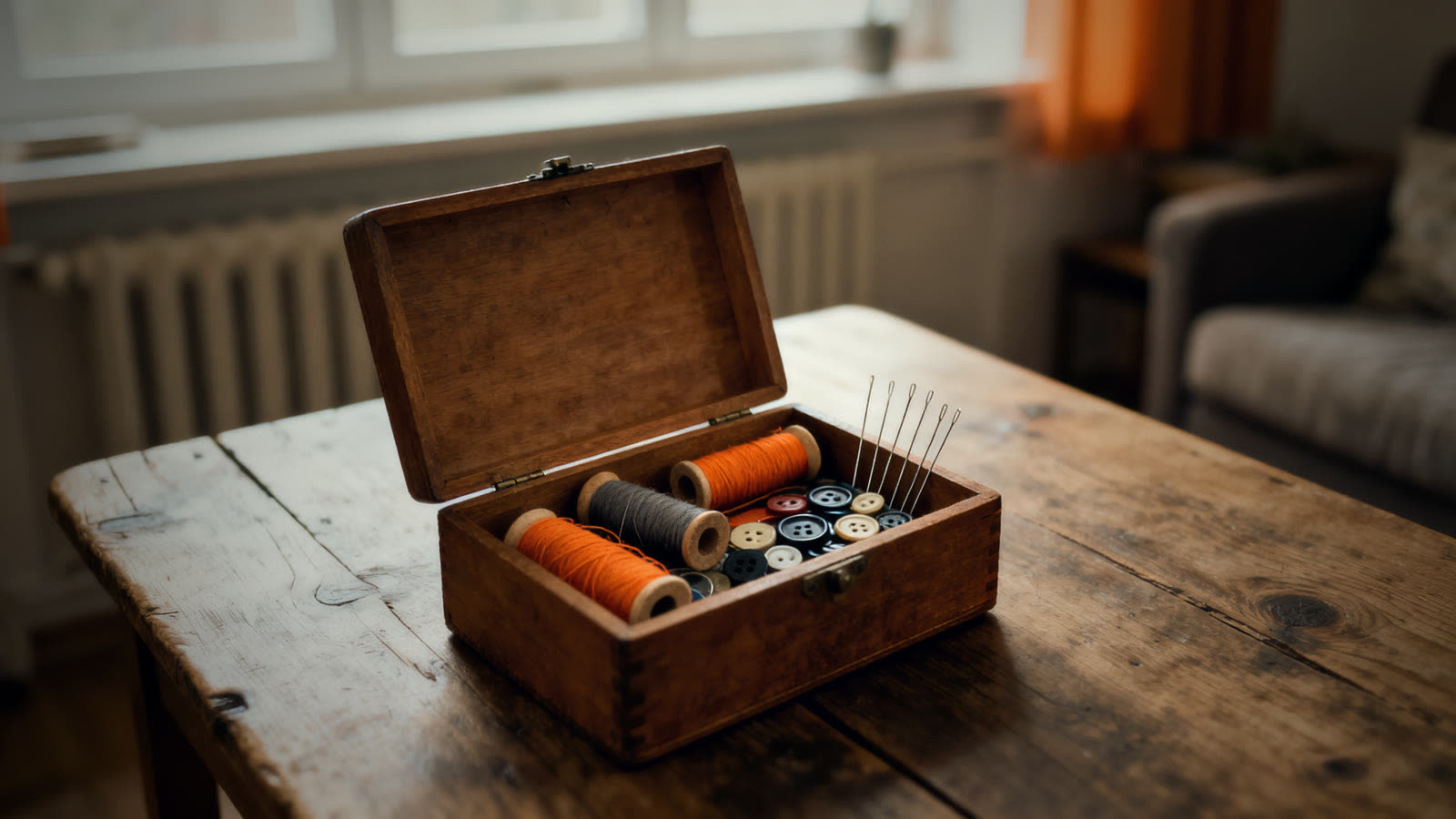
The Sewing Kit: What You Need
A small set is enough to start. You don’t need expensive equipment, just a few solid basics:
- Hand-sewing needles in various sizes
- Thread in neutral colors, plus some stronger thread for bags and backpacks
- A small, sharp scissors
- Thimble and pins
- Spare buttons, snaps, and patches
- A darning egg or a substitute made from a smooth, round object
Keep the set dry and in a fixed location. A sewing kit you have to search for when you need it is not very useful.
Sewing On a Button and Closing a Seam
Start with the simplest task: a button. Thread the thread double, knot the end, and pass the needle through the button holes several times. Leave a small space between the button and the fabric so it can close properly later. Finally, wrap the thread several times around the shank and secure it with a knot.
For a burst seam: work cleanly with small, even stitches. The backstitch is a good all-rounder because it holds securely. Practice it first on an old piece of fabric until your stitches look even.
Darning Socks and Patching Holes
Darning has nearly been lost as a skill, but it’s especially useful for wool socks. You stretch the damaged area over a darning egg and fill the hole with parallel threads. Then you weave across them until a solid surface forms. It’s important to include the edges of the hole so the repair holds securely.
For pants, jackets, or blankets, sewn-on patches work well. Cut them a bit larger than the hole, turn in the edges, and sew them on all around. It may not always look elegant, but it holds reliably.
You can learn how to layer clothing properly in cold weather in the article on the layering principle in cold. Well-mended layers provide a good foundation for that.

Repair It Yourself Instead of Throwing It Away
DIY repair starts with curiosity and a calm approach. Many defects are less complicated than they seem: a loose chair leg, a stuck zipper, a dripping faucet, a torn strap on a backpack. Anyone who can fix these things themselves saves time and money.
Basic Tools for Small Repairs
A small toolkit with screwdrivers, pliers, hammer, measuring tape, duct tape, and some string covers a lot. Supplement it with screws, nails, wall anchors, and rubber bands that you collect from old supplies. Keeping old materials was once routine and makes sense today as well.
Safety First
Not everything belongs in an amateur’s hands. Work on electrical, gas, and heating systems is the domain of professionals. This is especially true in a crisis when improvisation can become dangerous. When it comes to emergency heaters and cooking surfaces, safe use is essential. Learn more about this in the article on carbon monoxide hazards with emergency heaters.
A good rule of thumb: repair what you understand and can safely manage. If you’re unsure, get help or don’t touch it. You should also only use a knife or other tool if you know how to handle it and it’s well-maintained. You’ll find guidance on selection in the article about choosing the right outdoor knife.
Share Knowledge
Ask parents, grandparents, or neighbors what repairs they can do. Many are pleased when someone appreciates their skills. Repair cafes or community college courses near you can also be a good starting point. The best way to see if there’s something available in your area is to check locally.
Saving the Old Way: Building and Preserving Supplies
Saving the old way meant above all: shopping ahead, letting nothing go to waste, and preserving surplus food. This fits perfectly with modern preparedness. The BBK (Germany’s Federal Office of Civil Protection) recommends stocking food supplies for as much as ten days. However, a three-day supply already helps significantly and can be built up gradually.
Building Your Supply Thoughtfully
According to the BZfE (Germany’s Federal Center for Nutrition), a ten-day supply costs on average around €90 per person. You don’t have to do this all in one day. With each shopping trip, pick up a couple of shelf-stable items you’d use anyway. This spreads out the cost and keeps you flexible. For step-by-step planning, see the article Emergency Supplies for 10 Days According to BBK Recommendations.
Storage Done Right
Grandmother knew a cool, dark pantry was worth its weight in gold. The BZfE recommends ideal conditions of 15 to 20 °C in a dry, airy, and dark pantry or basement. Airtight containers made of glass, metal, or plastic protect against pests.
Water storage also deserves careful attention. The BZfE recommends about 1.5 liters of liquid per adult daily for drinking and 0.5 liters for cooking. For two people over three days, that’s at least 12 liters. Mineral water in its original glass bottles keeps for an almost unlimited time; PET bottles last about a year. It stays best when stored in a cool, dark place. Learn more in the article Storing Drinking Water Correctly.
Canning as a Cultural Skill
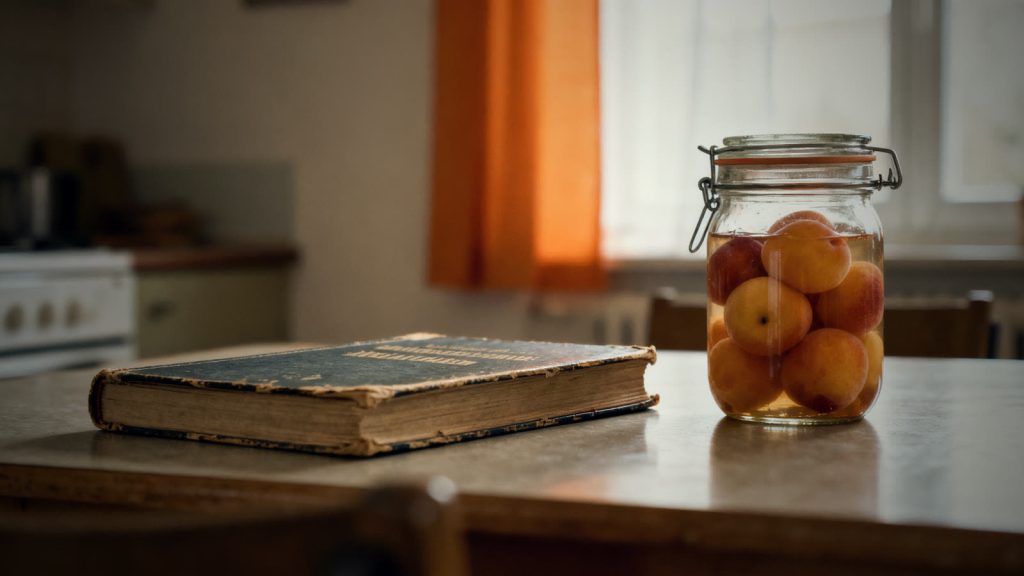
Canning is one of the best-known household skills from earlier times. Fruit, vegetables, and soups are preserved in jars and keep without refrigeration. What matters is clean jars, intact seals, and careful checking afterward. For concrete steps and tips, see the Canning Guide. Follow reliable instructions, because when it comes to food, hygiene counts.
Rotating Your Supply
Another classic: use the oldest first. That way nothing goes to waste. How this works in practice is shown in the article on the principle of “Rotating Stock”. You eat what you store and replenish what you’ve used.
Grandmother’s Knowledge: Cooking, Baking, and Household Management
Grandmother’s knowledge often lies in small skills that few have written down. How long something needs to steep, how to tell when dough is ready, what to make from leftovers. You can’t google that kind of experience, but you can gather it while it’s still available.
Old Cookbooks, New Opportunity
Old cookbooks rely on simple ingredients, few tools, and making use of everything. That’s exactly what helps when the stove breaks down or groceries run short. Flip through to find dishes that work with supplies like legumes, grain, potatoes, and canned goods. Try them out while you still have all your options.
Dietary preferences and allergies play a role too, as the BBK guide also emphasizes. So adapt recipes to the people you’re caring for.
Cooking and Baking Without Electricity
The BBK checklists mention, among other things, an emergency cooking station. If you want to use one, you should know how to cook efficiently with minimal energy: use lids, choose appropriately sized pots, and repurpose leftovers. The article Cooking Without Electricity describes practical options. If you want to bake bread yourself, the article Baking Bread Without Electricity offers simple ideas.
Smart Household Management
Old household knowledge also includes mindful use of water, light, and heat. Use daylight, close doors to unused rooms, save dishwater for other purposes. These habits cost nothing and create leeway in an emergency. Find more ideas about keeping warm in the article Keeping Your Home Warm When Heat Fails.
Skills and Composure: The Psychological Factor
The BBK (Germany’s Federal Office of Civil Protection and Disaster Relief) guide also addresses psychological strain during crises. Capability counteracts this. When you can take matters into your own hands, you feel less helpless. Sewing a button or filling a mason jar may seem mundane, but it builds routine and self-confidence.
Simple activities also structure your day and keep your hands busy. This can be particularly helpful during prolonged outages. Learn how to remain capable of action during stressful moments in the article Staying Calm in an Emergency.
Learning Together
Involve family and neighbors. Children can, for example, sew on a button or help with food preservation. This way, knowledge grows within the family, and no one has to master everything alone. The article Emergency Preparedness for Families offers suggestions and ideas.
Frequently Asked Questions
Which household skills are most important during a crisis?
Particularly useful are food preservation and storage, basic cooking, mending and sewing, and minor, safe repairs. They’re inexpensive to learn and directly applicable in everyday life.
How do I get started with mending and sewing?
Get a small sewing kit and practice on a scrap of fabric or an old piece of clothing. Start with sewing a button, then move on to a simple seam, and later try darning. Just a few minutes of practice is enough to begin.
How long should my food supply last?
The BBK recommends stockpiling food for ideally ten days. However, a supply for at least three days already helps considerably and can be built up gradually.
Where should I store my supplies?
According to the BZfE (German Center for Nutrition), the ideal storage conditions are 15 to 20 °C in a dry, well-ventilated, and dark pantry or cellar. Airtight containers protect against pests.
Can I fix everything myself?
No. You can often repair small defects in furniture, clothing, or household items yourself. However, work on electricity, gas, and heating systems should be left to professionals.
Your Next Steps
You don’t have to learn everything at once. Choose a small starting point and make it a habit:
- Put together a simple sewing kit and sew on a button.
- Darn or mend a piece of clothing that would otherwise end up in the trash.
- Check your toolbox and add basic tools if needed.
- Build a supply of food for at least three days, and expand it gradually.
- Store food in a cool, dry, and dark place in airtight containers.
- Try a recipe from an old cookbook that uses shelf-stable ingredients.
- Ask your parents or grandparents about their knowledge and record it.
For overall planning, the article Prepared in 30 Days will help you. Start small, stay consistent, and you’ll discover that old skills not only make you more resilient during crises but also more composed in everyday life.
Sources and Further Information
General information, no substitute for individual advice from authorities, emergency services or medical professionals. In an emergency in Europe: 112.