The fridge is off, and the stove stays cold. During a longer power outage, the question comes up fast: how do you cook a hot meal or boil water? The good news: there are several safe ways to do it. The bad news: every year, people get hurt or poisoned because they turn to unsuitable methods out of desperation. That’s why we start this article with the most important point.
The one rule you never break
Charcoal and gas grills, fire bowls, and patio heaters never belong indoors – not in a garage, basement, tent, or camper, and not “just for a moment with the window open” either. Burning fuel produces carbon monoxide (CO), a gas you can neither smell nor see. The BBK (Germany’s Federal Office of Civil Protection and Disaster Assistance) explicitly warns about the risk of suffocation when grilling indoors and recommends carbon monoxide detectors whenever combustion appliances are used.
Warning signs of carbon monoxide poisoning can include headache, dizziness, nausea, and drowsiness. If several people, or pets as well, show these symptoms at the same time: get out into fresh air immediately, turn off the appliance only if you can do so safely, and call the emergency number 112.
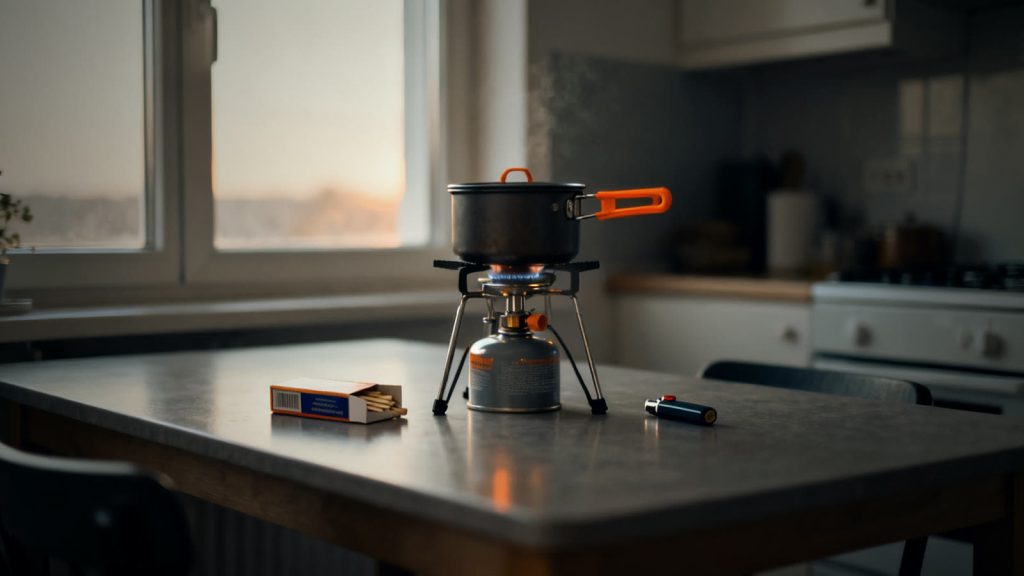
Your options at a glance
Alcohol stoves
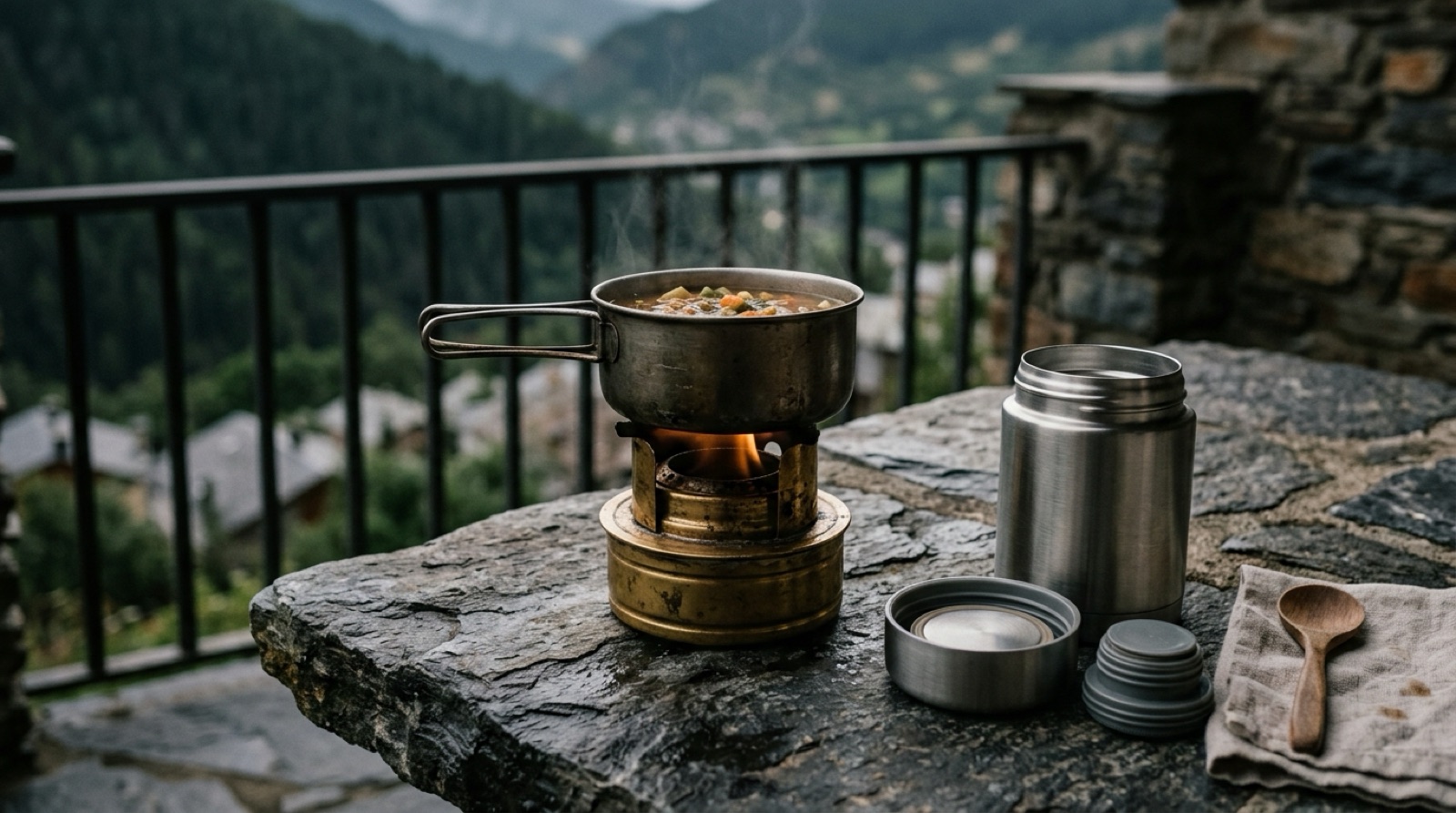
Alcohol stoves like the Trangia storm cookers are simple, sturdy, and have hardly any parts that can break. According to the BBK, smaller meals can be prepared easily on a camping stove.
- Pros: quiet, low maintenance, fuel stores for a long time
- Caution: The flame is almost invisible in daylight. Never refill the burner while it is burning or still hot. Only use it on a stable, non-flammable surface.
Gas canister stoves
Stoves for screw-on or pierce-type canisters bring water to a boil quickly and are very common.
- Pros: fast, easy to regulate, clean
- Caution: Read the instruction manual carefully. Many manufacturers specify that their appliances are for outdoor use only. Follow that rule. Store canisters in a cool place, never near heat sources.
Solid fuel (Esbit)
Fuel tablets in a small folding stove are lightweight and have a long shelf life. They work well for a go bag and for heating up food. Burning them produces fumes and a distinctive smell – so use them only outdoors or with very good ventilation as specified by the manufacturer, and not in small enclosed spaces.
Fondue burner with fuel paste
Many households have a fondue set in the cupboard. It’s an option for heating up small amounts, but the output is usually not enough for bigger cooking tasks. Here, too: ventilate well, keep anything flammable away, and never leave it unattended.
Grill and open fire – outdoors only
The BBK names garden, balcony, or tabletop grills as an option, but only outdoors. The same applies to fire pots or Dutch ovens over an open fire. Observe your building’s house rules, local regulations, and wildfire warning levels.
Wood stove with a cooktop
If you have an approved wood stove that has been inspected by a chimney sweep, you can often cook on it as well. It is built for indoor use because the exhaust gases escape through the chimney. Improvised stoves without a flue, on the other hand, are life-threatening.
In the field, we learned this: first the spot, then the fire. A stable surface, nothing flammable within reach, extinguishing supplies close at hand. This order applies just as much on a balcony.
Saving Energy When Cooking
Fuel is limited in an emergency. With a few tricks, you can make it last much longer:
- Put a lid on it: Saves a noticeable amount of energy and time.
- Small amounts: Only heat as much water as you really need.
- Quick-cooking foods: Couscous, red lentils, thin noodles, instant flakes instead of dried beans.
- Retained-heat cooking: Bring to a boil briefly, then wrap the pot in blankets, a sleeping bag, or a cooler. The stored heat keeps cooking rice or pasta. This method is called a hay box cooker (Kochkiste).
- Insulated containers: Once you’ve boiled hot water, it stays warm in them for hours for tea or instant meals.
- Plan for no-cook meals: The BBK (Germany’s Federal Office of Civil Protection and Disaster Assistance) recommends also stocking foods you can eat cold.
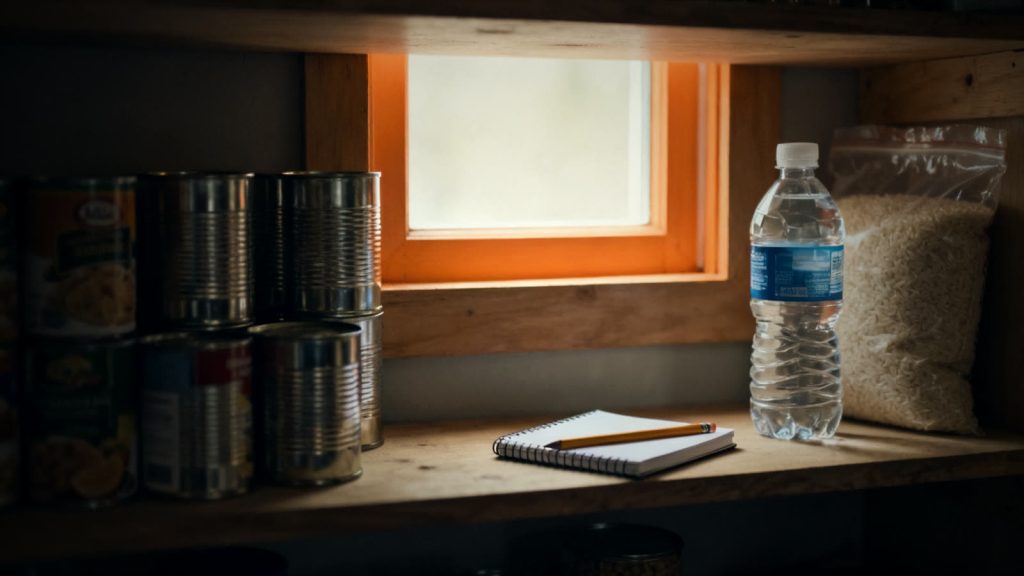
What You Should Have on Hand
- A camping stove you’ve already tested
- Enough suitable fuel, stored safely and in a cool place
- A lighter and matches, packed waterproof
- A pot with a lid and a kettle
- A fire blanket or a fire extinguisher within reach
- A carbon monoxide alarm if you use any fuel-burning appliances
Practice Before It Gets Serious
Try out your stove on a picnic or on the balcony. How long does it take to bring one liter of water to a boil? How much fuel does it use? With these real-world numbers, you can estimate how long your supply will last – and in an emergency, you’ll handle it with routine instead of nerves.
In short: Never use grills or open flames indoors – carbon monoxide is invisible and deadly. Use alcohol, gas, and solid-fuel stoves only according to the manufacturer’s instructions and with good ventilation or outdoors. With a lid, a hay box cooker, and quick-cooking foods, you save fuel.
Suitable Gear Compared
| Produktbild bei AmazonLight & SimpleCampingaz Bleuet 206 Plus | Produktbild bei AmazonWith Grill PlateCampingaz Camp'Bistro 3 | Produktbild bei AmazonComplete SetKochmann Gaskocher-Set | |
|---|---|---|---|
| Rating | at least 4.3 out of 5 starswith 500+ customer reviews (our selection criterion)See current reviews* | at least 4.3 out of 5 starswith 500+ customer reviews (our selection criterion)See current reviews* | at least 4.3 out of 5 starswith 500+ customer reviews (our selection criterion)See current reviews* |
| Features |
|
|
|
| Pros |
|
|
|
| Cons |
|
|
|
| View on Amazon* | View on Amazon* | View on Amazon* |
Selected by manufacturer data and customer reviews (at least 4.3 stars with 500+ reviews). We only show exact star ratings when they come from Amazon the same day. As of 04.10.2026. Not tested by us. Current prices and reviews are on Amazon. *Ad · paid link
Conclusion: our product picks
Gas Stoves Compared
For emergency cooking at home, a case-style gas stove using standard cartridges is the most practical solution – the Campingaz Camp'Bistro 3 offers the most safety features. The Bleuet is designed for on-the-go use. Important: never operate gas stoves in enclosed spaces without ventilation.
Links marked with * are advertising links. As an Amazon Associate I earn from qualifying purchases.
Sources and Further Information
General information, no substitute for individual advice from authorities, emergency services or medical professionals. In an emergency in Europe: 112.