To calculate your power needs in an emergency, list every device you actually want to keep running, note its power consumption in watts, and multiply that by the planned runtime in hours. The result in watt-hours tells you the minimum capacity a portable power station or battery solution needs to have. With a few example values and a simple formula, you can arrive at a realistic number without any technical expertise.
Why you should do the math in the first place
Many people buy a portable power station based on gut feeling or price – and then end up either disappointed by the runtime or having paid far more than they needed to. The Verbraucherzentrale (German consumer advice organization) points out that extensive supplies or expensive backup power solutions are generally not necessary for private households, because power outages in Germany are usually resolved within a few hours. A quick calculation helps you find exactly the capacity that fits your actual needs – no more and no less.
Calculating your emergency power needs: the basic formula
The formula is simple: power in watts times runtime in hours gives you the energy requirement in watt-hours (Wh). Stiftung Warentest (German consumer testing foundation) gives a clear example: a power tool drawing 500 watts needs about 500 watt-hours of capacity for one hour of runtime. You use exactly the same principle for household appliances – just usually with much lower wattages and longer runtimes.
- Watts (power) × hours (runtime) = watt-hours (energy requirement)
- Multiple devices: calculate each device separately, then add them up
- Finally, build in a safety buffer, since the usable energy of a power station is lower than its stated capacity
Estimating the power use of your router, lamp, and more
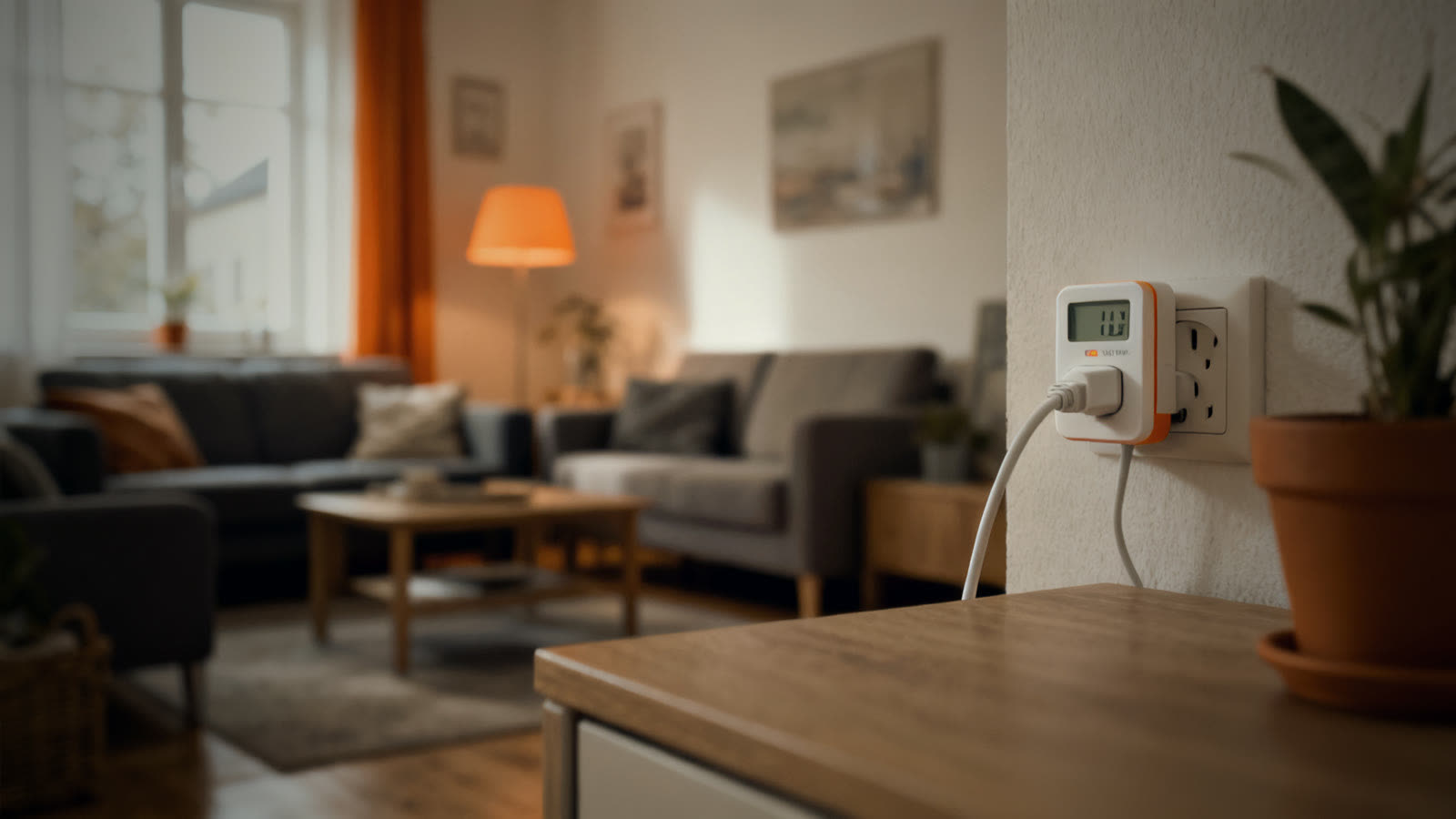
For the calculation, you need the power consumption of your devices. The most accurate way to find it is with an energy cost meter (also called a watt meter or plug-in power meter) that you plug in between the outlet and the device. If you don’t have a meter, a look at the device’s rating label or the user manual often helps – it lists the maximum power consumption in watts.
Typical ranges
A Wi-Fi router draws only a few watts during continuous operation, and a smartphone charger uses similarly little. A small LED lamp or a radio also falls in the low single-digit to double-digit watt range. Larger household appliances, on the other hand, require significantly more power – with these devices, check specifically how much continuous output the power station you’re considering can actually deliver.
For each device you want to use in an emergency, enter the wattage and the daily runtime you need into a simple table or list. That gives you a realistic overview before you come up with a single figure for your total needs.
Calculating watt-hours: a worked example
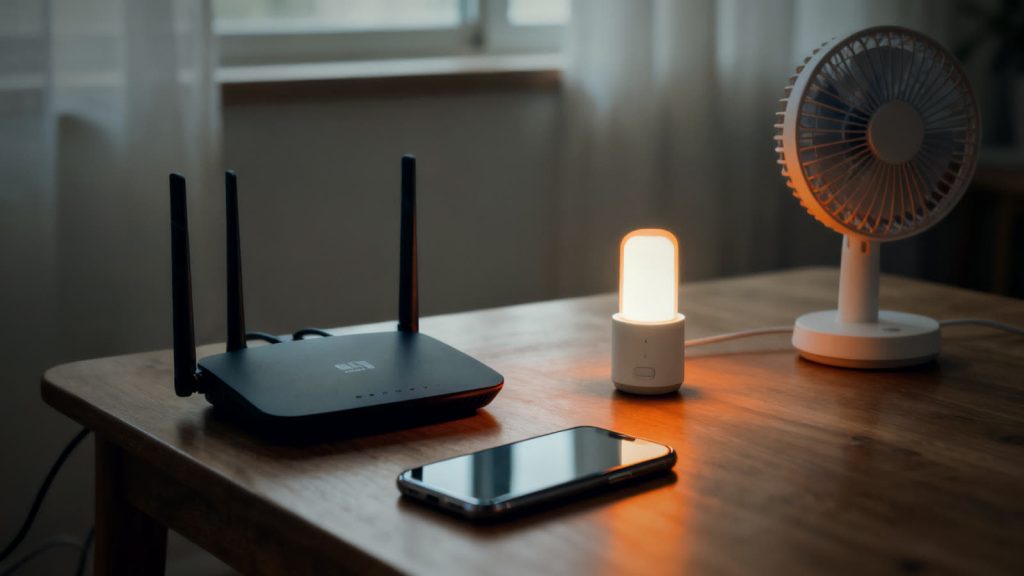
Say you want to run a router, a phone charger, an LED lamp, and a small fan for several hours a day during an emergency. You estimate or measure the power of each device, multiply it by the planned runtime, and add up the values. The result is your daily energy requirement in watt-hours – the number your power station’s capacity should be based on.
One important point: according to Stiftung Warentest, the usable energy of a power station is lower than its stated capacity, because the device’s own electronics consume power. So don’t calculate down to the last watt-hour; build in a safety buffer before you decide on a specific capacity.
How to Calculate Power Station Capacity and Find the Right Model
Once you’ve worked out your daily watt-hour needs, you can compare them with the capacities of real-world devices. In 2023, Stiftung Warentest (Germany’s consumer testing foundation) tested eleven power station models; capacities ranged from 400 to 644 watt-hours, and maximum continuous output ranged from 300 to 700 watts. Five of the tested models received a rating of “good,” with prices ranging from around €470 to over €800.
Besides capacity, continuous output matters too: it determines how many devices you can connect at the same time without the power station shutting off. According to Stiftung Warentest, one of the tested models shut down after just 30 minutes under rated load, a sign that the watt-hour figure alone isn’t enough. For more on choosing between smaller and larger solutions, see the article Power Station or Power Bank: Which One Do You Need?.
Ports and Recharging
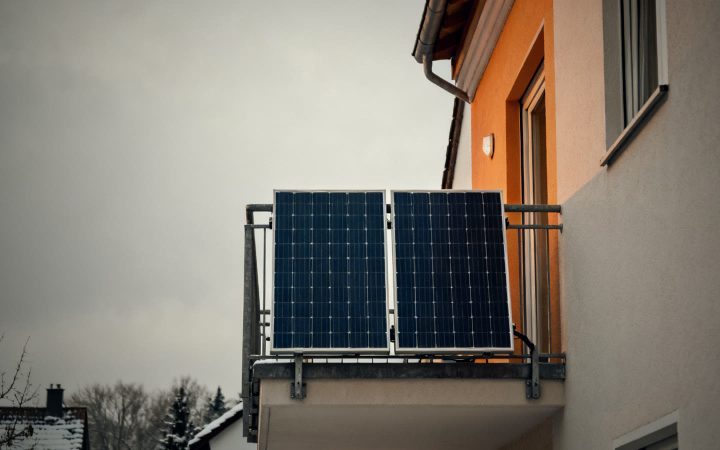
Power stations typically come with at least one standard household outlet (Schuko), 12-volt car sockets for camping accessories, and USB ports, increasingly including USB-C. This makes it easier to power several devices at once. Thanks to MPPT technology, many models can also be recharged with a solar panel, a topic covered in more detail in the article Solar Panels for Beginners.
Putting Your Emergency Power Needs in Perspective
BBK (Germany’s Federal Office of Civil Protection and Disaster Assistance) names accidents, construction errors, severe storms, flooding, heavy snowfall, avalanches, sabotage, and cyberattacks, among others, as causes of power outages. Power outages are typically fixed within a few hours, but in cases of major damage they can last several days. Your calculated emergency power needs should therefore be based not on weeks, but on a realistic period of hours to a few days.
For basic preparedness, the BBK recommends charged batteries and power banks, solar-powered chargers, cash because ATMs don’t work during a power outage, and a battery-powered or hand-crank radio for information. You can read more in the article The Hand-Crank Radio: Why Every Household Needs One. The Verbraucherzentrale (German consumer advice center) also advises regularly recharging spare batteries, rechargeable batteries, and power banks.

What a Power Station Doesn’t Replace
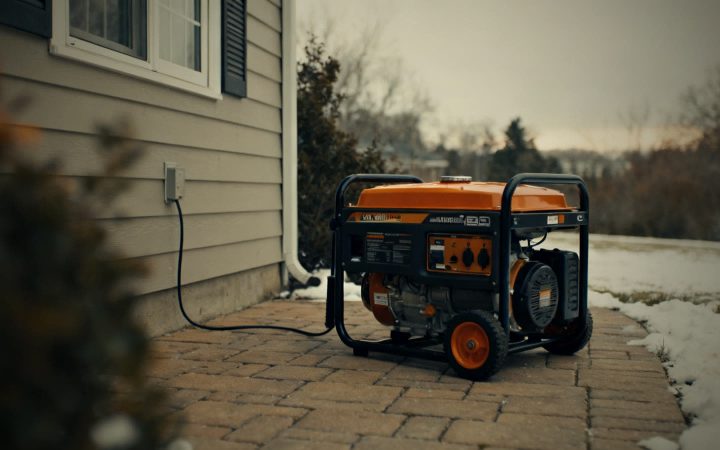
For cooking, the BBK recommends camping stoves or garden and tabletop grills that use charcoal or gas, never used indoors, as well as non-perishable foods that can also be eaten cold. A small power station isn’t designed for this and shouldn’t be planned for it. To learn how to cook safely without electricity, see the article Cooking Without Power: Safe Options.
In the event of a heating failure, the BBK recommends fuel supplies for fireplaces or stoves, alternative heat sources only after professional advice, carbon monoxide detectors for gas-powered appliances, as well as warm clothing, blankets, and regular ventilation. This, too, can’t be solved with a small power station and requires its own preparation. For more, see the article How to Keep Your Home Warm When the Heating Fails.
Step-by-Step Guide to Calculating Your Own Power Needs
- List the devices that are truly essential in an emergency
- Measure each device’s power consumption in watts or check the rating label
- Decide how many hours per day each device needs to run
- Multiply watts by hours and add up all the values
- Add a safety margin for electronic losses
- Compare suitable power station models based on capacity and continuous output
Stiftung Warentest (Germany’s independent consumer testing foundation) also recommends using interactive calculators before buying to match your own power needs to the right power station. Doing your own calculation first is what makes the results of such tools truly meaningful.
Frequently Asked Questions
How do I calculate how many watt-hours I need?
Multiply each device’s power consumption in watts by the planned daily runtime in hours, then add up the values for all devices. The result in watt-hours is your benchmark for the capacity you need.
How many watts does a router use during a power outage?
A Wi-Fi router draws only a few watts during continuous operation. The exact figure is on the rating label, or you can measure it directly with an energy cost meter.
What power station capacity makes sense for home use?
The models tested by Stiftung Warentest offered 300 to 700 watts of continuous output and 400 to 644 watt-hours of capacity. Which capacity is right for you depends on your own device list and the runtime you want.
Do I need a power station for every power outage?
No. The Verbraucherzentrale (German consumer advice center) points out that extensive supplies or expensive emergency power solutions are generally not necessary for private households, since power outages are usually resolved within a few hours.
What should I do if I don’t know a device’s power consumption?
Check the device’s rating label or the user manual. Alternatively, an energy cost meter measures the actual power consumption directly at the outlet.
What to Do Now
Start with a short list of the devices you really can’t do without in an emergency. Measure or estimate their power consumption, multiply it by the runtime you want, and add up the results. With that number, you can choose a power station with confidence or check whether your batteries and power banks already cover your needs. For how to store your rechargeable batteries and batteries properly, read our article How to Store Batteries and Rechargeable Batteries Properly, and for what to do in the first hours of a power outage, see Power Outage: How to Act Correctly in the First 24 Hours.
Sources and Further Information
General information, no substitute for individual advice from authorities, emergency services or medical professionals. In an emergency in Europe: 112.