A power station or power bank will eventually run out of charge. With a portable solar panel, you can recharge it – no wall outlet, no fuel, no exhaust fumes. The BBK (Germany’s Federal Office of Civil Protection and Disaster Assistance) explicitly lists solar-powered chargers as a sensible preparation for a power outage. To avoid disappointment, though, it pays to take a realistic look at what a panel can deliver in Germany.
Understanding the Wattage Rating
A solar panel is sold with a rated power in watts, for example 100 or 200 watts. This value is measured under standardized lab conditions: very strong sunlight and a cell temperature of 25 degrees Celsius. Outdoors, you rarely get these conditions. Clouds, a low sun angle, heat on the panel, dirt, and an unfavorable tilt all reduce output. In everyday use, a panel therefore usually delivers noticeably less than the label says.
The difference between the seasons is especially large. In summer, the days are long and the sun is high. In the German winter, the days are short, the sky is often overcast, and the sun sits low. The same panel then produces only a fraction of its summer yield. If you want to rely on solar power in winter, you should size the panel generously and keep your consumption tightly limited.
What Is Solar Power Good For?
A portable panel is not a replacement for the power grid. It is a tool for keeping your most important devices running through a longer outage:
- Charging smartphones, two-way radios, and a radio
- Recharging the batteries of headlamps and lanterns
- Filling a power station during the day so you can run lights and a laptop in the evening
- Powering a cooler box from time to time, if the panel is large enough and the sun is out
Heating, cooking with electricity, or running large household appliances is not realistic with portable panels.
Important: A Balcony Power Plant Won’t Help During a Power Outage
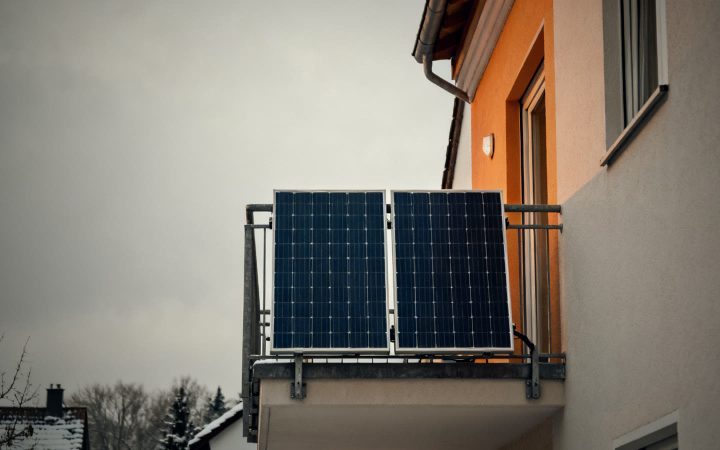
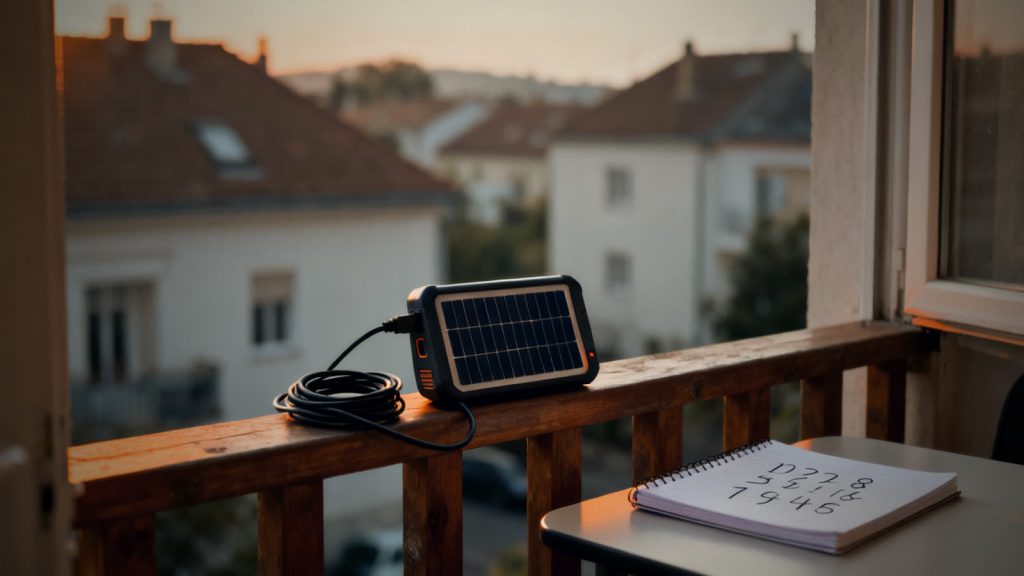
Many households now have a plug-in solar system on their balcony. These units feed power into the home’s electrical system and, for safety reasons, shut down as soon as the public grid fails. Without a special battery storage system with backup power function, they therefore deliver no electricity during a power outage. A portable panel connected to a power station, on the other hand, works independently of the grid.
What to Look for When Buying
- Compatibility: The most important criterion. The panel’s voltage and power must match the solar input of your power station. Check the permitted voltage range in the data sheet, as well as the connector type. The easiest option is a panel from the same manufacturer as the power station.
- Foldable and rugged: Foldable panels with a carrying case and kickstands are easy to store and quickly ready for use. Look for water protection according to the IP rating.
- Direct USB: Some panels have USB ports for charging phones directly. This is handy, but output fluctuates a lot with passing clouds. It’s better to go through a power bank or power station that buffers the energy.
- Charge controller: Power stations usually have one built in. An MPPT controller gets more out of changing light conditions than a basic controller.
How to Get the Most Out of Your Panel
- Orientation: The panel should face the sun as squarely as possible. Point it south and adjust the angle over the course of the day if you can. In winter, the panel needs to be tilted more steeply than in summer.
- Avoid shade: Even a small shadow, for example from a railing or a branch, can significantly reduce output.
- Not behind glass: Window panes absorb part of the light. The panel belongs outside: on a balcony, patio, in the garden, or on a car roof.
- Keep it cool: Heat reduces efficiency. Let air reach the back of the panel.
- Keep it clean: Remove dust, pollen, and leaves with a soft cloth.
- Secure it: In wind, a panel acts like a sail. Fasten it well, especially on a balcony – a falling panel can injure people.
Storage and Care
A foldable solar panel needs very little maintenance. Store it dry, folded up in its bag, and with no heavy objects on top so the cells don’t crack. Don’t bend cables sharply, and check plugs and cables for damage before every use. Keep the panel, the matching cable and any adapters together – nothing is more annoying than a working panel without the right connector.
Practice First, Rely on It Later
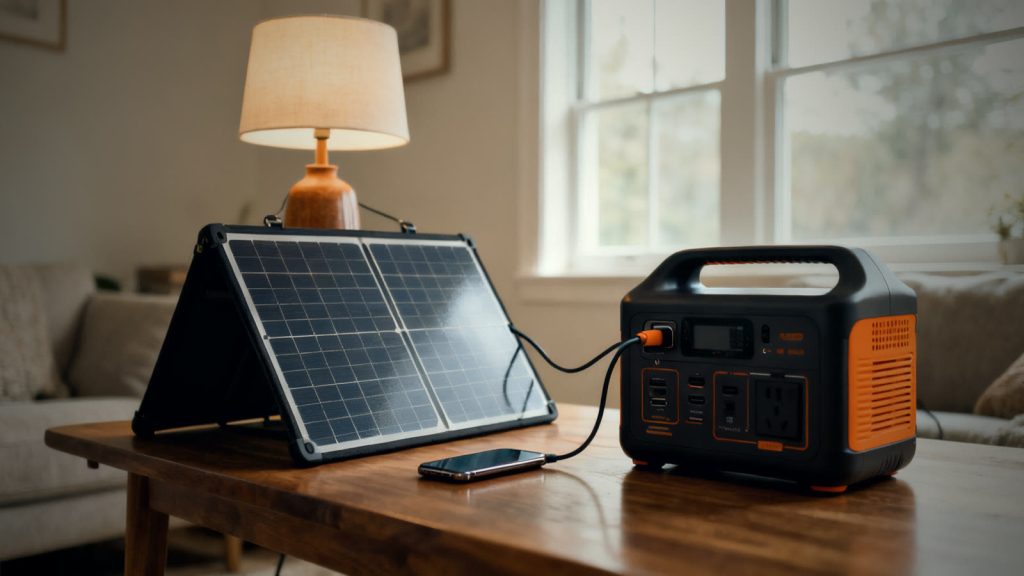
In training, the principle is: equipment must be tested before it is needed. Set up your panel on a sunny Saturday, charge the power station and watch how much power comes in at different angles and in different weather. Try it on an overcast winter day as well. That gives you an honest sense of what to expect in a real emergency – and lets you plan your power use accordingly.
In short: A portable solar panel charges a power station and small devices independently of the grid. Expect much less output than the label states, especially in winter. Check compatibility with your power station, set the panel up outdoors in a spot without shade, and test it beforehand.
Matching Gear Compared
| Produktbild bei AmazonFor phone & power bankMARBERO 30 W | Produktbild bei AmazonMid-rangeFlexSolar 60 W | Produktbild bei AmazonFor power stationsEcoFlow 160 W (bifazial) | |
|---|---|---|---|
| Rating | at least 4.3 out of 5 starswith 500+ customer reviews (our selection criterion)See current reviews* | at least 4.3 out of 5 starswith 500+ customer reviews (our selection criterion)See current reviews* | at least 4.3 out of 5 starswith 500+ customer reviews (our selection criterion)See current reviews* |
| Features |
|
|
|
| Pros |
|
|
|
| Cons |
|
|
|
| View on Amazon* | View on Amazon* | View on Amazon* |
Selected by manufacturer data and customer reviews (at least 4.3 stars with 500+ reviews). We only show exact star ratings when they come from Amazon the same day. As of 04.10.2026. Not tested by us. Current prices and reviews are on Amazon. *Ad · paid link
Conclusion: our product picks
Foldable Solar Panels Compared
If you only want to charge your phone and a power bank, the MARBERO 30W will do the job. A large panel like the EcoFlow 160W belongs with a power station. The FlexSolar 60W fits in between—for small power stations and multiple USB devices.
Links marked with * are advertising links. As an Amazon Associate I earn from qualifying purchases.
Sources and Further Information
- BBK (Germany’s Federal Office of Civil Protection and Disaster Assistance) – Preparing for and Handling a Power Outage
- Verbraucherzentrale (German consumer advice organization) – Off-Grid Photovoltaic Systems: Using Solar Energy Directly
- Verbraucherzentrale – FAQ on Plug-In Solar Devices
- BBK – Self-Sufficient Emergency Power Supply for the Population
General information, no substitute for individual advice from authorities, emergency services or medical professionals. In an emergency in Europe: 112.