A backup generator for your home can keep a refrigerator, heating controls, or medical devices running during a longer power outage. It makes the most sense for households with a genuine need for basic supply, it may only be operated under clear conditions, and it only becomes safe with proper placement, fuel storage, and grid connection. This article explains what really matters.
When a backup generator for your home makes sense
Most power outages in Germany last from a few minutes to a few hours – for those, a portable power station or power bank is usually enough. A backup generator is more worthwhile if you depend on a heating pump, a well pump, medical devices, or the contents of a chest freezer, and an outage lasting many hours becomes a real possibility. According to the BBK (Germany’s Federal Office of Civil Protection and Disaster Assistance), causes of such longer outages include accidents, construction errors, severe storms, flooding, heavy snowfall, avalanches, as well as sabotage or cyberattacks.
If you mainly want to keep lights, a radio, and your phone running, you can manage without a combustion engine. For true household supply over hours or days, however, a backup generator is often the more practical solution than battery-only setups. It is important to assess your actual needs realistically before you invest.
Power classes: how many watts does your home really need?
Backup generators differ greatly in output. According to the TÜV-Verband (Germany’s association of technical inspection organizations), small units deliver about 1,000 watts, and mid-size units 3 to 6 kilowatts, with a runtime of roughly 8 to 12 hours per tank of fuel. The ADAC (Germany’s automobile club) divides the power classes slightly differently and gives the following guidelines:
- 1.5–3 kW: clean power for smartphones, laptops, small appliances
- 3–8 kW: basic supply for a single-family home (refrigerator, heating controls, lighting)
- 8–20 kW: full home supply, including power-hungry appliances
The figures from the TÜV-Verband and ADAC differ slightly because they describe different device classes and measurement bases. Think realistically about which appliances truly need to keep running in an emergency, rather than buying the highest output available.
Gasoline, diesel, gas, or hybrid: which fuel type fits?
The fuel type determines the intended use and the long-term costs:
- Gasoline generators are portable and affordable, at about €250–1,800, but have a limited runtime per tank of fuel.
- Diesel generators are suited to long-term operation, but cost more, at about €800–6,000.
- Gas and hybrid units are considered more environmentally friendly and lower-maintenance, according to the ADAC.
Running costs are about 1–3 euros per hour, plus annual maintenance of about 50–100 euros. Factor in these ongoing costs from the start, not just the purchase price of the unit.
The power class you ultimately choose is closely tied to the fuel type: if you only need to power a few specific devices, a small gasoline generator is often enough. If you need to keep a heating pump running for days, you are more likely to consider diesel or a permanent grid feed-in setup.
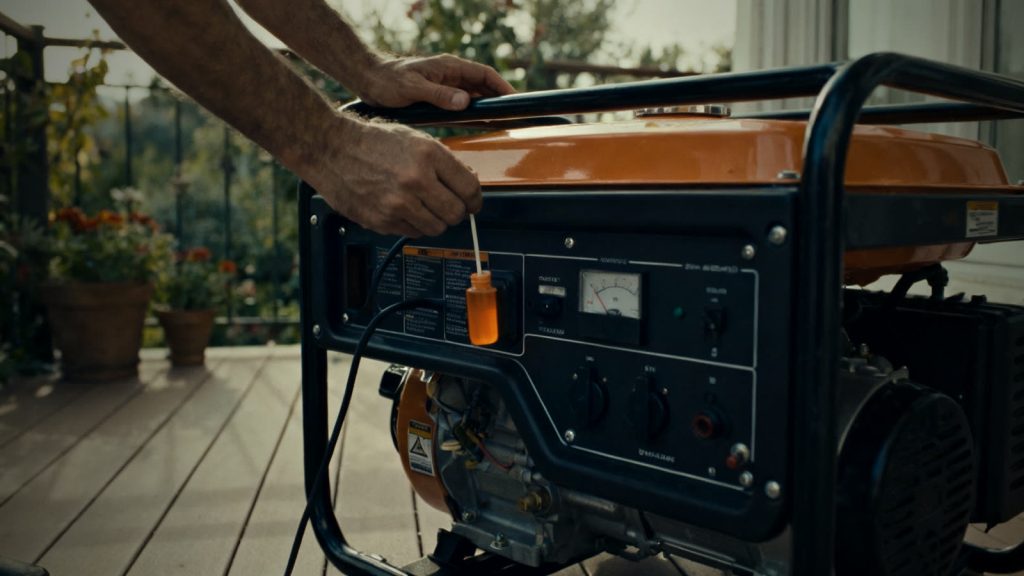
Running a Generator Indoors: Why It Can Be Deadly
A backup generator must never be used inside your home – according to the TÜV-Verband (German Association of Technical Inspection Organizations), the risk of carbon monoxide poisoning can be fatal. Carbon monoxide is colorless and odorless and is often noticed too late. You can read more in our article Carbon Monoxide: The Invisible Danger of Emergency Heating.
In addition, gasoline evaporates even at low temperatures. These vapors can collect in basements in particular and form explosive mixtures. A basement is therefore not a safe place to set up a generator, even if it seems protected from the weather.
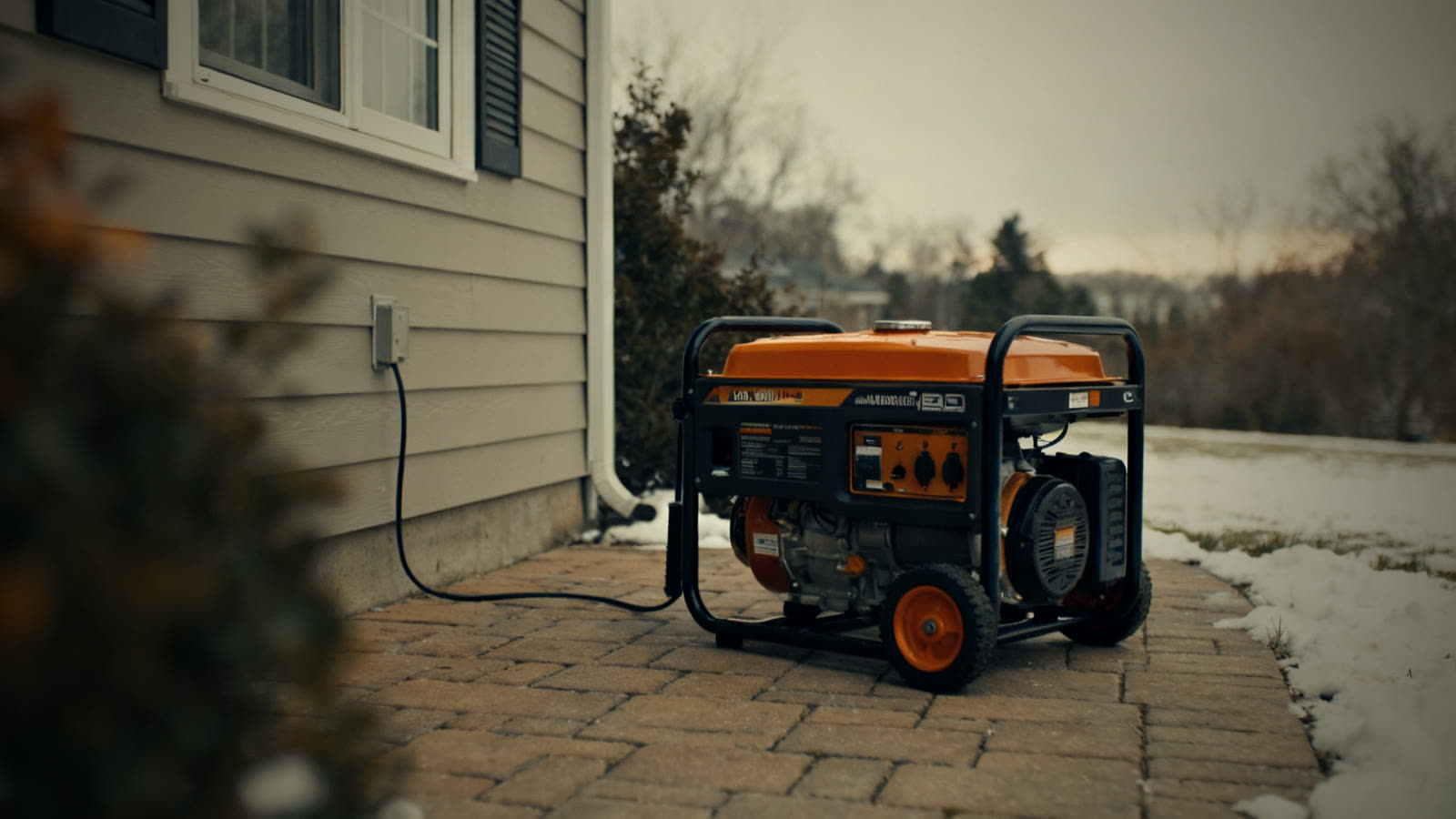
The safe place to operate a generator is always outdoors, in the open air, with consideration for your neighbors because of noise and exhaust fumes. This also applies to garages and sheds: without suitable fresh air supply and exhaust ventilation, indoor operation remains risky, which is why you should always choose an outdoor location when in doubt.
Connecting a Generator to Your Home Power Grid: Home Wiring and Grid Operator
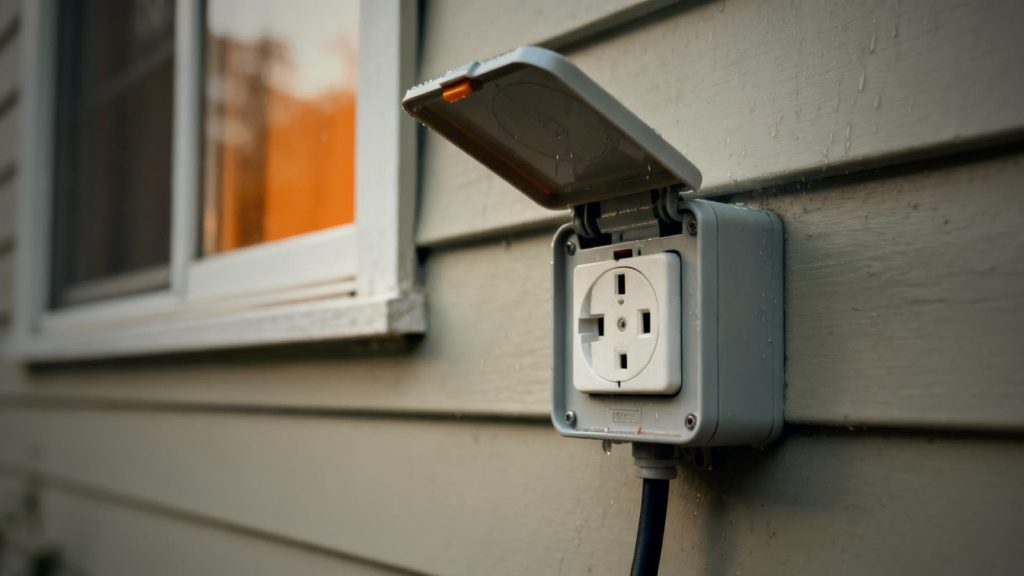
If you want to permanently connect your backup generator to your home’s electrical system, an improper connection risks backfeeding into the public grid and dangerous interactions, warns the TÜV-Verband. A professional electrician should therefore always handle the connection to the home’s electrical system.
The ADAC (German automobile club) lists the following among the key safety requirements: residual-current devices (RCDs), safe fuel storage, a ban on operation in enclosed spaces, and registration with grid operators for permanently installed systems. If you are planning a permanent connection, registering with your local grid operator is therefore a must, not an option. According to the ADAC, a complete whole-house connection costs roughly 2,000–6,000 euros.
If you instead run only individual appliances by cable directly from the generator, you don’t need a permanent connection to the home’s electrical system and thus avoid this registration requirement – though this also limits your reach in the house accordingly.
Storing Fuel Safely
Legal limits apply to fuel storage: a maximum of 20 liters in a basement or garage and a maximum of 1 liter in a living space, according to the TÜV-Verband. These limits are mandatory, not just a recommendation.
Fuel may only be refilled when the engine is switched off and has cooled down. When buying a generator, it is also worth looking for the GS mark (Geprüfte Sicherheit, “tested safety”) or the TÜV test mark as proof of quality.
The article Fire Safety at Home: Smoke Detectors, Fire Extinguishers, and Your Escape Route describes how to safely handle flammable materials and ignition sources at home in general.
Alternatives and Supplements to a Backup Generator
Not every household needs its own generator. The BBK (Germany’s Federal Office of Civil Protection and Disaster Assistance) lists several supplementary preparedness measures for a power outage:
- Fireplace or stove with a supply of coal, briquettes, or firewood as an alternative heat source, plus warm clothing and blankets as a stopgap measure
- For gas-powered heat sources: pay attention to oxygen depletion and ignition safety devices, use carbon monoxide detectors, and ventilate regularly
- For cooking, use a camping stove or grill – but not in the apartment or house, as there is a risk of suffocation
- Charge batteries regularly and keep solar-powered chargers or a power bank on hand
- Keep cash on hand, since ATMs don’t work during a power outage
- Keep a battery-powered or hand-crank radio on hand for official announcements
These measures are no substitute for a backup generator for appliances that depend on continuous power, but they cover many everyday needs. If you haven’t yet built up an organized supply, the article The 10-Day Emergency Supply According to BBK Recommendations is a good starting point. You can read more about the first steps during a power outage in Power Outage: How to Act Correctly in the First 24 Hours and in The Hand-Crank Radio: Why Every Household Needs One.
Maintenance and Storage Between Uses
A backup generator that rarely runs still needs care. Annual servicing at a cost of 50–100 euros helps make sure the unit actually starts when you need it during a power outage. This usually includes checking the oil level, spark plug, and air filter, plus a short test run so that seals and the carburetor don’t deteriorate from sitting idle for a long time.
Always store fuel within the legal quantity limits mentioned above and away from heat sources. That way, the generator stays ready for use without creating an unnecessary everyday risk in your basement or garage.
Frequently Asked Questions
Can I run a backup generator in the garage?
No. Gasoline evaporates even at low temperatures, and these vapors can build up into explosive mixtures in enclosed spaces such as a garage or basement. In addition, operating a generator produces carbon monoxide, which can be deadly in enclosed spaces. The safe place to run it is outdoors.
How long does a backup generator run on one tank of fuel?
Depending on the model, about 8 to 12 hours per tank, for small to mid-sized units with an output of 1,000 watts to 6 kilowatts.
Do I have to register a backup generator?
For permanently installed systems connected to the home’s electrical grid, registration with the grid operator is required, according to ADAC (Germany’s automobile club).
How much fuel can I store at home?
A maximum of 20 liters in the basement or garage, and a maximum of 1 liter in the living space.
How much does a permanent connection to the home’s electrical system cost?
According to ADAC, a complete home power feed-in system costs about 2,000 to 6,000 euros, depending on the amount of work involved and the chosen power class.
How to Get Started
Before you buy a backup generator for your home, figure out what you actually need: Which appliances really have to keep running, and for how long? Then choose the right power class and fuel type, and plan a safe spot outdoors for it from the start. For a permanent connection, hire a qualified professional and notify your grid operator of the project. Store fuel within the legal quantity limits, and also equip yourself with a power station, a hand-crank radio, and a small cash reserve for the time without electricity.
Sources and Further Information
General information, no substitute for individual advice from authorities, emergency services or medical professionals. In an emergency in Europe: 112.