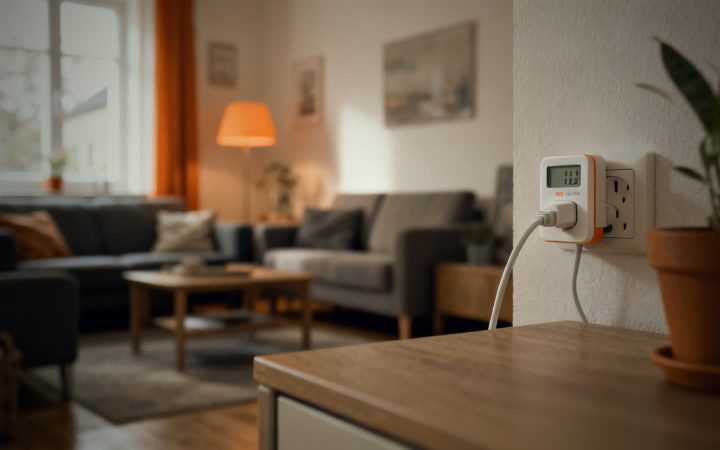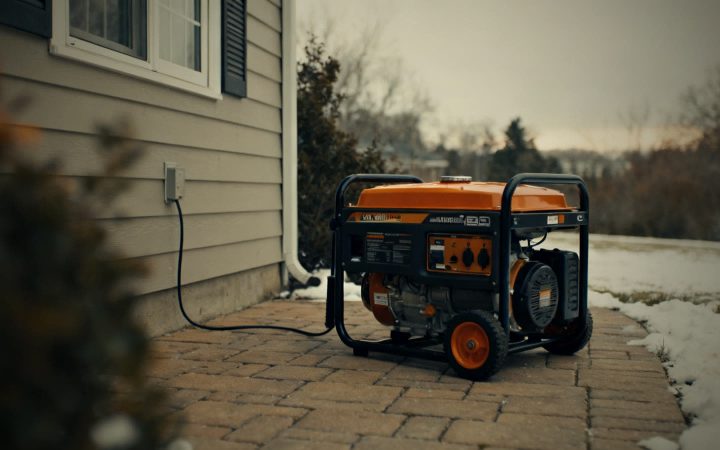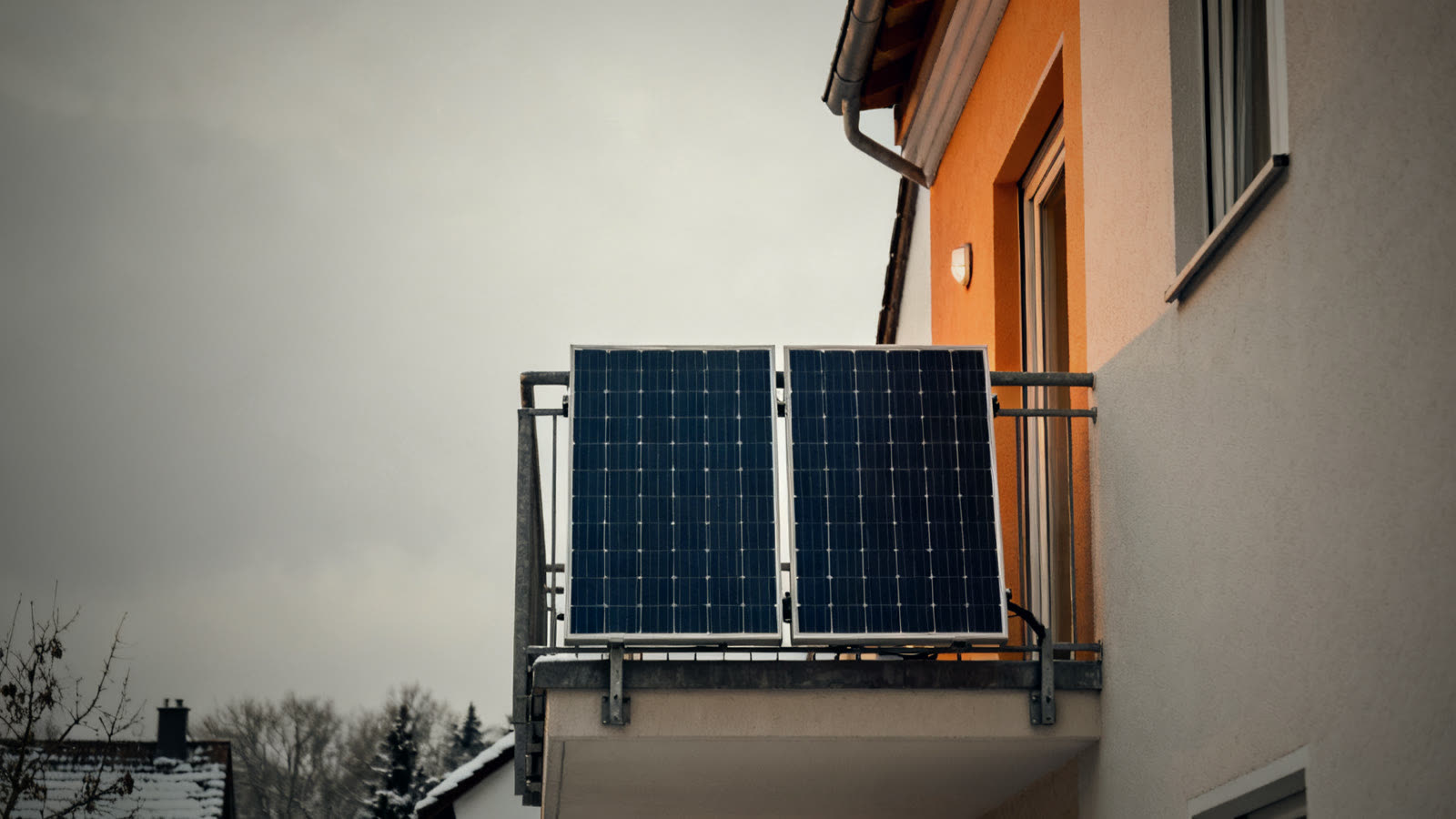
A plug-in solar system (balcony power plant) can only help during a power outage if the connected battery has its own backup power function with an off-grid outlet. Without this feature, the system shuts down automatically during a grid failure for safety reasons. With a suitable battery, you can keep individual devices such as a router, a lamp, or a refrigerator running for a limited time – but it is not a replacement for your home’s full power supply.
Why standard plug-in solar systems don’t help during a power outage
A standard plug-in solar system (balcony power plant) depends on the public power grid. If the grid goes down, the inverter disconnects automatically for safety reasons – otherwise it could feed electricity into the dead grid and endanger utility workers during repairs. This shutdown is mandatory and works on all compliant devices. Without an additional battery with off-grid capability, your plug-in solar system is useless during a power outage, no matter how much the sun is shining.
If you want to rely on solar power during a power outage, you therefore need a battery that is explicitly designed for off-grid operation. These devices have a separate outlet that works independently of your home’s electrical system and supplies power even when it’s dark outside. This distinction is crucial, because many manufacturers’ marketing often doesn’t make the backup power function clear enough.
Balcony solar system during a power outage: what batteries with backup power can really do
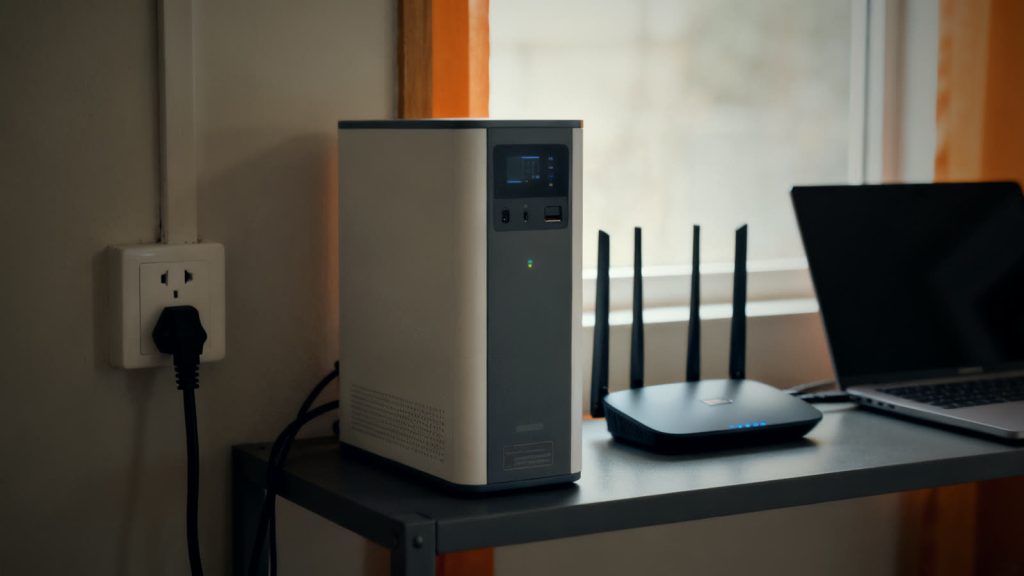
Stiftung Warentest (a German consumer organization that tests products) tested five batteries for plug-in solar systems from Anker, EcoFlow, FoxESS, Growatt, and Zendure, each with a capacity of around 2 kWh and priced between 700 and 1,000 euros. The tested devices have an off-grid outlet that is sufficient to run a refrigerator overnight, for example, or to power a lamp, laptop, and router for several hours.
This shows the realistic scale: a battery like this is well suited for small, essential loads. You can’t run a heater, an electric stove, or several large appliances at the same time with it. If you want to keep your daily routine going during a longer power outage, you should adjust your expectations accordingly and also read up on the first 24 hours after a power outage.
How much energy does the sun actually provide?
The battery capacity of around 2 kWh is recharged via the connected solar panel, provided there is enough daylight. In winter, under heavy cloud cover, or during a multi-day power outage with bad weather, the supply is significantly lower than in summer. So don’t plan on a permanent full supply, but on a supplement to other preparedness measures, such as a comparison of power stations and power banks.
It’s also important to know that recharging via the solar panel only works during the day. At night, the battery runs solely on the energy it collected beforehand. So if you still need light in the evening during a power outage, you should let the battery charge fully as early in the day as possible instead of connecting it only in the evening.
The Weak Points: Interference and Water Resistance
The test results were sobering overall. Three of the five power stations tested received an overall rating of “poor” because they emit too much electromagnetic interference. In everyday use, this can cause TVs to flicker or disrupt the Wi-Fi router – of all devices, the very one a battery storage unit is supposed to keep running during an emergency.
Even more serious: in a water resistance test, water got into the built-in outlets of four of the five storage units tested, even though the devices are expressly approved for outdoor installation on a balcony. If you buy a unit like this, pay close attention to test results and protection ratings instead of relying on marketing claims alone.
- An off-grid outlet for island mode is a must, otherwise there is no backup power function
- Be realistic about capacity: around 2 kWh is enough for a few devices, not for the whole household
- Look for test results on interference and water resistance
- Recharging via solar panel depends on the weather and is much lower in winter
What to Prepare in Addition to Your Plug-In Solar System
A battery storage unit with backup power function is no substitute for basic preparedness. During a power outage, the Verbraucherzentrale (German consumer advice center) recommends checking the fuse box, informing your grid operator, switching off sensitive devices, and finding out how long the outage is expected to last – and calling the emergency number only if there is real danger. According to the Verbraucherzentrale, extensive supplies or expensive backup power solutions are generally not necessary for private households.
This includes a water supply for 3 to 5 days at a minimum of 2 liters per person per day, as described in the guide to the right amount of drinking water. Cash in small bills is also part of it, since card payments and ATMs can fail during a power outage – you can read more in the article on the emergency cash reserve.
This basic kit applies whether or not you own a plug-in solar system with battery storage. It covers the things a storage unit can’t provide anyway: drinking water, cash, and information about the situation.
Other Causes and Safety Considerations During a Power Outage
The BBK (Germany’s Federal Office of Civil Protection and Disaster Assistance) lists accidents, construction errors, severe storms, flooding, heavy snowfall, avalanches, as well as sabotage and cyberattacks among the causes of power outages. A plug-in solar system with backup power function can be a small but useful addition in all of these scenarios.
The BBK also recommends other energy sources, including solar-powered battery chargers, power banks, and battery-powered or hand-crank radios. Important: there is a risk of suffocation when using gas-powered heat sources, and a carbon monoxide detector significantly increases safety. You can find more in the article Carbon Monoxide: The Invisible Danger of Emergency Heating. Grills must also never be used in enclosed spaces, and regular ventilation is important when using open flames.
The BBK also recommends storing non-perishable food that can be eaten cold. If you haven’t put together your emergency food supply yet, you’ll find a concrete overview in the article Foods with a Long Shelf Life.
Is a Plug-In Solar System with Battery Storage Worth It for Emergency Preparedness?
The answer depends on what you expect from it. If you already run a plug-in solar system (also called a balcony power plant) to cut your electricity costs and add a battery with a tested backup power function, you get a useful extra layer of protection for smaller devices. If you are buying only for the backup power function, you should know the limits: limited capacity, recharging that depends on the weather, and sometimes significant differences in quality between models.
A good supplement still makes sense in any case, for example a solar panel for beginners as a smaller, more flexible starting point that needs no permanent installation. If you are unsure which solution fits your needs, first work out how much power the most important devices in your household actually use before you invest in a battery.
Frequently Asked Questions
Does my plug-in solar system work automatically during a power outage?
No. For safety reasons, standard inverters automatically disconnect when the grid goes down. Only an additional battery with its own off-grid outlet can still supply power in that situation.
How long does a battery with a backup power function last?
The batteries tested, with a capacity of around 2 kWh, last roughly one night of running a refrigerator or several hours of powering a lamp, laptop, and router.
Can I use it to run my heating system or stove?
No. The capacity and output of the off-grid outlet are designed for smaller devices, not for large household appliances.
Are all batteries for plug-in solar systems safe?
A test revealed clear weaknesses: Several units emitted strong interference signals or let water into the outlets during waterproofing tests. It pays to check the test results.
Do I need other emergency preparedness measures as well?
Yes. A battery is no substitute for a water supply, a cash reserve, or basic equipment for light and heat during a power outage.
What You Can Do Now
Before buying a battery, look up the latest test results on interference signals and waterproofing. At the same time, build up a stock of water and cash, as makes sense in any household, and look into alternative light sources such as a hand-crank radio in case the battery isn’t enough. That way you build preparedness that doesn’t depend on a single device alone.
Sources and Further Information
General information, no substitute for individual advice from authorities, emergency services or medical professionals. In an emergency in Europe: 112.