We’re used to finding any piece of information on our phones in seconds. What’s the weather going to be like? Where’s the traffic jam? What’s going on in town? When the internet goes down – whether because of a power outage, a technical fault, or overloaded networks – many people only then realize how dependent they are on it. The good news: there are reliable ways to stay informed even without internet. You just need to know them ahead of time.
The most important source: the radio
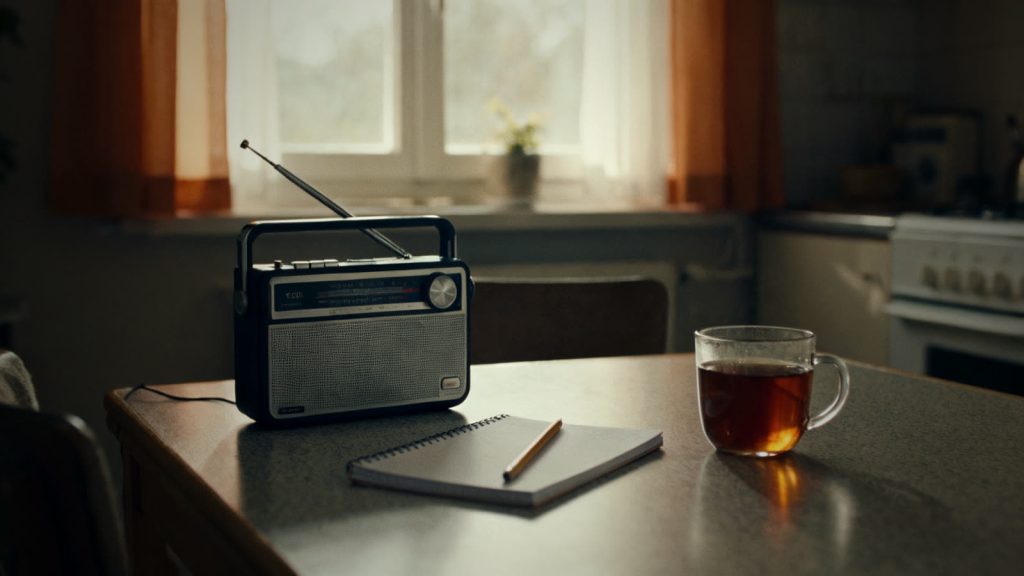
The BBK (Germany’s Federal Office of Civil Protection and Disaster Assistance) explicitly names the radio as an important device for emergencies and crises and recommends battery-powered, hand-crank, or solar-powered models. In major situations, authorities pass hazard alerts and safety instructions on to broadcasters, especially the regional public radio stations. Radio works without cell service and without internet.
Here’s how to prepare:
- Get a radio that runs without a wall outlet, ideally with a hand crank and a battery compartment.
- Write down the frequency of your regional station and a backup station.
- Don’t forget your car radio: during a power outage, it’s a handy receiver. But don’t let the engine run unnecessarily, and never in enclosed spaces like a garage – exhaust fumes contain toxic carbon monoxide.
Cell broadcast: emergency alerts without internet
As long as the cell network is still working but mobile internet is overloaded, an alert can still reach you via cell broadcast. You don’t need an app or a data connection for this, just a phone that’s turned on, has network reception, and has emergency alerts enabled. Warning apps like NINA, on the other hand, need a data connection.
On site: emergency points and public notices
The BBK advises knowing the emergency contact points in your area. For longer power outages, many cities and counties have planned locations where you can get information and place an emergency call. Depending on the region, they’re called things like emergency information points, disaster relief lighthouses, or emergency meeting points. These are often fire stations, town halls, or schools with backup power.
Find out now whether something like this exists where you live: on your city or county website, in the official gazette, or by calling the local administration. Write down the address and think about how you’d get there without a car.
In an emergency, there may also be loudspeaker announcements from the police or fire department, notices posted at public buildings, and information in the local newspaper. It sounds old-fashioned, but it works.
Keep Essential Information Offline
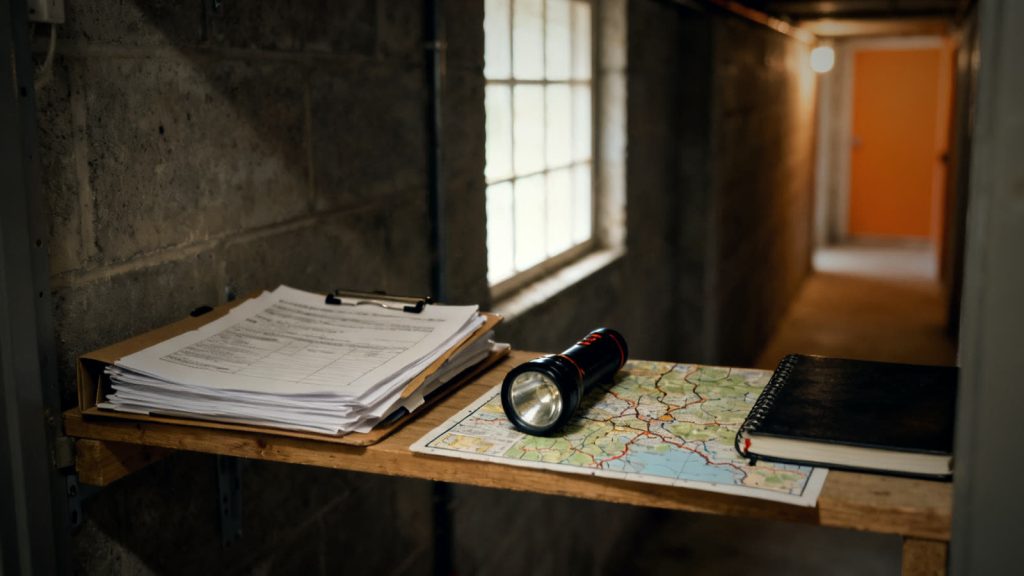
You shouldn’t have to search for what you need to know in an emergency at the very moment it happens. Set up a small binder with the most important information on paper:
- the BBK (Germany’s Federal Office of Civil Protection and Disaster Assistance) guide to emergency preparedness, printed out or ordered as a brochure,
- your emergency contact list with meeting points,
- a paper map of your area with emergency shelters and information points marked,
- first aid basics as a quick-reference sheet,
- instruction manuals for important devices such as your radio, camp stove, or power station.
You can also prepare your phone: download maps of your area for offline use and save important PDFs locally. This helps for as long as the battery lasts.
How to Spot Rumors and Misinformation
In uncertain situations, rumors spread especially fast, whether through messaging apps, social media, or word of mouth. When official information is scarce, speculation fills the gaps. A few simple rules can help you:
- Where does the information come from? Is an agency, the fire department, the police, or an established broadcaster named as the source?
- Is it current? Old reports often resurface during a crisis.
- Does a second, reliable source confirm the news?
- Does the message play on fear or urgency? Phrases like “Forward this to everyone immediately!” are a warning sign.
Only pass on what you got from an official source. The BBK explicitly encourages people to share official information with others, especially with those who have no access themselves.
Your Neighborhood as an Information Network
Don’t underestimate the people around you. If someone doesn’t have a radio, they will be glad if you knock on their door and tell them what was announced. Older neighbors without a smartphone depend on this in particular. If you organize a little with the people in your building or on your street, for example with a shared notice on the bulletin board in the stairwell, you create a small, reliable information network. In the military, they say: information that gets stuck with one person is worthless. The same applies here.
Power for Your Information Sources
Your radio, phone, and flashlight all need power. A charged power bank, a supply of batteries in the right sizes, and a hand-crank device will keep you able to receive information for several days. Turn devices on at news times and switch them off again in between.
In short: A battery-powered or hand-crank radio that doesn’t need an outlet is your most important source of information when the internet goes down. Find out where emergency information points will be set up in your community, and keep important information on paper. Only pass on information from official sources.
Compare the Right Gear
| Produktbild bei AmazonBudget entry pointSolarbaby Notfall-Solarradio | Produktbild bei AmazonSolid middle groundActa Berg Kurbelradio | Produktbild bei AmazonLargest reserveROCAM Kurbelradio 12.000 mAh | |
|---|---|---|---|
| Rating | at least 4.3 out of 5 starswith 500+ customer reviews (our selection criterion)See current reviews* | at least 4.3 out of 5 starswith 500+ customer reviews (our selection criterion)See current reviews* | at least 4.3 out of 5 starswith 500+ customer reviews (our selection criterion)See current reviews* |
| Features |
|
|
|
| Pros |
|
|
|
| Cons |
|
|
|
| View on Amazon* | View on Amazon* | View on Amazon* |
Selected by manufacturer data and customer reviews (at least 4.3 stars with 500+ reviews). We only show exact star ratings when they come from Amazon the same day. As of 04.10.2026. Not tested by us. Current prices and reviews are on Amazon. *Ad · paid link
Conclusion: our product picks
Crank Radios Compared
For most households, the Acta Berg offers the best compromise between battery reserve and size. If you want to recharge your phone over several days, go for the ROCAM with 12,000 mAh. For a small emergency backpack, the Solarbaby is enough.
Links marked with * are advertising links. As an Amazon Associate I earn from qualifying purchases.
Sources and Further Information
General information, no substitute for individual advice from authorities, emergency services or medical professionals. In an emergency in Europe: 112.