📌 Part of the guide: Preparing for a Power Outage: Light, Heat, Communication
Identifying misinformation starts with three questions you ask yourself before sharing a message: Is the source credible? Is the information based on facts? Do other sources agree? The BBK (Germany’s Federal Office of Civil Protection and Disaster Relief) recommends these verification questions. If you answer “no” to any of them, it could be misinformation according to the BBK.
In this post, we go through the three questions step by step, show a fabricated example, and give you some of our own tips, which we clearly mark as such. The goal is not that you distrust every message. The goal is that you pause for a brief moment before you share something further.
Why Misinformation is Part of Preparedness
In its emergency preparedness guide, the BBK explicitly notes that cyberattacks, misinformation, or sabotage lead to attacks on infrastructure, public discourse, and social cohesion. The updated guide includes new topics, such as misinformation, protective shelters, and mental health. The topic is thus listed alongside other emergency preparedness considerations.
For you, this means: Preparation includes not only stockpiles of water, food, and light sources. It also includes dealing with information thoughtfully. How you prepare for an emergency is also covered in our post Emergency preparedness done right.
The BBK’s guiding principle is: “Question critically instead of sharing!” It captures the essence concisely. If you suspect misinformation, you should not share it. Everything else in this post builds on this idea.
Recognizing Disinformation: The Three Verification Questions
The BBK (Germany’s Federal Office of Civil Protection and Disaster Assistance) recommends asking three verification questions before sharing information. They concern the source, the facts, and verification across other sources. You can memorize them or write them down. What matters is that you actually work through them before you hit “forward.”
Question 1: Is the sender or original source credible?
The first question focuses on the origin of the information. Who originally published it? That’s not always the person you received it from. Often a message reaches you through multiple channels, and the actual sender is no longer identifiable.
The BBK mentions two concrete indicators. For profiles, pay attention to real names; for websites, look for a complete imprint with name and address. These are points you can check. They are, however, only indicators and not proof: A real name alone says nothing about whether the content is accurate.
Our own assessment: If a message group only says someone heard something from someone else, the source cannot be traced. Then you cannot answer the first question with yes.
Question 2: Is the information based on facts?
The second question concerns the content. According to the BBK, you should check whether references and sources are provided and whether reputable news outlets with fact-checking departments report similarly. A post that only makes claims and provides no evidence does not pass this check.
So look for this: Does it refer to a source you can read yourself? Are there details about who said or determined something, and when and where? Do you find similar reporting at reputable news outlets with fact-checking departments? If all of this is missing, you should not treat the message as verified.
Question 3: Do other sources agree?
The third question is cross-checking. The BBK advises comparing questionable messages with other trustworthy sources online. You actively search for other sources reporting the same thing and evaluate them using questions one and two as well.
If the internet goes down, cross-checking cannot be done as described. How you can stay informed in that case is explained in our article Staying Informed Without Internet.
The Three Questions at a Glance
- Source: Is the sender or original source credible (real name for profiles, complete imprint for websites)?
- Facts: Is the information based on facts, with references and sources, and do reputable news outlets with fact-checking departments report similarly?
- Cross-checking: Do other trustworthy sources agree?
If any of these questions is answered with no, it could be disinformation according to the BBK. Then the principle applies: question critically rather than forward. If you suspect false information, do not spread it further.
A Fictional Example: Rumor During a Power Outage
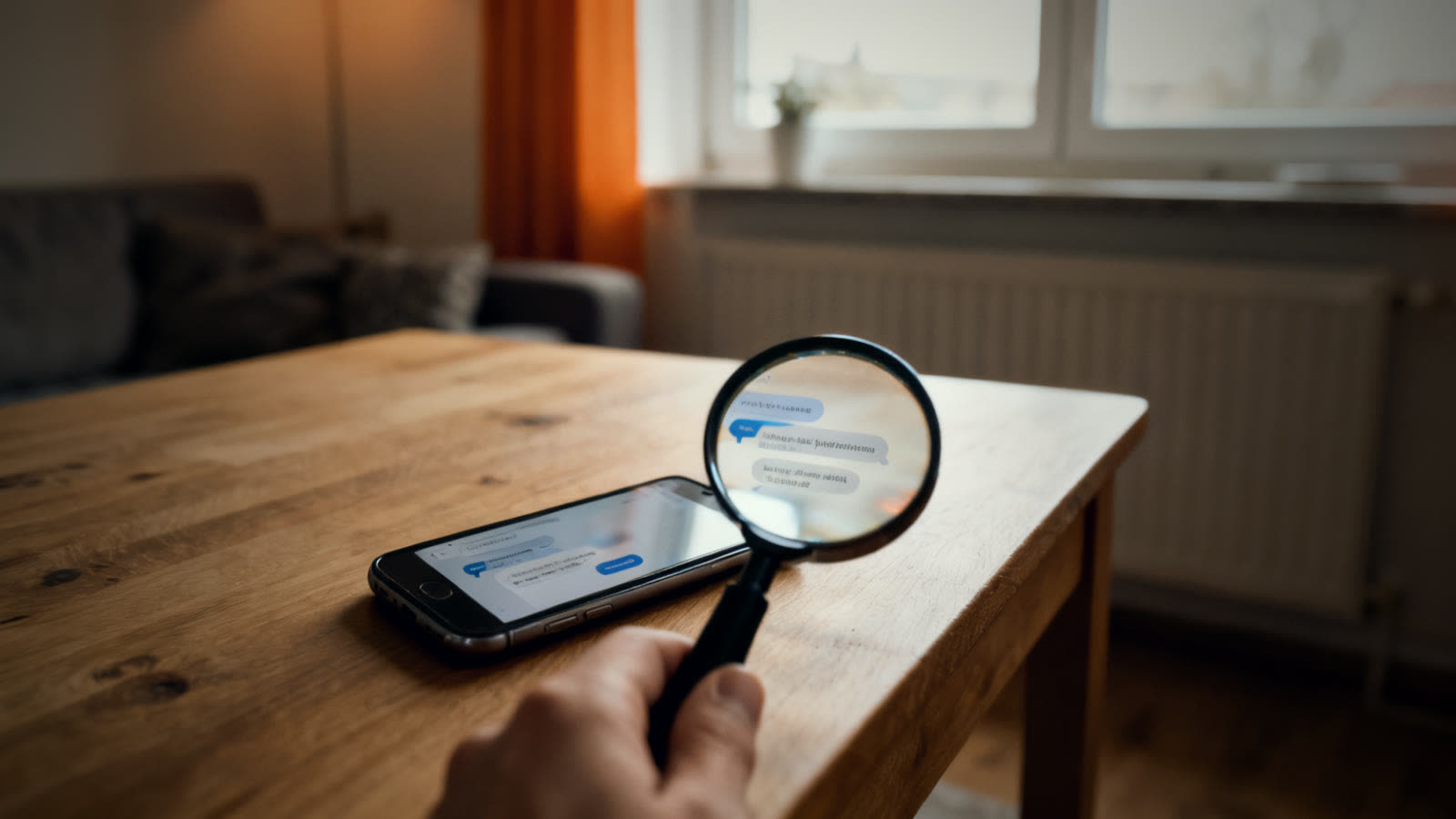
To illustrate this, here’s a made-up example, not a real case. During a power outage, a message appears in a neighborhood group: It supposedly says the situation is serious, and everyone should act immediately. Who wrote it remains unclear. You receive the message on your smartphone and wonder whether you should pass it on.
Let’s work through the three questions. Source: Who is the sender, and where did they get the information from? Is there a name, or does everything remain vague? Facts: Is there a reference to a source you can read, or only a claim? Cross-checking: Does another trustworthy source report the same thing?
If the answer to any of these questions is no, do not forward the message. That doesn’t necessarily mean it’s false. It just means you cannot verify it. An unchecked message does not get spread further this way.
What you can do instead: Stick to what you’ve prepared for the situation. Helpful steps for the first few hours can be found in the article Power Outage: How to Respond in the First 24 Hours. If you have a plan, you don’t have to react to every rumor.
Additional Notes: Our Own Assessment
The following points do not come from the BBK (Germany’s Federal Office of Civil Protection and Disaster Relief). These are our own considerations and meant as food for thought. They do not replace the three verification questions, but can help you take another closer look at a message.
Pay Attention to the Tone of the Message
Some messages pressure you to act quickly or try to trigger strong emotions. Phrases like “Forward to everyone immediately!” are an example. For us, that’s a reason to look particularly closely. However, a particular tone is not proof that a message is false, and a factual tone is not proof that it’s true.
How to stay able to act even in tense moments is explained in the article Staying Calm in an Emergency. A clear head helps you work through the questions calmly.
Be Careful with Images and Videos
Images and videos can be convincing. Still, you shouldn’t treat them as evidence on their own. You can ask yourself where the material came from and whether you can trace the source of the image itself. We cannot judge whether all material can be reliably identified as authentic or inauthentic.
That’s why the three verification questions apply here too: source, facts, cross-check. An image or video does not replace these questions.
Clarify Your Information Sources in Advance
The sooner you decide where you want to get information from in an emergency situation, the less you’ll have to decide on the spot. The BBK lists the NINA alert app as part of the warning infrastructure. You can learn how NINA, Cell Broadcast, and sirens work together in the article Warning the Public: NINA, Cell Broadcast, Sirens.
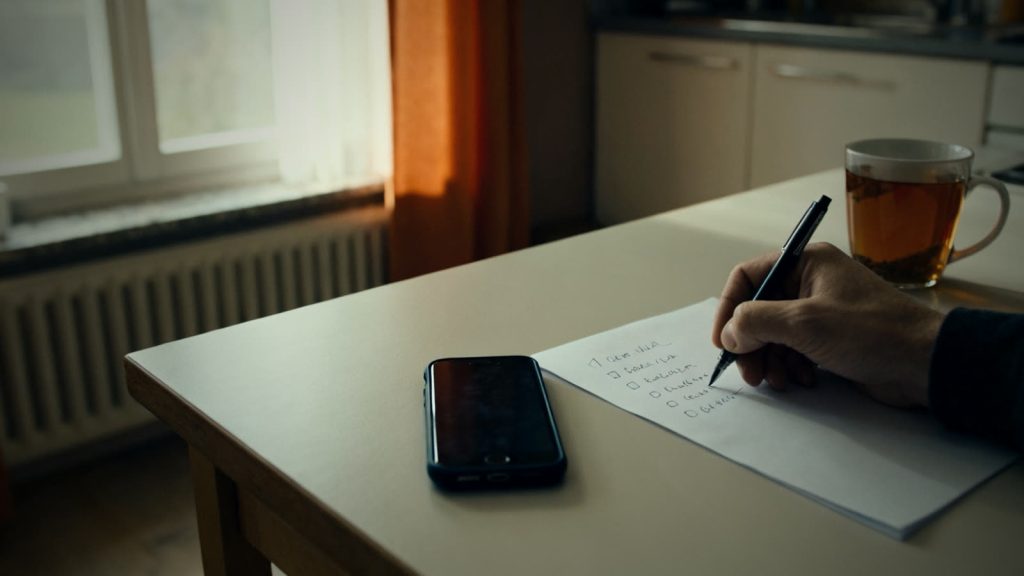
Here’s an idea from us: Write down on a piece of paper which sources you consider important and how to reach them. This is not an official standard, but a suggestion. The list helps you organize information calmly instead of being swayed by the first message you see.
You can also discuss this topic with your family. Those who agree in advance on how to handle unconfirmed messages won’t have to figure it out in the heat of the moment. You can find more about joint preparation in the article Emergency Preparedness for Families.
What to Do If You Suspect Misinformation?
The most important step is an unassuming one: don’t spread it further. The BBK states that information suspected of being false should not be shared. You don’t have to refute anything or prove anything to anyone. It’s enough to keep the message to yourself.
If someone in your circle has already shared the message, you can approach them calmly and without blame. For example: “I couldn’t find a source for this, do you have one?” This is our personal recommendation for how to treat each other. A factual tone keeps the conversation open.
Give yourself and others time. Not every question can be answered immediately. If you can’t categorize a message, it’s okay to leave it open and not spread it. That’s how you deal with uncertainty without contributing to misinformation yourself.
Frequently Asked Questions
How can I recognize misinformation?
The BBK (Germany’s Federal Office of Civil Protection and Disaster Assistance) recommends three verification questions: Is the source credible? Is the information based on facts? Do other sources confirm it? If you answer no to any of these, it could be misinformation according to the BBK. Then you should not share the message further.
How do I recognize a credible source?
The BBK identifies these indicators: for profiles, use of a real name; for websites, a complete imprint with name and address. Additionally, references and sources should be provided, and credible media outlets with fact-checking departments should report similarly.
What should I do if I can’t verify a message?
The BBK advises against sharing suspected false information. Following the principle ‘Question critically rather than share,’ you keep the message to yourself and compare it, where possible, with other trustworthy sources.
What role does NINA play?
The BBK lists the NINA warning app on its guidance page as part of the warning infrastructure. You can find more about warning systems in our article on NINA, Cell Broadcast, and sirens.
Your Next Steps
You don’t need to implement everything at once. With a few simple steps, you’ll be better prepared:
- Remember the three BBK questions about source, facts, and cross-checking.
- Internalize the principle ‘Question critically rather than share!’
- Read our article on NINA, Cell Broadcast, and sirens to learn how warnings reach the public.
- Think about which information sources you want to use in an emergency and write them down.
- Talk with your family about how you want to handle unverified messages.
- Practice in everyday life: consciously go through all three questions the next time you encounter a striking message.
Anyone who verifies information before sharing it can help prevent unverified messages from spreading further. With a little practice, this brief moment of pause becomes a habit.
Sources and Further Information
General information, no substitute for individual advice from authorities, emergency services or medical professionals. In an emergency in Europe: 112.