📌 Part of the guide: Preparing for a Power Outage: Light, Heat, Communication
To make an emergency call correctly, you dial 112, stay calm, and provide the most important information: where it happened, what happened, how many people are affected, and what injuries or dangers exist. Accurate reporting is very important for rescue services because they can prepare specifically for the operation. This article shows you how to practice this – and how to prepare if network signal or power fails.
Making an emergency call correctly: the essentials
Before we go into detail, here are the key points you should remember. They apply in everyday situations just as much as in an emergency where technology doesn’t work as usual.
- Get a quick overview: Is the accident scene safe? Don’t put yourself in danger.
- Call 112 and speak calmly and clearly.
- Give the location first, then the type of emergency.
- Answer the dispatcher’s follow-up questions and don’t hang up on your own.
- Provide first aid until rescue services arrive.
- Check in advance how you would react in case of weak signal or power outage.
Most people call the dispatcher for the first time in an emergency. That’s exactly why it’s worth going through the procedure once in peace, while nothing is happening.
The 5 W-questions in an emergency call
With the 5 W-questions you have a simple framework for the conversation. You don’t need to recite anything from memory, but the order helps you not to forget anything important under stress. The dispatcher will usually ask anyway and guide you through the conversation. The questions are a memory aid, not test material.
Where did it happen?
The location is the most important information because without it no one can respond. Give the place, street, and house number. If you’re on the road, landmarks like intersections, town exits, road signs, or distinctive buildings help. Also the floor and rear entrance can be crucial when rescue services need to enter a building.
What happened?
Describe the situation in a few words: fall on slippery ground, accident, fire, unconscious person. You don’t need to make a diagnosis. Describe what you see and hear. The dispatcher can infer from this what kind of help is needed.
How many people are affected?
State how many people are injured or in danger. This way enough emergency personnel and vehicles can be sent. Also whether children, elderly people, or people with pre-existing conditions are involved is useful information.
What injuries or symptoms are present?
Tell what you notice: Is the person responsive? Are they breathing normally? Is there heavy bleeding? If you suspect hypothermia, for example, it’s important to say that. The DRK (German Red Cross) recommends contacting emergency medical services for stages I and II hypothermia. Don’t assess anything you can’t be sure about; instead describe observations.
Waiting for follow-up questions
The fifth point is not a sentence but an attitude: Stay on the line. The dispatcher decides when the conversation ends. Often they give you instructions for the time until help arrives. Don’t hang up until you’re told to.
Stay Calm and Control the Call
In an emergency, your heart races and your thoughts scatter—this is normal. It helps to consciously slow your speech and take a deep breath before you dial. How stress affects your body and how to stay capable of action, we explain in the article Stay Calm in an Emergency.
Speak in short, clear sentences. Repeat the location if you notice it wasn’t understood. If you don’t know something, say so openly. “I don’t know” is better than a guess that might mislead rescue personnel.
Safety First
Before you help, look around. If you break through ice, according to the BBK (Germany’s Federal Office of Civil Protection and Disaster Assistance), lie flat on the ice and move only with great caution. This illustrates a fundamental principle: you can only help if you yourself are safe. In case of accidents or falls on slippery surfaces, first aid providers should provide first aid and call the emergency number.
First Aid While Waiting for Help
The emergency call does not replace first aid; it complements it. For hypothermia in stage I, bring the person to a warm place, remove wet clothing, wrap them in emergency blankets, calm them, and monitor them. Warm, sweet drinks are acceptable; alcohol is not. Active warming methods such as rubbing or heating pads should not be used. Find more details in the article Recognizing Hypothermia: Symptoms and First Aid.
In stage II: no rewarming attempts. If the person becomes unconscious, place them in the recovery position; check consciousness and breathing repeatedly. If normal breathing is absent, begin cardiopulmonary resuscitation (CPR). Those who feel uncertain can find guidance in the article Refreshing First Aid: Why a Course Really Pays Off.
Emergency Call Without Network Coverage: What’s Realistic?
A cyberattack, storm, or sabotage can, according to the BBK (Germany’s Federal Office of Civil Protection and Disaster Assistance), disrupt cellular networks or internet access. Without power, mobile devices can fail. An emergency call without network coverage is therefore not always possible, and it would be irresponsible to promise otherwise. This makes it all the more important to think in advance about what you would do in such a situation.
Weak Reception in Daily Life
With weak reception, it can help to change location—for example, moving outdoors, to a higher spot, or near a window. Move only if it’s safe for you and, if applicable, for the injured person. Keep your message brief and state the location right at the beginning in case the connection drops. If in doubt, try calling again.
Emergency Call via SMS and the nora Emergency App
In addition to calling, there are other ways to request help, such as emergency calls via SMS or the nora emergency app. You should check with official authorities to see which requirements apply (for example, prior registration) and how they work in your region. Important: Such methods typically also require functioning technology. They are a supplement, not a replacement for a preparedness plan.
Don’t set up such services only in an emergency. Inform yourself in a calm moment, try only what is officially available for testing, and discuss it with family members, especially those who are hard of hearing or have difficulty speaking.
When 110 and 112 Don’t Work
Germany’s Federal Office of Civil Protection (BBK) advises: If emergency numbers 110 and 112 are no longer working, you should go to the nearest police station or hospital in an emergency if possible. This may sound straightforward, but it has practical implications. You should know where these facilities are located in your area and how to reach them without navigation.
Consider whether you can reach these locations on foot, by bicycle, or by car – and whether you can safely transport an injured person or whether it’s better to ask someone for help. If in doubt, it’s advisable to involve neighbors. The article Emergency Meeting Point: Where to Find Help in an Emergency describes additional contact points.
Alerts and Information Also Fail
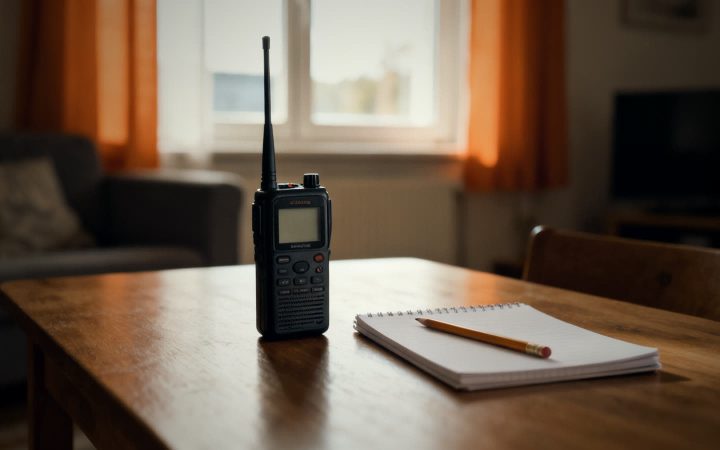
If mobile networks and the Internet stop working, alert apps and SMS alerts will also fail, according to the BBK. Radio stations, however, continue to work even when the network is down. Car, hand-crank, and battery-powered radios are recommended because they don’t require power from an outlet. The articles Hand-Crank Radios and Staying Informed Without the Internet show what this looks like in practice.
Home Preparation: What You Can Do in Advance
Much can be prepared calmly and without great effort. The goal is not to cover every situation, but to not start from zero in an emergency.
- Know your address: Everyone in the household should be able to state the street, house number, and city.
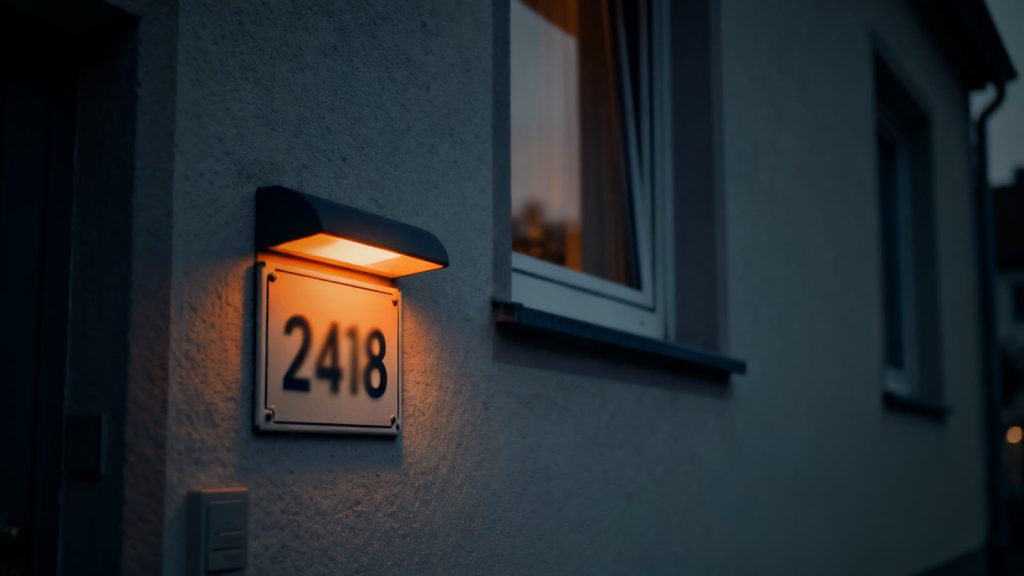
- Display your house number clearly: A legible house number that’s visible even at night makes it easier for emergency responders to locate you.
- Keep a printed contact list: The BBK recommends printed contact lists. See Emergency Contact List and Family Meeting Point.
- Know your local facilities: Police station and hospital nearby, as well as any other relevant local facilities.
- Battery and power: A charged cell phone is essential. Learn what options are available under Power Station or Power Bank – What Do You Need?
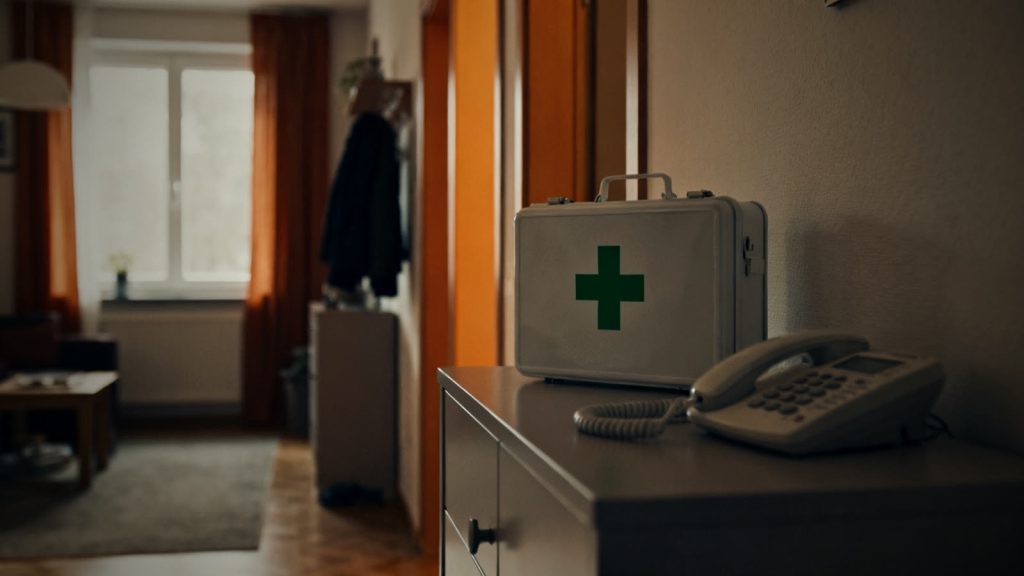
- Keep first aid supplies within reach: Ideally at a fixed location that everyone knows. Learn more: What Belongs in a First Aid Kit?
The Designated Spot in the Hallway
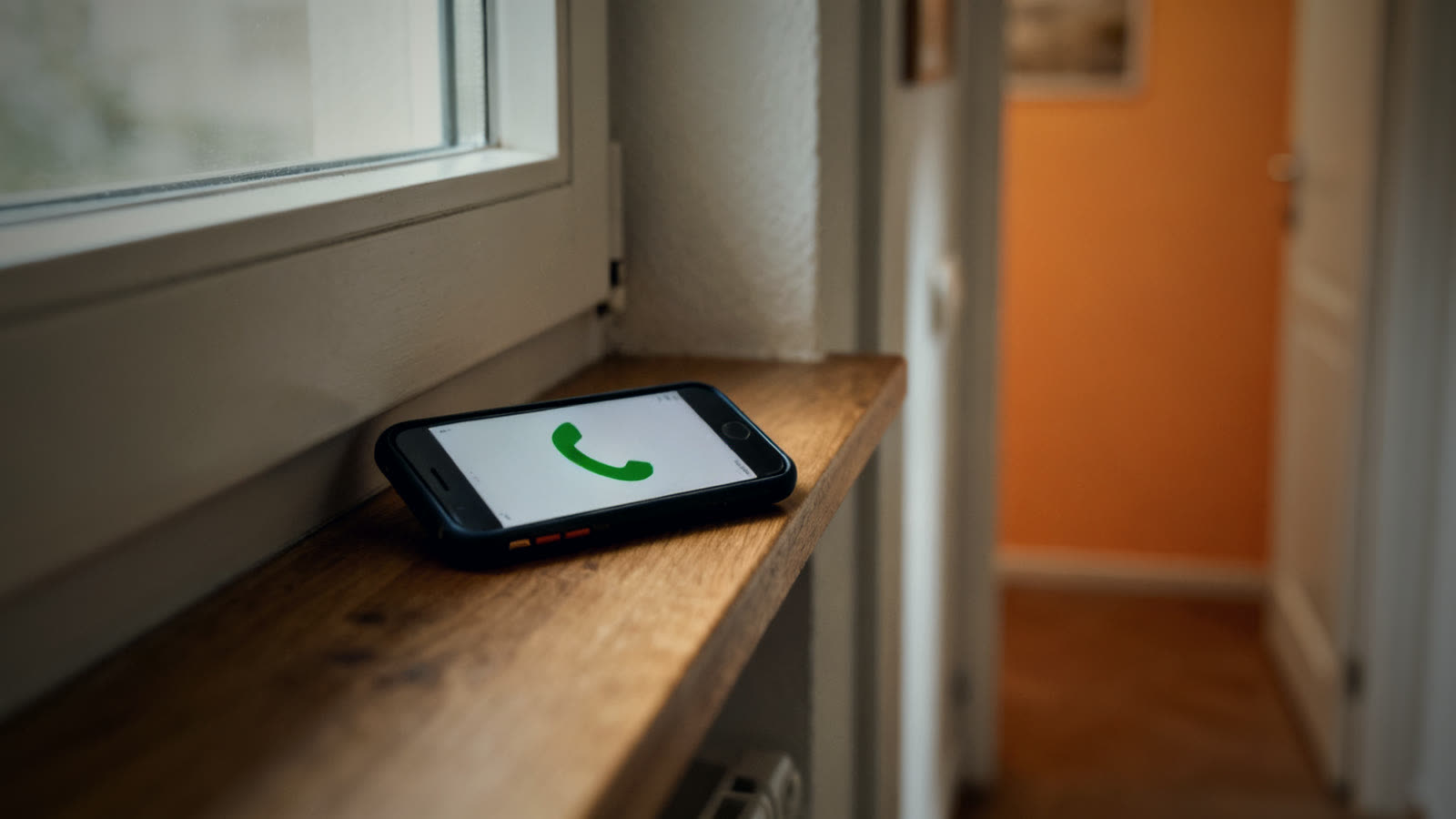
A first aid kit next to the telephone or charging cable in the hallway can save precious seconds in an emergency. Alongside it, you can post a note with your address, emergency contacts, and important information – such as pre-existing conditions or medications. This sheet also helps visitors, babysitters, or neighbors who aren’t familiar with your home.
Consider Special Situations
People who depend on medical devices need a separate plan in case of a power outage. Instructions for this can be found in the article Power Outage: Securing Medical Devices at Home. It’s also worth discussing the process of making an emergency call together with elderly relatives and those requiring care.
Frequently Asked Questions
What Number Do I Call in an Emergency?
For medical emergencies, fires, and hazardous situations, 112 is the primary emergency number. 110 reaches the police. Both are referred to as emergency numbers by the BBK. When in doubt, call 112 – the dispatch center will determine what kind of help is needed.
What Are the Five W Questions for an Emergency Call?
They form a framework for your report: Where did it happen? What happened? How many people are affected? What injuries or complaints are there? And: Be prepared for follow-up questions. Accurate information helps emergency responders prepare appropriately.
Can You Make an Emergency Call Without Mobile Coverage?
That depends on the situation. If the mobile network fails or power goes out, an emergency call may not go through. The BBK advises going to the nearest police station or hospital if possible. With weak network coverage, changing location can help if it’s safe to do so.
Can I Make an Emergency Call by Text Message?
There are additional methods such as emergency SMS and the nora Emergency Call app. You should clarify in advance with official sources whether and how these options are available to you. Don’t rely solely on them, as these methods also require functioning technology.
Should I Provide First Aid Before Calling Emergency Services?
Both go together. Ensure safety, make the emergency call, and provide first aid. Follow the dispatcher’s instructions if they give you any. If multiple people are present, divide the tasks.
Your Next Steps
Take ten minutes today and work through these points. They cost little and can achieve a lot in an emergency.
- Go through the 5 W-questions aloud with your family once, using your address as an example.
- Check whether your house number is legible and recognizable at night.
- Keep first aid materials in a fixed, well-known location.
- Print out a contact list and display it visibly.
- Find out where the nearest police station and hospital are located.
- Inform yourself at official agencies about emergency SMS and the nora emergency app.
- Keep a battery-powered or hand-crank radio on hand.
This way, you remain capable of acting even when technology doesn’t work as usual – calm, prepared, and ready for any situation.
Sources and Further Information
General information, no substitute for individual advice from authorities, emergency services or medical professionals. In an emergency in Europe: 112.