📌 Part of the guide: Packing a Go Bag: Checklist, Documents, and Family Plan
If you depend on medical equipment at home, early planning is especially important when a power outage occurs. You’ll clarify in advance with your doctor and care service how your equipment is powered and what’s planned for an outage. This includes a written emergency plan and your own preparations. Your healthcare professionals—not this article—always answer medical questions.
This article gives you a structure for your preparations. It deliberately contains no therapy or dosing information. It’s about organization: Who do you contact, what do you prepare, and how do you document it so that in an emergency, everyone in your household knows what to do?
Why planning for medical equipment matters
Germany’s Federal Office of Civil Protection and Disaster Assistance (BBK) states that power outages are typically restored within a few hours. In emergencies with widespread damage, however, they can sometimes last for days. For most households, that’s inconvenient. For people who depend on electrical equipment at home, it’s a matter of preparation.
The Hannover Region points out that people who depend on electronic aids at home—such as ventilators or dialysis equipment—need special precautions for a power outage or blackout. The same applies, in principle, to any equipment without which you or a family member would not be adequately cared for at home.
Good preparation here doesn’t mean playing out every conceivable scenario. It means clarifying the few important questions beforehand, while everything is calm. Then, in an emergency, you only need to execute your plan.
Preparing for a power outage: the equipment list
Start with an honest list. Which equipment is plugged in at your home or your family member’s? Don’t just think of the obvious device, but also everything that goes with it. The BBK recommends thinking about what you need when, for example, the power fails. It specifically mentions spare batteries, battery packs, and chargers for technical aids.
Go through your equipment one by one and document the following for each:
- Name and purpose of the equipment, as your doctor or care service refers to it
- Whether it runs on a rechargeable battery, disposable batteries, or only on mains power
- What power supply, charger, or accessories belong with it
- Who in your household can operate the equipment
- Who is responsible for the equipment—for example, your doctor, care service, or supplier
This list is the foundation for all further conversations. It also helps when someone else needs to step in later and quickly get oriented.
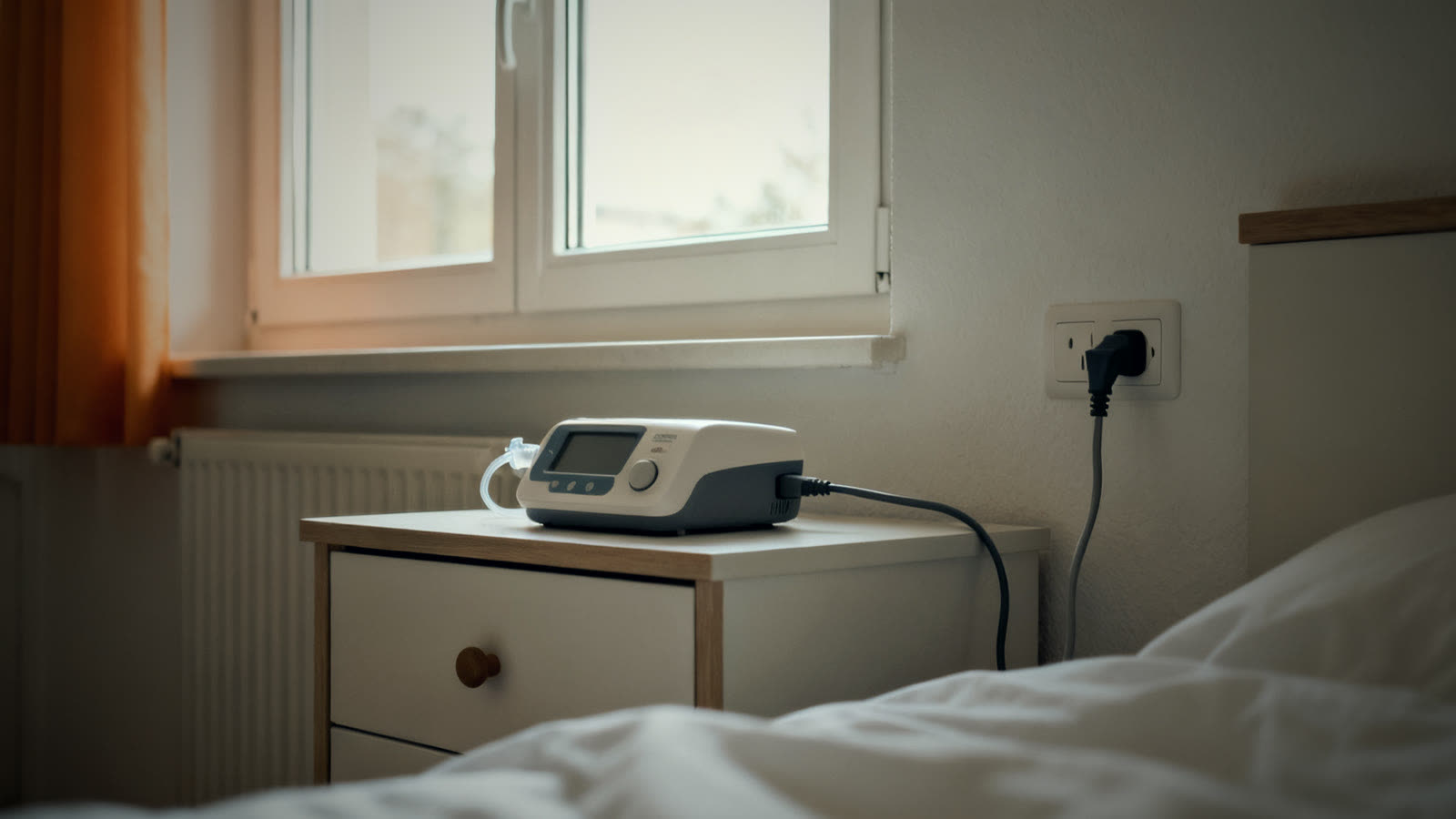
Example: ventilator
The Hannover Region also cites a ventilator as an example of equipment that requires special precautions. All questions about operation, backup solutions, and what to do during an outage belong first to your attending physician and the organization that maintains your equipment. You—and certainly not this guide—don’t make decisions about therapy and settings on your own.
Document your knowledge while things are calm
It’s important that you write down your answers and agreements, not just keep them in your head. In a stressful situation, you quickly forget details. Our article Staying calm in an emergency describes how to stay organized and able to act.
Talking with Your Doctor and Care Provider
Your doctor and care provider know your situation best. They can assess what is important during an outage and know what documents or agreements you need. It’s best to prepare for the conversation with a short list of questions so you don’t miss anything.
You can discuss the following topics with your healthcare professionals:
- What backup plan is there for my device during a power outage?
- Which backup options are suitable for me and which are not?
- Who should I call in an emergency, and who is available?
- What information should family members or neighbors know?
- What assistive devices and support do I need in my daily life?
Write down the answers so you have a reliable reference later. For questions about therapy or settings, only your doctors make the final decisions.
Don’t Forget Medications and Assistive Devices
Preparedness means more than just electricity. The BBK (Germany’s Federal Office of Civil Protection and Disaster Relief) recommends keeping a medication list and a supply of necessary medications, taking shelf life and storage into account. Discuss with your doctor how much medication you should store. According to the BBK, personal medications belong in a home medicine cabinet. How to set one up practically is explained in The Home Medicine Cabinet for Emergencies.
Your supply of important medications and medical supplies should be replenished before it runs out. Also keep in mind: medications that have passed their expiration date can lose their effectiveness and even become dangerous. In general, medications should be stored in a cool, dry room. The bathroom is not suitable for this.
Assistive devices like glasses or hearing aids should also be within easy reach. Additionally, consider what assistive devices and support you need in your daily life, and include this in your plan as well.
Emergency Registry and Your Own Preparedness
The Region of Hannover offers an additional option: free registration is available at www.notfallregister.eu. The organization forwards information about those affected to local emergency and rescue services. According to the Region of Hannover, these services can then evacuate those affected and provide backup power at central locations. However, this is not a guaranteed service.
Registration Does Not Replace Your Own Preparedness
It is important to note: registration does not entitle you to individual assistance. Those affected must absolutely make their own preparations. So do not rely on the registration alone, but view it at best as a supplement to your own plan.
If you do need to leave your home, advance preparation will help. What is important during evacuation is explained in the article Evacuation: what to do when you must leave your home.
Backup power for medical devices: What you should clarify beforehand
When it comes to backup power, the question is how to bridge the time until power returns. For medical devices, this is explicitly a matter for professionals. Only your doctor and the facility that manages your device can determine which supplementary solution is appropriate for your device. Conducting your own experiments with the power supply is the wrong approach here.
For context: In the general context of a power outage, the BBK (Germany’s Federal Office for Civil Protection and Disaster Assistance) mentions solar-powered battery chargers or a power bank as helpful—for example, to charge small devices. This is not a recommendation for medical devices. Whether such a solution is suitable for your device at all is something you clarify in advance with your professionals.
Spare batteries, rechargeable batteries, and chargers
The BBK explicitly recommends replacement batteries, spare rechargeable batteries, and chargers for technical aids. How you use, charge, and store these with your device depends on the manufacturer’s instructions and your professionals’ guidance. You can find general basics on how to handle batteries in Proper storage of batteries and rechargeable batteries.
Larger solutions only after consultation
There is much general information on the site about larger solutions such as a power station. The difference to smaller solutions is explained in Power station or power bank – what do I need? For medical devices, the rule is: first you talk to your professionals, then you buy, not the other way around.
If professionals recommend an additional solution for your device, a power requirement calculation helps. How to approach something like this in principle is shown in the article Calculate power requirements in an emergency. However, always have your professionals review the result for a medical device.
Write down your emergency plan and keep it current
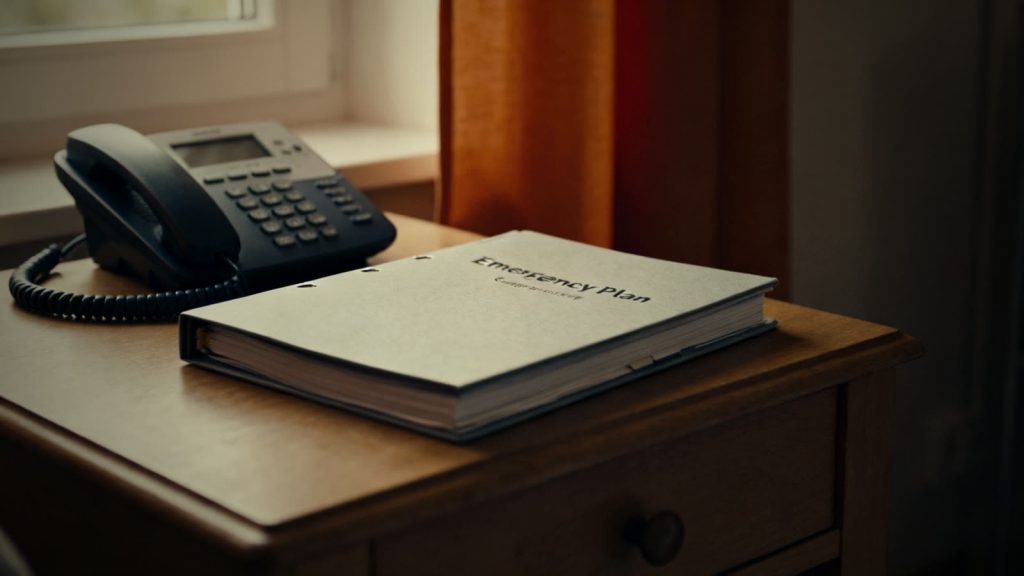
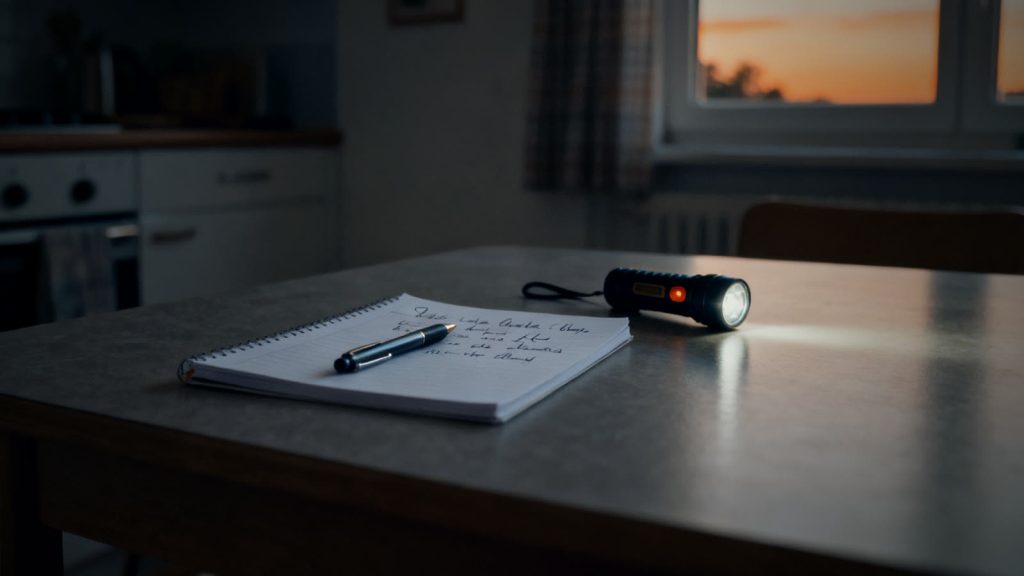
A plan that exists only in your head provides little help in an emergency. Write it down and keep it in a fixed location, for example in a folder next to your phone. Make sure that family members, neighbors, or your care service also know where to find it. A plan that’s inaccessible doesn’t help anyone.
Your folder should contain the following:
- Device list with accessories, spare batteries, and chargers
- Phone numbers of doctor, care service, utility provider, and family members
- Your medication plan and an overview of your supplies
- Your professionals’ written instructions for power outages
- A note on whether you are registered in the emergency registry
You can find templates for contacts in Emergency contact list and family meeting point. You secure important documents bundled together, as described in The document folder.
Stay informed
For power outages, the BBK recommends a battery-powered radio or hand-crank radio for information, as well as cash at home. How to stay informed without an internet connection is explained in Stay informed without Internet. Also agree with family members in advance how you’ll contact each other in an emergency.
Further guidance for people in need of care is compiled in the article Preparedness for seniors and people in need of care. General procedures in the first hours are explained in Power outage: how to handle the first 24 hours correctly.
Review your plan regularly
An emergency plan becomes outdated quickly. Devices are replaced, phone numbers change, and your professionals’ guidance is updated. Therefore, schedule times when you go through the plan. You should also keep an eye on your home medicine cabinet: the BBK recommends checking it from time to time and keeping supplies up to date.
Frequently Asked Questions
How long does a power outage typically last?
According to BBK (Germany’s Federal Office of Civil Protection and Disaster Assistance), power outages are typically fixed within a few hours. However, in cases of widespread damage during emergencies, it can sometimes take days. Therefore, don’t plan only for short outages.
Who should I ask first if I use a medical device at home?
Start with your treating physician and the nursing service or provider who manages the device. They will clarify what is planned for a power outage. After that, you can inform yourself about the emergency registry and finalize your written plan.
Is registration in the emergency registry enough?
No. The Region of Hannover points out that registration does not establish any claims to individual assistance measures. Those affected must definitely also make their own preparations.
Is a power bank sufficient for my device?
This cannot be said in general. BBK generally mentions a power bank as helpful for power outages. Whether it is suitable for a medical device, you should clarify in advance with your doctor or the facility that manages the device.
What else belongs in your preparedness besides power?
This includes a medication plan, a supply of necessary medications with attention to shelf life and storage, as well as readily accessible aids such as glasses or hearing aids. Information about a battery-operated radio and cash at home are also part of it.
Your Next Steps
You don’t have to do everything in one day. Work through the items one by one and check them off. Even the first steps will make you much more prepared to act.
- Create the device list with accessories, batteries, and chargers.
- Schedule a meeting with your doctor and nursing service and bring your questions.
- Document the instructions for the power outage in writing.
- Clarify with your specialists whether and which backup power solution is suitable.
- Check the free registration at www.notfallregister.eu.
- Keep your emergency folder, medication plan, and contacts readily accessible.
- Set a fixed date when you review everything again.
This way, you create a plan step by step that you can rely on. It eases your mind about this topic, because you know what to do.
Sources and Further Information
General information, no substitute for individual advice from authorities, emergency services or medical professionals. In an emergency in Europe: 112.