📌 Part of the guide: Packing a Go Bag: Checklist, Documents, and Family Plan
An emergency meeting point is a place where you can get information and help in an emergency when critical infrastructure fails. These are primarily what municipalities call disaster protection beacons. They don’t open for every small disruption, but only for extraordinary situations. That’s why it’s helpful to know the location in advance.
What is a disaster protection beacon?
A disaster protection beacon is an official contact point for the public during extraordinary crisis situations. It provides information and coordinates help when critical infrastructure fails. This can affect the power supply, for example, and often also telephone, internet, and mobile networks.
The term “beacon” is deliberately chosen: it should provide orientation in darkness and confusing situations. You can recognize the locations by a uniform logo that is used throughout Germany. This means you don’t have to learn how each municipality names its contact point, but can rely on a recognizable symbol.
In some places, comparable facilities are also called emergency meeting points, emergency information points, or similar. The names and exact equipment can vary from municipality to municipality. What matters is the basic idea: a known place where you find reliable contacts in an exceptional situation.
When does a beacon open?
Beacons open only during extraordinary events. These include prolonged, large-scale power outages with no foreseeable end. They also open when authorities declare a disaster situation. A brief outage of one or two hours in your street is not a reason to go to the beacon.
This is important for your planning. During a brief disruption, you stay at home and rely on your own preparations. How to bridge the first few hours well is explained in the article Power outage: how to handle the first 24 hours correctly. The emergency meeting point is the supplement for cases where the situation lasts longer or you can’t manage at home.
What does an emergency meeting point offer?
The tasks of a disaster protection beacon can be divided into four areas. They are the actual benefit of this facility for you as a citizen:
- Information: Beacons distribute official situation information and behavior recommendations.
- Emergency calls: They accept emergency calls and pass them on when normal communication fails.
- Neighborhood assistance: They coordinate help among neighbors.
- Central contact point: It’s the place where the public finds contacts.
The second point is particularly reassuring for many people. When telephone and mobile networks no longer work, you’re often left only to find someone yourself. At the beacon, an emergency call can be passed on, for example in case of a medical problem. This doesn’t replace your own first aid skills, but it gives you a clear way to get help.
Official information is also valuable. In an exceptional situation, rumors quickly spread. If you can ask at an official source, you learn what the authorities actually know and what behavior they recommend. This creates calm and helps you make reasonable decisions.
What you shouldn’t generally expect
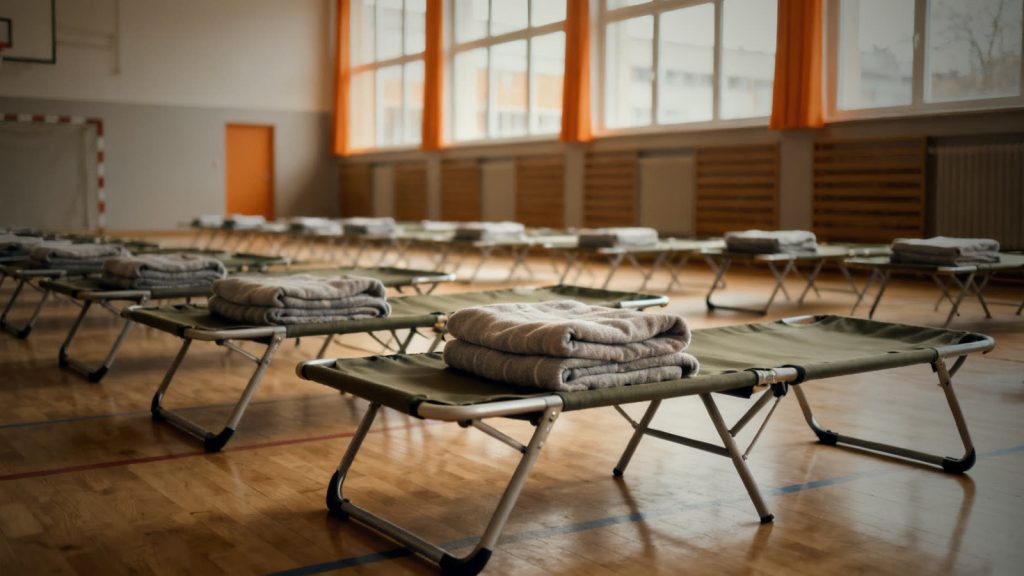
What additional services a location offers, such as warming facilities, beverages, or charging options, depends on the individual municipality. No general statement can be made about this from the available sources. Therefore, don’t assume that everything will be provided there. Ask your municipality in advance what is planned at your location and continue to provide for your own basic needs.
Example Neukölln: What a location concept looks like
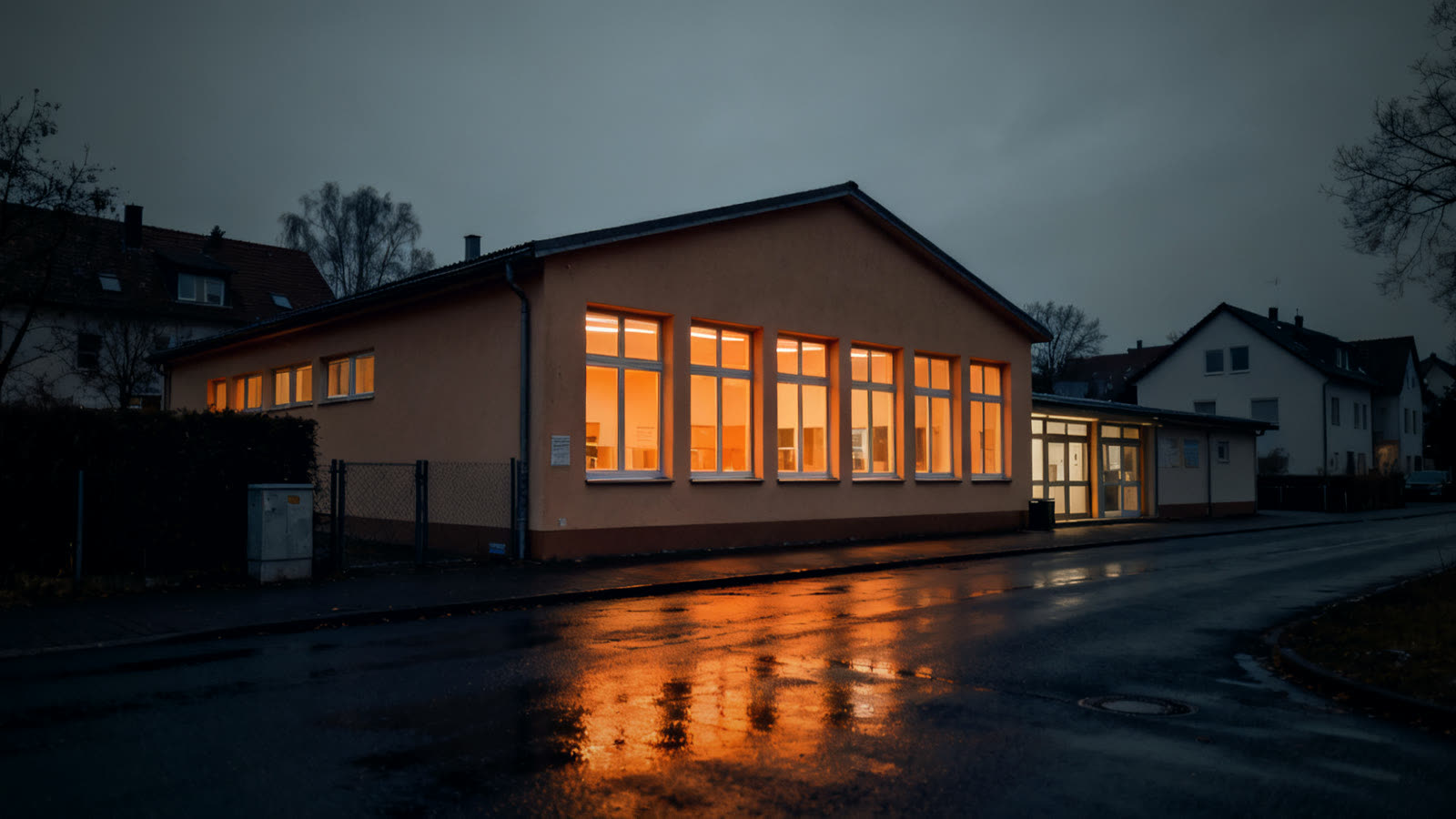
The Berlin district of Neukölln demonstrates what such a concept can look like in practice. Four locations are designated there: Neukölln Town Hall at Karl-Marx-Straße 83, the Britz Business Yard at Buckower Damm 20, the Gropiusstadt Community Center at Bat-Yam-Platz 1, and the Michael-Ende Elementary School at Neuhofer Straße 41.
What stands out is the mix of locations: an administrative building, a maintenance facility, a community center, and a school. These are buildings that already belong to the public infrastructure and are well-known in the neighborhood. That’s a sensible approach because an emergency meeting point only works if people can find it without GPS navigation.
A candid note is important: According to the district’s website, the Neukölln locations are still under development and not yet fully operational. This likely applies beyond there as well. In many municipalities, these structures are only just developing. Don’t rely on everything being ready at your place of residence; check the current status yourself.
Finding the emergency meeting point in your community
According to our research, there is no national unified list of all locations. Emergency meeting points in the community are organized by the respective municipality or district. The Federal Office of Civil Protection and Disaster Relief (BBK) recommends knowing local contact points such as town halls or emergency meeting points before a crisis occurs. You can take care of that now at your leisure.
Here’s how to proceed
- Search your city’s, municipality’s, or district’s website for terms like disaster protection, beacon, or emergency meeting point.
- Contact town hall, citizen services, or local government office to ask whether and where emergency contact points are planned and how they’re marked.
- Write down the address and access hours, then post the note in a fixed location, such as with your important documents.
- Walk the route once or cycle it. That way, you’ll know how long it takes and which path is safe.
- Talk about it with family and neighbors so everyone knows the same location.
The paper note is important. If power and internet go out, the address on your phone may no longer be accessible if the battery is dead. A handwritten note always works. This aligns with BBK’s recommendation to keep a paper contact list on hand.
If you can’t find information, that’s also useful knowledge. You can then inquire with the municipality, demonstrating that citizens are interested in this topic. At the same time, you’ll know that you need to rely more on your own preparedness and your neighborhood.
How to find your way without GPS navigation
An emergency meeting point isn’t much use if you can’t reach it without your phone. A paper city map or area map can help. Our article Orientation without GPS: Using map and compass safely shows how to navigate without satellite positioning. For short distances in your own neighborhood, often just having walked the route once with awareness is sufficient.
How to Prepare So You Can Stay Home as Long as Possible
An emergency meeting point is a fallback option, not a substitute for your own preparedness. The BBK (Germany’s Federal Office of Civil Protection) guide “Preparing for Crises and Disasters” aims at self-sufficiency for approximately ten days. Even a three-day supply makes a significant difference and can be expanded gradually. You’ll find concrete details in the article The Emergency Supply for 10 Days According to BBK Recommendations.
The BBK recommendations are not mandatory but suggestions for your personal preparedness. You decide how far to go. Being well prepared also relieves public emergency resource points so they can focus on those who truly need assistance.
Staying Informed When Devices Fail
The BBK points out that television, computers, and phones can fail—for example, due to power outages, cyberattacks, or storms that disrupt mobile networks. It therefore recommends a paper contact list, a power bank, and a battery-powered or hand-crank radio, since broadcast radio continues to operate even if the internet fails.
With a radio, you can find out whether authorities have opened an emergency resource point. You’ll find more details in the articles Hand-Crank Radio: Why Every Home Needs One and Staying Informed Without Internet. According to the BBK, DAB+ is to replace analog FM between 2031 and 2037. New radio devices are to be able to automatically activate emergency alerts starting at the end of 2025. When buying a new device, it’s worth checking for this feature.
Family Coordination
Talk about who goes where if you’re separated. A fixed family meeting point and a paper contact list can ease much uncertainty. You’ll find instructions under Emergency Contact List and Family Meeting Point. The public emergency meeting point can serve as a second gathering location if your private meeting spot isn’t accessible.
Frequently Asked Questions
Where can I get help during a power outage?
For short outages, it’s best to help yourself at home and work with your neighbors. For prolonged, widespread outages with no end in sight, emergency lighthouses may open. There you receive official information, emergency calls are forwarded, and assistance is coordinated. Find out where your nearest location is from your municipality.
What is an emergency resource point?
An emergency resource point is a location designated by authorities where citizens can receive information and support when normal communication channels fail. Emergency lighthouses serve this function. They are marked with a uniform logo and open only during extraordinary events.
Are there emergency meeting points everywhere?
No, there’s no simple answer. Organization is up to municipalities, and some locations are still being developed, as the example of Neukölln shows. Ask your municipality whether and where emergency resource points are planned or established.
Can I go to an emergency lighthouse anytime?
The lighthouses are not permanently open facilities. They open during prolonged, widespread power outages with no end in sight or when authorities declare a disaster. Check via radio and official warnings to find out whether a location near you is operational.
How do I find out if a lighthouse is open?
Radio broadcasts and official warnings are your best sources. A battery-powered or hand-crank radio works even if the internet goes down. The article Public Alert Systems: NINA, Cell Broadcast, Sirens explains the available warning channels.
Your next steps
You don’t have to do everything at once. The following steps are manageable and can be completed in just a few days:
- Find out on your municipality’s website whether there is a civil protection beacon or emergency meeting point, and write down the address on paper.
- If you have any questions, ask at the town hall about the current status and how the locations are marked.
- Walk the route once and check how long it takes you.
- Create a contact list on paper and discuss meeting points with your family.
- Get a battery-powered or hand-crank radio and a power bank.
- Build up your supplies step by step, starting with three days, then gradually working toward ten days.
- Keep important documents readily accessible, as described in The document folder: securing important documents.
Once you’ve done this, you’ll be well-prepared for an emergency: You know where to turn for help, you stay informed, and you can support yourself for some time. This is no cause for worry, but rather a calm sense of being able to take action.
Sources and further information
- Civil protection beacons in the Neukölln district – Neukölln district office of Berlin (berlin.de)
- Staying informed in a crisis – Federal Office of Civil Protection and Disaster Assistance (BBK – Germany’s federal civil protection agency)
- Guides and checklists – Federal Office of Civil Protection and Disaster Assistance (BBK)
General information, no substitute for individual advice from authorities, emergency services or medical professionals. In an emergency in Europe: 112.