📌 Part of the guide: Preparing for a Power Outage: Light, Heat, Communication
The Class N amateur radio license is the simplest way to become a licensed radio operator in Germany: It has been available since June 24, 2024, requires only the essential technical fundamentals, and permits operation on the 10-meter, 2-meter, and 70-centimeter bands. For emergency preparedness, it is a useful supplement, but not a replacement for emergency supplies, a radio, and emergency services. Whether it’s worth it for you depends mainly on whether you’re interested in the hobby itself.
Class N Amateur Radio License: The Essentials at a Glance
Amateur radio is a radio service that you may only operate with a license. The Bundesnetzagentur (Germany’s Federal Network Agency) currently distinguishes three license classes: N (Entry-Class), E (Novice), and A (Expert/HAREC). Class N is the newest and lowest level. It was designed as an entry point to lower the barrier for beginners.
With the license, you receive a personal call sign. This is your “identifier” in radio communications and belongs to you personally. You cannot simply pass it on to family or neighbors, and others are not permitted to transmit using your call sign.
To obtain the Class N certificate, you must demonstrate knowledge of the essential technical fundamentals according to the Amateur Radio Regulation (§ 4 AFuV). The requirements are thus lower than for the higher classes. The Bundesnetzagentur determines and publishes the specific frequency and power parameters separately in its Official Gazette. Therefore, always check the current publications before buying equipment.
What You Can and Cannot Do with Class N
Class N license holders may only transmit on the 10-meter, 2-meter, and 70-centimeter amateur radio bands. Class E has access to additional bands with higher transmit power than Class N. Class A permits radio operation in all frequency ranges designated for amateur radio service up to the maximum permitted transmit power.
What This Means in Practice
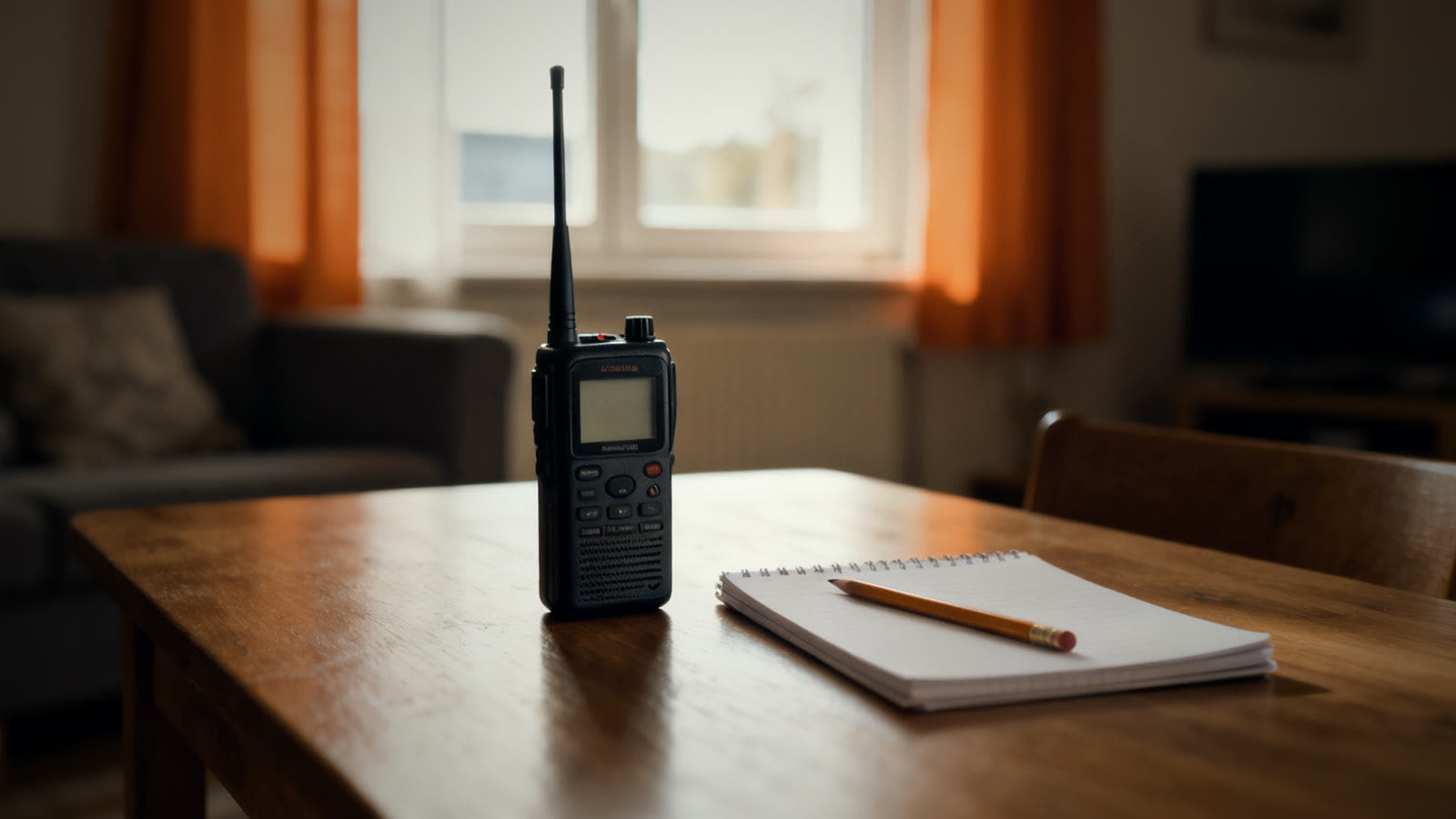
The 2-meter and 70-centimeter bands are the classic range for handheld radios and local communication. The 10-meter band has different propagation characteristics. The actual range you can achieve depends on your equipment, antenna, terrain, and building environment. Specific kilometer ranges would be misleading here, as they vary significantly from location to location.
Keep the Limits in Mind
- You are restricted to three bands; other frequency ranges are reserved for higher classes.
- Transmit power is lower than in the higher classes. You’ll find the exact values in the Bundesnetzagentur’s specifications.
- Your call sign and license are tied to you personally.
- Amateur radio is not a telephone replacement: You can only reach other amateur radio operators, not emergency services through a dispatch center.
If you want more capabilities later, you can work toward upgrading to the next higher class. Class N is thus an entry point that keeps your options open for future advancement.
Amateur Radio as Emergency Communication: What’s Realistic
The law explicitly includes support for relief operations in emergencies and disaster situations within amateur radio service. The concept of emergency amateur radio is thus firmly established. However, this does not mean that every amateur radio operator is automatically involved in disaster response. Anyone who wants to participate should inquire with local radio clubs or relief organizations about how cooperation is arranged locally.
As a private individual, the benefits are more straightforward. If mobile networks and the internet go down, radio can be a way to stay in contact with other amateur radio operators in your area and exchange information without cell networks. However, you can’t know for sure beforehand whether anyone will actually be listening in your region during an emergency. A radio with no one to communicate with remains silent.
That’s why radio is a supplement. The BBK (Germany’s Federal Office of Civil Protection) points out that radio broadcasts continue to work during power outages when mobile networks and the internet go down. For that reason, it recommends hand-crank, car, or battery-powered radios. You can read how to set this up properly in our article on hand-crank radios. Information reaches you reliably this way, and with amateur radio you can additionally transmit yourself.
The emergency number remains the first step in case of danger to life and health. How to make the call even with weak signal is covered in the article Calling Emergency Services Correctly.
The Amateur Radio Exam: How It Works
The exam consists of three parts: technical knowledge, operational knowledge, and knowledge of regulations. For Class N, the technical portion is limited to essential fundamentals. So you don’t need to be an electrical engineer, but you should understand how radio basically works, how to conduct yourself in radio communications, and what rules apply.
Where and When Exams Are Held
Exams from the Bundesnetzagentur (Germany’s Federal Network Agency) are held at 11 locations: Berlin, Dortmund, Cottbus, Erfurt, Eschborn, Göttingen, Hamburg, Hanover, Munich, Nuremberg, and Reutlingen. Exams are normally held every four to six weeks. Plan your travel accordingly and register early. You can find current dates and the registration process on the Bundesnetzagentur website.
How to Prepare
- First, get an overview of the three exam sections.
- Study with current material, as questions and regulations can change.
- Break the material into small units, for example one topic per week.
- If interested, find a local radio club. There you can often get help from people who have gone through it themselves.
I’ve deliberately left out how many questions the exam has or how much time you get. Rely instead on the official information from Bundesnetzagentur.
Costs and Obligations
Fees are charged according to the BMDVTKBGebV. Additionally, annual frequency protection fees apply, and their amount varies from year to year. I’m not listing specific euro amounts here because they can change. However, budget for ongoing costs beyond the exam and inform yourself in advance with the Bundesnetzagentur (Germany’s Federal Network Agency).
Add to that the expenses for a radio device, accessories, and power. A device is only as good as its power supply. If you view radio as part of your emergency preparedness, include batteries and charging options in your planning. Our articles on storing batteries and rechargeable batteries correctly and power stations or power banks can help.
With a license, you also assume responsibility. You may only transmit within the scope of your authorization and must comply with applicable regulations. That’s exactly why they’re part of the exam content.
When Class N is worth it – and when it’s not
The honest answer: The license is primarily worthwhile for people who understand radio as a hobby and learning project. Emergency preparedness is then a welcome side benefit, not the sole reason. Anyone looking for just a simple device for family use is often better served by alternative solutions.
Class N is right for you if …
- you’re fundamentally interested in technology and radio communication,
- you’re willing to study rules and exam material,
- you want to network with other amateur radio operators in your region,
- you might want to advance to a higher class later.
Other solutions are more suitable if …
You mainly want to communicate with family or your immediate neighbors. In that case, simple devices without a license are often the more practical choice. We present them in our article on PMR and Freenet radio devices for emergencies. A printed plan with designated meeting points is also very valuable, like the one you can find in emergency contact list and family meeting point. The BBK (Germany’s Federal Office of Civil Protection and Disaster Assistance) explicitly recommends printed contact lists because phones might not be available.
Where radio fits into your emergency preparedness
In emergency preparedness, prioritization matters more than equipment. First come the essentials: water, food, warmth, light, medications, and a radio. How to handle this in the first hours of an outage is covered in power outage: handling the first 24 hours correctly. Only then does it make sense to think about additional communication options.
The BBK also recommends a power bank alongside a radio and advises knowing local contact points like city hall. These are simple measures you can implement today. You’ll find more on this topic in staying informed without internet.
A small note: According to the BBK, DAB+ is to replace analog FM frequencies between 2031 and 2037. Therefore, when buying a radio, check which reception types the device supports. This is independent of amateur radio but relevant to your information supply.
Frequently Asked Questions
When was Amateur Radio Class N introduced?
Amateur Radio Class N has existed since June 24, 2024. It is the newest of the three classes: N, E, and A.
Which frequencies can I use with Class N?
Class N license holders can only operate on the amateur radio bands 10 m, 2 m, and 70 cm. The Federal Network Agency (Bundesnetzagentur) determines the exact frequency and power parameters and publishes them in its official bulletin.
What is tested in the Amateur Radio Exam?
The exam consists of three parts: technical knowledge, operational knowledge, and knowledge of regulations. For Class N, the technical section only requires knowledge of the essential fundamentals.
Can I use amateur radio to make an emergency call?
Amateur radio does not replace the emergency number 112. However, it can help you stay in contact with other amateur radio operators when the mobile network is disrupted. The legislator explicitly names support for relief operations during emergencies and disasters as part of the amateur radio service.
Where can I take the exam?
The Federal Network Agency (Bundesnetzagentur) conducts exams at 11 locations, including Berlin, Hamburg, Munich, and Hanover. Exam dates are typically offered every four to six weeks.
Your Next Steps
- Decide whether amateur radio appeals to you as a hobby or if a simpler radio device would suffice.
- Read the information from the Federal Network Agency (Bundesnetzagentur) about license classes, exams, fees, and frequency protection fees.
- Find a local amateur radio club in your area and ask about beginner courses and emergency radio activities.
- Check which exam location is most convenient for you and schedule an appointment.
- Secure the basics: hand-crank radio, power bank, printed contact list, and known points of contact.
- Practice operating the equipment regularly so that every step becomes second nature in an emergency.
A license is not required, but it’s a good way to develop communication independence from mobile networks. Start small, stay realistic, and build step by step. This way, you’ll be emergency-prepared without overwhelming yourself.
Sources and Further Information
General information, no substitute for individual advice from authorities, emergency services or medical professionals. In an emergency in Europe: 112.