📌 Part of the guide: Packing a Go Bag: Checklist, Documents, and Family Plan
A get-home bag is a small, pre-packed backpack that helps you get from your workplace to your home in case of emergency. It contains what you need for a walk home: water, food, comfortable shoes, a flashlight, first aid supplies, and a cell phone with backup battery. You keep it at your workplace, for example in a locker, and check it regularly.
What is a get-home bag and is it right for you?
The term comes from the emergency preparedness community and describes a set of items for getting home when you’re away. Unlike a bug-out bag, which you use to evacuate your home, a get-home bag is designed to help you reach your home when you’re stranded away from it. It’s deliberately kept small and lightweight. Your larger supplies stay at home, and this bag only accompanies you on your commute.
A get-home bag makes sense especially if you work far from home, rely on public transportation, or have a commute that can’t easily be replaced. Even if you commute daily, it’s worth considering. If transit fails, roads are closed, or there’s a widespread power outage, your normal commute could become a route that requires planning.
This isn’t cause for concern. It’s about asking a practical question: What would I need if I had to walk for several hours and couldn’t rely on outside help? Once you’ve thought it through and packed the bag, you can go to work with more peace of mind.
What this article is based on
The recommendations are based on guidance from the BBK (Germany’s Federal Office of Civil Protection and Disaster Assistance) on emergency supplies and the kit concept from Ready.gov. Ready.gov recommends keeping supplies for at least 24 hours at your workplace: food, water, medications, and comfortable running shoes in a grab-and-go container. The BBK’s emergency supply recommendations were originally designed for cases where you need to evacuate your home. We’re applying those concepts here to your commute home and noting where we’re making our own interpretation.
Packing Your Get-Home Bag: The Packing List
There is no fixed size for the contents, as the route, season, and personal needs vary greatly. The following packing list is based on the sources mentioned and is intended as a starting point. Adapt it to your route and remove what doesn’t make sense for you.
Water and Provisions
For emergency kits, the BBK (Germany’s Federal Office of Civil Protection and Disaster Relief) recommends supplies for two days in dust-proof packaging, a water bottle, and dishes and utensils. For a journey home, you usually need less, but the principle is clear: shelf-stable food that doesn’t require cooking, and a way to carry water with you. You can find out how much liquid you should plan for in How much drinking water do I need in an emergency?
- Water bottle that you refill at regular check intervals if you store it filled
- Shelf-stable supplies in sealed packaging that require no cooking
- Dishes and utensils if you think they’re useful
You can find tips on storing water in Storing Drinking Water Properly. Ideas for foods that taste good cold and are filling can be found in Emergency Supplies Without Cooking.
Clothing and Shoes
Comfortable shoes are the most important single item for a journey home. Ready.gov recommends comfortable running shoes for the workplace kit. If you wear business shoes or heels every day, you’ll quickly run into problems on a long distance. The BBK calls weather-resistant shoes or rubber boots essential. So have a pair of shoes ready that you’re comfortable wearing for extended periods.
When it comes to clothing, the BBK recommends the layering principle, which means multiple layers, plus weather-protective clothing, a hat, and work gloves. For the get-home bag, this means: weather protection, a hat, and gloves can be packed compactly. How the layers work together is explained in The Layering Principle: Dressing Properly in Cold Weather.
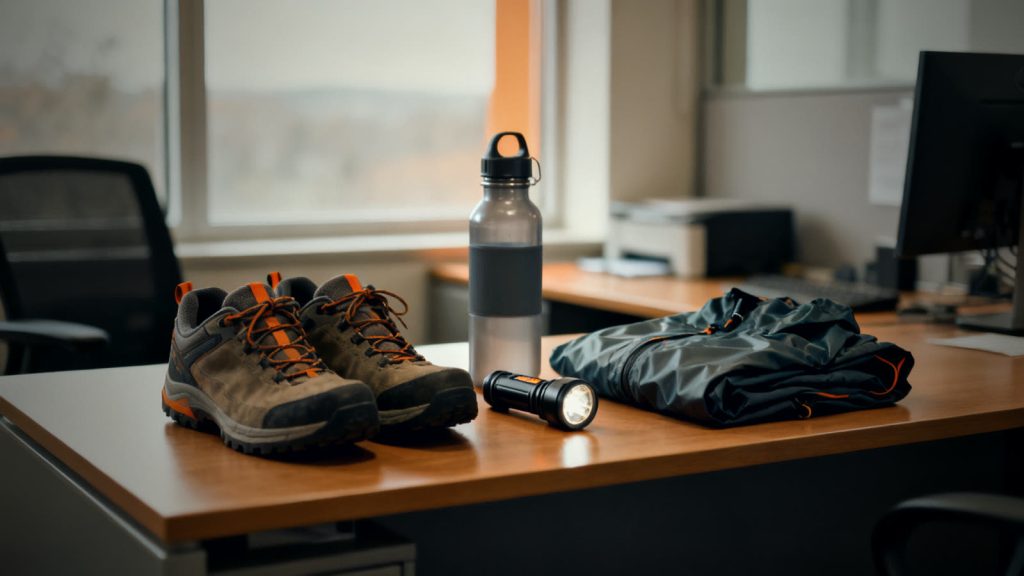
- Comfortable, weather-resistant shoes
- Rain jacket or other weather protection
- Hat or cap and gloves
- An additional layer appropriate for the season
Light, Power, and Communication
The journey home can take longer than planned, and in fall or winter it gets dark early. Ready.gov lists a flashlight with spare batteries in its basic kit, and the BBK does too. To find out which type suits you best, see Choosing the Right Flashlight and Headlamp.
Your mobile phone serves as your phone, map, and information source all in one while you’re out. Ready.gov therefore lists the mobile phone along with a charger and backup battery in its basic kit. For help deciding, see Power Station or Power Bank – What Do I Need? How to store and check batteries and rechargeable batteries is covered in Storing Batteries and Rechargeable Batteries Properly.
The BBK also lists a battery-powered radio with spare batteries for the emergency backpack. Whether you pack something like this in your get-home bag depends on how much space you have. If mobile networks and the internet are disrupted, a radio can be an important source of information. Ready.gov also mentions a whistle for signaling.
First Aid and Medication
First aid materials and personal medications are equally important on the list for both the BBK and Ready.gov. For the get-home bag, pack a compact first aid kit. What a good kit should contain is shown in What Should Be in a First Aid Kit?
If you take medication regularly, talk to your doctor about how best to keep a small supply on hand. Dosages and instructions for taking medications are beyond the scope of a blog post and should be handled by your doctor. Pay attention to the expiration date and storage instructions on the packaging.
The BBK also recommends a protective mask (FFP2) to protect against viruses, bacteria, and dangerous substances in the air. According to the BBK, hygiene products also belong in emergency supplies, such as items for menstrual hygiene. For a journey home, a small selection that matches your personal needs is sufficient.
Documents, Money, and Keys
The BBK lists these as things you shouldn’t forget in an emergency: national ID card, passport, cash, credit and debit cards, health insurance card, vaccination record, house and car keys, and mobile phone. You probably carry most of these with you anyway. Think about what you want to have with you if you have to leave the office quickly and what should stay in the bag. You can find more about cash in Cash Reserve for Emergencies.
You shouldn’t leave valuables like keys, cash, and IDs in an easily accessible bag. Carry them on you or keep them locked up. Keep your home documents organized in the Document Folder.
Backpack and Weight: Keeping the Bag Practical for Daily Use
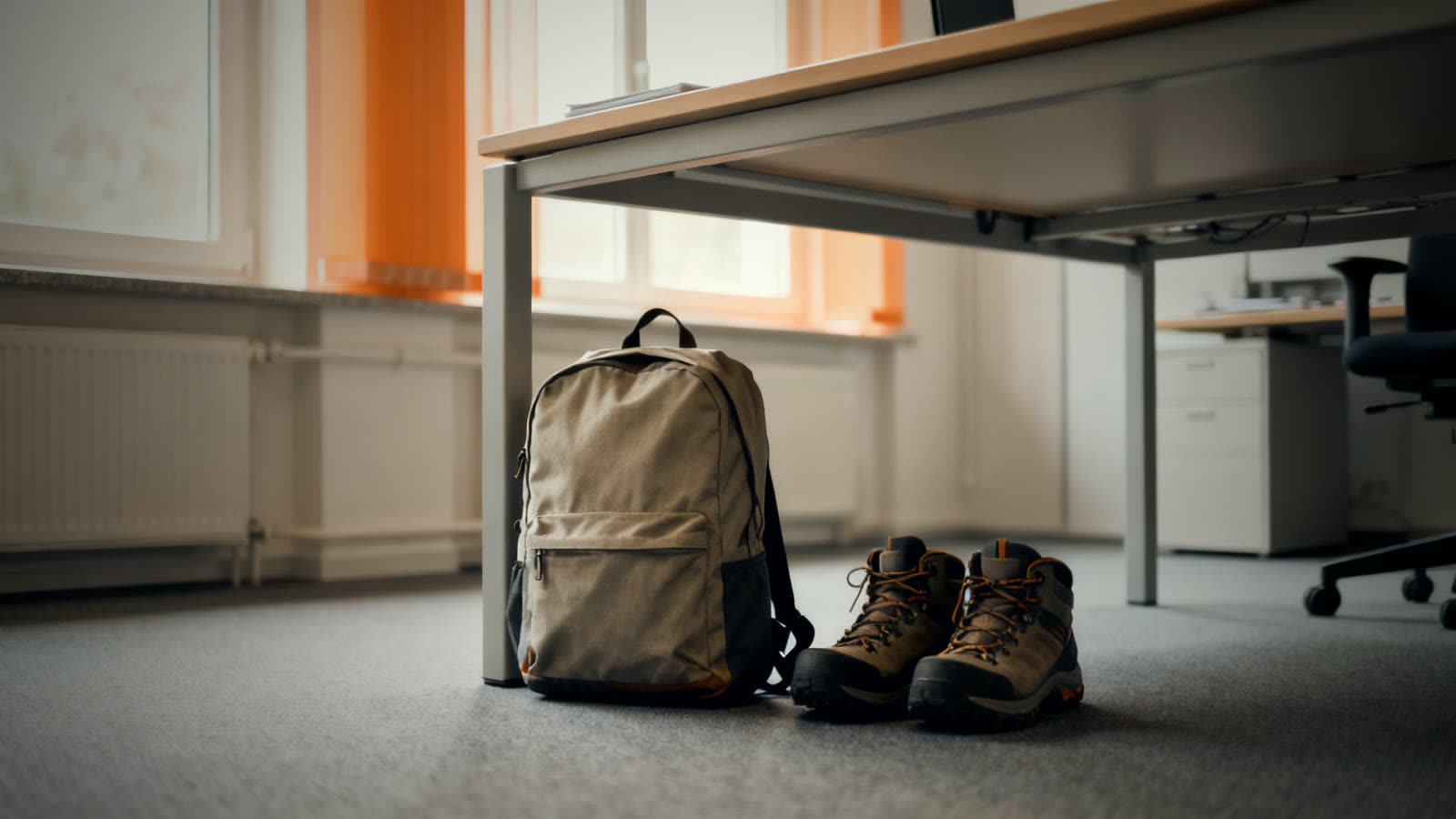
The basic rule of the BBK (Germany’s Federal Office of Civil Protection and Disaster Assistance) is: per family member, take no more than what fits in a backpack. A backpack is preferable because you keep both hands free. For the get-home bag, it makes sense to apply this rule, since you may need to carry it over longer distances, possibly in rain or darkness. Therefore, choose a weight that you can still comfortably carry after several hours.
Choose a discreet model that won’t cause issues at the office. The backpack should be small enough to fit under your desk or in a locker, but large enough for shoes and weather protection. For detailed guidance, see Choose the Right Emergency Backpack.
Pack with Care
For each item, consider whether you really need it for your journey home. What helps you get home safely and dry stays in the bag. What would only rarely be useful, leave out first when space becomes tight. The same applies to items you can’t operate safely.
Items with multiple functions save weight. A rain jacket protects against wind and moisture; a cap keeps you warm or shields you from the sun. Familiarize yourself with everything you pack. Those who already know their equipment have less to figure out in an emergency.
Planning Your Way Home: Route, Meeting Point, and Behavior
The best emergency gear does little good without a plan. Think through in advance how you’ll get home if cars, buses, and trains aren’t available. It can make sense to know at least one alternative route in addition to a primary one. Consider where bridges, underpasses, or roads are located that could become difficult during flooding or storms. If you explore the route once in daylight, you’ll feel more confident in an actual emergency.
Ready.gov recommends local maps in a basic kit. If the network goes down or your phone battery dies, a paper map will help you. For guidance on using it, see Navigation without GPS: Using Maps and Compass Safely.
Family Communication Plan
Talk with your family members about how you’ll stay in touch in a situation where phone networks are overloaded. Agree on who contacts whom first and plan a meeting point in case you don’t meet at home. A template for this is available at Emergency Contact List and Family Meeting Point. Also write down important numbers on paper in case your phone fails.
Stay Informed and Remain Calm
Before you leave, get a clear picture of the situation. Alert apps and radio often provide the most reliable information, as described in Public Warnings: NINA, Cell Broadcast, Sirens. For guidance on making emergency calls correctly, see Making Emergency Calls Correctly.
Not every disruption automatically means you need to leave the office. Your go-home bag gives you the option to leave if necessary, but doesn’t force you to do so. Make the decision calmly based on current information, preferably together with your colleagues. Helpful thoughts on this can be found in Staying Calm in an Emergency.
Walking Home Safely
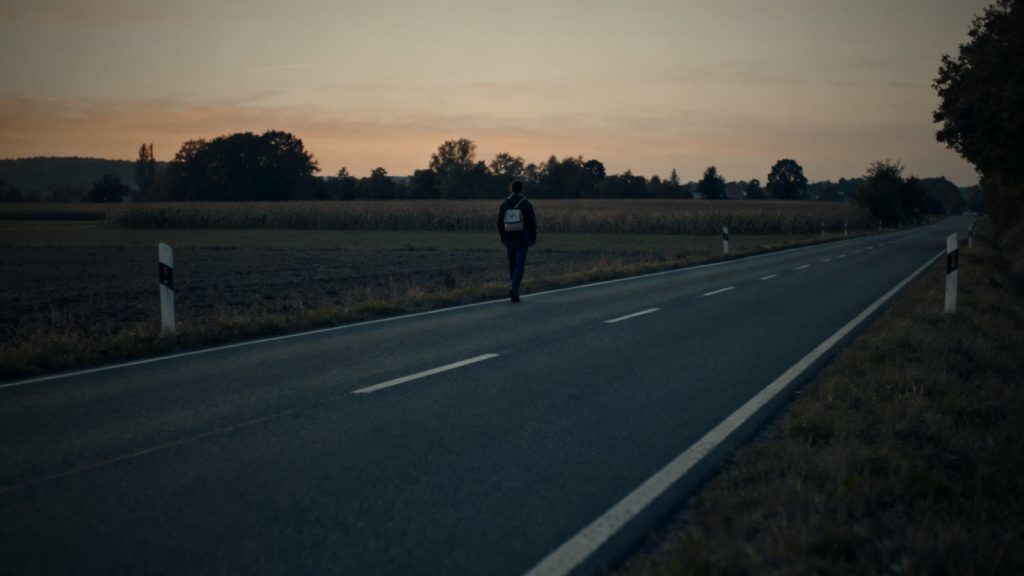
Stay on familiar routes and plan rest breaks before you become exhausted. Drink and eat on schedule rather than waiting until you feel the need. And don’t take risky shortcuts just to save time. A carefully chosen route is usually the better decision.
Maintenance: Keeping Your Go-Home Bag Current
A go-home bag that sits untouched in your office for years quickly becomes unreliable. Ready.gov recommends regularly replacing expired items and checking and updating your kit annually. You can tie this maintenance check to a fixed date each year, such as daylight saving time in spring or fall. A routine for this is described in Checking Your Emergency Supplies: Making It a Regular Practice at Daylight Saving Time.
- Check expiration dates of food, medications, and first aid supplies and replace anything that’s expired
- Check your water and water bottle and refill or replace as needed
- Check batteries and your backup power bank and recharge them
- Adjust clothing for the season
- Test your shoes for fit and condition
- Update your map, contact list, and any cash you’re carrying
If your workplace, commute, or life situation changes, adjust your bag accordingly. If you move or change jobs, rethink your route and packing list. The same applies to changes in your health, such as new medications or allergies.
Discussing This with Your Employer
Check beforehand whether you’re allowed to keep items in your office or locker. Let others know so your bag isn’t accidentally thrown away, and talk openly with your colleagues about it. Perhaps this will create a small community that reminds each other of maintenance dates.
Frequently Asked Questions
What belongs in a go bag?
Water, shelf-stable food, comfortable waterproof shoes, weather protection, a flashlight with spare batteries, a mobile phone with a spare power bank, a first aid kit, personal medications, a map, and a whistle. Depending on your needs, add an FFP2 mask, hygiene items, and identity documents.
How does a go bag differ from an emergency evacuation bag?
The go bag is meant to help you get from work to home. The emergency evacuation bag is designed for situations where you need to leave your home and follows the guidelines of the BBK (Germany’s Federal Office of Civil Protection and Disaster Relief). Learn more in Packing an Emergency Evacuation Bag: The Basics.
How long should the supplies at the office last?
Ready.gov recommends keeping supplies for at least 24 hours at your workplace. How much beyond that you plan for depends on your commute and your situation. A buffer can be useful if your commute gets delayed.
Do I also need an emergency kit in my car?
Ready.gov identifies home, workplace, and car as storage locations and describes the car kit for situations where you’re stranded. Learn what goes in your car in Emergency Equipment for Your Car.
How often should I check the bag?
Ready.gov recommends reviewing and updating your kit annually and replacing expired items. Setting a calendar reminder helps you remember to do this.
Your Next Steps
You don’t need to do everything at once. With a few simple steps, you can quickly build a solid foundation:
- Think about how you would walk home in an emergency and identify a primary and alternate route.
- Keep comfortable waterproof shoes at your workplace.
- Get a small, inconspicuous backpack and pack water, food, weather protection, a flashlight, a spare power bank, and first aid supplies in it.
- Add personal medications, a map, and contact information.
- Discuss the plan with your family and agree on a meeting place.
- Enter a review date in your calendar and go through the bag once a year.
You’ll find more getting-started tips in Prepared in 30 Days: A Step-by-Step Plan. A packed bag costs you little and, if needed, gives you the freedom to decide on your own how to get home.
Sources and Further Information
General information, no substitute for individual advice from authorities, emergency services or medical professionals. In an emergency in Europe: 112.