📌 Part of the guide: Building Your Emergency Supply Kit: A 4-Step Guide to 10 Days of Readiness
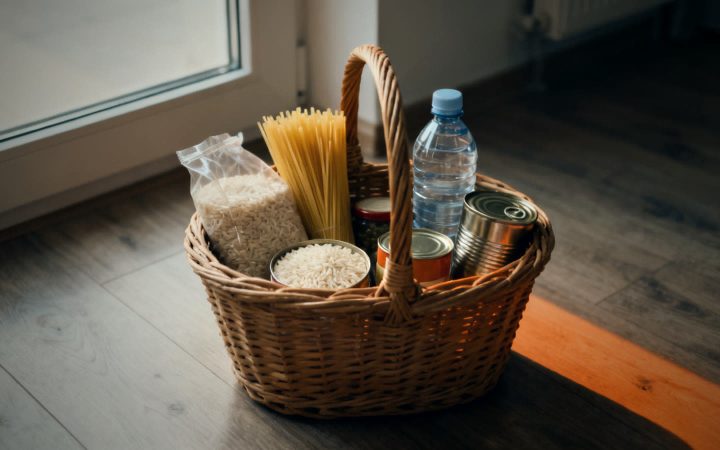
For an emergency food supply without cooking, the best choices are long-lasting foods you can eat straight from the can, jar, or package: canned food, dried fruit, nuts, rusks, or granola bars. They need neither a stove nor a refrigerator, and they work during a power outage. What matters is that the mix is filling, stays varied, and tastes good to you.
Emergency Food Supply Without Cooking: Why It Makes Sense
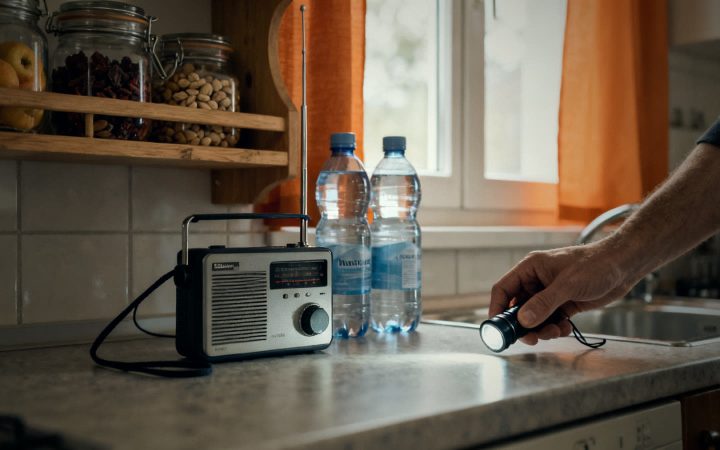
During a power outage, your stove and refrigerator stop working. That is why the BBK (Germany’s Federal Office of Civil Protection and Disaster Assistance) points out that food in your supply should keep for a long time and should not need refrigeration, since power outages are to be expected. The food supply recommended by the Ernährungsvorsorge (Germany’s official food preparedness guidance) also does not include frozen foods. The less you depend on technology, the calmer you can stay.
Cooking without power is possible, but it costs energy, space, and attention. We explain how to do it safely in the article Cooking Without Power: Safe Options. A basic stock of food you can eat cold takes that pressure off. You don’t have to prepare something right away, and you can decide calmly when a hot meal makes sense.
The BBK recommends being able to take care of yourself for ten days if possible. Even a supply for at least three days helps a great deal. You can read how to build such a basic supply in the article The 10-Day Emergency Supply According to BBK Recommendations. No-cook food is not a replacement here, but a sensible part of it.
What the BBK Lists as “No Cooking Required”
The BBK names the following, for example, as foods that do not (or no longer) need to be cooked:
- Canned food
- Dried fruit
- Nuts
- Rusks
- Granola bars
This is a good starting list. In the next section, we turn it into concrete meals, so you don’t just have a collection of packages on the shelf, but real dishes in mind.
Cold Meals in Your Emergency Supply: Ideas for Every Day
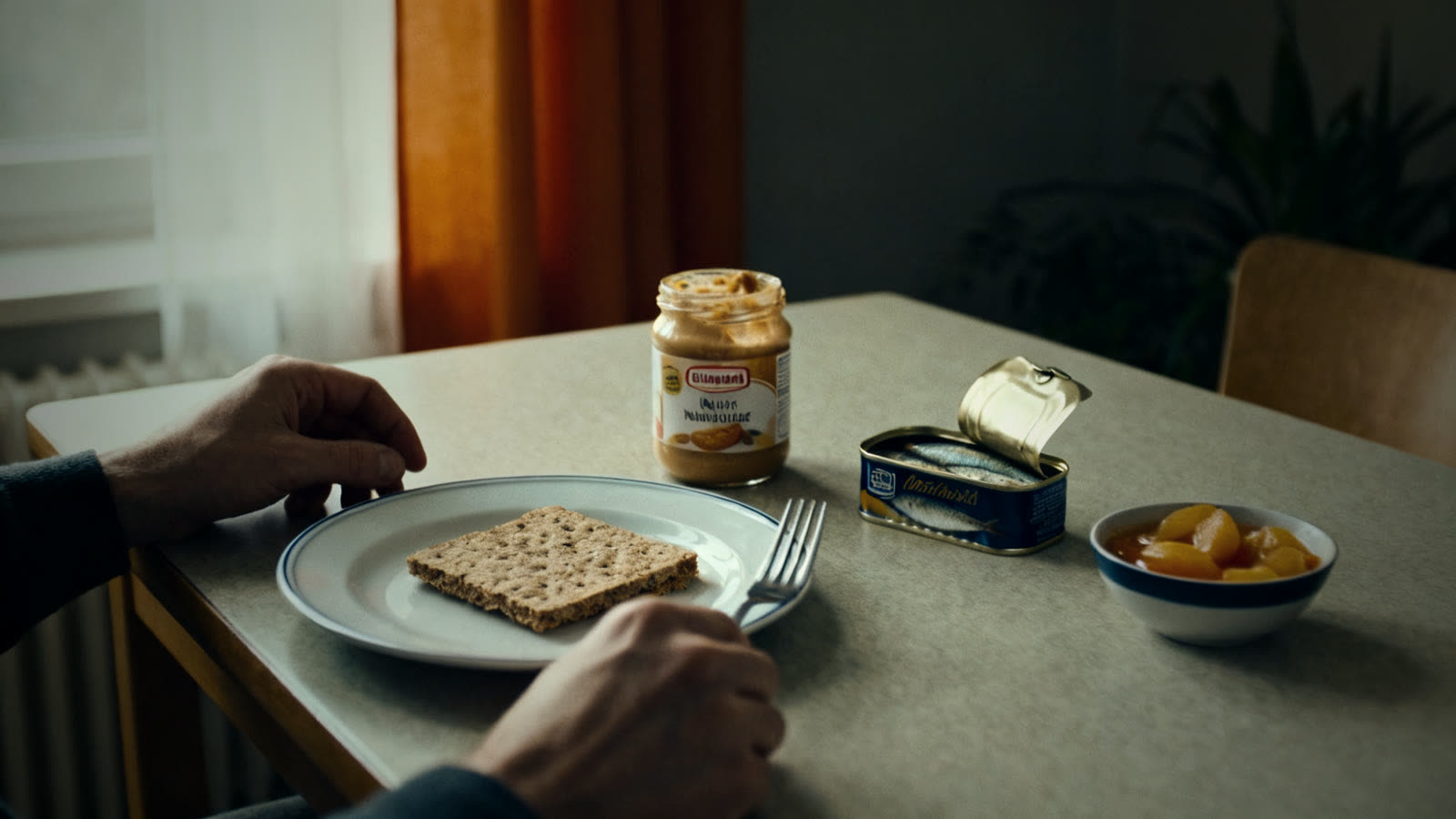
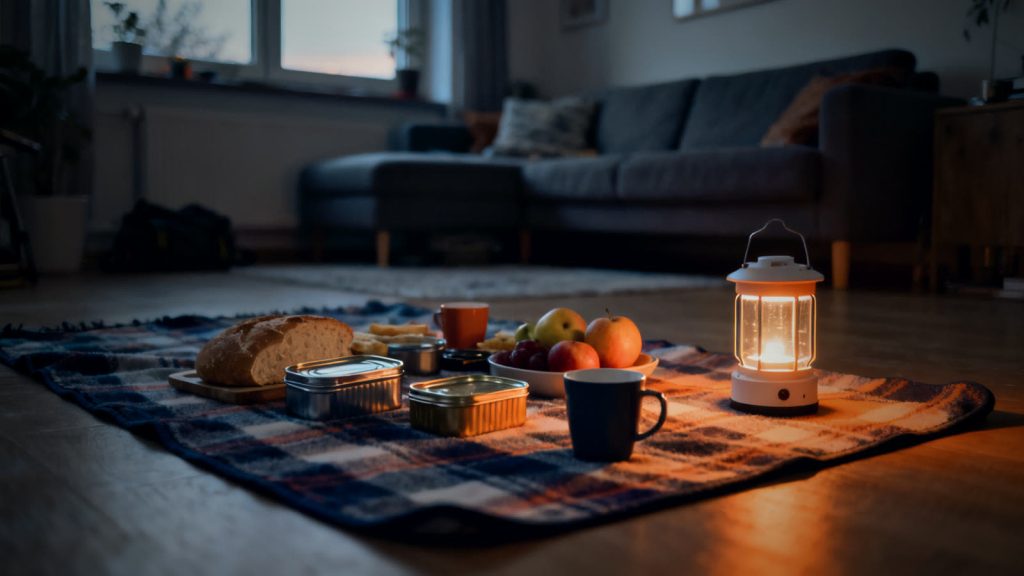
Cold meals in your emergency supply don’t have to be boring. Think in building blocks: a filling base (for example bread or crispbread), a topping or spread, something savory or rich in protein, and a little something for sweetness and variety. A few ingredients can make many combinations.
Base: Bread, Crispbread, and Rusks
Dry baked goods are the backbone of no-cook meals. Crispbread and rusks can be eaten without preparation and store well when kept dry and in airtight packaging. Nut butter, honey, jam, or jarred cream cheese go well with them, as long as it keeps without refrigeration. Check the information on the package, because not every product keeps without cooling.
Savory and Protein-Rich Foods
For hunger in the evening, canned food is the simplest solution. You can eat canned fish, beans, lentils, or corn straight from the can or mix them into a cold salad. Canned vegetables and legumes from a jar also make a complete meal with a little oil, vinegar, and spices. A can opener is therefore an absolute must in your supply, ideally two of them.
Fruit, Nuts, and Sweets
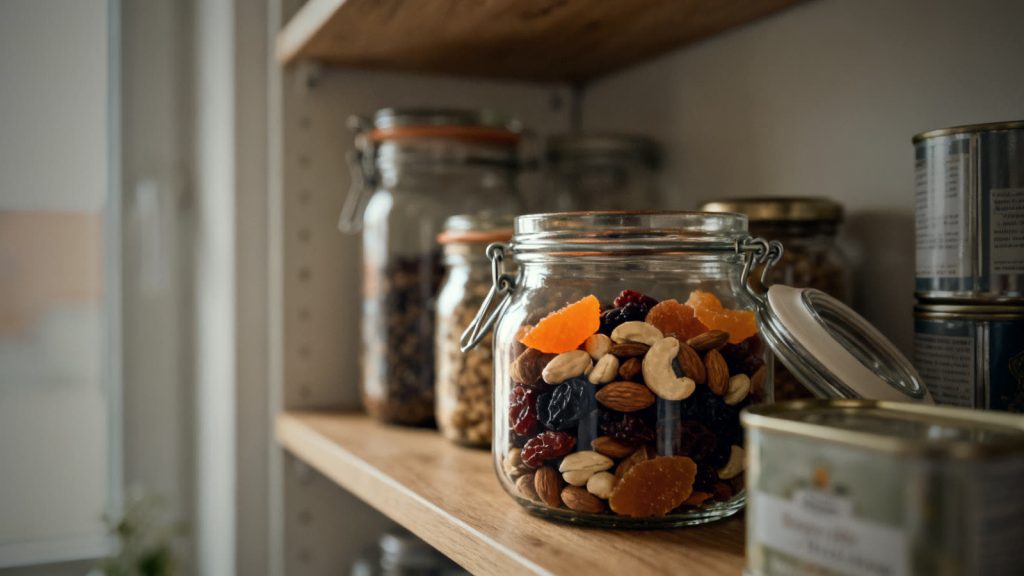
Canned fruit, dried fruit, and nuts are practical because you can eat them without any preparation. Granola bars fit into any jacket pocket and make a good snack on the go. Something sweet, such as chocolate or cookies, is more than a luxury: it lifts your mood and gives the day a little structure. Include it in your plan on purpose.
A Sample Day Without a Stove
Here is what a day can look like without having to heat anything:
- Breakfast: crispbread with nut butter, plus dried fruit
- Lunch: cold canned bean and corn salad, plus bread or rusks
- In between: nuts and a granola bar
- Dinner: canned fish on crispbread, plus canned fruit
This is deliberately kept simple. Whether it covers your energy needs depends on the person and the situation. The Ernährungsvorsorge supply calculator uses about 2,200 kcal per day for the recommended 10-day supply and helps you determine the amounts for your household.
Emergency Food Supply with Ready-to-Eat Meals: What to Look For
An emergency food supply with ready-to-eat meals is convenient, because stews, pasta dishes, and soups in cans and jars are already cooked. Many of them can also be eaten cold in an emergency, but they taste much better warm. Read the package before you buy: some products are explicitly meant to be eaten cold or warm, while others should be heated. Don’t rely on it without checking first.
During longer power outages, the BBK (Germany’s Federal Office of Civil Protection and Disaster Assistance) also recommends food with a short cooking time, so you save fuel when you switch to a camping stove or grill. A sensible mix therefore combines both: mostly foods that work cold, and a few meals that can be heated in a few minutes. That way you stay flexible, even if the situation lasts longer.
The Taste Test in Advance
Try the products cold before an actual emergency. What looks good in the supermarket can taste surprisingly different when cold. The best way to test ready-to-eat meals, canned foods, and spreads is on an ordinary evening. Write down what you and your family like, and buy more of it. Food that nobody likes will stay on the shelf in an emergency, and that is wasted money.
Don’t Forget Drinking Water
Food is important, but fluids are more important. The BBK points out that people can survive only about four days without fluids. An adult needs at least 1.5 liters of fluid per day. An additional 0.5 liters should be planned for cooking. If you mostly eat cold food, you save part of that, but you shouldn’t calculate your reserve too tightly.
You can find specific amounts for your household in our article How Much Drinking Water Do I Need in an Emergency?. For storage: mineral water in glass bottles keeps almost indefinitely at room temperature or in cool storage, while PET bottles last about one year. You can read more in Storing Drinking Water Properly – Containers, Shelf Life, Location.
Also think about the food itself: dried fruit, rusks, and crispbread are very dry. If you eat a lot of them, you need to drink more. Canned foods with liquid, such as fruit in juice, provide a little fluid, but they don’t replace drinks.
Storage and Rotation: How to Keep Your Emergency Food Supply Usable
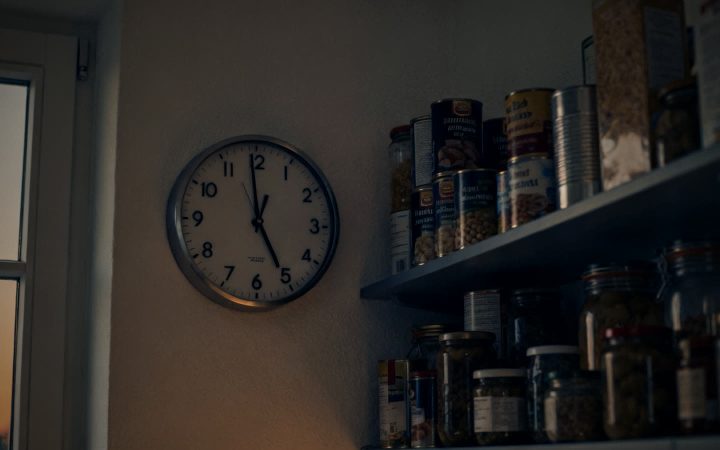
According to the BZfE (Germany’s Federal Center for Nutrition), the ideal place is a dry, well-ventilated, dark pantry or a dry basement at 59 to 68 °F (15 to 20 °C). Store your food in airtight containers made of glass, metal, or plastic. This protects nuts, dried fruit, and baked goods in particular from moisture and pests. In a small apartment, a shelf in the hallway or space under the bed can help. You’ll find more ideas in Emergency Preparedness in a Small Rental Apartment.
To make sure nothing expires, the “living supply” method helps: whenever you do your regular grocery shopping, you buy a little extra, eat the older products first, and restock. The BBK (Germany’s Federal Office of Civil Protection and Disaster Assistance) recommends this as an alternative to one big stock-up shop. The article Rotating Your Supplies: The “Living Supply” Principle shows how this works in practice. No-cook foods are especially well suited for this, because you can use them up in everyday meals at any time.
What Does It Cost?
According to the BZfE, a 10-day supply costs just over 90 euros per person on average. The price depends on which products you choose. If you add items to your weekly shopping step by step, the expense is spread out anyway. Our article Emergency Food Supply Cost: What 10 Days of Preparedness Really Costs provides an overview.
Food in the Refrigerator and Freezer
During a power outage, you eat the fresh food from the refrigerator first, before you turn to your long-term supply. The article Freezer During a Power Outage: What Stays, What Has to Go? explains what happens to frozen food. This way you conserve your emergency food supply and throw away as little as possible.
Eating Is Also About Psychology
The BZfE emphasizes that solid food provides energy and nutrients and is also important psychologically. A plate with bread, something savory, and a piece of fruit feels like a proper meal. Even small rituals, such as sitting together at the table, give you stability in an unfamiliar situation. We’ve collected foods with a long shelf life in the article Foods With a Long Shelf Life.
Frequently Asked Questions
What can I eat during a power outage without cooking?
Well-suited options include canned food, dried fruit, nuts, rusks, and granola bars, which the BBK explicitly lists as requiring no cooking. Also good are crispbread, spreads, and precooked ready meals, as long as they can be eaten cold. Always check the information on the packaging.
How long does an emergency food supply last without cooking?
That depends on the quantity, not on the preparation. The BBK recommends being able to take care of yourself for ten days if possible; a supply for at least three days already helps a great deal. With the food supply calculator from Ernährungsvorsorge (Germany’s food preparedness portal), you can calculate quantities for 1 to 28 days.
Can I eat canned ready meals cold?
Many products are already cooked and can generally be eaten cold as well. Whether this is intended for a specific product is stated on the packaging. Try it in everyday life, so you know in an emergency whether you like it cold.
Do I still need a camping stove?
It isn’t necessary, but it is helpful. A hot meal or drink does you good in a longer emergency. If you use a gas stove, you should know the rules for storage and safety. Read the article Storing Gas Cartridges in Your Apartment: Rules and Limits for details.
Your Next Steps
You don’t have to do everything at once. With these steps, you can build a no-cook emergency food supply at your own pace:
- Look through your pantry and mark what you could already eat without any preparation.
- Decide how many days and how many people you want to plan for. Start with at least three days and work your way up toward ten days.
- Add staples (crispbread, rusks), protein (canned food), fruit (dried fruit, canned fruit), and snacks (nuts, granola bars).
- Plan for drinks: at least 1.5 liters per person per day, plus a reserve.
- Put a can opener, cutlery, plates, and trash bags with your supplies.
- Hold a cold-food dinner night and note what’s missing.
- From now on, buy a little extra when you shop and rotate your supplies regularly.
This turns a collection of non-perishable food into an emergency food supply that really works when it counts. If you’re looking for a structured plan, Prepared in 30 Days: A Step-by-Step Plan can help.
Sources and Further Information
- BBK (Germany’s Federal Office of Civil Protection and Disaster Assistance) – Stocking Emergency Supplies – Bundesamt für Bevölkerungsschutz und Katastrophenhilfe
- Ernährungsvorsorge (Food Security Preparedness) – Emergency Food Supply – Bundesanstalt für Landwirtschaft und Ernährung (Germany’s Federal Office for Agriculture and Food)
- BZfE (Federal Center for Nutrition) – Private Food Preparedness – Bundeszentrum für Ernährung
General information, no substitute for individual advice from authorities, emergency services or medical professionals. In an emergency in Europe: 112.