📌 Part of the guide: Building Your Emergency Supply Kit: A 4-Step Guide to 10 Days of Readiness
The occasion: On Saturday, October 17, 2026, the German Weather Service (DWD – Deutscher Wetterdienst) issued regional alerts: prolonged rainfall in southwestern Baden-Württemberg, wind gusts along the North Sea coast, and widespread fog in Bavaria. This does not constitute a nationwide weather alert. The Federal Office of Civil Protection and Disaster Assistance (BBK – Bundesamt für Bevölkerungsschutz und Katastrophenhilfe) generally recommends establishing a household supply and checking its shelf life regularly.
What does this mean for my household?
The weather alerts apply to the regions mentioned. If you live in one of these areas, it’s worth checking the current weather reports for your location. In the rest of Germany, this situation does not create any special need for action. In contrast, the BBK’s preparedness recommendations apply regardless of weather to households everywhere and serve as an opportunity for a brief routine review.
The BBK recommends building a household supply to cover at least ten days. Even a three-day supply makes a big difference. You don’t need to do it all at once: supplies can be built up gradually, and the BBK guidebook “Preparing for Crises and Disasters” provides checklists to help you.
3 Steps for Today
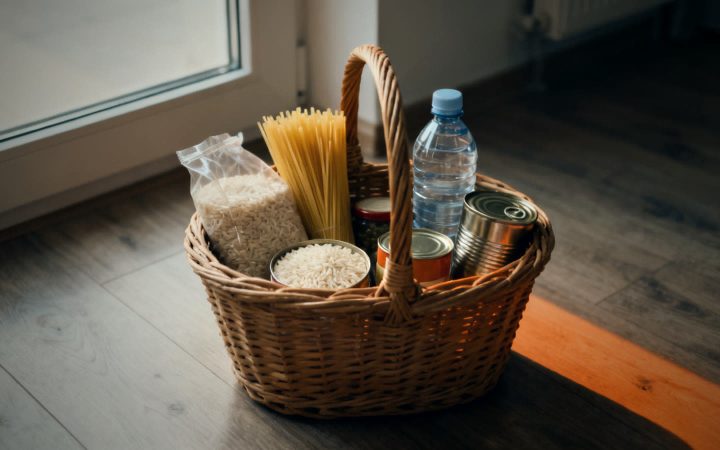
- Count and top up beverages. According to the BBK, an adult needs at least 1.5 liters of liquid per day. If you plan to cook, add an additional 0.5 liters of water. Quickly calculate what would be needed per day for everyone in your household and note what you’re missing.
- Review shelf-stable and ready-to-eat foods. For power outages, the BBK identifies three criteria: food that doesn’t need refrigeration lasts longer. Food that doesn’t need cooking is easy to use. And food that requires minimal energy to prepare is helpful. As suitable foods, the BBK lists, for example, dried fruits, nuts, rusks, and cereal bars. Check what you already have on your shelves and verify the expiration dates.
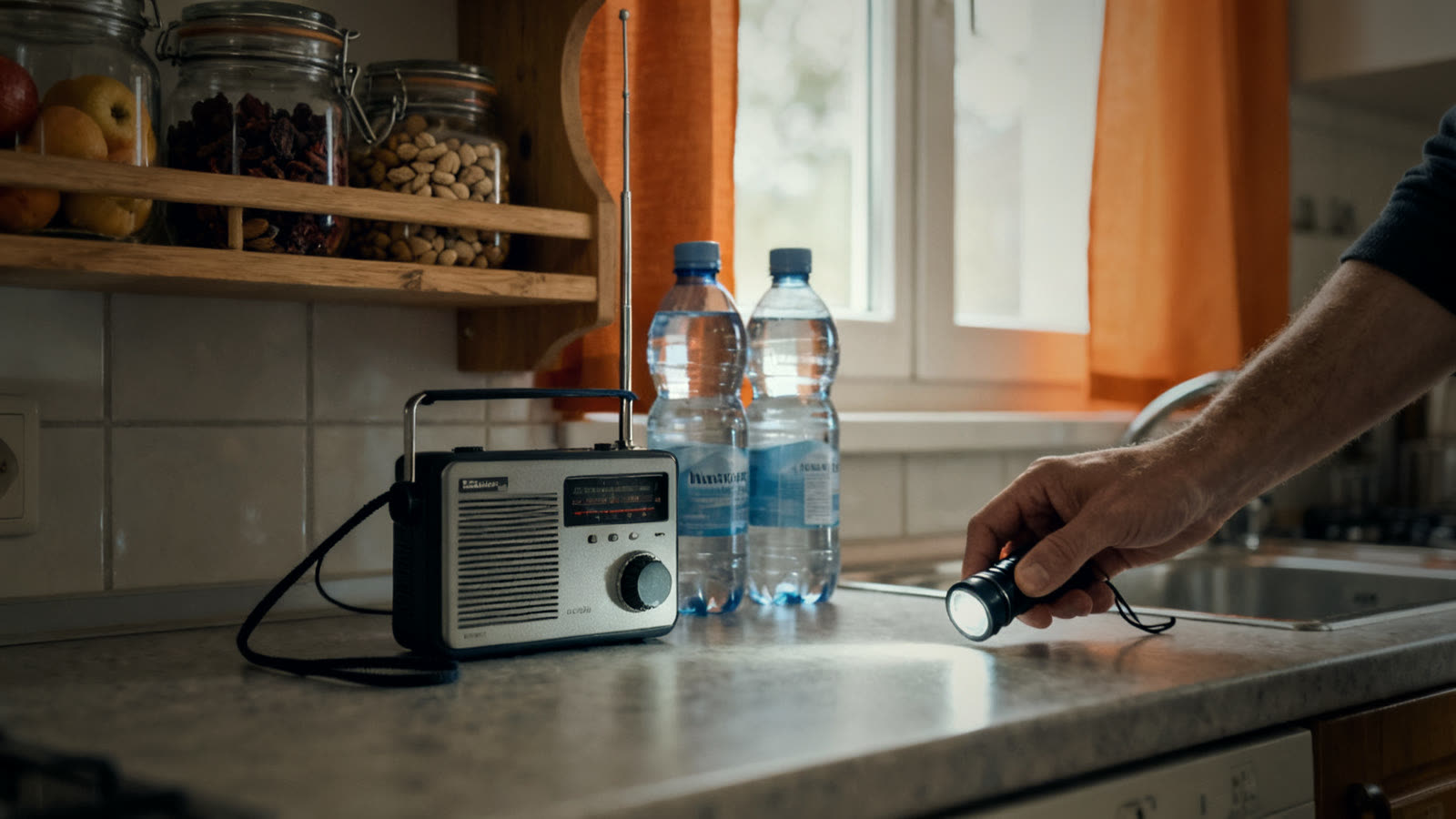
- Check equipment and cash. For power outages, the BBK recommends charged backup batteries or power banks, a battery-operated radio or hand-crank radio, and cash, because ATMs don’t function without power. Check what you already have on hand.
Further Reading
- Ready-to-eat emergency supplies: What tastes good cold and fills you up
- Power outage: How to act in the first 24 hours
- Rotate your supplies: The “living inventory” principle
Sources
- BBK – Stock food and beverages – Federal Office of Civil Protection and Disaster Assistance (accessed October 17, 2026)
- BBK – Power outages – Federal Office of Civil Protection and Disaster Assistance (accessed October 17, 2026)
- BBK – Guide: Preparing for Crises and Disasters – Federal Office of Civil Protection and Disaster Assistance (accessed October 17, 2026)
- DWD – Warning situation Germany – German Weather Service (as of October 17, 2026, 07:05 AM)
General information, no substitute for individual advice from authorities, emergency services or medical professionals. In an emergency in Europe: 112.