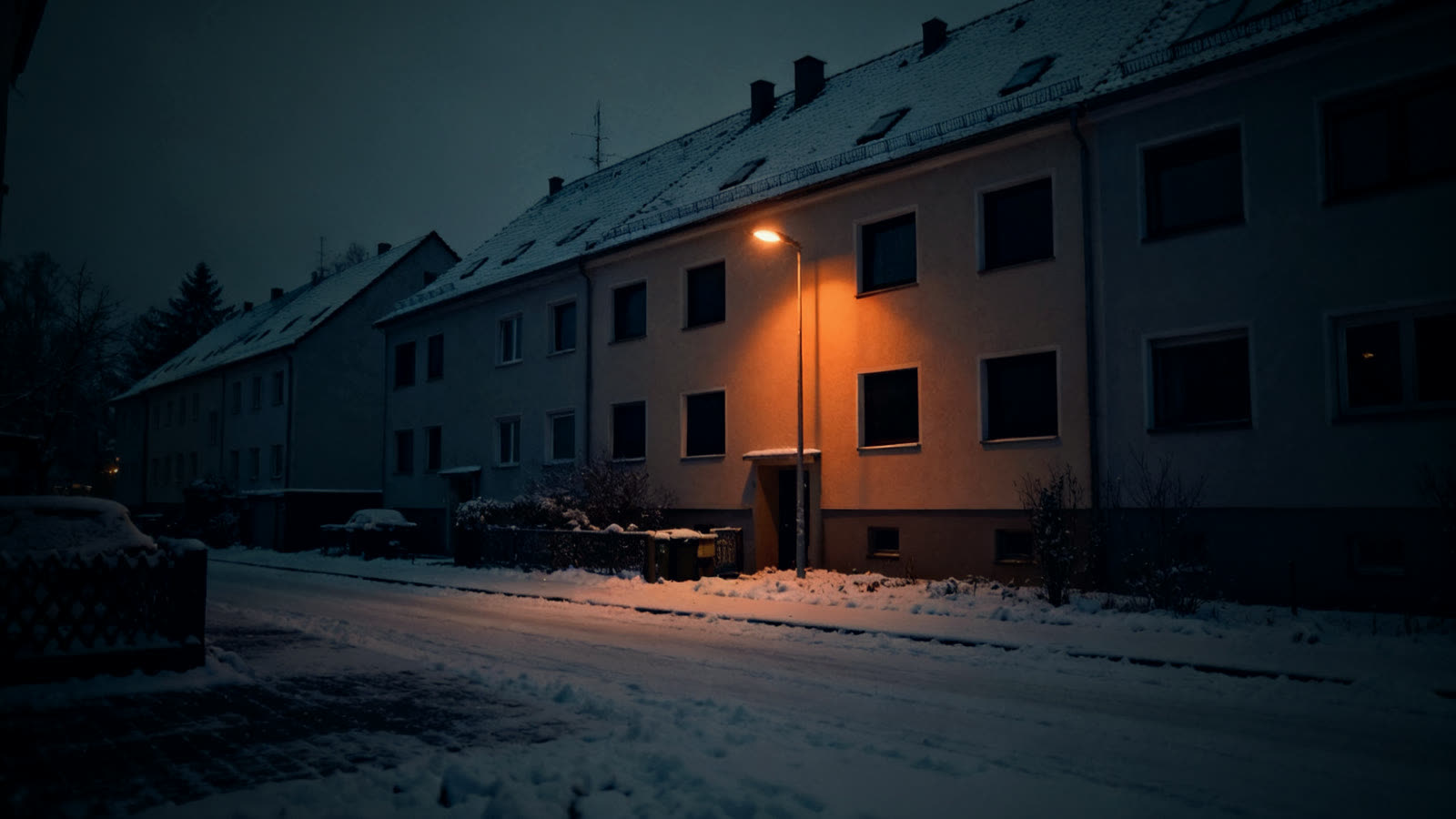
The 2026 Berlin blackout began on January 3 with an attack on an inadequately secured power line in the southwest of the city. Partial restoration was achieved on January 6, but the grid was not fully stable until January 9. More than 45,000 households were left without power and heating in the middle of winter. What this case shows about private preparedness is worth a closer look.
What Happened During the 2026 Berlin Blackout
On January 3, 2026, the power went out in several districts in southwest Berlin. Partial restoration was achieved on January 6, but according to a working paper from the Bundesakademie für Sicherheitspolitik (BAKS, Germany’s Federal Academy for Security Policy), the grid was not fully stable until January 9. For many households, this meant several days without a reliable power supply – a timeframe that the Bundesamt für Bevölkerungsschutz und Katastrophenhilfe (BBK, Germany’s Federal Office of Civil Protection and Disaster Assistance) considers entirely realistic for situations involving widespread damage, even though ordinary power outages usually end after a few hours.
The Cause: An Attack on a Power Line
According to the BAKS working paper, the cause was not a technical failure but an attack on a power line that had not been adequately secured. A letter claiming responsibility from a group described as far-left extremist surfaced, and at the same time there was speculation about possible Russian involvement. For private preparedness, the exact attribution is secondary – what matters is that critical infrastructure in Germany is vulnerable too, and that a power outage can be caused by more than just a storm or grid overload.
How the Berlin Power Outage Hit Everyday Life
The outage affected far more than just lights and outlets. According to BAKS, several areas of daily life were affected at the same time:
- Commuter rail (S-Bahn) and regional train lines were canceled because the signaling systems had no power.
- Hospitals had to activate their emergency power systems, and nursing homes experienced delays in deploying their backup generators.
- Mobile phone reception was severely limited at the start of the outage.
- The German armed forces (Bundeswehr) helped with fuel trucks to keep mobile backup generators running.
This combination – no power, no trains, hardly any cell service, delayed emergency power in care facilities – shows how quickly a single point of failure can affect many areas of life at once. If you are wondering how to get through the first hours in a situation like this, you will find a step-by-step guide in Power Outage: How to Act During the First 24 Hours.
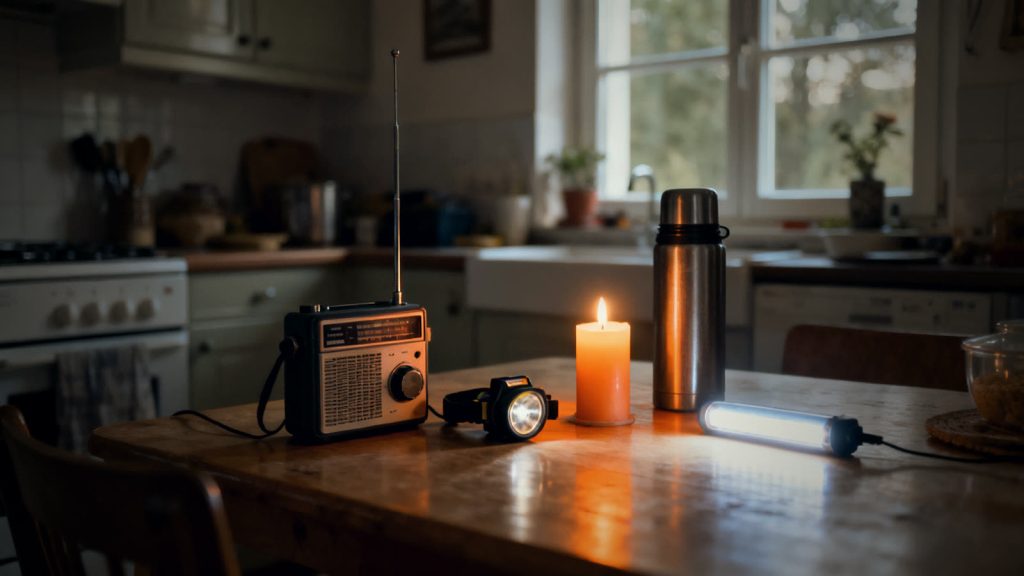
Winter Power Outage: Why the Season Made the Situation Worse
The timing made the Berlin blackout even more critical: in early January, that means cold weather, short days, and heating that no longer works in many apartments without electricity. If you have to get by without power in winter, you need not only light and information, but above all a way to keep your home warm. How to do that without heating is explained in the article How to Keep Your Home Warm When the Heating Fails. Dressing the right way indoors can also help save energy for heating – you can read more in the article The Layering Principle: How to Dress for Cold Weather.
What the 2026 Berlin Blackout Shows About Preparedness
The BAKS (Federal Academy for Security Policy) working paper puts it bluntly: the incident exposed inadequate crisis preparedness, a lack of redundancy in the grids, insufficient protection of critical infrastructure, and coordination gaps between the federal government, the states, and local authorities. That concerns the government level first, but it has a direct consequence for households: if you wait for the authorities to fix a power outage within hours, you could end up unprepared for days in a situation like this.
This is exactly why the BBK (Germany’s Federal Office of Civil Protection and Disaster Assistance) stresses that a power outage is usually short, but in exceptional cases involving widespread damage it can also last for days. The Berlin case is a concrete, recent example.
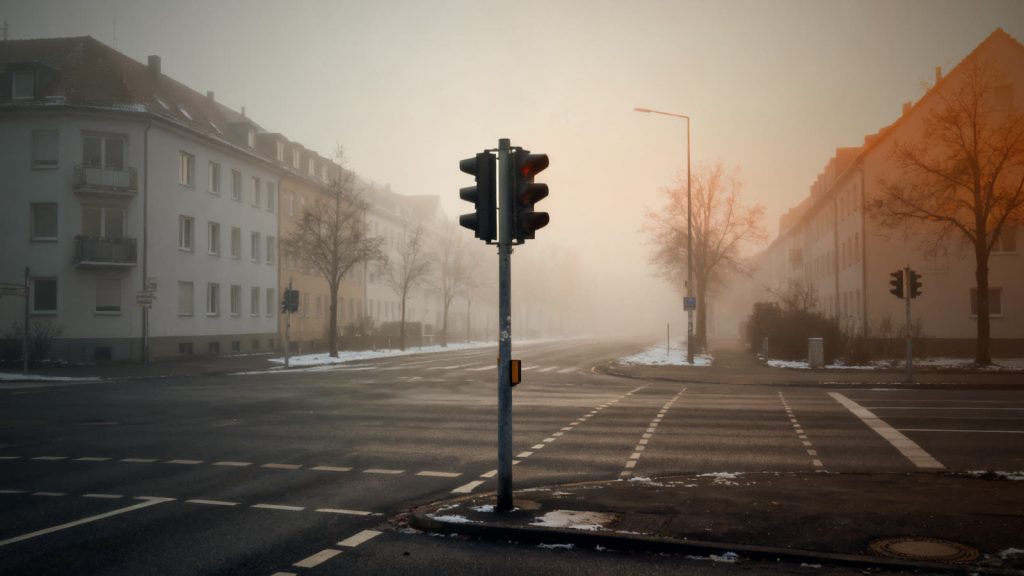
Blackout Preparation for Your Own Household
The BBK’s recommendations and the observations from Berlin point to concrete steps you can take to prepare for a blackout:
- Information without a network: A battery-powered radio or hand-crank radio still works when cell service and the internet go down.
- Food without refrigeration: Shelf-stable foods that can be eaten cold are important, because the water supply can fail as well. For an overview, see Foods with a Long Shelf Life.
- Heat: Fireplaces, stoves, or alternative heat sources can help, but only with safety precautions such as a carbon monoxide alarm – learn more in Carbon Monoxide: The Invisible Danger of Emergency Heating.
- Power for your devices: Keep laptop and phone batteries charged regularly, and have solar-powered chargers or a portable power station or power bank on hand.
- Cash: ATMs go down during a power outage, so a small emergency cash reserve makes sense.
- Cooking: Camping stoves or charcoal and gas grills are suitable for cooking without electricity – but only outdoors, never in enclosed spaces. For more safe options, see Cooking Without Power: Safe Options.
If you go through these points at home once, you’ll quickly see where the gaps are. A well-planned emergency food supply is part of this, too, for example following the principle in The 10-Day Emergency Supply According to BBK Recommendations.
Where to Go in an Emergency: Disaster Relief “Lighthouses”
For larger emergencies, some Berlin districts have so-called disaster relief lighthouses (Katastrophenschutz-Leuchttürme) – official points of contact that provide official situation updates and guidance during an emergency, take emergency calls, and coordinate help among neighbors. In Neukölln, four such sites are planned, for example at Rathaus Neukölln (Neukölln City Hall) or at the Wirtschaftshof Britz (Britz municipal service yard). However, they are still being set up and are not open around the clock. Until such structures are available everywhere, your own household remains the first point of contact for the first days of an outage.
Frequently Asked Questions
How long did the Berlin blackout in 2026 last?
The outage began on January 3, 2026, and power was partially restored on January 6. According to the BAKS working paper (Federal Academy for Security Policy, Germany), the grid was not fully stable until January 9, 2026 – meaning affected households went several days without a reliable power supply.
What caused the power outage in Berlin?
According to the BAKS working paper, the cause was an attack on an inadequately secured power line in southwest Berlin. A claim of responsibility surfaced, and there was also speculation about possible Russian involvement.
How many households were affected?
More than 45,000 households in several districts in southwest Berlin lost electricity and heating.
Can a power outage in Germany last several days?
The BBK (Germany’s Federal Office of Civil Protection and Disaster Assistance) stresses that power outages are normally fixed within hours. In emergencies with widespread damage – like the Berlin case – they can definitely last days, though.
What should you have ready at home for a power outage?
The BBK recommends, among other things, non-perishable food that can be eaten cold, a battery-powered or hand-crank radio, charged batteries or power banks, cash, and a safe solution for heating and cooking without electricity.
What do I do if no Leuchtturm location is open near me?
Since the disaster relief “lighthouses” (Katastrophenschutz-Leuchttürme) are still being set up and are not open permanently, you shouldn’t rely on them alone. Your own supply of water, food, light, and information bridges the time until official help is available – how much water makes sense for that is explained in How Much Drinking Water Do I Need in an Emergency?.
What You Can Do Now
The 2026 Berlin blackout shows that a power outage can last several days and hit heating, mobile networks, public transit, and care facilities at the same time. For your own household, that means: check whether you have a radio, power bank, food supply, cash, and a way to stay warm without electricity. Go through the following steps once, concretely:
- Check whether there is a battery-powered or hand-crank radio in your household and whether it works.
- Build up a supply of non-perishable food that can be eaten cold.
- Charge power banks and devices regularly and keep a small cash reserve on hand.
- Work out how to keep your home warm without electricity if necessary – safely and with a carbon monoxide (CO) detector.
Anyone who goes through this once and closes the gaps is much better prepared for a multi-day power outage.
Sources and Further Information
General information, no substitute for individual advice from authorities, emergency services or medical professionals. In an emergency in Europe: 112.