📌 Part of the guide: Packing a Go Bag: Checklist, Documents, and Family Plan
The DWD (Germany’s National Meteorological Service) warning levels use a four-tier color scale: yellow stands for a weather warning, orange for significant weather, red for severe weather, and violet for extreme weather. The higher the level, the more dangerous the expected conditions and the more you should adjust your behavior. In this article, you’ll learn what each color means and what specific steps to take at each level.
DWD Warning Levels: Meaning of the Color Scale at a Glance
The Deutscher Wetterdienst (DWD) issues warnings for weather events that can endanger people or property. To help you assess a warning at a glance, it uses four colors. They build on one another and describe not just the weather itself, but primarily the potential hazard.
- Level 1, Yellow: Weather warning. The expected conditions are not unusual, yet weather-related hazards can still occur.
- Level 2, Orange: Warning of significant weather. The conditions are not unusual, but they are dangerous, and localized damage is possible.
- Level 3, Red: Severe weather warning. The conditions are very dangerous, and widespread damage can occur.
- Level 4, Violet: Extreme weather warning. There is a danger to life and a risk of extensive destruction.
Important: The color does not tell you what type of weather to expect. An orange warning could mean wind, heavy rain, black ice, or something else entirely. Always read the warning text for the exact details.
Which Weather Conditions the DWD Warns About
The weather hazards covered by the DWD include wind, thunderstorms (including hail), snowfall and snowdrifts, continuous rain and heavy rain, black ice, frost, thaw, and fog. Each of these hazards has its own criteria for triggering a given warning level. You don’t need to memorize these thresholds. What matters is understanding the level and knowing what it means for your daily routine.
Yellow and Orange: What Do They Mean and What Should You Do?
Yellow: Stay Alert
At the yellow level, the weather conditions are not unusual. Even so, they can become dangerous in certain situations, such as when you are outdoors. The DWD advises anyone spending time outside to stay informed about further developments and adjust their behavior accordingly.
In everyday life, that means you don’t need to cancel plans or rearrange everything. However, you should check the current situation again before heading out, allow a little extra time for trips or drives, and bring appropriate clothing. Yellow is the level that is easiest to overlook. That is precisely why a quick check is worth it.
Orange Weather Warning: What Does It Mean?
With an orange weather warning, the expected conditions are still not unusual, but they are dangerous. Localized damage is possible. The DWD’s guidance is clear: stay informed, be cautious, and avoid risks.
In the NINA warning app from the Bundesamt für Bevölkerungsschutz und Katastrophenhilfe (BBK, Germany’s Federal Office of Civil Protection and Disaster Assistance), this level is called “Markante Wetterwarnung” (Significant Weather Warning). It describes weather conditions with an elevated risk potential, such as strong wind gusts or heavy rain. In practice, that means:
- Reconsider outdoor errands and appointments, and reschedule them for a calmer time if possible.
- Secure or bring indoors any loose items on your balcony, patio, and in the yard.
- Limit driving to essential trips and expect traffic disruptions.
- Charge your phone and keep an eye on the warning period.
Orange is the level where preparation pays off the most. You usually still have time to act calmly instead of reacting under pressure.

DWD Red Warning and Purple Warning Level: What Matters Now
Red: Severe Weather Warning
At the Red level, expected weather conditions are very dangerous, and widespread damage can occur. The DWD (Germany’s National Meteorological Service) states clearly: avoid going outdoors. If you must expose yourself to the weather, be very careful.
In NINA (Germany’s official emergency alert app), Red appears as an “Official Severe Weather Warning” with significant hazard potential. The BBK (Germany’s Federal Office of Civil Protection) cites heavy snowfall or hail as examples. For you, this means:
- Stay home or in a safe building if possible, and postpone anything that can wait.
- Do not stand under trees, near scaffolding, or in other places where objects could fall.
- Avoid basements and low-lying rooms if heavy rain or flooding is a concern.
- Check in with your family about where everyone is and how to reach each other.
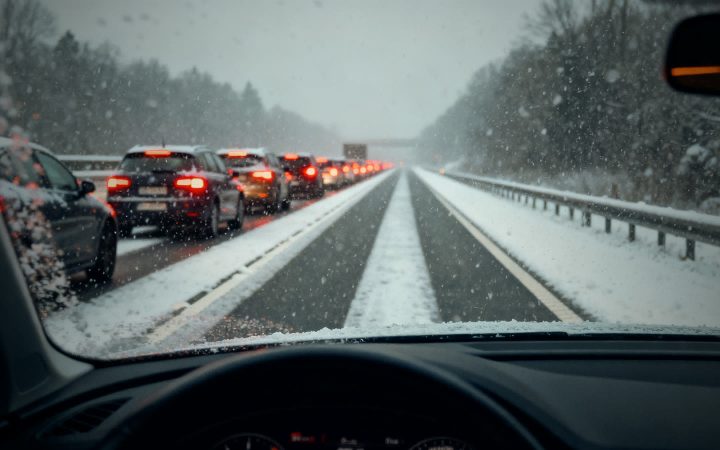
If someone still has to drive—for work or caregiving, for example—the rule is: drive very carefully, expect delays, and let others know your plans. In winter weather, it is also recommended to carry blankets and water in your car. You can find more on this in our article on a car emergency kit.
Purple Warning Level: Extreme Severe Weather
Purple is the highest warning level. Expected conditions are extremely dangerous, with a threat to life and major destruction possible. The DWD urges people to avoid going outdoors and to follow instructions from authorities and emergency responders.
The BBK cites hurricane-force gusts capable of causing widespread destruction as examples. Purple warnings are rare. When one is issued, safety takes absolute priority. Stay inside a sturdy building, monitor the radio or an emergency alert app, and rely on official information rather than rumors. If emergency responders give you instructions, such as an evacuation order, follow them. What to do in that situation is explained in the article Evacuation: What to Do If You Have to Leave Your Home.
Hatching, Heat, UV, and Alert Apps: Reading Special Cases Correctly
What the Hatching on the Map Means
On the warning map, you will sometimes see hatched areas. Hatching indicates advance information for severe or extreme weather events. It is used when the exact location, timing, or intensity is not yet certain. This is no reason to worry, just an early heads-up: conditions could become serious, but the situation is not yet precise enough for a final warning. In this case, check back again later.
Heat, UV, and Green
Heat and UV warnings use their own color schemes in shades of purple and pink, so do not confuse them with the severe weather scale. Green means there is no active warning. Whenever you see unfamiliar colors, always read the warning text so you know immediately what it is about.
Receiving and Interpreting Warnings
The BBK notes that weather warnings are based on scientific forecasts with specific probabilities of occurrence. They do not guarantee that your exact location will be affected. Still, take warnings seriously: they are the best available basis for your decisions. Always check the region, time frame, and weather phenomenon.
How warnings reach you is explained in the article Public Alerts: NINA, Cell Broadcast, and Sirens. In case of a network or power outage, Staying Informed Without Internet helps with alternatives like the radio.
Preparedness: How to stay ready at every warning level
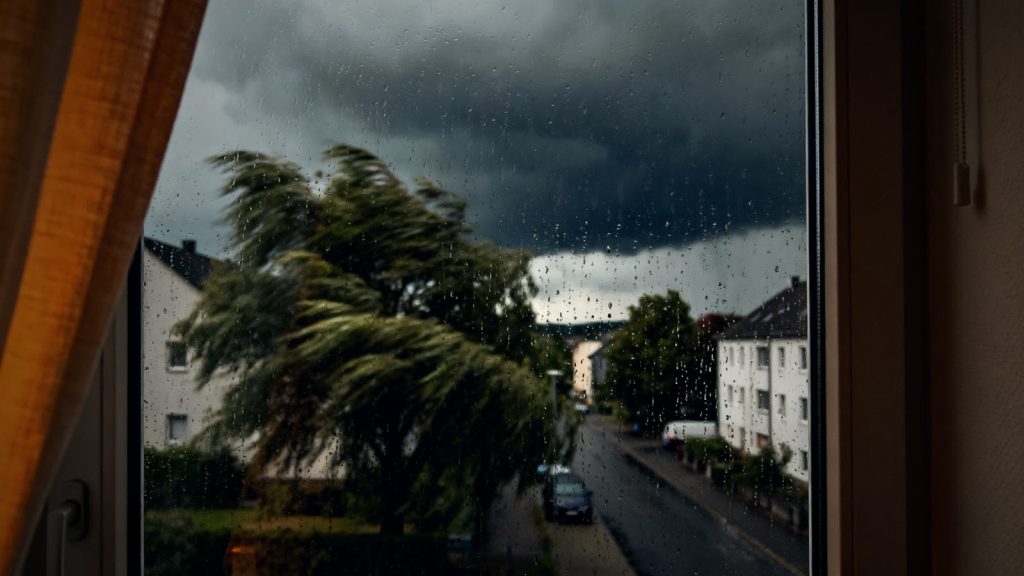
The best response to a warning starts weeks in advance. If you already have a basic stock of emergency supplies, lighting, and reliable sources of information, you can remain calm at Orange and calmly stay at home at Red. Heavy rain, storms, or snow can sometimes cause power outages or blocked roads. When that happens, what you already have at home is what counts.
- Emergency supplies: An emergency food and supply stock bridges days when you cannot go shopping. For guidance, see the 10-day emergency supply recommended by the BBK (Germany’s Federal Office of Civil Protection).
- Light and power: Flashlights, a charged power bank, and a radio should be kept within easy reach.
- What to do in a storm: Find out what to keep in mind before, during, and after severe weather in Storms and severe weather: what to do.
- Water in the home: During continuous or heavy rain, see the guidance in Flooding: how to prepare and respond properly.
- Winter: For snow and icy conditions, use the checklist Winterizing your home.
Especially with black ice from freezing rain, roads and walkways can become dangerously slick within minutes. When these warnings are issued, it is better to adjust your plans early rather than assuming everything will turn out fine.
Frequently asked questions
What do the DWD (German Weather Service) warning levels mean?
There are four levels: Yellow (weather warning), Orange (significant weather), Red (severe weather warning), and Violet (extreme severe weather). With each level, the expected danger increases.
Orange weather warning: What does it mean for me?
The weather is not unusual, but it is hazardous, and localized damage is possible. Stay informed, be cautious, avoid risks, secure loose objects, and limit travel to essential trips.
What is the difference between Orange and Red?
At Orange, localized damage is possible; at Red, widespread damage can occur. During a Red warning, you should avoid going outdoors.
What does the Violet warning level mean?
Violet warns of extreme severe weather with a threat to life and major destruction. Stay indoors and follow the instructions of authorities and emergency services.
Do I have to take action for every warning?
You do not need to act on every warning, but you should read it and assess what it means. Check the region, time frame, and type of weather. At Yellow, staying alert is enough; from Orange onward, concrete precautions make sense.
Your next steps
You do not have to do everything at once. With these steps, you will be better prepared in no time:
- Install an emergency warning app like NINA (Germany’s official warning app) and check that notifications are enabled for your area.
- Remember the four levels and their core message: Yellow: stay alert; Orange: be cautious; Red: stay indoors; Violet: follow instructions.
- Keep a flashlight, power bank, and radio in a fixed, familiar spot.
- Agree with your family on where everyone will be during a Red warning and how you will reach each other.
- Check your emergency supplies and restock anything that is missing.
Weather warnings are a helpful tool, not a reason to worry. When you know what they mean and how to interpret them, you can make calmer decisions and act in time.
Sources and further information
General information, no substitute for individual advice from authorities, emergency services or medical professionals. In an emergency in Europe: 112.