When people think of flooding, many picture big rivers. But even small streams can swell within a short time after heavy rain, and heavy rainfall can flood basements anywhere – even far from any body of water. Flood preparedness isn’t just a topic for people along the Rhine or the Elbe. With a little planning, you can limit damage and, above all, protect yourself and your family.
Before a Flood: Know Your Risk
The first step is to assess your personal risk. Germany’s federal states publish flood hazard maps that show whether your home is in an at-risk area. You can find current water levels and warnings on the Länderübergreifendes Hochwasserportal (Germany’s cross-state flood portal, hochwasserzentralen.de). Also install the warning app NINA and turn on alerts for your location.
Ask yourself honestly: Is my apartment on the ground floor or in a garden-level unit? Do I have a basement? Is the house in a dip or on a slope? The answers determine which measures make sense for you.
Before a Flood: Prepare Your Home
The BBK (Germany’s Federal Office of Civil Protection and Disaster Assistance) recommends the following in its guide, among other things:
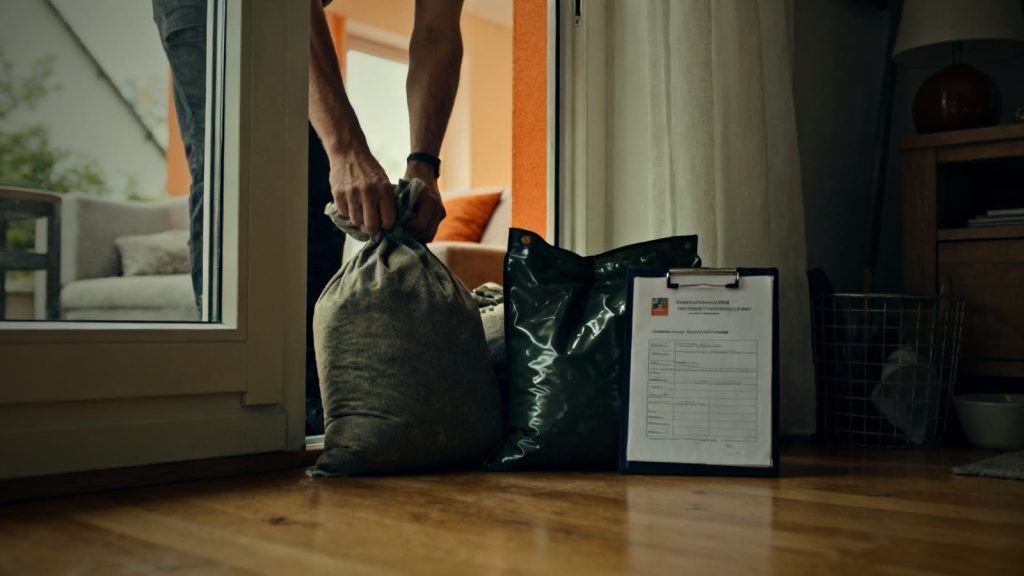
- Keep sealing materials on hand, such as sandbags, formwork boards, waterproof plywood sheets, and silicone sealant
- Don’t store valuables and important documents in the basement; keep them in higher-up rooms
- Secure your heating oil tank against buoyancy, for example by anchoring it – leaking oil causes enormous damage
- Build up a supply of food and drinking water, and keep a battery-powered radio, flashlight, camping stove, and emergency toilet on hand
- Prepare a document folder with important papers
Also have someone check whether your home has a working backflow preventer. During heavy rain, water from the sewer can back up through floor drains and toilets in the basement.
Before a Flood: Check Your Insurance
A standard homeowners or home contents insurance policy usually does not cover damage from flooding and heavy rainfall. For that, you need an additional add-on, natural hazard insurance (Elementarschadenversicherung). Consumer advice centers (Verbraucherzentralen) recommend checking your own policy and adding coverage if necessary. This isn’t an advertisement but a consumer tip: Without this coverage, you can quickly be left with high costs after a loss.
When the Water Rises
If a warning comes, stay calm, but act quickly. Basic training teaches that decisions made early are almost always better than those made late. That is especially true in a flood.
- Follow warnings and announcements – via NINA (Germany’s official emergency warning app), radio, and loudspeaker announcements. Instructions from the fire department, police, and authorities take priority.
- Clear out your basement while it is still safe to do so, and seal windows, doors, and drain openings.
- Turn off the power: Switch off electrical appliances and the heating system, and in areas at risk, shut off the power early at the fuse box – but only if you can reach it with dry feet. Never enter a flooded basement while there could still be live electricity.
- Move your car in time: Get your vehicle out of at-risk areas early. The BBK (Germany’s Federal Office of Civil Protection and Disaster Assistance) explicitly warns that underground garages can become deadly traps during a flood.
- Do not drive or walk through flooded streets. You can’t see the depth or the current, and open manholes or debris may be hidden beneath the surface. Even a small amount of moving water can knock people off their feet and carry vehicles away.
- Prepare your go bag and get ready for a possible evacuation.
If you are trapped, move to a higher floor, make yourself noticeable, and call the emergency number 112 if your life is in danger.
Afterward: Cleaning Up Safely
When the water recedes, the danger is not over yet. Watch out for:
- Electrical systems: Have a qualified electrician inspect your electrical installation and appliances before you turn the power back on.
- Heating oil and chemicals: If oil or other hazardous substances have leaked, notify the fire department.
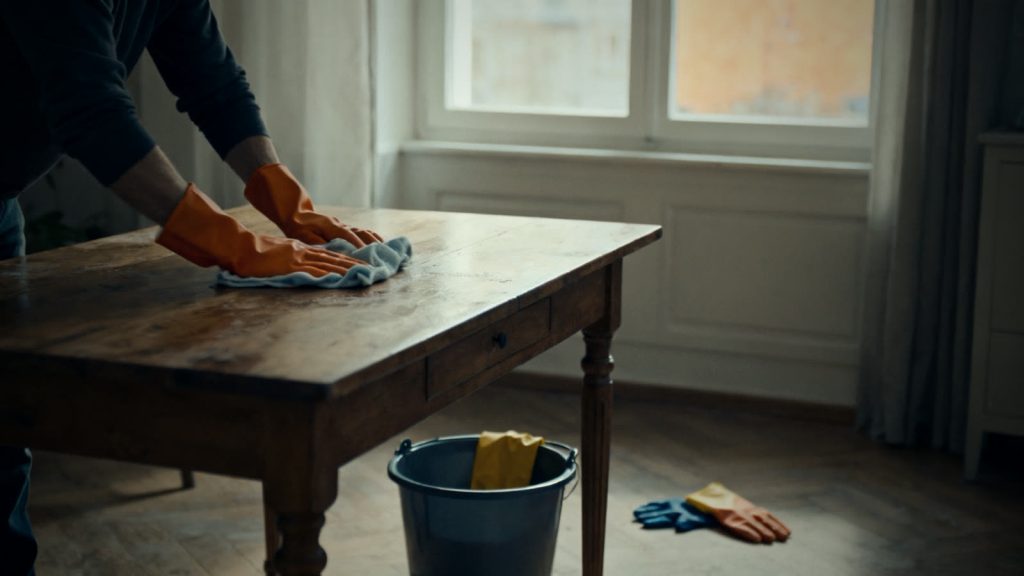
- Hygiene: Floodwater is often contaminated with sewage. Wear rubber boots and gloves, and don’t eat fruit or vegetables from flooded gardens.
- Documentation: Photograph all damage before you start cleaning up, and report it to your insurance company promptly.
- Drying out: Ventilate and dry out rooms as quickly as possible to prevent mold. If the groundwater is high, wait to pump out the water until the groundwater level has dropped sufficiently – otherwise structural damage can occur.
And finally: Check on your neighbors, especially older people and those who live alone. A flood is a situation that people handle better together.
Our tip for calm times: Write yourself a short flood checklist and hang it on the basement door or next to the fuse box. It should list what to do in which order when a warning comes, where the sandbags are stored, and who in the household takes on which task. In an emergency, you won’t have to think – you just check things off.
In short: Know your risk, review your insurance, and keep sealing materials on hand. When the water is rising: power off, stay out of the basement, move your car early, and never walk or drive through floodwater. After the flood, first have everything inspected, then document, then clean up.
Recommended Gear Compared
| Produktbild bei AmazonLong CableGüde GS 4002 P | Produktbild bei AmazonAll-RounderEinhell GC-DP 3325 | Produktbild bei AmazonFor Large Volumes of WaterEinhell GC-DP 7835 | |
|---|---|---|---|
| Rating | at least 4.3 out of 5 starswith 500+ customer reviews (our selection criterion)See current reviews* | at least 4.3 out of 5 starswith 500+ customer reviews (our selection criterion)See current reviews* | at least 4.3 out of 5 starswith 500+ customer reviews (our selection criterion)See current reviews* |
| Features |
|
|
|
| Pros |
|
|
|
| Cons |
|
|
|
| View on Amazon* | View on Amazon* | View on Amazon* |
Selected by manufacturer data and customer reviews (at least 4.3 stars with 500+ reviews). We only show exact star ratings when they come from Amazon the same day. As of 04.10.2026. Not tested by us. Current prices and reviews are on Amazon. *Ad · paid link
Conclusion: our product picks
Comparing Submersible Dirty Water Pumps
For a flooded basement, the Einhell GC-DP 3325 is the solid all-rounder. For large volumes of water, the GC-DP 7835 delivers the most, while the Güde GS 4002 P stands out with its 10 m cable. Important: only use the pump if the electrical system is safe – keep water away from outlets or distribution boards, and when in doubt, have the power shut off.
Links marked with * are advertising links. As an Amazon Associate I earn from qualifying purchases.
Sources and further information
- BBK (Germany’s Federal Office of Civil Protection and Disaster Assistance) – Guide: Preparing for Crises and Disasters
- Cross-State Flood Portal
- Verbraucherzentrale (German consumer advice center) – Insurance Coverage for Natural Hazard Damage
- BG ETEM (German statutory accident insurance for the energy, textile, electrical and media sectors) – Shut Off the Power Early During a Flood
General information, no substitute for individual advice from authorities, emergency services or medical professionals. In an emergency in Europe: 112.