Evacuations happen in Germany more often than many people think. The best-known cause is the discovery of a World War II bomb, which can force entire neighborhoods to be cleared for several hours. Other causes include flooding, large fires with heavy smoke, and gas leaks. Usually there is little time. If you are prepared, you can pack calmly instead of frantically searching for your ID and medication.
How you find out about an evacuation
Authorities share information through several channels at the same time: the NINA warning app, cell broadcast alerts on your smartphone, sirens, radio, loudspeaker announcements from the police and fire department, and the websites and social media channels of your city and county. There you will find out which streets are affected, by when you have to leave your home, and where assembly points or emergency shelters are located. Instructions from emergency responders always take priority over general advice, including this article.
Preparation: go bag and document folder
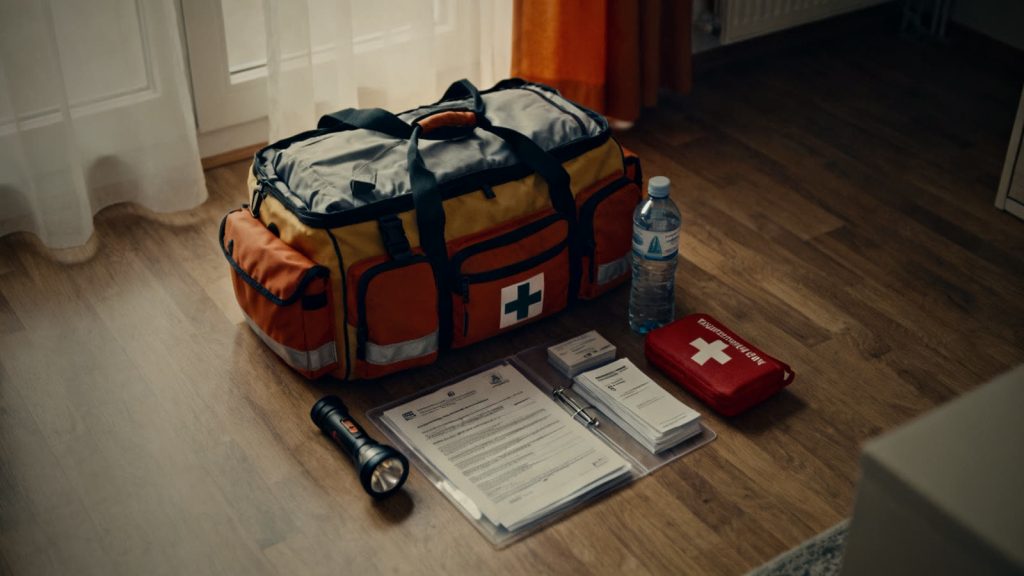
The BBK (Germany’s Federal Office of Civil Protection and Disaster Assistance) recommends preparing a go bag for each family member, no more than fits into one backpack. A backpack is more practical than a suitcase because you keep both hands free. It should include, among other things:
- personal medication and first aid supplies
- the document folder with important papers
- IDs, cash, and valuables
- about two days’ worth of food in dust-proof packaging, a water bottle, and utensils
- battery-powered radio with spare batteries, flashlight
- sleeping bag or blanket
- clothing and toiletries for a few days, rain protection, sturdy shoes
Add charging cables and a charged power bank, a spare pair of glasses, and, most importantly, a list of phone numbers on paper. Children should carry a note with their name, address, and a contact number in their jacket pocket.
When the order comes: the first minutes
In basic training, we learned that an alarm is not the moment to make plans. The plan has to be in place beforehand. Then all that is left is working through it step by step. For an evacuation, it can look like this:
- Check the information: What happened, which area is affected, by when do you have to leave, and where is the assembly point?
- Gather your family and assign tasks.
- Grab your go bag and document folder, and don’t forget your medication.
- Pack up your pets: carrier, leash, food, and vaccination record. If you can’t take them with you, leave out enough food and water and let the emergency responders know.
- Secure your home (see below).
- Notify your neighbors, especially older people, people who are ill, or those who live alone and may not have heard the announcement.
- Leave promptly, but stay calm. Follow the signposted routes and the instructions on site.
How to Leave Your Home Properly
What you should do when leaving your home depends on the situation. Here is a general framework based on guidance from authorities and fire departments:
- Close windows and doors and lock your front door.
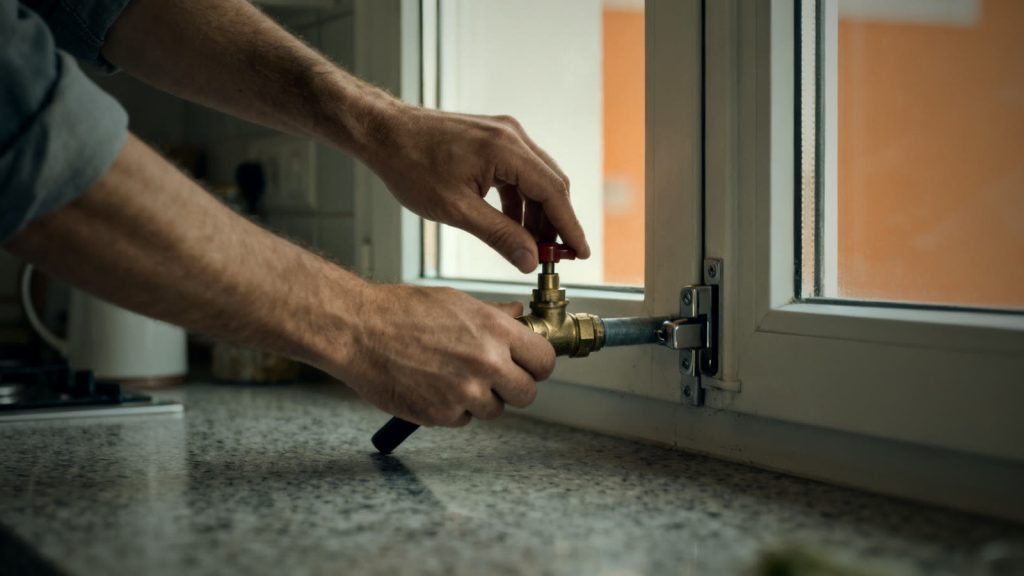
- Turn off electrical appliances, the stove, and candles, and shut off the faucets.
- Only use the main switches for electricity, gas, and water if the authorities explicitly tell you to, for example when there is a risk of flooding. In other situations, such as a bomb disposal, people are often asked not to shut off utilities completely.
Some municipalities ask residents to leave roller shutters open or to put a sign on the door so that emergency crews can recognize vacant homes. So pay attention to the specific instructions for your situation.
On the Road and in an Emergency Shelter
If possible, stay with relatives or friends outside the affected area. If you can’t, you will find a place in the designated care centers, which are often run by relief organizations such as the DRK (German Red Cross), the Johanniter (Johanniter-Unfall-Hilfe, a Germany-based relief organization), the Malteser (Malteser Hilfsdienst, a Germany-based relief organization), or the ASB (Arbeiter-Samariter-Bund, Germany’s Workers’ Samaritan Federation). Register there, even if you’re only staying a short time, so your family can find you.
Only use your car if it is explicitly permitted and the roads are clear. In some situations, the area is closed to traffic, and traffic jams hinder rescue crews.
Returning Home
Only return once the area has been officially cleared. After floods or fires, you should have the systems checked for damage before turning electricity and gas back on. Document damage with photos before you start cleaning up.
Practice Once
Run a simple test with your family: How long does it take until everyone is standing at the door with their go bag, documents, medications, and pets? The first time, it often takes well over ten minutes. The second time, it goes much faster – and that’s exactly the point.
It also helps to agree with relatives outside your area that you can stay with them in an emergency. An arrangement like this costs nothing, but it takes a lot of uncertainty out of the situation – and it eases the burden on emergency shelters for people who have no other option.
In short: Pack your go bag and document folder in advance, one backpack per person. When the evacuation order comes: get informed, gather your family and pets, secure your home, warn your neighbors. Follow the instructions of emergency crews and only return after official clearance.
Matching Gear Compared
| Produktbild bei AmazonLightweightBseash 40 l | Produktbild bei AmazonRuggedMardingtop 40 l (taktisch) | Produktbild bei AmazonComfortTerra Peak Flex 40 | |
|---|---|---|---|
| Rating | at least 4.3 out of 5 starswith 500+ customer reviews (our selection criterion)See current reviews* | at least 4.3 out of 5 starswith 500+ customer reviews (our selection criterion)See current reviews* | at least 4.3 out of 5 starswith 500+ customer reviews (our selection criterion)See current reviews* |
| Features |
|
|
|
| Pros |
|
|
|
| Cons |
|
|
|
| View on Amazon* | View on Amazon* | View on Amazon* |
Selected by manufacturer data and customer reviews (at least 4.3 stars with 500+ reviews). We only show exact star ratings when they come from Amazon the same day. As of 04.10.2026. Not tested by us. Current prices and reviews are on Amazon. *Ad · paid link
Conclusion: our product picks
Backpacks (40 L) Compared
As a bug-out bag, we recommend the rugged Mardingtop – additional pouches can be attached. If you want to save weight, go with the Bseash with its rain cover. The Terra Peak is the most comfortable to carry over longer distances.
Links marked with * are advertising links. As an Amazon Associate I earn from qualifying purchases.
Sources and Further Information
General information, no substitute for individual advice from authorities, emergency services or medical professionals. In an emergency in Europe: 112.