
📌 Part of the guide: Packing a Go Bag: Checklist, Documents, and Family Plan
Backflow risk must be explicitly covered within your comprehensive damage insurance. According to the Verbraucherzentrale (German consumer protection authority), standard household and building insurance do not include it. Additionally, the BBK (Federal Office of Civil Protection and Disaster Assistance) recommends backflow preventers or check valves in sewage lines, with regular functional testing.
In this guide, we walk you through step by step what you can do: assess your risk, review your backflow protection, read your insurance policy, and organize your documents so you’re ready to act when needed. All information is based on the Verbraucherzentrale, the Verbraucherzentrale Bundesverband (vzbv, German Federation of Consumer Organizations), and the Bundesamt für Bevölkerungsschutz und Katastrophenhilfe (BBK, Federal Office of Civil Protection and Disaster Assistance).
What Backflow Is and Why Basements Are Particularly at Risk
Backflow occurs when municipal sewage systems become overwhelmed during heavy rain. Sewage from the public sewer line is then forced back into buildings. This water doesn’t come from a stream or river, but from the sewage system. This distinction is important because it affects both your insurance coverage and prevention measures.
Which Areas Are Most at Risk
According to the Verbraucherzentrale, particularly deep entry areas, basements, and below-ground rooms below the backflow elevation level are at risk. You should clarify exactly where this backflow elevation level runs on your property with a specialist contractor rather than guessing. This determination is the foundation for all further decisions, for example, determining which protection technology makes sense at which location.
Who Is Liable for Backflow Damage?
Important information upfront: municipalities are not liable for backflow damage. You cannot rely on your municipality to compensate you for damage. This makes personal preparation and appropriate insurance coverage all the more important.
Assess Your Risk
To assess your risk, the BBK points to flood hazard and risk maps from the federal states as well as heavy rain hazard maps. They provide you with initial guidance on your property’s location. However, they do not replace professional determination of your backflow elevation level. How to respond during an acute situation is covered in our guide Floods: prepare and respond correctly.

Backflow Preventer Maintenance: What the BBK and Consumer Protection Authorities Recommend
The BBK recommends backflow preventers or check valves in sewage lines with regular functional testing. This is especially important for rooms below the backflow elevation level. A specialist contractor familiar with your building will determine which type fits your needs and how it should be installed.
Why Maintenance Is Not a Minor Issue
Backflow preventers can become blocked by wet wipes, tampons, hair, or food scraps and require regular maintenance. A blocked valve cannot do its job. That’s why functional testing is an essential part of protection, not just a formality. Additionally, according to the Verbraucherzentrale: lift stations and backflow preventers must be regularly inspected.
- Manual valves can be maintained by you after instruction.
- Many contractors offer maintenance contracts if you prefer to outsource the inspections.
- Wet wipes, tampons, hair, and food scraps should not go down toilets or drains because they can block valves.
Document Your Maintenance
The Verbraucherzentrale recommends documenting maintenance because insurers may require proof of maintenance. Therefore, record each inspection with date and result, and keep receipts and maintenance records. You can find out what form your insurer will accept for documentation in the policy terms or by asking them directly.
Home Protection During Heavy Rainfall: Additional Measures from the BBK
In addition to backflow prevention valves, the BBK (Germany’s Federal Office of Civil Protection and Disaster Assistance) provides additional measures against flooding in its home safety guidance. Not every measure is suitable for every building, but the list helps you review what makes sense for your home.
- Install a lifting station in lower-level areas.
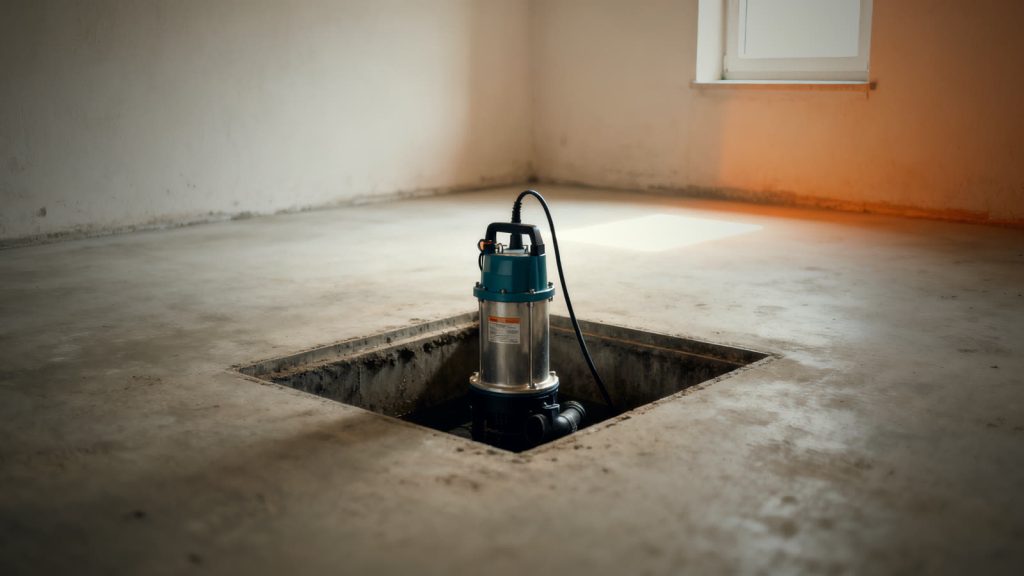
- Install submersible pumps with a sump basin in areas at risk of flooding.
- Check RCD (residual current devices) and surge protection systems.
- Make meter boxes flood-resistant.
- Secure oil tanks against flotation.
Work on electrical systems and meter boxes must only be performed by licensed electricians. This also applies to checking RCD and surge protection systems. To determine what measures are appropriate for your home, you should consult with a qualified contractor who is familiar with your building. You can also find a concise overview of this topic in our Lage-Check on backflow prevention during extended rainfall.
Protecting Important Documents
In addition to technical measures, it’s worth reviewing your documents. Insurance policies, contract terms, and maintenance records should be stored in a location you can access quickly. You can learn how to organize important documents in our document management guide.
Comprehensive Natural Hazard Insurance: What It Covers and What It Doesn’t
Backflow risk must be explicitly covered within comprehensive natural hazard insurance. According to vzbv (Association of German Consumer Organizations), standard homeowners’ insurance covers only storm and hail damage. Standard household contents insurance also does not include backflow risk, according to consumer protection agencies. You can only determine if you have comprehensive natural hazard coverage by reviewing your own policy.
How Common Is This Coverage
According to vzbv, the figures are as follows: Approximately 95 percent of residential buildings are insured, but only 54 percent of those homeowners’ insurance policies include comprehensive natural hazard coverage. Therefore, having an existing building insurance policy does not automatically mean you have comprehensive natural hazard coverage. It’s worth checking your policy.
Hazards Currently Considered Uninsurable According to vzbv
According to vzbv, storm surge, groundwater rise, and drought are currently considered uninsurable. Carefully review the terms and conditions of your policy to see which hazards are covered and which are not. Don’t rely on the name of your plan; focus on what is specified in writing.
What vzbv Is Calling for Politically
vzbv is calling for automatic insurance coverage against natural hazards such as flooding, heavy rainfall, earthquakes, landslides, heavy snow load, avalanches, and volcanic eruptions. It opposes mandatory insurance requirements. Additionally, it calls for deductibles to reduce premiums in high-risk areas and financial support for economically disadvantaged individuals. These are policy demands, not current regulations. What matters for you right now is what your own policy covers.
What to Look for When Comparing Policies
- Is backflow damage explicitly covered?
- Which natural hazards are covered, and which are not?
- Does the insurer require maintenance documentation, such as for backflow prevention valves or lifting stations?
If you have any questions, contact your insurance provider or seek independent advice. Specific premiums and terms depend on individual circumstances, which is why we do not provide figures here.
Documents and Damage Reporting
Good documentation makes many things easier in an emergency. Being organized helps ensure you don’t forget anything later. Starting today, you can gather your insurance policy, terms and conditions, as well as invoices and maintenance records for your backwater valve and lift station—digitally or otherwise—so you can find them quickly when needed.
After Water Intrusion: Safety First
Do not enter flooded rooms if there could be electrical current present. Basements can contain electrical outlets, distribution panels, or devices under voltage. Have a qualified electrician cut off power or call 112 if there is immediate danger. Backwater brings contaminated water into your home, so you should avoid direct contact with the water.
Report the Damage
How to report damage and what your insurer needs is specified in your policy terms and conditions. Prepare the requirements in advance and report the damage accordingly. If you must leave your home, our article on evacuation can help.
Frequently Asked Questions
Does homeowners insurance cover backwater in the basement?
Standard homeowners insurance does not cover backwater risk. It must be explicitly covered within a natural hazards insurance policy. According to vzbv (Federation of German Consumer Associations), only 54% of homeowners insurance policies include natural hazards protection. Check your policy terms and conditions to see if yours does.
Is the municipality liable if the sewer overflows?
No. According to the Consumer Protection Center, municipalities are not liable for backwater damage. Personal prevention measures and insurance are therefore essential.
How often should I inspect the backwater valve?
The sources do not specify a fixed interval. BBK (Germany’s Federal Office of Civil Protection and Disaster Assistance) recommends regular functional testing, and the Consumer Protection Center recommends regular maintenance. Document every inspection. A specialist contractor can advise you on the interval.
Who can maintain a backwater valve?
According to the Consumer Protection Center, manual valves can be maintained yourself after instruction. Many contractors also offer maintenance contracts.
Is groundwater rise covered by natural hazards insurance?
According to vzbv, storm surge, groundwater rise, and drought are currently not insurable. Check your policy terms and conditions carefully.
Your Next Steps
- Review your state’s flood hazard and risk maps and heavy rainfall hazard maps to assess your property’s situation.
- Have a specialist contractor determine the backwater level.
- Check whether a backwater valve or lift station is present and functioning.
- Review your insurance policies: Is natural hazards protection with backwater coverage included?
- Create a folder with insurance documents and maintenance records.
- Schedule a date for the next functional inspection.
With these steps, your preparations are organized and verifiable. For more information on the complete picture, see our article Prepared in 30 Days.
Sources and Further Information
General information, no substitute for individual advice from authorities, emergency services or medical professionals. In an emergency in Europe: 112.