📌 Part of the guide: Packing a Go Bag: Checklist, Documents, and Family Plan
The situation: The German Weather Service (DWD) describes in its warning status report from October 24, 2026, 7:00 a.m., a low-pressure system affecting large parts of Germany. Conditions are changeable and windy to stormy, with continuous heavy rain beginning at night in the west. In higher elevation areas of the western and central uplands, the DWD expects significant continuous rainfall of 30 to 50 l/m² in 24 hours beginning Saturday night through Sunday daytime.
What does this mean for my household?
According to the DWD, the continuous heavy rain primarily affects the west and higher elevation areas of the uplands. In these locations, it makes sense to inspect your basement, lower floors, and sewage connections. Wind also plays a role: in the west, the DWD indicates that gusts and severe gusts of 70 to 85 km/h are possible, with peak conditions during the early part of the night. From the Rhine region to the Emsland, isolated severe gusts up to 100 km/h cannot be ruled out.
The BBK (Federal Office of Civil Protection and Disaster Relief) points out that flash floods can occur anywhere in Germany, even without a nearby stream. Drainage systems are usually not designed for this. The BBK defines heavy rainfall as more than 25 millimeters per hour or more than 35 millimeters within six hours. To assess the risk at your location, the BBK recommends consulting the flood and heavy rainfall hazard maps of the federal states.
3 Steps for today
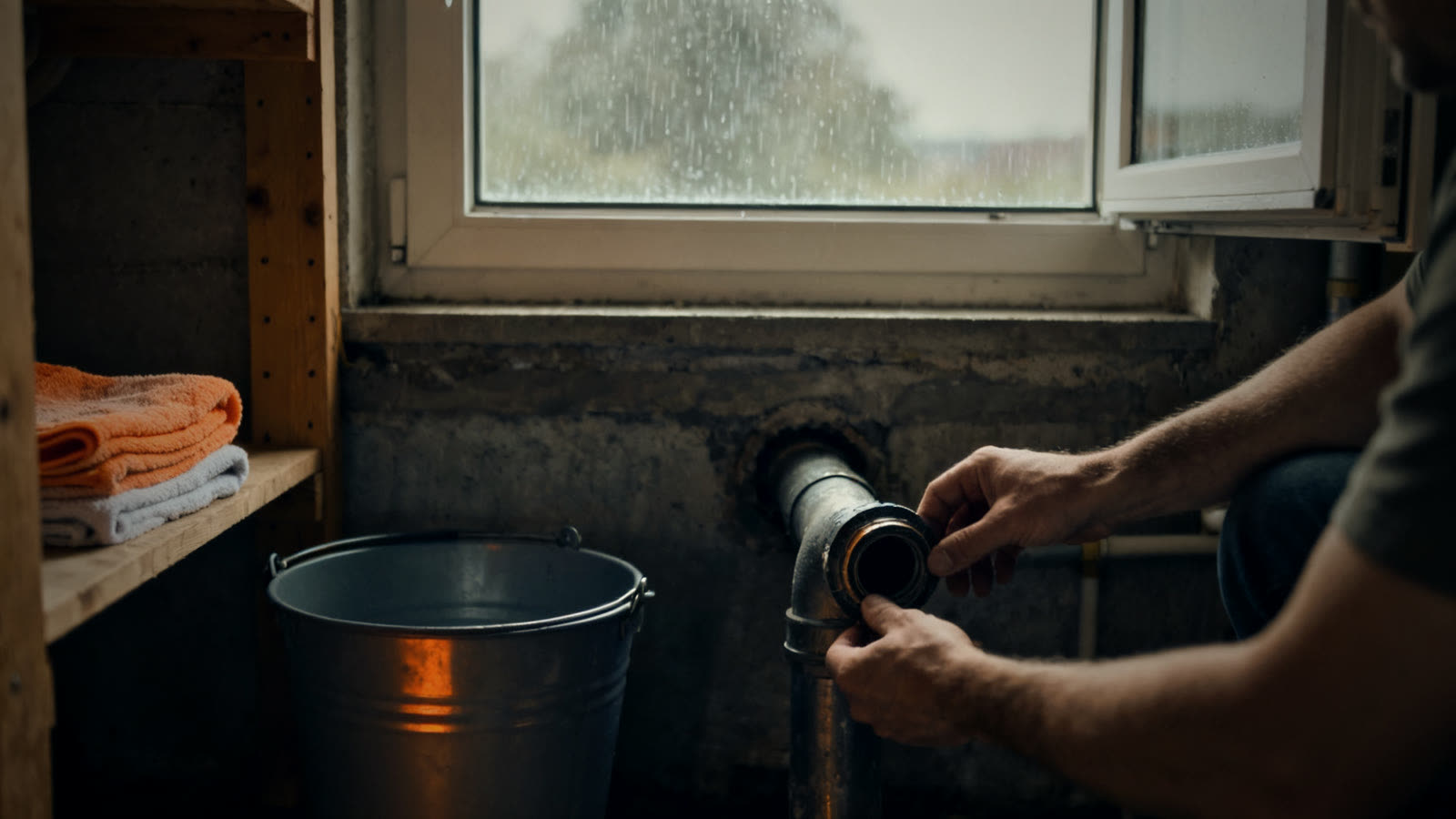
- Check your backflow protection system. If you have a check valve or pump station installed, note when it was last serviced. The Consumer Center recommends regular inspection and maintenance; insurance companies may require proof of maintenance in case of a claim. If you’ll be away for an extended period, the check valve should be locked, according to the Consumer Center.
- Reduce strain on your sewage system. Do not flush hygiene products, wet wipes, or food scraps down the toilet, as the Consumer Center advises. If basement windows are present and you’ll be away for a long time, they should be kept tightly closed.
- Secure awnings and roof structures. The BBK recommends protecting awnings and roof structures against storms. Retract them or secure them before wind gusts reach their peak during the night.
During heavy rainfall, the BBK advises remaining indoors and, in an emergency, calling 112 for the fire department. After the event, you should dry affected areas as quickly as possible, according to the BBK, to prevent structural damage, mold growth, and pest infestation.
Further reading
- Flooding: prepare and respond correctly – before, during, and after
- Storms and severe weather: what to do – before, during, and after
- Alerting the public: NINA, Cell Broadcast, sirens
Sources
- DWD – Warning status report – German Weather Service (Date: October 24, 2026, 7:00 a.m.)
- BBK – Heavy rainfall – Federal Office of Civil Protection and Disaster Relief
- BBK – Structural precautions / Home safety – Federal Office of Civil Protection and Disaster Relief
- Consumer Center – Heavy rainfall flooding and sewage backup – Consumer Center (Date: August 14, 2026)
General information, no substitute for individual advice from authorities, emergency services or medical professionals. In an emergency in Europe: 112.