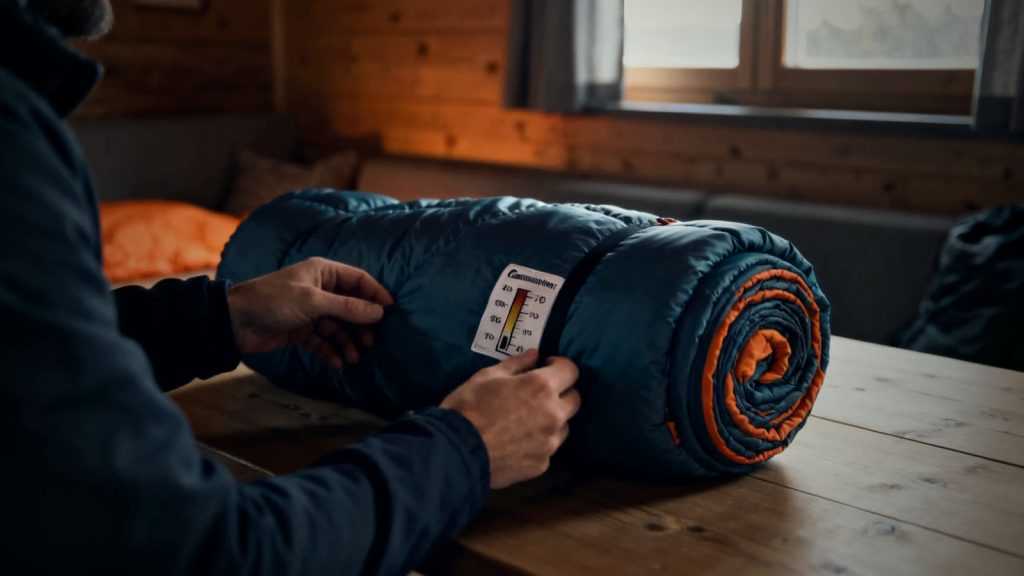
A good sleeping bag is one of the most versatile pieces of gear in emergency preparedness. It keeps you warm in a tent, in your car, in an emergency shelter – and just as well in your own home when the heating stays cold during a winter power outage. But when buying one, many people face a label with several temperature ratings and wonder: Which number actually counts? Here is the explanation.
The Standard Behind the Numbers
Reputable manufacturers have their sleeping bags tested using a uniform procedure. The standard used to be EN 13537; today it is the international ISO 23537. The principle has stayed the same: A heated thermal manikin lies in the sleeping bag on a standardized sleeping pad, and temperature ranges are calculated from the measurements. The big advantage: sleeping bags from different brands become comparable. If no standard is listed on the label, the figures are purely the manufacturer’s own claims – and often optimistic.
The Temperature Ratings in Detail
Comfort
The comfort temperature describes the outside temperature down to which a standard woman can sleep comfortably in a relaxed position on her back. Since women statistically get cold more easily than men, this value is the most realistic rating for most people. Our recommendation: Buy based on the comfort temperature.
Limit
The limit temperature indicates the point down to which a standard man, curled up in a ball, just barely doesn’t get cold. This is no longer comfortable sleep, but the edge of what is possible. If you regularly sleep near this value, you will often wake up and be exhausted the next day.
Extreme
The extreme temperature is purely a survival value. It describes the temperature at which a standard woman can hold out for about six hours without risk of death from hypothermia. However, health damage such as frostbite is possible in this range. This value is never a planning figure – treat it as a warning, not as a performance promise.
Upper Comfort Limit
Sometimes an upper temperature is also given. Above it, the sleeping bag becomes too warm, even with the zipper open.
Why You Can Still Feel Cold
The standard values are determined in a lab. In real life, many factors come into play:
- The sleeping pad: The ground draws off an enormous amount of heat. Without a well-insulating sleeping pad, even the best sleeping bag helps little. Pay attention to the pad’s R-value – the higher it is, the better the insulation.
- Your body: Fatigue, hunger, dehydration, and stress reduce heat production. A warm drink and a snack before bed make a noticeable difference.
- Moisture: Wet insulation performs worse. Damp clothing doesn’t belong in the sleeping bag.
- Wind and humidity: Cold, damp nights feel colder than dry cold at the same temperature.
During basic training, we saw it again and again: If you forget your sleeping pad or climb into your sleeping bag in sweaty clothes, you will be cold – no matter how expensive the sleeping bag was. Dry spare clothes just for the night are therefore a proven trick.
Down or Synthetic?
Down offers the best warmth-to-weight ratio and packs down very small. However, it loses a lot of its insulating performance when wet, and it needs care. Synthetic insulation is heavier and bulkier, but it still keeps you reasonably warm when damp, dries faster, and is more durable. For emergency preparedness in our humid Central European climate, for cars, and for households where the sleeping bag sits in a closet for a long time, synthetic is often the more robust choice. If you carry a lot, for example in a go bag or bug-out backpack, you will tend to benefit more from down.
Choosing the Right Sleeping Bag for Emergency Preparedness
- Define the use: Is the sleeping bag mainly meant to get you through a cold apartment, to live in your car, or to go in a backpack?
- Choose the comfort rating: For an unheated apartment during a German winter, a three-season sleeping bag is often enough. For outdoor use in winter, you need a much larger safety margin.
- Consider the shape: Mummy bags keep you warm more efficiently, while rectangular sleeping bags are more comfortable and can sometimes be unzipped and opened up as a blanket.
- Add to it, don’t overdo it: A fleece or silk liner, a second blanket, or a bivy bag can noticeably upgrade a sleeping bag.
How to Store a Sleeping Bag
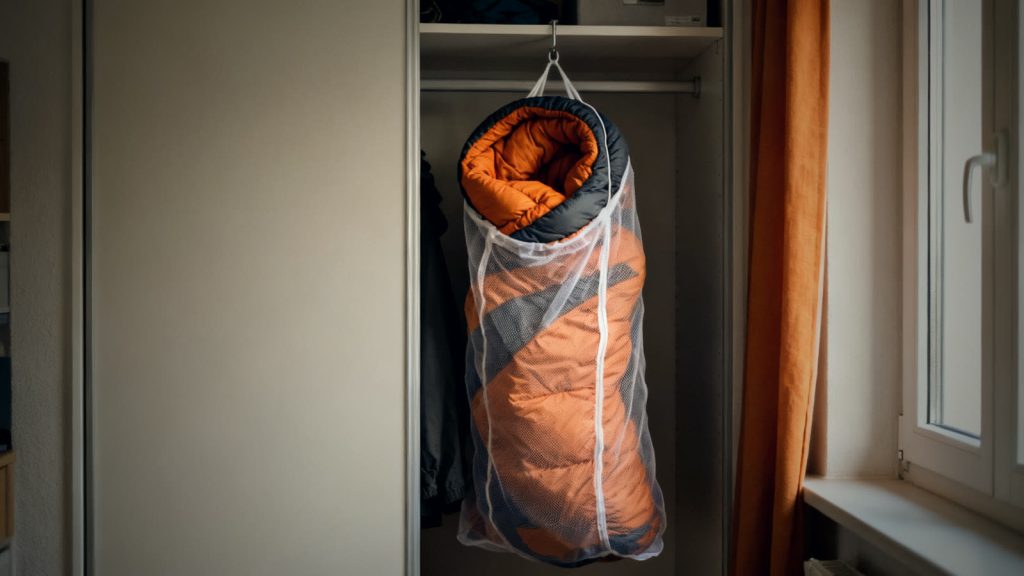
Don’t keep your sleeping bag in a small compression sack long term. Otherwise the fill gradually loses its loft. Store it loosely in a large cotton or mesh sack in a dry place. After use, let it air out and dry thoroughly before packing it away again.
Test It for One Night
Before you rely on your sleeping bag in an emergency, test it. A night on the balcony, in the garden, or in a cool guest room will quickly show you whether the comfort rating and sleeping pad work for you. You’ll find out whether you tend to get cold or sweat, whether the zipper catches, and whether the hood fits well. This applies especially to children: they need a sleeping bag in the right size, because an adult sleeping bag that is too big leaves too much cold air inside.
In short: Buy based on the comfort temperature, not the limit or extreme rating. Without a good sleeping pad, even the best sleeping bag does little. Staying dry and storing it loosely preserves warmth and extends its lifespan.
Matching Gear Compared
| Produktbild bei AmazonFor mild temperaturesSportneer Deckenschlafsack | Produktbild bei AmazonLightweightSOULOUT Schlafsack | Produktbild bei AmazonWinterEXPLORER Grönland (Mumie) | |
|---|---|---|---|
| Rating | at least 4.3 out of 5 starswith 500+ customer reviews (our selection criterion)See current reviews* | at least 4.3 out of 5 starswith 500+ customer reviews (our selection criterion)See current reviews* | at least 4.3 out of 5 starswith 500+ customer reviews (our selection criterion)See current reviews* |
| Features |
|
|
|
| Pros |
|
|
|
| Cons |
|
|
|
| View on Amazon* | View on Amazon* | View on Amazon* |
Selected by manufacturer data and customer reviews (at least 4.3 stars with 500+ reviews). We only show exact star ratings when they come from Amazon the same day. As of 04.10.2026. Not tested by us. Current prices and reviews are on Amazon. *Ad · paid link
Conclusion: our product picks
Sleeping Bags Compared
When the heating fails in winter, comfort rating is what counts – here, the EXPLORER Greenland is the only choice in this comparison. The two rectangular sleeping bags are suitable for spring through fall and as an extra blanket.
Links marked with * are advertising links. As an Amazon Associate I earn from qualifying purchases.
Sources and Further Information
General information, no substitute for individual advice from authorities, emergency services or medical professionals. In an emergency in Europe: 112.